Leasehold Improvement Depreciation Life: Who Depreciates a Build-Out?
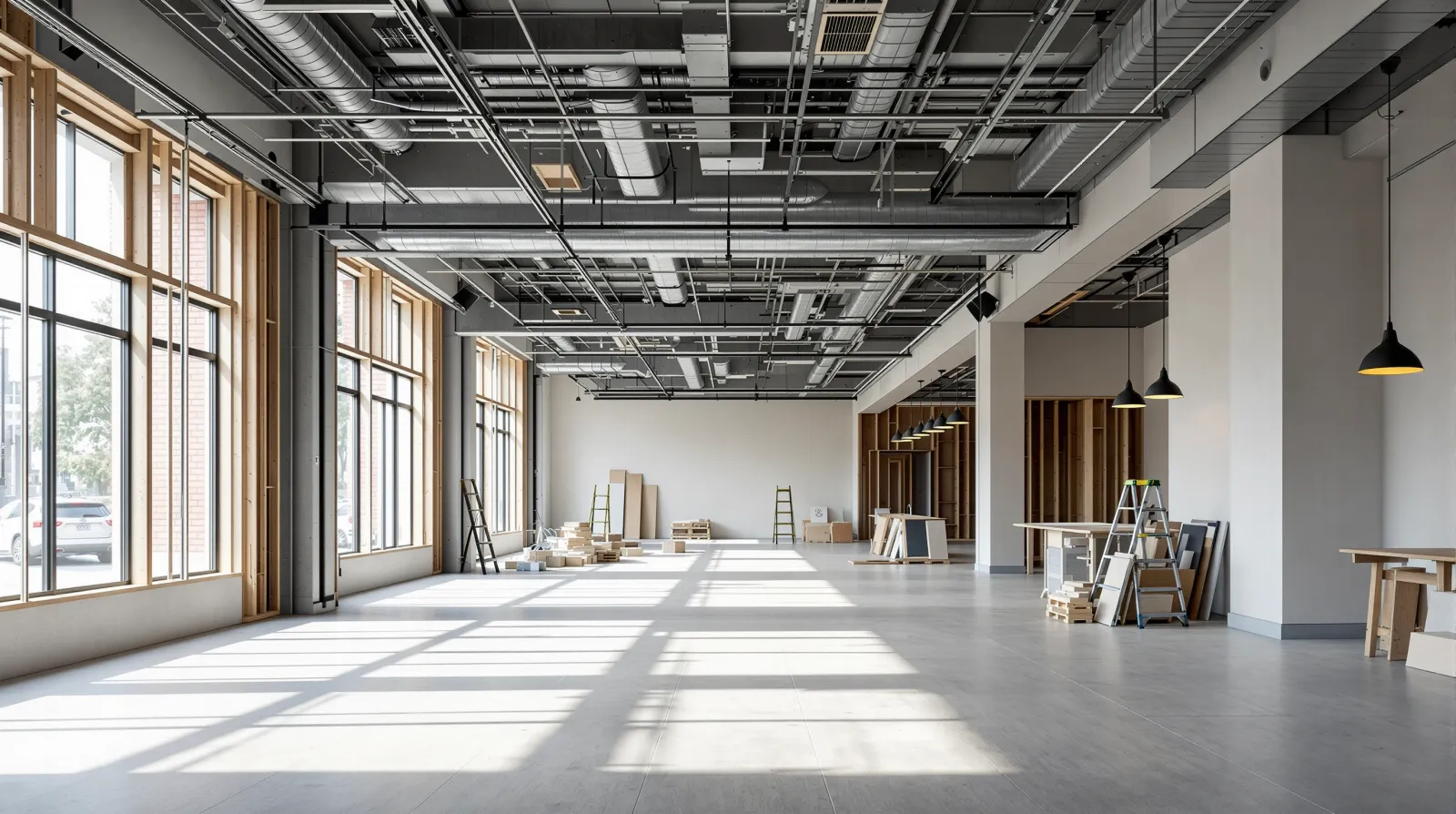
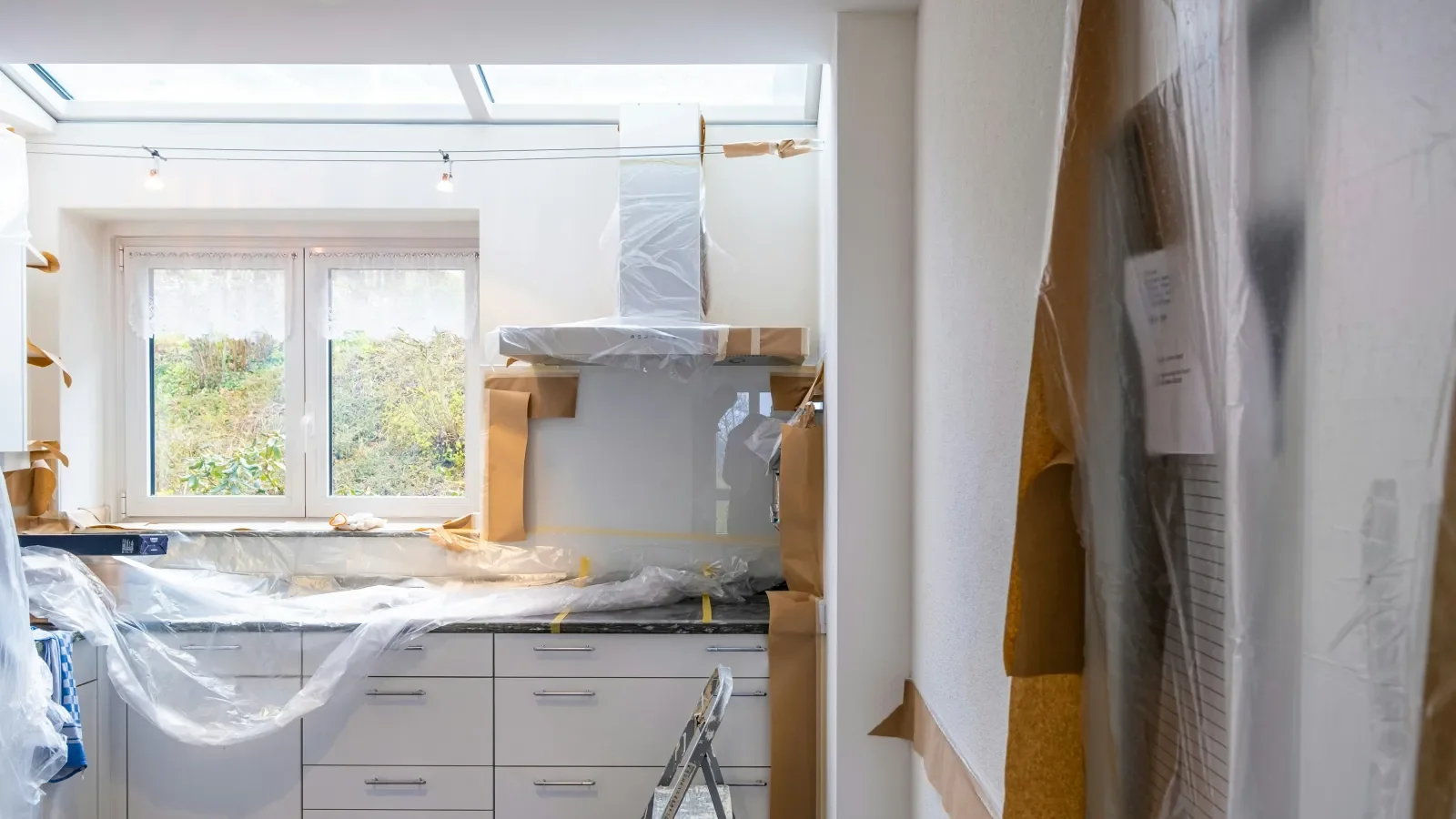
Two taxpayers, two schedules, one building. The landlord depreciates the shell and the site; the operator depreciates the fit-out they paid for, over 15-year QIP rather than the lease term.
A leasehold improvement is depreciated over its MACRS recovery period, not over the lease term. Interior non-structural work on a nonresidential building is Qualified Improvement Property, which is 15-year property and bonus-eligible. Whoever paid for the improvement depreciates it: the landlord owns the shell and the site, the tenant owns the fit-out they funded.
A leasehold improvement is depreciated over its MACRS recovery period, not over the lease term — and for interior, non-structural work on a nonresidential building that period is 15 years, under Qualified Improvement Property. Two separate taxpayers usually own two separate sets of property inside one leased building, and most people asking this question do not yet know which side of that line they are standing on.
That’s the whole problem. You lease a building, somebody paid for a build-out, and there are now two depreciation schedules in play. The landlord has one. The operator has another. They don’t overlap, they aren’t interchangeable, and putting a line on the wrong one isn’t a rounding error — it’s a deduction claimed by a taxpayer who never bought the asset.
| The landlord depreciates | The operator depreciates | |
|---|---|---|
| Building shell, roof, structural frame | Yes, 39-year | No |
| Site work: paving, fencing, landscaping, lighting | Yes, 15-year | No |
| Interior non-structural build-out the landlord paid for | Yes, 15-year QIP | No |
| Interior non-structural build-out the tenant paid for | No | Yes, 15-year QIP |
| Trade fixtures and equipment the tenant bought | No | Yes, 5- or 7-year |
| Land | Nobody. Land is not depreciable. | Nobody |
Everything below is one of those rows, argued out.
Who actually owns a build-out, the landlord or the tenant?
The test is who paid, not who holds the keys
Ownership for depreciation purposes follows the money and the depreciable interest — not possession, and not the deed. A tenant who writes the check for their own fit-out owns that fit-out for tax purposes, even though they own none of the building it’s bolted into. A landlord who writes the same check owns it, even though they’ll never set foot in the space during the lease.
You can usually settle this in one pass through the lease and the closing file. Who did the general contractor invoice? Was there an allowance, and did the tenant take it into income? Do the improvements revert to the landlord at termination, and at whose cost? Those three answers decide the schedule — everything else is decoration.
A landlord construction allowance is the landlord’s asset
This one catches people. If the landlord funds the build-out through a tenant improvement allowance and the tenant doesn’t report that allowance as income, the tenant hasn’t bought anything — the improvement is the landlord’s asset, on the landlord’s 15-year QIP schedule, and the tenant gets a finished space and zero depreciation from it.
Flip it. If the tenant takes the allowance into income and spends it, the tenant has basis. Same cash, opposite result, and the deciding fact is a line on a tax return rather than anything visible in the space. That’s why mixed build-outs get split line by line, and why a tenant improvement study asks for pay applications rather than a lease summary.
What a CPA is going to ask you first
Whether you’re the landlord or the operator, the first question is the same — show me what you paid for. Construction budgets, AIA G702 and G703 pay applications, the schedule of values, the fixed asset register, the closing statement. An owner’s purchase study can lean on public records for the shell. A build-out study can’t, because the value sits in paperwork only you have.
What is the depreciation life of a leasehold improvement?
Why “over the lease term” is wrong, and what §168(i)(8) says instead
The instinct is to spread a build-out over the lease. It feels tidy and conservative. It’s neither, and the statute is unusually direct. IRC §168(i)(8)(A) says that for any building erected, or improvements made, on leased property, the depreciation deduction is determined under the ordinary provisions of §168. Not the lease term. Not the shorter of the two.
So a 7-year lease and an 18-year lease on identical build-outs produce identical schedules. The lease term matters only at the very end, when unrecovered basis is left and the tenant leaves — its own section below.
QIP is 15-year property, and it excludes exactly three things
Qualified Improvement Property is defined at §168(e)(6): an improvement made by the taxpayer to an interior portion of a building that is nonresidential real property, placed in service after the date the building was first placed in service. §168(e)(3)(E)(vii) assigns it a 15-year recovery period, and because 15 is under 20, QIP is bonus-eligible under §168(k).
Three carve-outs, and they matter more than people expect:
- Enlargement of the building. Pushing a wall out into the parking lot is not QIP.
- Any elevator or escalator. Both stay on the 39-year schedule.
- The internal structural framework. New load-bearing steel inside the envelope is not QIP even though it is interior.
Notice what is not in the definition — the word tenant. QIP isn’t a tenant-only class, and a landlord re-fitting a vacant suite before the next lease is making QIP too. It’s nonresidential only, so a build-out inside residential rental property never gets here.
What the rest of a build-out looks like
A real fit-out is not one number on one line. It splits, and the split is where the benefit actually comes from. Here is the shape of it, with the authority for each class:
| Class | Recovery period | What lands here | Authority |
|---|---|---|---|
| Personal property | 5 years | Security and access control, data cabling, dedicated equipment, decorative and accent lighting, removable floor finishes | §1245; Rev. Proc. 87-56 classes 00.11 and 00.12 |
| Furniture and fixtures | 7 years | Desks, casework and furnishings that are genuinely furniture rather than building | Rev. Proc. 87-56 class 00.11 |
| Qualified Improvement Property | 15 years | Interior non-structural partitions, ceilings, HVAC distribution inside the shell, interior doors and finishes | §168(e)(6); §168(e)(3)(E)(vii) |
| Land improvements | 15 years | Paving, fencing, site lighting, drainage, landscaping | Rev. Proc. 87-56 class 00.3 |
| Structure | 39 years | Shell, roof, structural frame, elevators, enlargements | §1250 |
When something sits on the line between §1245 personal property and §1250 building, the analysis worth knowing is Whiteco Industries, Inc. v. Commissioner, 65 T.C. 664 (1975) — a six-factor permanence and affixation test covering how the item is affixed, whether it was designed to be moved, how it’s actually used and what removal damages. Arguing only that something is removable answers one factor out of six. The IRS Cost Segregation Audit Techniques Guide works the same boundary from the examiner’s side.
The number, on a $312,400 build-out
Take an operator who spent $312,400 finishing a leased space on a 12-year lease, all of it interior non-structural work meeting the QIP definition. Simplified, of course — a real build-out splits across the table above, which is the point of a component-level study.
| Treatment | Year 1 deduction | Year 1 tax effect at 37% |
|---|---|---|
| Amortized over the 12-year lease term | $26,033 | $9,632 |
| 15-year QIP, straight MACRS, no bonus | $20,827 | $7,706 |
| 15-year QIP with 100% bonus depreciation | $312,400 | $115,588 |
The gap between the first row and the third is $105,956 in the first year, on a fit-out that cost $312,400. The lease-term row is not a safer answer than the QIP rows. It is a different answer than the one the code gives. Run your own numbers through the cost segregation calculator before you decide anything.
What does a landlord’s study cover, and what does an operator’s?
The cleanest illustration we publish is a child day care centre, because in that sector the split is almost always real. Here are the actual figures from our child day care sample report: a 9,500 SF purpose-built centre, $1,600,000 purchase price, $208,000 allocated to land at 13%, leaving $1,392,000 of depreciable basis. Accelerated property came to $365,547, or 26.3% of basis.
That sample is a single owner who bought the whole thing. Split the same building between a landlord and an operator and each column has to find a home:
| Class | Sample amount | Share of basis | Whose schedule, in a leased centre |
|---|---|---|---|
| 5-year personal property | $177,886 | 12.8% | Split. Access control, data cabling, dedicated lighting and floor finishes that conveyed with the building are the landlord’s. Kitchen equipment and playroom electronics the operator bought are the operator’s. |
| 7-year furniture and fixtures | $35,164 | 2.5% | Usually the operator’s. See the next section, because this is the line we have not closed. |
| 15-year land improvements | $152,497 | 11.0% | The landlord’s, nearly always. Playground safety surfacing, anchored structures, fencing, the drop-off lane, parking and site lighting. |
| 39-year structure | $1,026,453 | 73.7% | The landlord’s. |
| Depreciable basis | $1,392,000 | 100.0% |
Read down the right-hand column and the argument makes itself. The landlord’s study is the building and the site — a $1,026,453 shell plus a $152,497 playground and parking package that is 11.0% of basis on its own. The operator’s is a different engagement entirely, run off build-out cost, and it doesn’t start from a purchase price at all.
The 7-year furniture line, and the question we have not closed
Here is something we would rather say out loud than have you find later. Our engine models a classroom furniture and fixtures baseline for day care centres on a per-square-foot basis, under Rev. Proc. 87-56 class 00.11, and right now it models that baseline on a landlord’s study as well as an operator’s. In the sample above, the $35,164 of 7-year property is $16,000 of classroom furniture the buyer reported as conveyed plus about $19,164 of that modeled baseline, so the modeled portion is roughly 1.4% of basis. Measured on a bare study with nothing declared, the baseline runs about 1.2%.
That figure is then reconciled against what the intake reports actually conveyed with the sale. If the classroom furniture belonged to the operator and walked in with them, it isn’t the landlord’s asset and it doesn’t stay on the landlord’s schedule. So: a modeled starting point followed by a reconciliation — not an automatic exclusion, and not a gate. Whether the baseline should be withdrawn from landlord studies outright is an open question on our side, and at roughly 1.2% of basis it isn’t a rounding item either.
We would rather publish that than let you assume a filter exists that does not.
Why are Goddard, Primrose and KinderCare tenants, not building owners?
Because the brand on the sign tells you who runs the classrooms, not who holds title. Goddard, Primrose, KinderCare and The Learning Experience are franchised or corporate operators. The centre itself is usually owned by a separate real estate entity — a single-purpose LLC, a local investor, a net-lease fund — that leases the building to the operator on a long-term lease.
This is why people land on the question at all. They see a nationally recognised name on a building, assume that name owns it, then can’t work out whose schedule the playground belongs on. It belongs on the landlord’s — and so does nearly three-quarters of the basis.
What each side actually holds in a franchised centre
The landlord holds the shell, the roof, the building’s mechanical systems, the playground and its surfacing, the fencing, the drop-off lane and the parking. That’s a conventional commercial purchase study, and the child day care property page covers the bands and fit criteria. The operator holds their signage, classroom furniture and cubbies, the kitchen equipment they bought, the technology, and whatever share of the fit-out they funded. That’s a build-out study, priced off build-out cost. Same building, two engagements, two clients.
The same pattern runs through adult day care, veterinary practices, retail and office suites — day care is just where brand recognition makes the mistake most visible. If you’re not sure which side you’re on, the depreciation calculator will at least tell you what the building side is worth.
What happens when a landlord puts the operator’s fit-out on their own schedule?
They claim depreciation on assets they never bought. It’s the reverse of the error everyone warns about, and it’s more common than the tenant-side version because it’s easier to make honestly — the landlord walks the building, sees classroom casework and cubbies and a commercial kitchen, and assumes it all came with the purchase.
It often didn’t. Casework the operator installed under their own franchise build standard, cubbies they bought, kitchen equipment on their own fixed asset register: none of it is the landlord’s basis, however permanently attached it looks. If it’s already being depreciated on somebody else’s return, it can’t also be on yours.
The fix is unglamorous and it works — reconcile the fit-out against the closing documents and the bill of sale rather than against what you can see. If an item conveyed, there’s paper saying so. No paper, and the presumption should run against you rather than for you.
The mirror error: an operator capitalizing over the lease
Same building, opposite mistake, and it costs the operator instead of exposing them. The tenant who spent $312,400 and spreads it over a 12-year lease is deducting $26,033 a year on property the statute puts on a 15-year QIP schedule that is fully bonus-eligible. Nothing about that is conservative. It is a different number than §168 produces, arrived at by applying a rule that §168(i)(8)(A) specifically displaces.
If you’ve been doing it that way for a few years, you’re not stuck with it. A Form 3115 change in accounting method picks up the missed depreciation as a §481(a) adjustment in the current year with no amended returns, which is the same mechanism behind any lookback study. Our catch-up depreciation guide walks through what the workpapers need to contain.
What happens to the remaining basis when a tenant leaves?
Abandonment and retirement under §168(i)(8)(B)
A 15-year schedule on a 10-year lease leaves something behind, and the code says what happens to it. §168(i)(8)(B) provides that where the lessee disposes of the improvement at the termination of the lease, the lessee takes the adjusted basis of that improvement into account in determining gain or loss.
In plain terms — a tenant who walks away from a build-out with unrecovered basis recognizes that basis when the lease terminates and the improvement is abandoned. It isn’t lost, and it doesn’t keep trickling out over the remaining recovery period on property you no longer hold. Whether the result is ordinary or §1231 depends on facts your CPA has and this page does not.
It’s also why the 15-year schedule beats lease-term amortization even for a tenant expecting to leave early — bonus front-loads the deduction, and §168(i)(8)(B) cleans up the rest.
The landlord’s side: partial asset disposition
When the operator leaves and the landlord demolishes the fit-out for the next tenant, the landlord has the same problem pointed the other way — real basis in improvements about to go into a dumpster. A partial asset disposition election under Treas. Reg. §1.168(i)-8 lets the remaining basis of the retired portion be written off in the year of the disposition, instead of continuing to depreciate a wall that no longer exists.
The election needs a basis figure for the retired component — which is exactly what a component-level study produces and a single line reading “building, $1,026,453” does not. Our renovation and improvement guide goes deeper, and the sale-side consequences sit in the depreciation recapture guide.
What is a §110 construction allowance, and when does it apply?
A short sidebar, because it is the one statutory rule that overrides the who-paid test.
IRC §110 allows a tenant to exclude a landlord’s construction allowance from gross income, but only inside a narrow box: the lease has to be a short-term lease of retail space, 15 years or less, and the money has to be spent on qualified long-term real property for use in that space. Meet those conditions and the allowance is not income to the tenant.
The trade-off is ownership, and it’s the entire point. Property built with a §110 allowance is treated as nonresidential real property owned by the lessor — the landlord depreciates it, and the tenant who excluded the cash from income has no basis and no deduction. Cash in one hand, depreciation in the other. You don’t get both.
| Tenant reports the allowance as income | §110 qualified lessee construction allowance | |
|---|---|---|
| Allowance taxable to tenant | Yes | No |
| Who has basis in the improvement | Tenant | Landlord |
| Who depreciates it | Tenant, 15-year QIP | Landlord, as nonresidential real property |
| What the tenant gets at lease end | §168(i)(8)(B) retirement of remaining basis | Nothing, there was no basis |
§110 doesn’t cover every allowance in every lease — most office and industrial allowances sit outside it — so don’t reach for it as a general rule.
When is a build-out study not worth paying for?
Some of them are not, and we would rather say so here than after you have paid us.
| Situation | Why it does not pay |
|---|---|
| Build-out under roughly $200,000 | The fee takes a meaningful bite out of the benefit. Check the study pricing against your own numbers first. |
| Two or three years left on the lease and you expect to leave | You’ll recognize remaining basis under §168(i)(8)(B) anyway. The acceleration buys timing you may not be around to use. |
| Landlord paid for everything and you never took an allowance into income | You have no basis. There is nothing to study. |
| No losses you can currently use | Accelerated deductions that get suspended are deferral, not savings. Passive activity status decides this, and your CPA owns that answer. |
| A cosmetic refresh — paint, carpet tiles, signage | Often expensed or too small to segregate. Save the study for the real build-out. |
The honest version — a build-out study earns its fee when the spend is real, the remaining lease is long enough to use the deduction, and you have income to apply it against. Miss any of the three and the math gets thin. The study cost breakdown has the fee side of that comparison.
How do you prove which side you are on before the study runs?
We ask you to say it in words rather than tick a box. On the post-purchase intake, the ownership question is written out as a sentence you have to affirm:
You own these improvements and will depreciate them. They are not a tenant’s property and not a landlord allowance written off over the lease.
A free-text field sits under it — “how you know that, if you want to say” — and people write things like we paid for the build-out ourselves or the lease puts the improvements on us. The certification can’t be affirmed while any underlying answer is still marked unsure, because certifying is a statement about what you answered, not a promise about what you didn’t.
That wording exists because this distinction is where studies go wrong, and a checkbox doesn’t make anyone read. If you can’t affirm that sentence about your own build-out, the answer isn’t to guess — it’s to go back to the pay applications and the lease.
Every study goes through internal technical review and QC before delivery, and a build-out with a mixed funding story gets read by a person rather than waved through. To see the deliverable first, the sample report library is open and what a cost segregation study is covers the method. When you’re ready, the commercial study page and the order form are the next step — or put your numbers into the depreciation calculator and see the shape of it in about a minute.
This article is general information about depreciation rules, not tax advice. Recovery periods, bonus depreciation eligibility, passive activity limits and the characterization of any gain or loss depend on facts specific to you and your entity. Talk to your CPA or tax advisor before relying on any of it for a filing position.
Free preliminary depreciation estimate — property summary, basis allocation, five-year schedule. We do the work; you get the PDF.
See my estimated Year-1 savings →Frequently asked
What is the depreciation life of a leasehold improvement?
Fifteen years for most of it. Interior, non-structural improvements to a nonresidential building placed in service after the building was first in service are Qualified Improvement Property, which IRC §168(e)(3)(E)(vii) assigns a 15-year recovery period. Because that is under 20 years, QIP is also bonus-eligible under §168(k). The lease term does not set the life. §168(i)(8) directs improvements on leased property to ordinary MACRS rules, so a 10-year lease and a 20-year lease produce the same schedule on the same build-out.
Does the landlord or the tenant depreciate a build-out?
Whoever paid for it and holds the depreciable interest in it. If the tenant funded the fit-out out of their own pocket, the tenant depreciates it and the landlord never puts it on their books. If the landlord paid directly, or paid through a construction allowance the tenant did not report as income, the improvement is the landlord's asset on the landlord's schedule. Money, not the deed and not possession, is what decides it. A mixed build-out splits between the two, line by line.
Can a leasehold improvement be depreciated over the lease term?
No, and this is the single most common error in the category. Under IRC §168(i)(8)(A), a building erected or an improvement made on leased property is depreciated under the ordinary MACRS provisions without regard to the lease term. Amortizing a build-out over a 7-year or 12-year lease is neither faster nor more conservative than the statute, it is simply a different number than the one the code produces. The lease term does become relevant at the end, when unrecovered basis is retired.
What happens to a tenant's remaining basis when the lease ends?
IRC §168(i)(8)(B) says that when the lessee disposes of the improvement at the termination of the lease, the lessee takes the adjusted basis into account in determining gain or loss. In practice, a tenant who walks away from a build-out with unrecovered basis recognizes that basis as a loss in the year the lease terminates and the improvement is abandoned. Whether it lands as ordinary or §1231 is your CPA's call, and it depends on facts a blog post cannot see.
Are Goddard, Primrose and KinderCare building owners?
No. Those are tenant brands. A franchised child day care centre is usually operated by a local franchisee under a long-term lease from a separate real estate owner, often a single-purpose LLC or a net-lease fund. The brand on the sign tells you who runs the classrooms, not who holds title. That distinction is the whole reason two studies exist: the landlord's study covers the building and the site, and the operator's covers the fit-out and the trade fixtures they bought.
What is a §110 qualified lessee construction allowance?
IRC §110 lets a tenant exclude a landlord's construction allowance from income when the lease is a short-term lease of retail space, 15 years or less, and the money is spent on qualified long-term real property. The trade-off is ownership. The improvement is treated as nonresidential real property owned by the lessor, so the landlord depreciates it and the tenant does not. §110 is narrow, it is a retail-space provision, and it does not cover every allowance in every lease.
Is a tenant build-out worth a cost segregation study?
Often, because almost the entire basis is improvement property rather than land and shell, so the reclassified share runs far higher than an owner's purchase. It stops being worth it in two situations. One, the build-out is small, say under roughly $200,000, and the study fee starts eating a real share of the benefit. Two, the remaining lease is short and you expect to leave before the deduction outruns the cost. Run the numbers before you order.