Design-driven desert STRs where renovation budgets create outsized depreciation opportunities under California’s 13.3% rate.
- $96,000 Accelerated Depreciation
- $35,520 Est. Year-1 Tax Savings
- 45x Return on Study Cost
Want a number for a specific property here? Use the calculator. It’s pre-set with property-type defaults you can adjust to match your basis and tax bracket.
Cost Segregation in Joshua Tree, CA
Joshua Tree Investment Snapshot
- Representative Price Range $300K–$650K
- Revenue Range $2,500–$7,000/mo gross STR
- Common Property Types Design-forward small homes and converted cabins
- State Income Tax Up to 13.3%
- Top Neighborhoods Joshua Tree Village, Yucca Valley, Pioneertown
- Representative Year-1 Savings $18,000–$42,000
The Joshua Tree Market
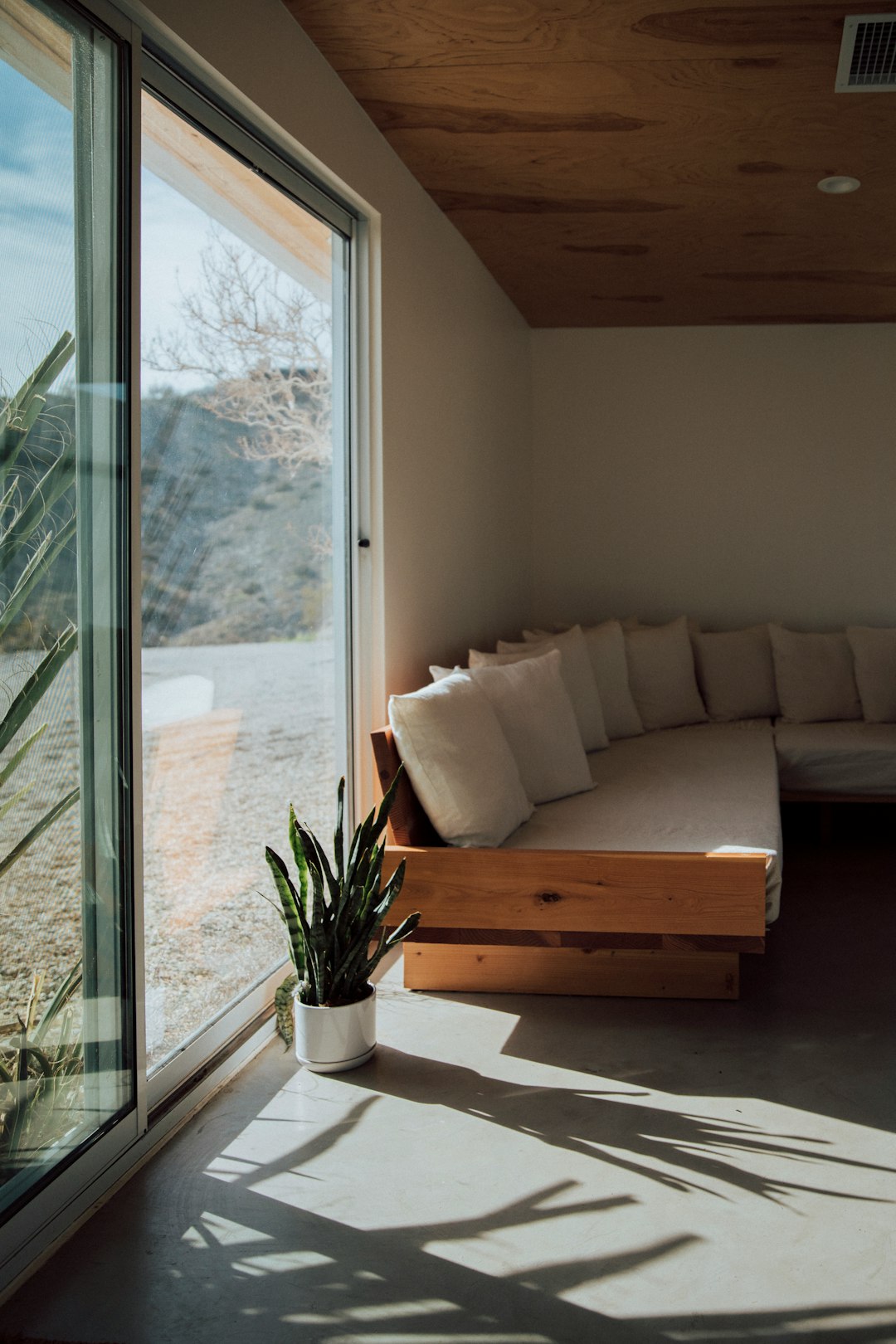
Joshua Tree and the surrounding Hi-Desert (Yucca Valley, Pioneertown, Landers) transformed from a quiet artist community into one of America’s most Instagram-driven STR markets. Properties succeed on aesthetic curation: outdoor soaking tubs, fire pits under open sky, A-frame silhouettes, and desert-modern interiors. Purchase prices remain modest at $300K–$650K, but renovation budgets of $80K–$150K are standard. That renovation spend is where cost segregation creates the most value.
Why Cost Segregation Hits Different in Joshua Tree
The typical Joshua Tree STR is a modest structure with a disproportionately large investment in personal property and site improvements. Custom outdoor structures, solar arrays, stock tank pools, concrete countertops, designer light fixtures, curated landscaping, and detached guest casitas: these are all short-life assets that cost seg reclassifies. California’s 13.3% top rate means each reclassified dollar saves roughly 50¢ in combined federal and state taxes.
Worked Example: Joshua Tree
A 2BR desert A-frame purchased for $400K with a $60K renovation. After $80K in land, the $320K adjusted basis includes $35K in 5-year assets (solar system, appliances, soaking tub, lighting, window treatments), $20K in 7-year assets (custom furniture, casework), and $50K in 15-year property (desert landscaping, fire pit area, gravel driveway, fencing, outdoor shower). That’s $105K reclassified into accelerated depreciation in Year 1.
Who Is Doing This in Joshua Tree
Joshua Tree investors tend to be design-conscious operators who pour money into the guest experience. That’s ideal for cost segregation because aesthetic upgrades (specialty tile, custom fixtures, outdoor living structures) are exactly the assets that qualify for accelerated treatment. If you spent $120K renovating a $300K purchase, a cost seg study captures depreciation value on those improvements that straight-line depreciation would spread over nearly three decades.
Joshua Tree bookings are typically two or three nights. When the average guest stay is 7 days or less, the property is generally not treated as a “rental activity” under the passive-loss rules, so if you also materially participate (for example, 100+ hours a year and more than anyone else), the depreciation can offset non-passive income such as wages. Desert properties make those hours easy to reach: cleaning, listing management, and upkeep on septic, wells, and cooling all count. Keep a time log; your CPA makes the final call.
CA Tax Considerations
- California’s top marginal rate of 13.3% stacks on top of the federal rate, pushing combined rates to ~50.3% for high-income investors. A $105K reclassification generates roughly $52K in Year-1 federal tax savings. California does not conform to federal bonus depreciation, so the California share of the deduction recovers over standard 5/7/15-year MACRS rather than in Year 1; the federal Year-1 benefit is unaffected (confirm specifics with your CPA). See California bonus depreciation: non-conformity rules. California investors generally get meaningfully more from every reclassified dollar than investors in zero-tax states.
- Bought in a prior year without a study? A look-back study lets your CPA catch up the missed depreciation on the current-year return by filing Form 3115, without amending prior returns. The federal bonus rate follows the year the property was placed in service (for example, 80% for 2023 and 60% for 2024), and California’s catch-up follows its own non-bonus rules.
- Your estimate $35,520 Estimated Year-1 tax savings
- $96,000 Accelerated
- 45x ROI on study
- Adjust Your Numbers →
Based on a $400,000 Joshua Tree property at the 37% federal bracket. Your actual results vary.
Want a number for a specific property here? Use the calculator. It’s pre-set with property-type defaults you can adjust to match your basis and tax bracket.
Common Joshua Tree Investment Properties
- 2BR desert modern A-frame with outdoor soaking tub
- 3BR adobe-style casita with detached guest studio
- Renovated homestead cabin with shipping container addition
Depreciable Features We Commonly See
- Custom desert landscaping and xeriscape (boulders, gravel beds, native plantings, drip irrigation), fire pits, and stargazing decks
- Septic systems, wells, and long gravel driveways and parking pads, which are common on desert lots and are generally 15-year land improvements
- Solar panel systems and off-grid battery storage
- Outdoor soaking tubs, stock tanks, and shower structures
- Specialty interior finishes like concrete counters and exposed beams
- Detached guest casitas and converted outbuildings
Yucca Valley, Twentynine Palms, Pioneertown, and Landers
The market spans the Morongo Basin, not only Joshua Tree itself. Yucca Valley is the more established town, with town water, paved roads, and more traditional ranch-style homes. Twentynine Palms, by the park’s north entrance, is generally the lowest-priced entry point, with a second source of demand from the Marine Corps Air Ground Combat Center. Pioneertown and Landers are smaller and more remote, often on larger parcels where driveways, fencing, septic, and wells make up a bigger share of the site work. The same classification approach applies across all of them; the dollar results scale with the depreciable basis.
What People Worry About (and What Actually Happens) “Will this trigger an IRS audit?”
No. Cost segregation is explicitly supported by IRS guidelines (Rev. Proc. 87-56) and the IRS Audit Techniques Guide for Cost Segregation. Tens of thousands of studies are filed every year. Our reports are designed to withstand scrutiny; that’s why they run 40+ pages with component-level documentation.
audit risk and cost segregation → “Is this aggressive tax strategy?”
Cost segregation is standard practice, not a loophole. The IRS has published formal guidance on how to do it correctly. Every Big 4 accounting firm offers it. We follow the same engineering-based methodology, just faster and at a fraction of the cost.
our engineering methodology → “What if I sell in a few years?”
When you sell, the accelerated 5- and 7-year (§1245) portion is recaptured at ordinary-income rates and the §1250 real-property portion at up to 25%. But if you 1031 exchange into another property, recapture is deferred indefinitely. For most investors, the upfront tax savings far outweigh the eventual recapture, especially when you factor in the time value of money. “My CPA hasn’t mentioned this.”
Most CPAs know about cost segregation but don’t proactively recommend it because they don’t do the engineering analysis in-house. That’s what we provide. Your CPA files the results; we email them a CPA-ready package with everything they need, and we answer any questions they have directly.
Why Cost Segregation Works for Short-Term Rentals
Short-term rentals contain a higher concentration of depreciable personal property than almost any other residential property type. Furniture, appliances, linens, kitchenware, electronics, decorative fixtures, and specialty items like hot tubs or game room equipment all qualify as 5-year property under the IRS MACRS classification system. This furniture, fixtures, and equipment (FF&E) package is often one of the larger 5-year items in the study.
Beyond interior components, site improvements add additional reclassification value. Driveways, walkways, patios, outdoor lighting, fencing, landscaping, and irrigation systems fall into the 15-year MACRS class rather than the default 27.5-year residential schedule. For STR properties with pools, outdoor kitchens, or fire pits, these components can represent a meaningful share of the total reclassified amount.
With 100% bonus depreciation permanently restored under the One Big Beautiful Bill Act (signed July 2025), every dollar reclassified into 5-year, 7-year, or 15-year MACRS classes is deductible in full in the first year. For STR owners who materially participate in their rental operation, these accelerated deductions can offset W-2 and business income, not just passive rental income.
Who This Example Applies To
- Airbnb, Vrbo, or short-term rental property owners
- Investors who materially participate in their STR operation (100+ hours/year)
- Taxpayers in the 32-37% federal bracket (where savings are most significant)
- Properties with furniture, appliances, and guest-ready finishes
If your property is a passive investment managed entirely by a third party, the accelerated depreciation may only offset passive income. If your property has minimal furnishings or you plan to sell within 1-2 years, the benefit may be reduced. Actual results vary based on property age, condition, renovations, and local construction costs.
Hear From a Short-Term Rental Owner Who Did This
This Airbnb investor ordered a cost segregation study and used the accelerated depreciation on their next tax return. Here’s what happened. CPA-Ready Guarantee Free revisions if your CPA flags a problem; refund if the report still can’t be used See a Sample Download Joshua Tree sample report
Compare: Airbnb / Short-Term Rental at Different Price Points
| Price | Accelerated | Tax Savings | Study Cost | ROI |
| $300K | $72,000 | $26,640 | $895 | 30x |
| $500K | $120,000 | $44,400 | $895 | 50x |
| $750K | $180,000 | $66,600 | $995 | 67x |
| $1M | $240,000 | $88,800 | $1,295 | 69x |
| $400K | $96,000 | $35,520 | $895 | 40x |
| $600K | $144,000 | $53,280 | $895 | 60x |
| $1.5M | $360,000 | $133,200 | $1,595 | 84x |
| $450K | $108,000 | $39,960 | $895 | 45x |
| $700K | $168,000 | $62,160 | $995 | 62x |
| $800K | $192,000 | $71,040 | $995 | 71x |
Compare: $400,000 Across Property Types
| Property Type | Accelerated | Tax Savings | Study Cost | ROI |
| Airbnb / Short-Term Rental | $96,000 | $35,520 | $895 | 40x |
| Rental Property | $64,000 | $23,680 | $895 | 26x |
Frequently Asked Questions What is a cost segregation study? ▼
A cost segregation study is an engineering-based analysis that reclassifies components of your property into shorter IRS depreciation categories (5, 7, and 15 years) instead of the default 27.5 or 39 years. This accelerates your depreciation deductions, reducing your tax bill in the early years of ownership. How does bonus depreciation work with Airbnb properties? ▼
Under the One Big Beautiful Bill Act (signed July 2025), 100% bonus depreciation is permanently restored for 2025 and beyond. This means every dollar of depreciation reclassified into 5-year, 7-year, or 15-year MACRS classes through cost segregation can be deducted in full in the first year you place the property in service. How long does a cost segregation study take? ▼
Our studies are delivered in 3-5 business days. You provide the property address, purchase price, and closing date; we handle everything else using assessor records, satellite imagery, and construction cost databases. Remote for most residential properties, with no tenant disruption.
Learn More About Cost Segregation
- What Is Cost Segregation? — Full explanation of how the study works and what you receive
- How Much Does a Cost Segregation Study Cost? — Pricing breakdown by property type and value
- What Percentage Gets Reclassified? — Representative accelerated depreciation rates by property type
- Cost Segregation for Short-Term Rentals — The STR material participation strategy explained
- Treasury Reg §1.469-1T(e)(3)(ii)(A) — The regulation behind the STR exception, with verbatim text and the 7-day calculation
Ready to See Your Actual Savings?
Want a number for a specific property here? Use the calculator. It’s pre-set with property-type defaults you can adjust to match your basis and tax bracket.
CPA use note: These figures estimate the size of the depreciation deduction. Whether the loss is usable in the current year depends on passive-activity rules, STR material participation, REPS status, entity structure, depreciable basis, and state conformity. Your CPA decides how and when it is applied. Specialty and site components (equipment, casework, docks, pools, arenas, tenant improvements, and similar) are only classified when you own them and they are included in the depreciable basis being studied.
How should Joshua Tree, CA investors choose a cost segregation provider?
For a Joshua Tree, CA investor buying a property in the $400,000 range, the choice of provider is a major controllable variable in the return. The IRS Audit Techniques Guide sets the quality characteristics an engineering-based study should meet — industry-standard construction cost data, MACRS classification, and component-level documentation — but it does not make every provider's work identical; rigor, cost, and turnaround still vary.
Traditional engineering studies often run several thousand dollars and can take several weeks, because they include on-site inspections, sales discovery calls, and scheduling overhead. The IRS Cost Segregation Audit Techniques Guide does not prescribe an on-site inspection as a standalone requirement; it sets out the quality characteristics of an engineering-based study — component-level classification, a documented and supportable cost derivation, and a clear audit trail — and describes how a physical inspection can contribute to meeting them.
Modern automated providers (such as Cost Seg Smart) deliver an engineering-based, IRS ATG-aligned study using property records, documents, photos, and recognized construction-cost data, typically from $495 and often by the next business day. For a Joshua Tree, CA investor at a high combined bracket, that cost and speed difference is meaningful. The CPA-Ready Guarantee (free revisions if your CPA flags a problem, and a refund if the report still can't be used) makes the decision essentially risk-free on the report itself.
The automated path is best-fit for owners who can provide closing documents and property photos online (no in-person visit required) and want the report in time to file the current year's return rather than the next one.
All Cost Seg Smart studies include the CPA-Ready Guarantee (free revisions if your CPA flags a problem, and a refund if the report still can't be used). Straightforward residential studies are often delivered the next business day and completed remotely; larger or more complex commercial studies take longer and may include an on-site observation.