
Phoenix’s affordable entry points, low land ratios, and year-round warm-weather tourism make it one of the highest-ROI markets for STR cost segregation. For Phoenix-metro neighborhood breakdowns and local STR scenarios, see phoenixcostseg.com.
- $120,000 Accelerated Depreciation
- $55,000 Est. Year-1 Tax Savings
- 69x Return on Study Cost
Want a number for a specific property here? Use the calculator — it’s pre-set with property-type defaults you can adjust to match your basis and tax bracket.
If you live in Phoenix-Scottsdale but invest elsewhere
Phoenix metro’s investor pool clusters across four cohorts that have grown dramatically through corporate relocation:
- Tech relocation cluster: Amazon HQ2 effectively in Tempe (~25,000 employees planned), Carvana HQ Tempe, GoDaddy Tempe, Opendoor Tempe, plus DoorDash, Cox Communications Phoenix, Microsoft Phoenix satellite. Senior engineers and product managers earn $300K–$1.2M+ with RSU. Many relocated from CA for the AZ 2.5% flat tax.
- Finance relocation: PayPal Scottsdale operations center, American Express Phoenix card services, Vanguard ACMC Scottsdale (asset management client services), Charles Schwab Phoenix. Senior finance professionals $300K–$1M+.
- Medical: Mayo Clinic Phoenix attending physicians (one of three Mayo destination clinics in the U.S.), Banner Health (largest healthcare system in AZ), HonorHealth Scottsdale, Phoenix Children’s. Senior attendings earn $400K–$1.2M+.
- University + research: ASU senior faculty with commercialization equity, plus ASU’s growing tech-transfer pipeline.
The combined marginal-rate stack:
- Federal: 37%
- NIIT: 3.8%
- Arizona: 2.5% (flat top rate, post-2023 flat-tax conversion)
- Combined: ~43.3%
AZ’s 2.5% flat rate is the lowest top-bracket state income tax of any state with an income tax (states with no income tax: TX, FL, WA, NV, TN, NH, AK, SD, WY). The flat-tax conversion from a progressive 2.59-4.5% system in 2023 was a major draw for CA tech relocations.
Verify with your CPA. Combined-rate math depends on filing status and AGI thresholds for NIIT.
Where Phoenix-Scottsdale investors are buying:
- Scottsdale, AZ: In-state premium resort STR; AZ 2.5% stays in stack.
- Sedona, AZ: Premium spiritual/wellness STR, drivable.
- Joshua Tree, CA: Closest out-of-state desert STR, 4-hour drive.
- Park City, UT: Premium ski STR; UT 4.85% flat.
- 30A / Destin, FL: Florida 0% state tax, premium beachfront; direct PHX flights.
Cost Segregation in Phoenix, AZ
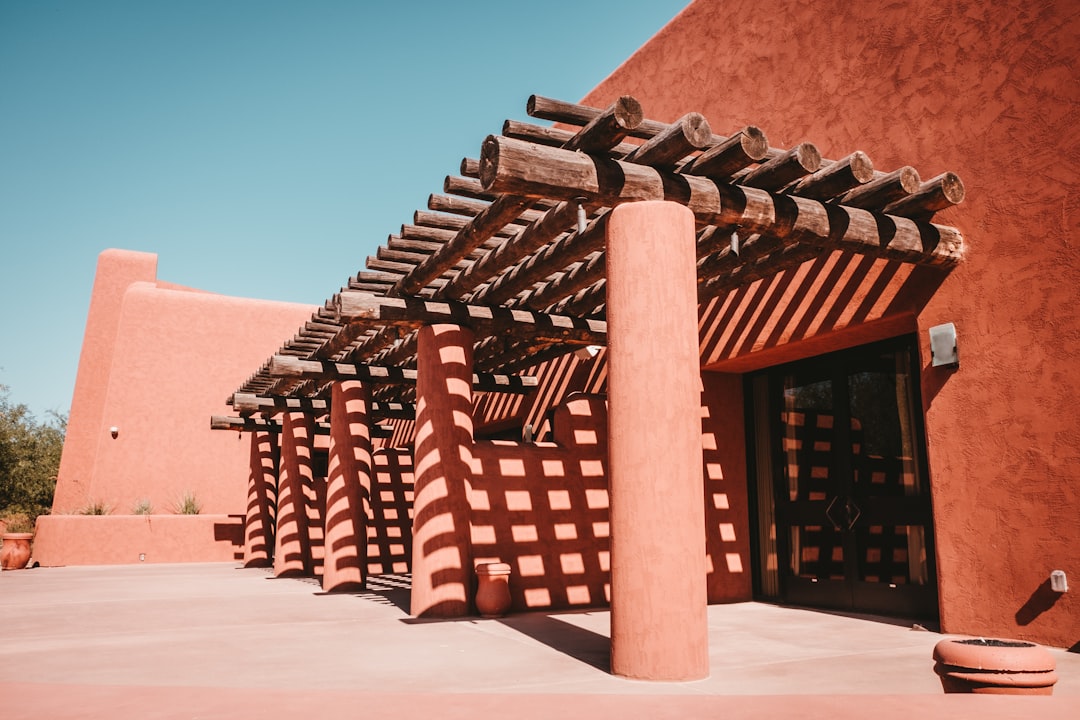
Phoenix Investment Snapshot
- Representative Price Range $350K–$700K
- Revenue Range $3,000–$7,000/mo gross STR revenue
- Common Property Types SFR, ranch, townhome
- State Income Tax 2.5%
- Top Neighborhoods Old Town Scottsdale, Arcadia, Downtown Phoenix
- Representative Year-1 Savings $25,000–$52,000
The Phoenix Market
The greater Phoenix metro (including Tempe, Mesa, Chandler, and Gilbert) draws STR demand from multiple sources: winter snowbirds, spring training baseball fans, golf tourists year-round, and a growing corporate event scene. Investors buying at $350K–$700K in the Arcadia corridor, Camelback East, and surrounding suburbs generally gross $40K–$80K annually. Summer pool-party bookings and monsoon-season visitors keep occupancy from falling off a cliff.
Why Cost Segregation Hits Different in Phoenix
Phoenix is structurally favorable for cost segregation because land values are low relative to building costs. When land represents 15–20% of the purchase price instead of the 30–40% common in coastal markets, more of your investment sits in the depreciable building. Nearly every Phoenix STR has a pool, which means pool shells, pumps, heaters, automated cleaning systems, and surrounding hardscaping all enter the accelerated MACRS classes. Desert landscaping, drip irrigation, block fencing, and covered patio structures add to the 15-year pool.
Worked Example — Phoenix
Take a $500K ranch-style home in the Arcadia area: a 3-bedroom with a pool, updated kitchen, covered patio, and desert-landscaped yard. The depreciable basis after land is roughly $420K. A cost segregation study reclassifies approximately $126K into shorter MACRS classes: about $88K in 5-year property (casework, countertops, appliances, flooring, bathroom fixtures, lighting, furniture, pool equipment) and $38K in 15-year property (pool shell, desert hardscaping, drip irrigation, block fencing, patio, driveway, landscape lighting).
Who Is Doing This in Phoenix
The typical Phoenix STR investor is a Midwest or California transplant who relocated to the Valley and kept a previous home as a rental, or a first-time investor drawn by entry prices that are half of what comparable markets in California cost. Many self-manage and easily qualify for material participation. The accessible price points mean investors often own 2–3 Phoenix STRs, stacking cost segregation studies across the portfolio to shelter a larger portion of W-2 income.
AZ Tax Considerations
- Arizona has a flat 2.5% state income tax, one of the lowest in the country. Arizona does not conform to federal §168(k) bonus depreciation (A.R.S. §43-1021 add-back). The federal Year-1 deduction is fully available; the Arizona share is not accelerated and recovers over standard 5/7/15-year MACRS (deferred, not lost). The Year-1 cash benefit comes from the federal deduction. See bonus depreciation by state.
- Your estimate $51,000 Estimated Year-1 federal tax savings (AZ share deferred over MACRS)
- $120,000 Accelerated
- 69x ROI on study
- Adjust Your Numbers →
Based on a $500,000 Phoenix property at the 37% federal bracket. Your actual results vary.
Want a number for a specific property here? Use the calculator — it’s pre-set with property-type defaults you can adjust to match your basis and tax bracket.
Common Phoenix Investment Properties
- Ranch-style homes with pools in Arcadia and Camelback corridors
- Modern builds near Old Town Scottsdale entertainment district
- Affordable starter STRs in Mesa and Gilbert
- Mid-century renovations in the Willo and Encanto historic districts
Depreciable Features We Commonly See
- Pool equipment, automated cleaning systems, and pool fencing
- Desert landscaping with drip irrigation and landscape lighting
- Covered patio structures and misting systems
- Updated flooring, casework, and appliance packages
- Security systems and smart-lock entry hardware
What People Worry About (and What Actually Happens) “Will this trigger an IRS audit?”
No. Cost segregation is explicitly supported by IRS guidelines (Rev. Proc. 87-56) and the IRS Audit Techniques Guide for Cost Segregation. Tens of thousands of studies are filed every year. Our reports are designed to withstand scrutiny: that’s why they run 40+ pages with component-level documentation.
audit risk and cost segregation → “Is this aggressive tax strategy?”
Cost segregation is standard practice, not a loophole. The IRS has published formal guidance on how to do it correctly. Every Big 4 accounting firm offers it. We follow the same engineering-based methodology, just faster and at a fraction of the cost.
our engineering methodology → “What if I sell in a few years?”
When you sell, the accelerated 5- and 7-year (§1245) portion is recaptured at ordinary-income rates and the §1250 real-property portion at up to 25%. But if you 1031 exchange into another property, recapture is deferred indefinitely. For most investors, the upfront tax savings far outweigh the eventual recapture, especially when you factor in the time value of money. “My CPA hasn’t mentioned this.”
Most CPAs know about cost segregation but don’t proactively recommend it because they don’t do the engineering analysis in-house. That’s what we provide. Your CPA files the results: we email them a CPA-ready package with everything they need, and we answer any questions they have directly.
Why Cost Segregation Works for Short-Term Rentals
Short-term rentals contain a higher concentration of depreciable personal property than almost any other residential property type. Furniture, appliances, linens, kitchenware, electronics, decorative fixtures, and specialty items like hot tubs or game room equipment all qualify as 5-year property under the IRS MACRS classification system. This furniture, fixtures, and equipment (FF&E) package is often one of the larger 5-year items in the study.
Beyond interior components, site improvements add additional reclassification value. Driveways, walkways, patios, outdoor lighting, fencing, landscaping, and irrigation systems fall into the 15-year MACRS class rather than the default 27.5-year residential schedule. For STR properties with pools, outdoor kitchens, or fire pits, these components can represent a meaningful share of the total reclassified amount.
With 100% bonus depreciation permanently restored under the One Big Beautiful Bill Act (signed July 2025), every dollar reclassified into 5-year, 7-year, or 15-year MACRS classes is deductible in full in the first year. For STR owners who materially participate in their rental operation, these accelerated deductions can offset W-2 and business income, not just passive rental income.
Who This Example Applies To
- Airbnb, Vrbo, or short-term rental property owners
- Investors who materially participate in their STR operation (100+ hours/year)
- Taxpayers in the 32-37% federal bracket (where savings are most significant)
- Properties with furniture, appliances, and guest-ready finishes
If your property is a passive investment managed entirely by a third party, the accelerated depreciation may only offset passive income. If your property has minimal furnishings or you plan to sell within 1-2 years, the benefit may be reduced. Actual results vary based on property age, condition, renovations, and local construction costs.
Hear From a Short-Term Rental Owner Who Did This
This Airbnb investor ordered a cost segregation study and used the accelerated depreciation on their next tax return. Here’s what happened. CPA-Ready Guarantee Free revisions if your CPA flags a problem; refund if the report still can’t be used See a Sample Download Phoenix sample report
Compare: Phoenix Airbnb at Different Price Points
| Price | Accelerated | Tax Savings | Study Cost | ROI |
| $300K | $72,000 | $26,640 | $895 | 30x |
| $500K | $120,000 | $55,000 | $895 | 61x |
| $750K | $180,000 | $66,600 | $995 | 67x |
| $1M | $240,000 | $88,800 | $1,295 | 69x |
| $400K | $96,000 | $35,520 | $895 | 40x |
| $600K | $144,000 | $53,280 | $895 | 60x |
| $1.5M | $360,000 | $133,200 | $1,595 | 84x |
| $450K | $108,000 | $39,960 | $895 | 45x |
| $700K | $168,000 | $62,160 | $995 | 62x |
| $800K | $192,000 | $71,040 | $995 | 71x |
Compare: $500,000 Across Property Types
| Property Type | Accelerated | Tax Savings | Study Cost | ROI |
| Airbnb / Short-Term Rental | $120,000 | $55,000 | $895 | 61x |
| Rental Property | $80,000 | $29,600 | $895 | 33x |
| Duplex | $88,000 | $32,560 | $995 | 33x |
| Condo | $68,000 | $25,160 | $895 | 28x |
| Triplex | $88,000 | $32,560 | $995 | 33x |
Frequently Asked Questions What is a cost segregation study? ▼
A cost segregation study is an engineering-based analysis that reclassifies components of your property into shorter IRS depreciation categories (5, 7, and 15 years) instead of the default 27.5 or 39 years. This accelerates your depreciation deductions, reducing your tax bill in the early years of ownership. Why do Airbnbs get higher cost segregation deductions? ▼
Short-term rentals are generally furnished with furniture, appliances, electronics, linens, kitchenware, and décor, all of which qualify as 5-year personal property under MACRS. This FF&E (furniture, fixtures, and equipment) can be a meaningful share of the property’s depreciable basis, significantly increasing the accelerated depreciation amount compared to unfurnished long-term rentals. How does bonus depreciation work with Airbnb properties? ▼
Under the One Big Beautiful Bill Act (signed July 2025), 100% bonus depreciation is permanently restored for 2025 and beyond. This means every dollar of depreciation reclassified into 5-year, 7-year, or 15-year MACRS classes through cost segregation can be deducted in full in the first year you place the property in service.
Learn More About Cost Segregation
- What Is Cost Segregation?: Full explanation of how the study works and what you receive
- How Much Does a Cost Segregation Study Cost?: Pricing breakdown by property type and value
- What Percentage Gets Reclassified?: Representative accelerated depreciation rates by property type
- Cost Segregation for Short-Term Rentals: The STR material participation strategy explained
Ready to See Your Actual Savings?
Want a number for a specific property here? Use the calculator — it’s pre-set with property-type defaults you can adjust to match your basis and tax bracket.
Cost segregation data for Phoenix, AZ investors
The representative (median) outcome across 50 engine-modeled property scenarios matched to the Phoenix, AZ investor profile. Year-1 savings shown are the federal benefit (37% + 3.8% NIIT). This state does not conform to federal bonus depreciation, so the state share is not accelerated; it recovers over standard MACRS.
Representative scenarios modeled via Cost Seg Smart's proprietary
engine — IRS ATG-aligned methodology, industry-standard 2026 construction cost data base costs,
calibrated metro multipliers. n=50 fixtures matched to
Phoenix, AZ investor profile. Not derived from individual
client returns. Methodology v1.0.0, generated
May 2026 (reproducible seed: phoenix-az_v1_2026-05-17).
Year-1 savings shown are the federal benefit only (37% + 3.8% NIIT). This state does not conform to federal §168(k) bonus depreciation, so the state share is deferred over standard MACRS rather than realized in Year 1; the federal benefit is unaffected. Confirm specifics with your CPA.
Tax law current as of July 2026. Federal: OBBBA restored 100% bonus depreciation under §168(k), permanent for property both acquired and placed in service after January 19, 2025 (property acquired or placed in service on or before that date remains under the prior 40% phase-down); 2026+ stays 100%. State conformity varies; verify with your CPA.
CPA use note: These figures estimate the size of the depreciation deduction. Whether the loss is usable in the current year depends on passive-activity rules, STR material participation, REPS status, entity structure, depreciable basis, and state conformity. Your CPA decides how and when it is applied. Specialty and site components (equipment, casework, docks, pools, arenas, tenant improvements, and similar) are only classified when you own them and they are included in the depreciable basis being studied.
How should Phoenix, AZ investors choose a cost segregation provider?
For a Phoenix, AZ investor buying a property in the $500,000 range, the choice of provider is a major controllable variable in the return. The IRS Audit Techniques Guide sets the quality characteristics an engineering-based study should meet — industry-standard construction cost data, MACRS classification, and component-level documentation — but it does not make every provider's work identical; rigor, cost, and turnaround still vary.
Traditional engineering studies often run several thousand dollars and can take several weeks, because they include on-site inspections, sales discovery calls, and scheduling overhead. The IRS Cost Segregation Audit Techniques Guide does not prescribe an on-site inspection as a standalone requirement; it sets out the quality characteristics of an engineering-based study — component-level classification, a documented and supportable cost derivation, and a clear audit trail — and describes how a physical inspection can contribute to meeting them.
Modern automated providers (such as Cost Seg Smart) deliver an engineering-based, IRS ATG-aligned study using property records, documents, photos, and recognized construction-cost data, typically from $495 and often by the next business day. For a Phoenix, AZ investor at a high combined bracket, that cost and speed difference is meaningful. The CPA-Ready Guarantee (free revisions if your CPA flags a problem, and a refund if the report still can't be used) makes the decision essentially risk-free on the report itself.
The automated path is best-fit for owners who can provide closing documents and property photos online (no in-person visit required) and want the report in time to file the current year's return rather than the next one.
All Cost Seg Smart studies include the CPA-Ready Guarantee (free revisions if your CPA flags a problem, and a refund if the report still can't be used). Straightforward residential studies are often delivered the next business day and completed remotely; larger or more complex commercial studies take longer and may include an on-site observation.