The Florida Gulf Coast (Naples, Marco Island, Bonita Springs, Sarasota, Longboat Key, Sanibel, Captiva, Venice) is the highest-quality snowbird investor market in the country. The combination of $1.1M–$3.4M typical condo and SFR pricing, beachfront 15-year MACRS site improvements, full FF&E packages calibrated to high-end seasonal renters, the post-Hurricane Ian (September 2022) rebuild documentation that has reset cost basis on a substantial portion of the Sanibel/Captiva and Fort Myers Beach inventory, and Florida’s zero state income tax produces cost segregation economics that rival Aspen, Maui, and Pacific Coast markets at meaningfully lower per-property prices.

- $215,000 Accelerated Depreciation
- $128,760 Est. Year-1 Federal Savings
- 162x Return on Study Cost
Want a number for a specific Naples or Sarasota property? Use the calculator. It’s pre-set with property-type defaults you can adjust to match your basis and tax bracket.
Cost Segregation in Naples + Sarasota, FL
Naples + Sarasota Investment Snapshot
- Representative Price Range $725K–$1.4M (Sarasota / Bonita Springs / Venice condos and SFRs); $1.2M–$2.8M (Old Naples / Park Shore / Pelican Bay / Longboat Key); $2.5M–$8M+ (beachfront SFRs, Aqualane Shores, Casey Key)
- Revenue Range $4,500–$12,500/peak season week (January-March); $145K–$385K annual gross on top-tier seasonal rentals
- Common Property Types Old Naples cottage, Park Shore beachfront condo, Pelican Bay condo, Marco Island Gulf-front, Sarasota Lido Key condo, Longboat Key resort condo, Sanibel/Captiva post-Ian rebuild, Venice 55+ community SFR
- State Income Tax 0%
- Effective Property Tax 0.83-1.05% (Collier, Lee, Sarasota, Manatee, Charlotte counties)
- STR Regulation Marco Island and Sarasota County permissive; Naples requires registration; Lee County (Sanibel/Captiva/Fort Myers Beach) regulating post-Ian
- Top Submarkets Old Naples, Park Shore, Pelican Bay, Marco Island, Lido Key, Siesta Key, Longboat Key
- Representative Year-1 Federal Savings $58,000–$185,000
The Naples + Sarasota Market
The Florida Gulf Coast investor map runs ~120 miles from Bonita Springs and Naples in the south through Fort Myers, Sanibel, Captiva, Venice, Sarasota, Longboat Key, and Anna Maria Island in the north. The market is anchored by snowbird investors, primarily from the Northeast (NY, NJ, CT, MA, PA), Midwest (IL, OH, MI, MN), and Toronto/Ontario, who acquire seasonal-rental property as both lifestyle asset and rental income. The Gulf Coast distinguishes from the East Coast Florida market (Miami, Fort Lauderdale) by quieter, more upscale, family-and-retiree-oriented positioning, and from the Florida Panhandle (Destin, Panama City Beach) by lower-density development and higher per-unit prices.
Old Naples and the Naples Beach corridor form the highest-priced sub-market. Old Naples (the historic core south of 5th Avenue South) runs $1.8M–$5M for charming 1920s-1960s cottages and remodeled mid-century homes within walking distance of the pier and 5th Avenue South dining. Park Shore and Pelican Bay (the master-planned communities between Old Naples and Bonita Springs) run $1.2M–$3.4M for beachfront and beach-adjacent condos in the towers along Gulf Shore Boulevard. Aqualane Shores, the canal-front yachting community, runs $3M–$15M+ for waterfront SFRs with private docks. Naples STR regulation requires registration but is otherwise permissive: most resort-zoned condos and beachfront properties have unrestricted rental rights.
Marco Island sits 12 miles south of Naples, connected by SR-951. Properties run $725K–$1.6M for 2-3BR Gulf-front condos in the towers along Collier Boulevard and South Beach. SFRs in the inland zones run $625K–$1.2M; canal-front homes run $1.4M–$3.5M. Marco STR regulation is permissive, with strong rental performance for snowbird investors targeting January-March bookings.
Bonita Springs and Bonita Bay form the upper-mid corridor. Bonita Bay is a master-planned gated community with multiple golf courses, beach club, and amenity-rich condo developments. Properties run $1.1M–$2.4M for 2-3BR condos and $1.4M–$3.5M for SFRs. The investor profile here skews more toward part-year residents who use the property 4-5 months personally and rent the remaining season.
Sarasota and the Lido Key / Siesta Key corridor form the second major Gulf Coast investor market. Sarasota proper runs $725K–$1.4M for downtown condos and Bayfront properties. Lido Key (the barrier island connected via the John Ringling Bridge) runs $1.1M–$2.5M for beachfront condos. Siesta Key (with its quartz-sand beach consistently ranked among the top in the country) runs $1.2M–$3.2M for Gulf-front condos and SFRs. St. Armand’s Circle and the surrounding St. Armand’s Key SFRs run $1.6M–$5M+. Sarasota County STR regulation is among the most permissive in coastal Florida: minimal restrictions, no occupancy caps.
Longboat Key is the 11-mile barrier island connecting Sarasota north to Anna Maria Island. Longboat properties run $1.4M–$4M for beachfront condos and $2.5M–$8M+ for Gulf-front SFRs. The Resort at Longboat Key Club, Beachplace, and Sea Cloister are the dominant condo developments. Strong year-round STR demand with peak season January-March.
Sanibel and Captiva (post-Ian) are recovering from Hurricane Ian (September 2022) which devastated the islands. Properties that survived or have been rebuilt are operating again under Lee County’s evolving STR regulatory framework. Pre-Ian Sanibel pricing was $700K–$2M for 2-3BR Gulf-front condos and $1.4M–$5M for SFRs; current 2026 pricing is meaningfully discounted on properties requiring rebuild work, premium-priced on properties that survived intact. For investors, post-Ian rebuild scope produces some of the cleanest cost segregation documentation in the country: every rebuild has line-item invoices, permit records, and engineering reports flowing through Lee County’s permitting system.
Venice and Boca Grande form the southernmost Sarasota County / Charlotte County markets. Venice runs $625K–$1.4M for 55+-community SFRs and beachfront condos. Boca Grande, the elite Gasparilla Island community, runs $1.8M–$8M+: small inventory, ultra-high-end clientele, very limited rental.
Why Cost Segregation Hits Different on Florida’s Gulf Coast
The Naples + Sarasota cost-seg story is driven by four structural features.
Snowbird-calibrated FF&E density runs unusually high. A typical Park Shore or Lido Key beachfront condo is furnished to “one-week-a-year executive turnover” standards: complete bedroom packages with Stearns & Foster mattress sets in every bedroom, full living-room and dining-room sets, premium kitchen appliance package (Sub-Zero/Wolf in higher-end Naples; Bosch/Thermador in mid-tier Sarasota), ample dishware/cookware/glassware to support 6-8 person family rentals, full linen sets for every bed and bath (4+ sets each), in-unit washer/dryer, beach gear inventory (chairs, umbrellas, kayaks, paddleboards, beach cart), full Florida-living lanai/balcony furniture sets, smart-home Lutron and Nest packages, and complete decor calibrated to the Florida-coastal aesthetic. On a $1.45M Naples beachfront condo, the 5-year FF&E bucket alone routinely runs $58K-$78K, comparable to high-end Maui or Tahoe condos.
Post-Hurricane Ian rebuild documentation is extreme on affected inventory. For Sanibel, Captiva, Fort Myers Beach, Estero Island, Bonita Beach, and select Sarasota County properties hit by Ian (September 2022) or Idalia (August 2023), the post-storm rebuild scope provides documentation that exceeds anything we’d reconstruct from a pre-storm property. Roof replacement (mandatory for most damaged properties under post-Ian Lee County code revisions), drywall and flooring (often the entire first floor in coastal V-zones), kitchen and bath casework and appliance replacement, exterior siding (often switched from older materials to Hardiplank or composite), HVAC replacement (corrosion-resistant marine-grade for Gulf-side properties), interior FF&E replacement, dune-mitigation hardscape and landscape, dock and boat-lift reconstruction. Ian-rebuilt Sanibel/Captiva/Fort Myers Beach properties can land at the high end of residential outcomes because every component has line-item invoice documentation from the rebuild scope.
Beachfront condo amenity-share components are substantial. Most Naples Park Shore, Pelican Bay, Sarasota Lido Key, and Longboat Key condos own a fractional share of the building’s pool deck, beach club, fitness center, parking garage, common-area landscape, and exterior signage. Engineering-based cost segregation identifies and reclassifies the unit’s pro-rata share of these components into 15-year MACRS, a category that conventional CPA depreciation software generally misses entirely. On a $1.45M Park Shore beachfront condo, the pro-rata 15-year amenity-share component alone routinely clears $52K-$78K of depreciable basis.
Florida zero-state-tax math is unusually clean. Florida has no state income tax. Cost segregation savings flow entirely through the federal return, with no state offset, no state recapture, no state conformity issues, no extra forms. For an investor in the 37% federal bracket, every reclassified dollar saves 37 cents in Year 1 federal taxes: clean, simple math that competes with the tightest state-tax structures in the country (TX, WA, NV, NH, SD, WY, AK, TN).
Worked Example — Naples
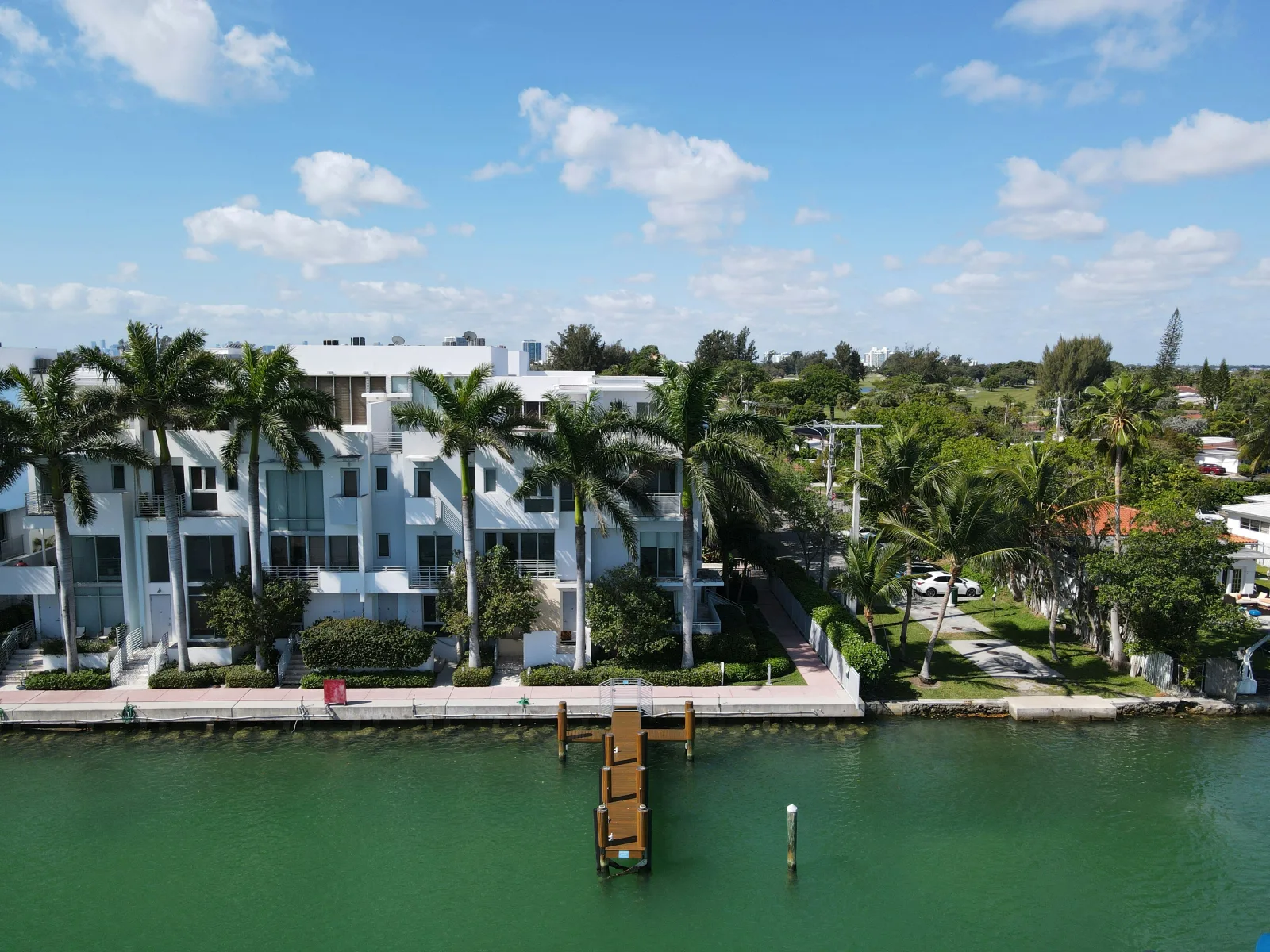
A 2BR/2BA fifth-floor beachfront condo at Park Shore Tower, on Gulf Shore Boulevard North, 2.5 miles north of 5th Avenue South. Direct unobstructed Gulf views, full west-facing lanai with sunset orientation, walking-distance access to Park Shore Beach via the resort path. Acquired in fall 2024 for $1.45M. Park Shore Tower is permanently STR-eligible under Naples zoning and operates as a high-end seasonal rental through Naples Realty’s distribution network and direct Airbnb/VRBO platforms. Average peak-season rates of $725/night January-March and $385/night summer, generating roughly $185K gross annual revenue on 240 booked nights.
After pulling $215K of land value (Park Shore Tower’s HOA-allocated common-area land share is roughly 14.8% of unit value, verified against current Park Shore master deed) and $135K of structural shell allocation in 27.5-year residential, the depreciable basis lands at $1.175M.
The cost segregation study identifies $68K in 5-year property, the complete FF&E set: king mattress sets in two bedrooms (Stearns & Foster), bedroom furniture (frames, nightstands, lamps, dressers, decor), living-room set (sectional sofa, two accent chairs, coffee table, side tables), dining set for 6, lanai dining set for 4 plus two lounge chairs, 3 smart TVs, full Sub-Zero/Wolf kitchen appliance package, small appliances and complete cookware/dishware/glassware service for 8, bathroom Frette linens (3 sets per bath), in-unit washer/dryer, lanai ceiling fans and outdoor lighting, beach gear inventory (chairs × 4, umbrellas × 2, kayaks × 2, paddleboards × 2, beach cart, snorkel sets, boogie boards, sandcastle equipment), smart-home Nest/Ring/smart-lock package. $9K in 7-year property: built-in master bedroom closet system, kitchen banquette, lanai built-in storage. $138K in 15-year property: the unit’s pro-rata share of Park Shore Tower’s two pool decks, beach club facilities, fitness center, paved walkway system, parking garage, common-area tropical landscape (verified against the master schedule of values), plus unit-level lanai improvements (ceramic-tile flooring, retractable shade systems, lanai ceiling fans and lighting, lanai built-in dining storage). Plus marine-grade HVAC components, hurricane-rated impact windows and doors (post-2002 Naples Building Code), and the building’s storm-shutter system pro-rata allocation.
Total reclassified: $348K, or roughly 29.6% of the depreciable basis. At 37% federal and 0% Florida, that is $128,760 in Year-1 federal savings.
The STR-positioning matters for material participation. Park Shore Tower rentals operate on weekly Saturday-to-Saturday turnover during peak season and a mix of nightly/weekly during shoulder, with overall average stay running 5.4 days, comfortably under the 7-day STR special test threshold. Material participation is established through the 100-hours-and-no-one-spending-more test. The owner-investor (a Manhattan-based BigLaw partner with $1.4M+ AGI in the 37% federal bracket) clears the 100-hour test through guest communication, peak-season turnover-day quality control during her quarterly Naples visits, supply runs, marketing-listing maintenance, and direct property management coordination with Naples Realty’s local operations team. With material participation established, the federal accelerated deductions offset BigLaw partnership income directly.
Who Is Doing This in Naples + Sarasota
The Naples + Sarasota investor profile is structurally different from most US STR markets, driven by snowbird demographics, second-home + rental hybrid use patterns, and the high concentration of high-AGI Northeast and Midwest professionals who hold Florida property as both lifestyle asset and rental income.
The Northeast snowbird investor is the dominant archetype. NYC, Long Island, North Jersey, Greenwich CT, Boston North Shore, and Philadelphia Main Line professionals (generally BigLaw partners, hedge fund and PE professionals, surgeons, and senior corporate executives) with $400K-$2M+ household income, federal 35-37% bracket. They acquire Naples or Sarasota property as a primary winter-second-home (3-4 months personal use) plus seasonal rental during the remaining months. Increasingly, post-2020 Florida tax-domicile relocations have shifted this profile from snowbird to permanent FL resident with rental income on the original FL property.
The Midwest snowbird investor runs the same playbook from Chicago, Detroit, Cleveland, Columbus, Cincinnati, Indianapolis, Minneapolis. Annual income $300K-$1.5M, federal 35-37% bracket. Slightly more focused on Marco Island, Bonita Springs, Venice, and Sarasota than the Naples premium tier, reflecting pricing alignment with Midwest income levels.
The Toronto / Ontario investor represents a meaningful slice of Naples and Sarasota Gulf-front condo transactions, particularly post-COVID with the increased Canadian winter migration. These investors hold through Florida LLCs and require US-CPA-coordinated cost segregation under FIRPTA frameworks.
The Florida tax-domicile relocator is the fourth and growing profile: investors who established Florida residency post-2018 (driven by SALT cap and post-COVID relocation) and now hold their original Florida property as rental income while either acquiring a new primary home elsewhere in FL or maintaining the original. The cost segregation Year-1 federal savings on these properties combine with Florida’s clean tax structure for unusually high after-tax cash flow.
The post-Ian Sanibel / Captiva / Fort Myers Beach rebuild investor is a specialized fifth profile. Investors who held property through Ian, completed substantial rebuilds in 2023-2026, and are now operating as STRs again. The rebuild scope provides cost segregation documentation that can put reclassification at the high end of residential outcomes.
FL Tax Considerations
- Florida has no state income tax. Cost segregation savings are entirely federal: no state recapture, no state conformity issues, no extra forms. A $348K reclassification at the 37% federal bracket = $128,760 in year-one federal savings.
- Florida property tax in Collier (Naples), Lee (Bonita / Sanibel / Fort Myers Beach), Sarasota, Manatee (Longboat Key), and Charlotte counties runs effective 0.83-1.05%, which is moderate. Save Our Homes (3% annual cap on assessed value increases for homestead properties) does not apply to investment rentals; non-homestead properties are subject to 10% annual cap on assessed value increases.
- Florida sales tax (6%) plus county tourist development tax (generally 5-6%) applies to STR rental income. Total occupancy tax in Naples/Sarasota runs roughly 11-12% combined. Separate from cost segregation analysis.
- 1031 exchanges fully recognized. Florida’s lack of state income tax simplifies the multi-state §1031 exchange math meaningfully.
- For Canadian (Toronto/Ontario) investors holding through Florida LLCs, FIRPTA withholding (15% on disposition) and Form W-8 ECI elections drive different cost-seg optimization patterns. We coordinate with US-CPA partners experienced in FIRPTA structures.
- Hurricane insurance (windstorm + flood) on Gulf-front coastal properties runs $4K-$18K/year depending on building height, age, and location. Insurance is unrelated to depreciation but shapes which properties pencil as rentals.
Common Naples + Sarasota Investment Properties
- 2-3BR Old Naples cottage walking distance to 5th Avenue South
- 2-3BR Park Shore beachfront condo (Park Shore Tower, Lutgert Park Shore, Le Parc, Le Ciel Park Tower)
- 2-3BR Pelican Bay condo (Crayton Towers, Marbella Pelican Bay, Le Provence, Cap Ferrat)
- Marco Island Gulf-front condo (Cape Marco, Hideaway Beach, Marco Beach Resort)
- Bonita Springs / Bonita Bay condo (Bay Pointe, Sandpiper at Bonita Bay, Esperia at Bonita Bay)
- 2-3BR Sarasota Lido Key beachfront condo (Beach Residences at Lido Key, Aria Lido Key)
- 2-3BR Sarasota Siesta Key Gulf-front condo (Crescent Beach Club, Crystal Sands, Sea Crystal)
- 2-4BR Longboat Key resort condo (Longboat Key Club, Beachplace, Sea Cloister, Promenade)
- Sanibel / Captiva post-Ian rebuild condo or SFR
- Venice 55+-community SFR or beachfront condo (Lake of the Woods, Venetian Falls, Pelican Pointe)
Depreciable Features We Commonly See on Florida’s Gulf Coast
- Hurricane-rated impact windows and doors (post-2002 Florida Building Code, accelerated post-Ian)
- Wind-rated metal-clad roofing systems
- Storm-shutter packages (manual, motorized, or accordion-style)
- Marine-grade exterior finishes (powder-coated aluminum, stucco, Hardiplank)
- Marine-grade HVAC and ventilation (corrosion-resistant condenser coils)
- Salt-air-resistant interior finishes (premium hardware, PVC trim)
- Lanai ceramic-tile flooring with retractable shade systems
- Lanai ceiling fans and outdoor lighting
- Heated saltwater pools with equipment pads (in SFR properties)
- Pool decks with paver hardscape
- Outdoor kitchens with built-in BBQs (in SFR properties)
- Tropical specimen landscape (palms, hibiscus, plumeria, sea grape)
- Drip irrigation with rain sensors
- Beachfront condo amenity-share components (pro-rata)
- Beach-access infrastructure (boardwalks, dune crossovers, outdoor showers)
- Boat docks and lifts (waterfront SFRs)
- Smart-home Lutron lighting, Nest thermostats, Ring/Arlo security
- Beach gear inventory (chairs, umbrellas, kayaks, paddleboards)
- Stearns & Foster mattress sets in every bedroom
- Premium kitchen appliance packages (Sub-Zero/Wolf in higher-end; Bosch/Thermador mid-tier)
What People Worry About (and What Actually Happens)
“Hurricane Ian destroyed half of Sanibel. How does cost seg work on a rebuild?”
Post-Ian rebuilds produce the highest accelerated percentage we see on Florida properties. Properties with documented post-storm reconstruction (roof, drywall, flooring, kitchen and bath, HVAC, FF&E, exterior siding, dune mitigation) have line-item invoices flowing through Lee County’s permitting system that provide engineering-grade documentation for every depreciable component. Ian-rebuilt Sanibel/Captiva/Fort Myers Beach properties can land at the high end of residential outcomes because the rebuild scope eliminates the documentation uncertainty that limits cost-seg precision on older un-rebuilt properties. Document everything: insurance claim files, contractor invoices, permit records, engineer-stamped reports. Renovation and partial-disposition rules →
“My Naples condo HOA fees are $25K/year. Does that affect cost seg?”
HOA fees are operating expenses, not depreciable basis, so they don’t directly affect the cost segregation reclassification. What HOA fees DO affect is the property’s underlying cash flow economics, which influences whether you hold the property long enough to benefit from cost segregation. For high-HOA Florida coastal condos (where fees can run $1,500-$3,000/month), the cost-seg Year-1 federal savings often exceed the entire annual HOA cost, making the study a clear positive ROI even before considering ongoing accelerated depreciation in subsequent years. Separately, the HOA’s master deed allocation determines your unit’s depreciable share of common-area amenities (pool decks, beach club, fitness center, parking garage); engineering-based cost segregation captures these as 15-year MACRS components, which conventional CPA depreciation software generally misses entirely.
“Florida property insurance is killing our cash flow. Should we still cost-seg?”
Florida coastal hurricane and flood insurance costs are real (often $8K-$18K/year on Gulf-front properties, $4K-$10K inland) but they’re operating expenses that don’t affect the cost segregation engineering analysis. The cost-seg Year-1 federal savings on a $1.45M Park Shore condo run $128K; that single-year tax benefit covers 7-15 years of insurance premiums. The insurance cost question is a hold-period viability question (does the property pencil as a rental), not a cost-seg question. If the property pencils on rental income net of HOA + insurance + property tax + management, cost segregation enhances the after-tax cash flow substantially. If it doesn’t pencil pre-cost-seg, cost segregation Year-1 federal savings can fund 6-12 months of operating costs, but the long-term economics still need to work.
Why Cost Segregation Works for Snowbird Seasonal Rentals
The Naples + Sarasota seasonal-rental model is a distinct asset class: properties that operate as full-service STRs for 4-9 months per year (depending on snowbird patterns) and as part-time second homes for 3-4 months. The cost segregation math reflects this hybrid use pattern, with material participation generally established through the §469 STR special test (sub-7-day average stay) during the rental period.
A typical Naples Park Shore condo carries: a 5-year FF&E bucket of $58K-$78K (driven by snowbird-grade furnishing standards and weekly turnover demands), a 7-year personal property bucket of $7K-$12K (built-in millwork, kitchen banquettes, custom closet systems), and a 15-year MACRS bucket of $115K-$155K (driven primarily by the unit’s pro-rata share of building amenities: pool decks, beach club, fitness center, parking garage, plus marine-grade HVAC, lanai infrastructure, and hurricane-rated exterior components). Combined: ~30% of the depreciable basis reclassifies into accelerated MACRS classes.
Florida’s zero state income tax is the structural multiplier. Every reclassified dollar at 37% federal saves 37 cents in Year 1 with no state offset, no state recapture, no conformity workaround. For a Park Shore condo investor with $1.5M AGI, the $128K Year-1 federal savings on a $1.45M acquisition represents ~9% of acquisition cost recovered in tax savings, comparable to or better than any high-tax state market.
With 100% bonus depreciation permanently restored under the One Big Beautiful Bill Act (signed July 2025), every reclassified dollar is deductible in the first year. For owner-managed Naples + Sarasota investors who clear material participation under the STR special test, these deductions offset W-2 income, partnership income, or 1099 consulting income directly without REPS qualification.
Who This Example Applies To
- Old Naples, Park Shore, Pelican Bay, or Aqualane Shores beachfront condo or SFR investors
- Marco Island, Bonita Springs, Bonita Bay condo or SFR investors
- Sarasota Lido Key, Siesta Key, Longboat Key beachfront investors
- Sanibel / Captiva / Fort Myers Beach post-Ian rebuild owners
- Northeast or Midwest snowbird investors with $400K-$2M AGI in 35-37% federal bracket
- Toronto / Ontario investors holding through Florida LLCs (with US CPA support)
- Florida tax-domicile relocators with rental income on original Florida property
- Properties operating as seasonal STRs (4-9 months/year) with weekly turnover
- Multi-property Florida portfolio investors operating across Naples + Sarasota + Destin
If your property is an inland Bonita Springs or Sarasota SFR without beachfront amenity-share or premium FF&E, the absolute reclassification dollars compress, but the percentage rate moves far less than the dollars do, and cost-seg ROI remains strongly positive given Florida’s zero state tax. The premium Naples/Sarasota advantage is the combination of beachfront amenity-share components, snowbird-grade FF&E density, and high purchase prices. Inland properties at $625K-$925K still produce solid cost-seg outcomes; they just produce smaller absolute Year-1 savings. Actual results vary based on building zoning, FF&E scope, beachfront-vs-inland positioning, and post-Ian rebuild documentation where applicable.
Compare: Naples + Sarasota Properties at Different Price Points
| Price | Accelerated | Year-1 Federal Savings | Study Cost | ROI |
| $725K Sarasota downtown condo | $172,000 | $63,640 | $995 | 64x |
| $925K Bonita Springs condo | $235,000 | $86,950 | $995 | 87x |
| $1.45M Park Shore beachfront condo | $348,000 | $128,760 | $1,295 | 99x |
| $1.85M Longboat Key Gulf-front | $478,000 | $176,860 | $1,595 | 111x |
| $2.4M Old Naples cottage | $625,000 | $231,250 | $1,995 | 116x |
| $3.8M Aqualane Shores waterfront | $948,000 | $350,760 | $2,495 | 141x |
Compare: $1,450,000 Across Property Types
| Property Type | Accelerated | Year-1 Federal Savings | Study Cost | ROI |
| Park Shore beachfront STR | $348,000 | $128,760 | $895 | 144x |
| Inland Bonita Bay LTR | $268,000 | $99,160 | $895 | 111x |
| Sarasota waterfront SFR | $342,000 | $126,540 | $895 | 141x |
| Naples small-MF (duplex) | $295,000 | $109,150 | $995 | 110x |
Frequently Asked Questions
How much does a cost segregation study cost in Naples? For a representative $1,450,000 Naples investment property, a Cost Seg Smart study runs $1,295. Full pricing: $495 (under $300K), $895 ($300K–$700K), $995 ($700K–$1M), $1,295 ($1M–$1.5M), $1,595 ($1.5M–$2M), $1,995 ($2M–$3M), $2,495 ($3M–$4M), $3,995 ($4M–$6M), $5,995 ($6M–$8M), $7,995 ($8M–$10M). Commercial studies start at $995 and 5+ unit multifamily at $1,995; 2–4 unit multifamily from $995. Most residential studies are delivered the next business day once your documents are in, and all within two business days, with the CPA-Ready Guarantee: free revisions if your CPA flags a problem, and a refund if the report still can’t be used.
Why is the Florida Gulf Coast such a strong cost-seg market?
Three structural drivers stack: (1) high purchase prices ($1.1M-$3.4M typical for beachfront condos and SFRs) generate substantial absolute reclassification dollars; (2) snowbird-grade FF&E density runs higher than typical Florida East Coast or Panhandle markets because seasonal rentals require complete furnishing for weekly executive/family turnover; (3) Florida’s zero state income tax means every reclassified dollar saves the full federal marginal rate without state offset or timing-difference workaround. Combined with hurricane-rated construction depreciation layers, beachfront condo amenity-share components, and post-Ian rebuild documentation on affected inventory, the Naples + Sarasota corridor produces some of the cleanest per-property Year-1 federal savings in coastal Florida, comparable to high-end Maui condos and surpassing most Texas, North Carolina, and South Carolina coastal markets on a per-dollar basis.
How does post-Hurricane Ian rebuild affect cost segregation on Sanibel / Captiva properties?
It produces the cleanest cost-seg documentation we see on any market. Properties with documented post-Ian reconstruction (generally $300K-$2M+ rebuild scope on a $700K-$2.5M property) have line-item invoices for every depreciable component flowing through Lee County’s permitting system. Roof replacement, drywall and flooring, kitchen and bath casework and appliances, HVAC, exterior siding, FF&E, dune mitigation hardscape, dock and boat lift reconstruction: every category has invoice-level cost basis documentation that exceeds anything we’d reconstruct from a pre-storm property. Reclassification on Ian-rebuilt properties can land at the high end of residential outcomes. The Form 3115 lookback also works cleanly here; owners who completed rebuilds in 2023-2024 can run cost-seg lookback in 2026 with a clean §481(a) adjustment.
Can I run cost seg on a Naples property I use personally for 3 months and rent for 6 months?
Yes, but the analysis follows the §280A vacation home rules: the depreciation deductions are allocated proportionally between personal-use and rental-use periods. For a property used personally 14+ days OR 10% of rental days (whichever is greater), §280A applies and the rental-period accelerated deductions are limited to rental-period income (no excess loss carryforward). For a Naples Park Shore condo used personally 90 days (3 months) and rented 180 days (6 months), §280A applies, so the cost-seg Year-1 deduction allocated to the rental-use period is roughly $85K-$95K (180/270 of the $128K full-year amount), still substantial but reduced. Many snowbird investors reduce personal-use days to under 14 nights/year to fall under the §469 STR special test rather than §280A, which enables full Year-1 deduction without the rental-income limitation. Discuss with your CPA before structuring.
Learn More About Cost Segregation
- What Is Cost Segregation?: Full explanation of how the study works and what you receive
- How Much Does a Cost Segregation Study Cost?: Pricing breakdown by property type and value
- What Percentage Gets Reclassified?: Representative accelerated depreciation rates by property type
- Form 3115 Lookback Study: Catch up missed depreciation on a property you already own
Ready to See Your Actual Naples or Sarasota Numbers?
Want a number for a specific Naples or Sarasota property? Use the calculator. It’s pre-set with property-type defaults you can adjust to match your basis and tax bracket.
CPA use note: These figures estimate the size of the depreciation deduction. Whether the loss is usable in the current year depends on passive-activity rules, STR material participation, REPS status, entity structure, depreciable basis, and state conformity. Your CPA decides how and when it is applied. Specialty and site components (equipment, casework, docks, pools, arenas, tenant improvements, and similar) are only classified when you own them and they are included in the depreciable basis being studied.
How should Naples + Sarasota, FL investors choose a cost segregation provider?
For a Naples + Sarasota, FL investor buying a property in the $1,450,000 range, the choice of provider is a major controllable variable in the return. The IRS Audit Techniques Guide sets the quality characteristics an engineering-based study should meet — industry-standard construction cost data, MACRS classification, and component-level documentation — but it does not make every provider's work identical; rigor, cost, and turnaround still vary.
Traditional engineering studies often run several thousand dollars and can take several weeks, because they include on-site inspections, sales discovery calls, and scheduling overhead. The IRS Cost Segregation Audit Techniques Guide does not prescribe an on-site inspection as a standalone requirement; it sets out the quality characteristics of an engineering-based study — component-level classification, a documented and supportable cost derivation, and a clear audit trail — and describes how a physical inspection can contribute to meeting them.
Modern automated providers (such as Cost Seg Smart) deliver an engineering-based, IRS ATG-aligned study using property records, documents, photos, and recognized construction-cost data, typically from $495 and often by the next business day. For a Naples + Sarasota, FL investor at a high combined bracket, that cost and speed difference is meaningful. The CPA-Ready Guarantee (free revisions if your CPA flags a problem, and a refund if the report still can't be used) makes the decision essentially risk-free on the report itself.
The automated path is best-fit for owners who can provide closing documents and property photos online (no in-person visit required) and want the report in time to file the current year's return rather than the next one.
All Cost Seg Smart studies include the CPA-Ready Guarantee (free revisions if your CPA flags a problem, and a refund if the report still can't be used). Straightforward residential studies are often delivered the next business day and completed remotely; larger or more complex commercial studies take longer and may include an on-site observation.