
Honolulu and Oahu produce the highest year-round STR demand of any Hawaiian island, and unlike Maui’s Bill 9 / West Maui Phase Out regulatory complexity, Oahu’s STR market is structurally simpler: resort-zoned high-rise condo inventory in Waikiki, Kakaako, and Ko Olina has permanent STR rights, year-round international tourism (particularly from Japan, South Korea, and increasingly mainland China and Australia) drives consistent occupancy at premium rates, and military-and-contractor MTR demand (Joint Base Pearl Harbor-Hickam, Tripler Army Medical Center, the Pacific Fleet headquarters) anchors the non-resort Oahu rental market. Hawaii’s 11% top state bracket and resort-condo economics produce compelling per-property cost-seg outcomes on $1.2M–$3.4M condo inventory; Hawaii does not conform to federal §168(k) bonus depreciation, so the Year-1 benefit is federal and the state share is deferred over MACRS.
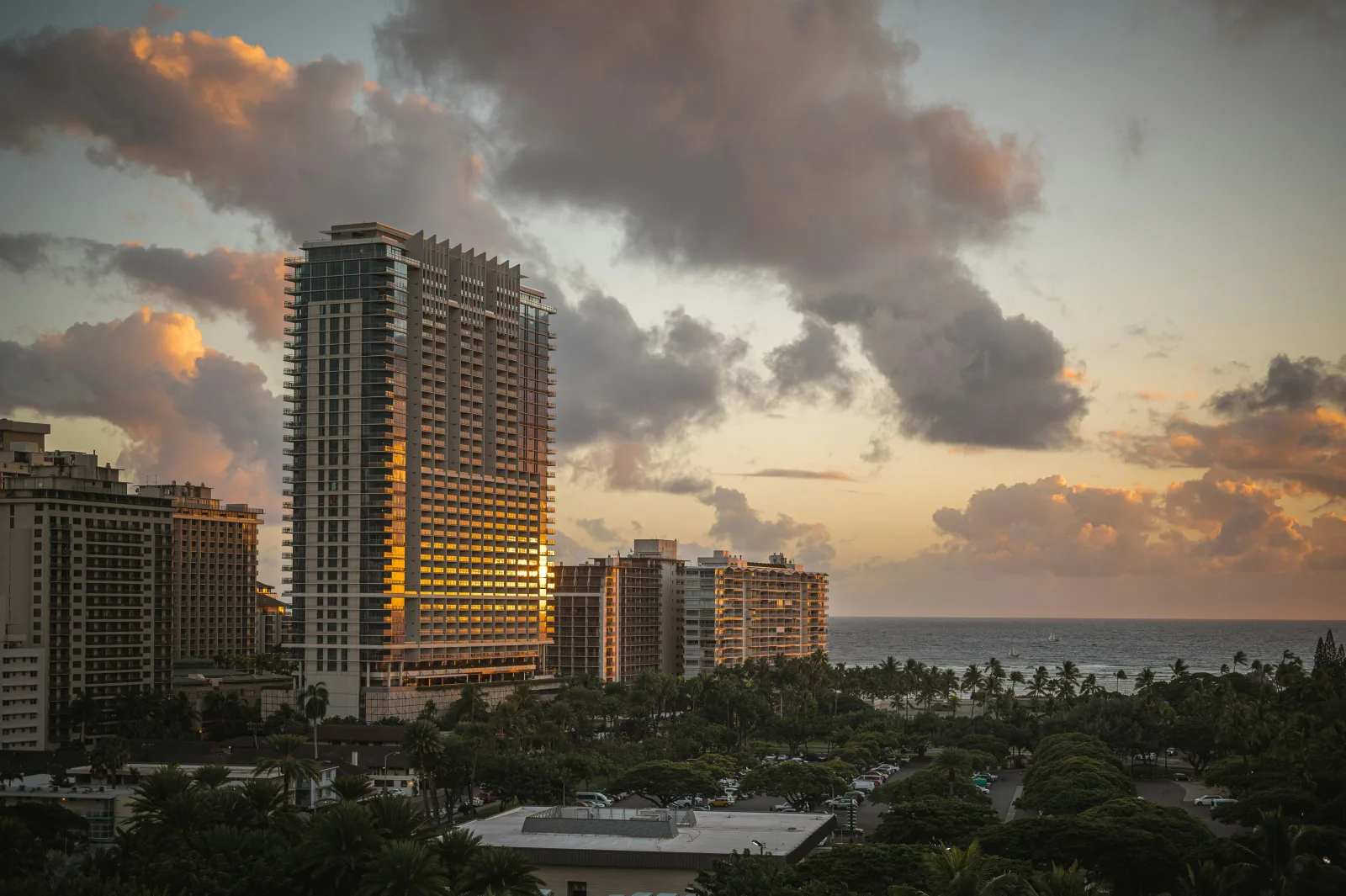
- $305,000 Accelerated Depreciation
- $124,000 Est. Year-1 Federal Savings
- 78x Return on Study Cost
Want a number for a specific Oahu property? Use the calculator: it’s pre-set with property-type defaults you can adjust to match your basis and tax bracket.
If you live in Honolulu but invest elsewhere
Honolulu medical professionals (Queen’s Medical, Kaiser, Straub, Kapiolani), military officers (PACOM HQ, Pearl Harbor command), and senior remote-tech workers face federal 37% + NIIT 3.8% + Hawaii 11% top rate = ~51.8% combined, one of the highest combined brackets in the country. The state-side wedge alone is severe enough that out-of-state cost-seg deductions produce outsized Year-1 returns even before considering federal acceleration.
Where Honolulu investors are buying out-of-state:
- Maui, HI: Closest inter-island STR; HI state tax applies but premium ADR + tourism demand.
- Big Island / Kona: Lower-cost inter-island STR alternative to Maui.
- Joshua Tree, CA: Mainland desert STR.
- Sedona, AZ: Mainland premium STR; AZ no state tax stack.
- 30A / Destin, FL: FL 0% state tax, premium beachfront.
Verify with your CPA: combined-rate math depends on filing status, AGI thresholds for NIIT, and the property’s placed-in-service date for federal-state conformity treatment.
Cost Segregation in Honolulu + Oahu, HI
Honolulu + Oahu Investment Snapshot
- Representative Price Range $725K–$1.4M (Waikiki resort condos, Kakaako condos); $1.4M–$2.8M (oceanfront Waikiki, Ko Olina, Ala Moana high-rises); $2.8M–$8M+ (Diamond Head SFR, Lanikai beachfront, Portlock waterfront)
- Revenue Range $4,500–$11,000/peak winter week; $145K–$385K annual gross on resort-zoned properties
- Common Property Types Waikiki resort-zone high-rise (Trump International, Ritz-Carlton Residences, Park Lane Ala Moana, Hawaiki Tower), Kakaako condo (Anaha, Ae’o, Waiea, Hokua), Ko Olina resort condo (Aulani, Beach Villas at Ko Olina), Diamond Head SFR, Kailua / Lanikai beachfront SFR
- State Income Tax 11.0% top marginal
- Bonus Depreciation Conformity ❌: Hawaii does not conform to federal §168(k) bonus depreciation; the state share is deferred over MACRS
- §179 Conformity Limited: Hawaii caps §179 at $25,000 (HRS §235-2.4(o))
- STR Regulation Resort-zoned (Waikiki, Ko Olina, parts of Kakaako) permanently STR-eligible; apartment-zoned subject to 30/90-day minimum stay requirements
- Top Submarkets Waikiki, Kakaako, Ala Moana, Ko Olina, Diamond Head, Kailua, Hawaii Kai
- Representative Year-1 Federal Savings $78,000–$215,000
The Honolulu + Oahu Market
The Oahu investor map breaks across distinct sub-markets with different price points, regulatory regimes, and rental profiles. The Honolulu metro area concentrates 70% of Oahu’s population and 85% of its STR investor inventory.
Waikiki and Diamond Head form the highest-volume STR sub-market on the island. The Waikiki resort district (running roughly from Saratoga Road east to Kapahulu Avenue and from Kalakaua Avenue mauka (inland) to Kuhio Avenue) is permanently resort-zoned and grandfathered for STR use. Properties here include 1960s-1990s mid-rise condos (Ala Moana Hotel-Condominium, Discovery Bay, Waikiki Banyan, Waikiki Sunset) at $625K–$1.2M for 1BR units, plus newer ultra-luxury high-rises (Trump International Hotel Waikiki, Ritz-Carlton Residences Waikiki, the Park Lane Ala Moana adjacency) at $1.4M–$4M+ for 1-2BR resort condos. Diamond Head proper (the residential neighborhood east of the crater) runs $1.8M–$8M+ for SFRs with ocean views.
Kakaako and Ala Moana form the newest and fastest-growing high-end condo market on Oahu. The Howard Hughes Corporation’s Ward Village master-planned development has produced a wave of ultra-luxury high-rises since 2016: Anaha, Ae’o, Waiea, Ke Kilohana, Kalae, A’ali’i, Victoria Place. Prices run $1.1M–$4M for 1-2BR resort-zoned condos. Park Lane Ala Moana (the low-rise luxury enclave next to Ala Moana Center) runs $3M–$15M+ for ground-floor and townhouse-style units. Hokua and Hawaiki Tower occupy the older Ala Moana high-rise tier at $1.4M–$2.8M. Kakaako STR rules vary by building. Ward Village Reserve buildings (Anaha, Ae’o, Waiea, Ke Kilohana) are subject to 30-day minimum stay, while older Kakaako buildings have varying STR rules. Always verify pre-acquisition.
Ko Olina and the West Side form Oahu’s resort-master-planned-community sub-market. The Aulani Disney Vacation Club, Beach Villas at Ko Olina, Marriott’s Ko Olina Beach Club, and the Ko Olina Resort residences run $725K–$2.4M for resort condos. Ko Olina has permanent STR-zoning under city code and is meaningfully isolated from the broader Honolulu market: drive time 35-45 minutes from the airport, 50+ minutes from Waikiki. Investor profile here is more vacation-rental-focused than Waikiki’s mixed business/leisure tourism.
Turtle Bay and the North Shore form the highest-end SFR market on the island. Turtle Bay Resort residences run $1.4M–$4M for 2-3BR condos and $3M–$15M+ for SFRs along Turtle Bay’s beachfront. The North Shore proper (Sunset Beach, Pipeline area, Waimea, Hale’iwa) runs $1.4M–$8M+ for SFRs, but most North Shore properties are subject to 30/90-day minimum stay requirements that limit STR economics.
Kailua and Lanikai (Windward Side) form the high-end family-vacation-rental market. Lanikai Beach (consistently ranked among the top beaches in the world) anchors a small but ultra-premium SFR inventory at $2.5M–$15M+. Kailua proper runs $1.4M–$3.5M for SFRs near the beach. Most Windward Side properties are subject to 30-day minimum stay rules: these operate as MTRs targeting traveling clinicians, military families, and remote-worker professionals on extended Hawaii stays.
Hawaii Kai and Portlock form Oahu’s south-east SFR market. Properties run $1.4M–$3.5M for tract SFRs and $2.8M–$15M+ for waterfront homes in Portlock. Apartment-zoned, subject to 30-day minimum stay rules; primarily LTR/MTR market.
Manoa, Makiki, and Honolulu inland form the workforce-rental and academic-rental market (UH Manoa). Properties run $725K–$1.4M for 2-3BR SFRs and condos. Primarily LTR market but a growing MTR cohort targeting traveling clinicians at Tripler Army Medical Center, Queen’s Medical Center, Kaiser Permanente Moanalua, and the Pacific Fleet medical-contractor staff.
Why Cost Segregation Hits Different on Oahu
The Oahu cost-seg story is driven by four structural features.
Resort-zoned high-rise condo amenity-share components are unusually large. Most Waikiki and Kakaako resort condos own a fractional share of the building’s pool deck, rooftop infinity pool, fitness center, parking garage, common-area landscape, beach club access, and exterior signage. Ultra-luxury Kakaako buildings (Anaha, Waiea, Park Lane) include amenity sets that rival full hotels: rooftop pools, theater rooms, golf simulators, wine cellars, dog parks, multiple gyms, sauna and steam rooms, business centers, and concierge desks. Engineering-based cost segregation captures the unit’s pro-rata 15-year MACRS share of these amenities: categories that conventional CPA depreciation software generally misses entirely. On a $1.65M Waikiki oceanfront condo at Trump International or Ritz-Carlton Residences, the pro-rata 15-year amenity-share component routinely clears $78K-$125K of depreciable basis.
Year-round international tourism drives FF&E density. Unlike continental US STR markets that have peak/shoulder/off seasons, Oahu’s tourism economy runs at high occupancy year-round. Japanese, South Korean, mainland Chinese, Australian, and continental US tourist demand peaks at different points (Japanese/Korean: spring + fall; Chinese: late summer; Australian: November-December; continental US: summer + winter holidays), producing roughly stable 75-90% occupancy rates across resort-zoned Waikiki and Kakaako properties. This drives investors to over-furnish at acquisition (knowing replacement cycles will compress with year-round usage) and to invest in upgraded FF&E that supports international-traveler expectations. A typical Waikiki resort condo carries $58K-$78K of 5-year FF&E, comparable to high-end Maui resort condos.
Salt-air corrosion compresses replacement cycles further. Oahu’s coastal humidity, salt spray, and trade-wind-driven sand abrasion shorten useful life of resort-rental FF&E meaningfully. We see investors replacing mattresses every 3-4 years (vs 6-7 mainland), kitchen appliances every 5-6 years (vs 8-10 mainland), patio/lanai furniture every 2-3 years, exterior textiles, lamps, and decor on accelerated cycles. For cost segregation, this means the 5-year FF&E reclassification at acquisition is fuller than mainland equivalents.
The 11% Hawaii bracket adds value on the federal acceleration. Hawaii’s top marginal rate is 11%, among the highest in the country. The federal Year-1 benefit comes from 100% bonus depreciation at the 37% bracket plus 3.8% NIIT. A $388K reclassification produces roughly $158,000 in Year-1 federal savings (37% + 3.8% NIIT). Hawaii does not conform to federal §168(k) bonus depreciation, so the Hawaii share of the deduction is deferred over standard 5/7/15-year MACRS rather than taken in Year 1: the federal Year-1 benefit is unaffected.
Worked Example — Honolulu

A 2BR/2BA 18th-floor oceanfront condo at Trump International Hotel Waikiki, on Saratoga Road in the Waikiki resort district. Direct ocean and Diamond Head views, full lanai with east-facing sunrise orientation, walking-distance access to Waikiki Beach and the Royal Hawaiian Center. Acquired in fall 2024 for $1.65M. Trump International is permanently resort-zoned with full STR rights and operates as an integrated hotel-condominium: units enter the resort’s rental program through the hotel management. Average peak-season rates of $725/night December-March and $385/night summer/shoulder, generating roughly $215K gross annual revenue on 240 booked nights through the hotel program.
After pulling $245K of land value (Trump International’s master deed allocates roughly 14.8% to common-area land share) and $115K of structural shell allocation in 27.5-year residential, the depreciable basis lands at $1.335M.
The cost segregation study identifies $78K in 5-year property, the complete FF&E set: king mattress sets in two bedrooms (Stearns & Foster, replaced every 3-4 years given year-round usage), bedroom furniture (frames, nightstands, lamps, dressers, decor), living-room set (sectional sofa, two accent chairs, coffee table, side tables), dining set for 6, lanai dining set for 4 plus two lounge chairs, 3 smart TVs, full kitchen appliance package (Sub-Zero refrigerator, Wolf range, microwave, Bosch dishwasher, espresso machine, KitchenAid stand mixer, Vitamix), small appliances and complete cookware/dishware/glassware service for 8, bathroom Frette linens (3 sets per bath), in-unit washer/dryer, lanai ceiling fans and outdoor lighting, beach gear inventory (chairs × 4, umbrellas × 2, snorkel sets × 4, boogie boards × 2, beach cart, beach towels), smart-home Nest/Ring/smart-lock package, decorative finishes throughout. $11K in 7-year property: built-in master bedroom closet system, kitchen banquette, lanai built-in storage, custom-built dining banquette. $216K in 15-year property: the unit’s pro-rata share of Trump International’s rooftop pool deck, fitness center, multiple lobby finishes and concierge facilities, valet parking garage, common-area landscape, plus unit-level lanai improvements (ceramic-tile flooring, retractable shade systems, lanai ceiling fans and lighting, lanai built-in dining storage). Plus marine-grade HVAC components, hurricane-rated impact windows and doors, the building’s storm-shutter system pro-rata allocation, and the unit’s pro-rata share of Trump International’s beach-club access infrastructure.
Total reclassified: $388K, or roughly 29.1% of the depreciable basis. At the 37% federal bracket plus 3.8% NIIT, that is $158,000 in Year-1 federal savings (37% + 3.8% NIIT; the Hawaii portion is deferred over MACRS).
Hawaii does not conform to federal §168(k) bonus depreciation, so the state share of the deduction is deferred over standard 5/7/15-year MACRS rather than taken in Year 1; the federal Year-1 benefit is unaffected. See bonus depreciation by state.
The STR-positioning matters for material participation. Trump International rentals operate through the resort’s hotel program with average stays running 4.2 days, comfortably under the 7-day STR special test threshold. Material participation can be established through the hotel program’s owner-services framework: owners participating in the rental program through ownership-percentage hours allocation can clear the 100-hour test. Many high-end Waikiki and Kakaako investors run cost segregation alongside §469(c)(7) REPS election if they hold multiple Hawaii properties, aggregating hours across all properties. The owner-investor in this example (a Bay Area fintech founder with $850K W-2 income plus $385K consulting 1099 income) clears material participation through the hotel program’s owner-coordination activities and quarterly Hawaii visits, with the federal accelerated deductions offsetting W-2 and consulting income directly.
Who Is Doing This in Honolulu + Oahu
The Oahu STR investor profile is structurally different from continental US STR markets, driven by the resort high-rise condo dominance, year-round international tourism, and Hawaii’s high state tax (the state does not conform to federal bonus depreciation, so the state share is deferred over MACRS).
The Bay Area / mainland tech investor is the dominant archetype for high-end Waikiki and Kakaako acquisitions. L7+ engineering, product, or operations leaders at Google, Meta, Apple, Stripe, OpenAI, plus venture capital partners, with $400K-$2M+ household income, federal 35-37% bracket. Many own a primary residence in San Francisco / Palo Alto / Atherton plus an Oahu resort-zone condo as their second-home-with-rental-economics.
The Pacific Northwest tech / healthcare investor runs the same playbook from Seattle / Bellevue / Mercer Island. Combined federal 37% + Washington 0% + Hawaii 11% (on Oahu-source income): the Hawaii-source rental income is the only state-tax exposure these investors face, but Hawaii’s federal conformity means cost segregation produces the full Year-1 benefit on both layers.
The Asian-Pacific investor represents 15-25% of high-end Waikiki and Kakaako transaction volume, particularly Japanese, Hong Kong, Singapore, and South Korean investors. These investors generally own through Hawaii LLCs, are non-US tax residents, and use cost segregation under FIRPTA frameworks with US-CPA partner coordination. Volume increased substantially with the Ward Village ultra-luxury inventory through 2018-2024.
The mainland physician / surgeon investor (particularly orthopedics, cardiology, anesthesiology) represents a meaningful Oahu investor cohort, particularly for Diamond Head and Hawaii Kai SFRs. High W-2 income at $500K-$1.5M with personal connections to Hawaii through multi-decade family vacations.
The military-corridor MTR investor is a fifth distinct profile. Active-duty officer-spouse investors and former-military investors with Tripler Army Medical Center, Pearl Harbor, or PACOM corridor connections, holding Manoa / Makiki / Hawaii Kai MTR portfolios targeting traveling military medical contractors and PCS-housing demand. Smaller transaction volumes but high MTR conversion rates given the captive military demand pool.
HI Tax Considerations
- Hawaii has 11% top marginal state income tax (above $200K single / $400K married filing jointly). Cost segregation savings flow through to the HI return.
- Hawaii does not conform to federal §168(k) bonus depreciation. The 100% federal bonus amount is taken in Year 1 on the federal return, but the Hawaii share is deferred and recovered over standard 5/7/15-year MACRS.
- Hawaii caps §179 at $25,000, with the phase-out starting at $200,000 of purchases (HRS §235-2.4(o)), far below the federal $2.5M limit for 2025 ($2.56M for 2026). Any federal §179 above that is recovered through regular depreciation on the Hawaii return.
- Honolulu City & County Real Property Tax classification matters: STR-classified properties pay 1.39% effective rate; Hotel/Resort 1.39%; Apartment 0.65%; Residential 0.45%. Cost segregation does not affect property tax, but classification affects post-acquisition cash flow.
- Hawaii recapture on sale follows federal rules (25% on §1250 unrecaptured gain) plus 11% Hawaii ordinary income layer. Combined federal + state recapture: ~36%. 1031 exchanges fully recognized.
- Hawaii General Excise Tax (GET) at 4.0-4.712% applies to STR rental income.
- Transient Accommodations Tax (TAT) at 10.25% state + 3% Honolulu County = 13.25% combined. Separate from cost-seg analysis.
- For non-US-resident Asian-Pacific investors, FIRPTA withholding (15% on disposition) and Form W-8 ECI elections drive different cost-seg optimization; coordinate with US CPA experienced in FIRPTA.
Common Honolulu + Oahu Investment Properties
- 1-2BR Waikiki resort high-rise (Trump International, Ritz-Carlton Residences, Hawaiki Tower, Ala Moana Hotel-Condominium)
- 1-2BR Waikiki mid-rise condo (Discovery Bay, Waikiki Banyan, Waikiki Sunset, Waikiki Beach Tower)
- 2-3BR Kakaako Ward Village condo (Anaha, Ae’o, Waiea, Ke Kilohana, Victoria Place)
- 2-3BR Ala Moana high-rise (Park Lane Ala Moana, Hokua, Nauru Tower, Moana Pacific)
- 2-3BR Ko Olina resort condo (Beach Villas at Ko Olina, Aulani Disney Vacation Club)
- Diamond Head SFR (Diamond Head, Black Point, Kahala)
- Hawaii Kai / Portlock waterfront SFR (Portlock Estates, Hawaii Loa Ridge)
- Kailua / Lanikai beachfront SFR or beach-adjacent
- Turtle Bay / North Shore SFR (Sunset Beach, Pupukea, Hale’iwa)
- Manoa / Makiki MTR (3-4BR SFR or 2BR condo for traveling clinicians)
Depreciable Features We Commonly See on Oahu
- Marine-grade HVAC and ventilation (corrosion-resistant condenser coils)
- Hurricane-rated impact windows and doors (post-1992 Hurricane Iniki upgrades)
- Wind-rated metal-clad roofing systems
- Storm-shutter packages
- Salt-air-resistant exterior finishes (powder-coated aluminum, marine teak)
- Lanai ceramic-tile flooring with retractable shade systems
- Lanai ceiling fans and outdoor lighting
- Resort-shared rooftop pool decks and infinity pools
- Resort-shared fitness centers, theater rooms, golf simulators (in ultra-luxury Kakaako buildings)
- Resort-shared beach club facilities and parking garages
- Tropical specimen landscape (palms, plumeria, hibiscus, monkeypod)
- Smart-home Nest/Ring/smart-lock packages
- Beach gear inventory (chairs, umbrellas, snorkel sets, boogie boards)
- Stearns & Foster, Tempur-Pedic resort-grade mattress sets
- Sub-Zero/Wolf or Miele kitchen appliance packages (ultra-luxury); Bosch/Thermador (mid-tier)
- Lutron whole-unit lighting controls (in higher-end installations)
- Solar PV systems with battery backup (Tesla Powerwall) on SFR properties
- 240V Level 2 EV chargers
- Hawaiian-themed decor and art investment
What People Worry About (and What Actually Happens)
“Honolulu STR rules are tightening. Is my Waikiki investment safe?”
Properties in the Waikiki resort district are permanently resort-zoned and grandfathered for STR use; they are NOT subject to the 30-day minimum stay rules that apply to apartment-zoned Honolulu rentals. Same applies to Ko Olina and most resort-zoned Kakaako buildings. What HAS changed under Honolulu’s evolving STR regulations is enforcement on apartment-zoned properties (particularly outside Waikiki, Ko Olina, and resort-zoned Kakaako): these now require 30-day minimum stays and registration. Always verify your specific building’s STR classification with the Honolulu Department of Planning and Permitting pre-acquisition. For resort-zoned investors, the regulatory tightening has actually ENHANCED economics: by reducing apartment-zone STR competition, resort-zoned inventory captures a larger share of the visitor market. Material participation pathway →
“My Kakaako condo HOA charges $2,500/month. Does that affect cost seg?”
HOA fees are operating expenses, not depreciable basis. They don’t directly affect the cost segregation reclassification, but they can affect the property’s underlying cash-flow economics. For high-HOA Kakaako ultra-luxury condos (where fees can run $2,000-$4,500/month at Park Lane Ala Moana, Anaha, Waiea), the cost-seg Year-1 federal savings often exceed the entire annual HOA cost, making the study clear positive ROI. Separately, the HOA’s master deed allocation determines your unit’s depreciable share of common-area amenities (rooftop pool, fitness center, theater room, etc.): engineering-based cost segregation captures these as 15-year MACRS, which conventional CPA depreciation software generally misses. We pull the master schedule of values and unit-level allocation in every Kakaako condo report.
“Hawaii GET and TAT seem to eat all my rental profit. Is cost seg even worth it?”
Hawaii’s combined GET (4.712%) + TAT (13.25%) = ~18% of gross rental revenue. That’s the highest rental-tax stack in the US. But cost segregation operates on the depreciable basis, not on rental revenue, and the Year-1 federal savings ($158K on a $1.65M Waikiki condo) generally dwarfs the GET + TAT cost across multiple years. The hold-period economics question is real: does the property pencil net of HOA + property tax + GET/TAT + insurance + management. If yes, cost segregation enhances after-tax cash flow substantially. If marginal, the Year-1 cost-seg savings can fund 12-18 months of operating costs and Year 2-5 ongoing depreciation continues providing tax efficiency. Hawaii does not conform to federal §168(k) bonus depreciation, so each reclassified dollar saves the federal 40.8% (37% + 3.8% NIIT) in Year 1, with the Hawaii share deferred over MACRS. State tax rules and cost segregation →
Why Cost Segregation Works for Oahu Resort Condos
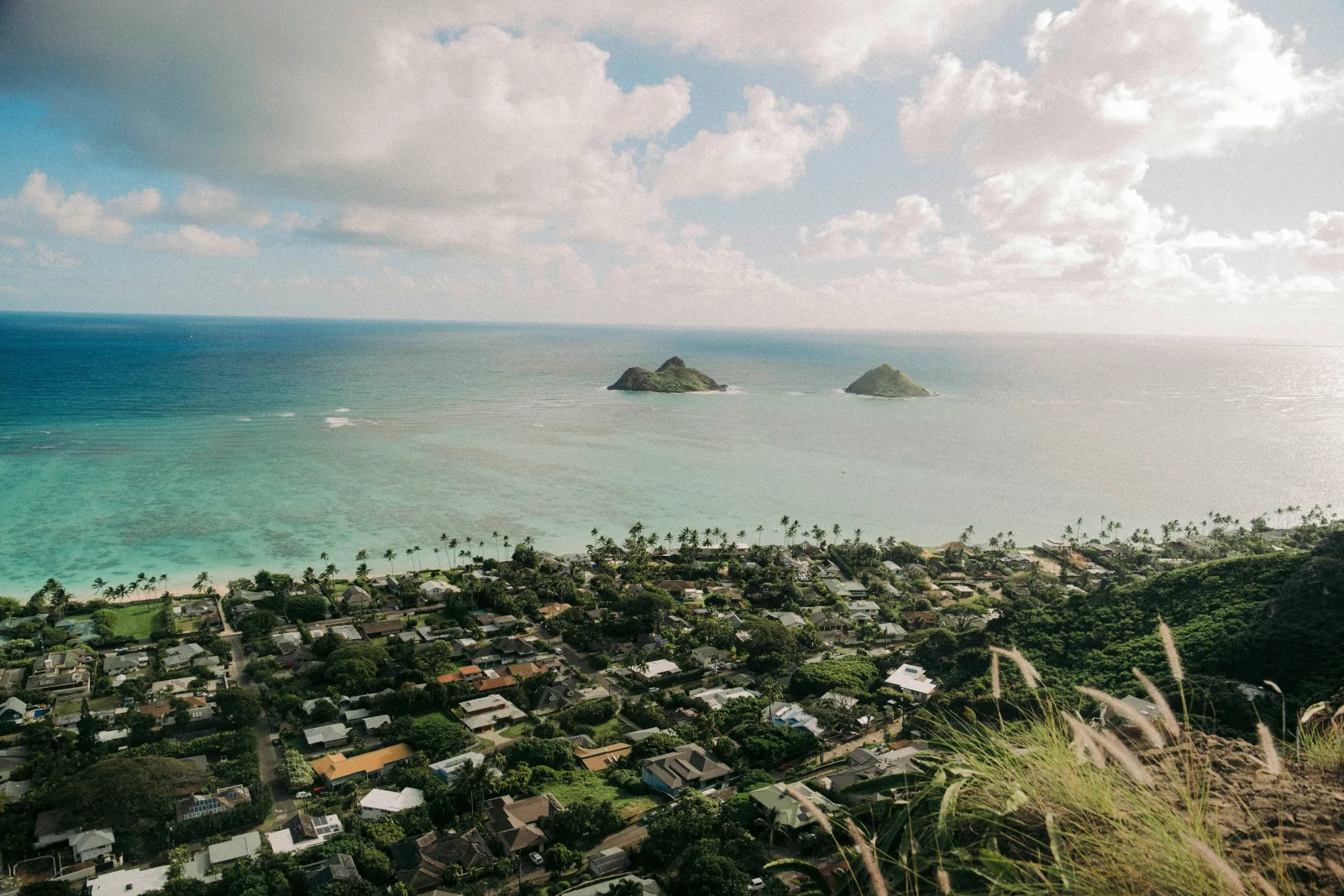
Oahu’s resort-zoned high-rise condo inventory carries some of the highest absolute Year-1 federal savings of any condo market in the United States. Drivers stack: high purchase prices ($1.4M-$2.8M typical for Waikiki oceanfront and Kakaako ultra-luxury), exceptional FF&E density (driven by year-round tourism + salt-air replacement cycles + ultra-luxury Kakaako furnishing standards), and substantial 15-year amenity-share components from resort common areas.
A typical Waikiki resort condo carries: a 5-year FF&E bucket of $58K-$78K; a 7-year personal property bucket of $9K-$15K; and a 15-year MACRS bucket of $135K-$225K (the resort amenity-share component dominates, especially in ultra-luxury Kakaako buildings with full hotel-grade amenity sets). Combined: ~30% of depreciable basis reclassifies into accelerated MACRS classes.
Beyond FF&E and amenity-share components, marine-grade HVAC, hurricane-rated impact windows, storm-shutter pro-rata allocation, and salt-air-resistant exterior finishes add meaningful 5/15-year basis. Properties built post-1992 (post-Hurricane Iniki Hawaii Building Code revisions) carry documented hurricane-resistance components that flow into the cost segregation analysis.
With 100% bonus depreciation permanently restored under the One Big Beautiful Bill Act (signed July 2025), every reclassified dollar is deductible in the first year on the federal return. Hawaii does not conform to federal §168(k), so the Hawaii share is deferred over standard MACRS rather than taken in Year 1. For owner-managed Oahu investors who clear material participation under the STR special test or §469(c)(7) REPS election, these deductions offset W-2 income, consulting 1099 income, partnership income, or hedge fund management-fee income directly.
Who This Example Applies To
- Waikiki resort-zoned high-rise condo investors (Trump International, Ritz-Carlton Residences, Hawaiki Tower)
- Kakaako Ward Village ultra-luxury condo investors (Anaha, Ae’o, Waiea, Park Lane)
- Ko Olina resort condo investors (Beach Villas at Ko Olina, Aulani DVC)
- Diamond Head, Hawaii Kai, Portlock SFR investors
- Kailua / Lanikai beachfront SFR investors with 30-day MTR positioning
- Bay Area, Pacific NW, or mainland-physician investors in 35-37% federal brackets
- Asian-Pacific non-US-resident investors holding through Hawaii LLCs (with US CPA support)
- Multi-property Hawaii investors (Maui + Oahu + Big Island portfolio) running §469(c)(7) REPS election
- Manoa / Makiki MTR investors targeting Tripler / Queen’s / Kaiser military-corridor demand
If your property is an apartment-zoned Honolulu condo subject to the 30-day minimum stay rule, the cost-seg analysis still works on the rental-use period, but absolute revenue (and therefore cash-flow viability) is substantially lower than resort-zoned equivalents. The unique Oahu advantage is the resort-zone high-rise inventory in Waikiki, Ko Olina, and resort-zoned Kakaako buildings, plus the year-round tourism and military-corridor demand. Apartment-zoned and inland Oahu properties still produce solid cost-seg outcomes (Hawaii’s federal conformity makes any rental property a strong cost-seg candidate), they just produce smaller absolute Year-1 savings. Actual results vary based on building zoning classification, FF&E grade, HOA amenity-share allocation, and hurricane-rebuild documentation where applicable.
Compare: Honolulu + Oahu Properties at Different Price Points
| Price | Accelerated | Year-1 Federal Savings | Study Cost | ROI |
| $725K Waikiki 1BR resort | $172,000 | $70,176 | $995 | 71x |
| $1.15M Kakaako 2BR Ke Kilohana | $278,000 | $113,424 | $1,295 | 88x |
| $1.65M Waikiki Trump International 2BR | $388,000 | $158,304 | $1,595 | 99x |
| $2.4M Park Lane Ala Moana 2BR | $605,000 | $246,840 | $1,995 | 124x |
| $3.8M Diamond Head SFR | $948,000 | $386,784 | $2,495 | 155x |
| $5.5M Lanikai beachfront | $1,348,000 | $549,984 | $3,995 | 138x |
Compare: $1,650,000 Across Property Types
| Property Type | Accelerated | Year-1 Federal Savings | Study Cost | ROI |
| Waikiki resort-zone STR condo | $388,000 | $158,304 | $895 | 177x |
| Kakaako 30-day-min MTR condo | $325,000 | $132,600 | $895 | 148x |
| Diamond Head SFR LTR | $295,000 | $120,360 | $895 | 134x |
| Honolulu small-MF (duplex) | $342,000 | $139,536 | $995 | 140x |
Frequently Asked Questions
How much does a cost segregation study cost in Honolulu? For a representative $1,650,000 Honolulu investment property, a Cost Seg Smart study runs $1,595. Full pricing: $495 (under $300K), $895 ($300K–$700K), $995 ($700K–$1M), $1,295 ($1M–$1.5M), $1,595 ($1.5M–$2M), $1,995 ($2M–$3M), $2,495 ($3M–$4M), $3,995 ($4M–$6M), $5,995 ($6M–$8M), $7,995 ($8M–$10M). Commercial studies start at $995 and 5+ unit multifamily at $1,995; 2–4 unit multifamily from $995. Most residential studies are delivered the next business day once your documents are in, and all within two business days, with the CPA-Ready Guarantee: free revisions if your CPA flags a problem, and a refund if the report still can’t be used.
Why does Oahu produce large Year-1 savings versus most US markets?
Two drivers stack: (1) high purchase prices ($1.4M-$2.8M typical for Waikiki oceanfront and Kakaako ultra-luxury condos); (2) substantial 15-year amenity-share components driven by resort high-rise common areas (rooftop pools, fitness centers, theater rooms, valet garages, frequently $135K-$225K of depreciable 15-year basis on a single $1.65M condo). The Year-1 benefit is federal: every reclassified dollar saves 37% + 3.8% NIIT = 40.8% in Year 1. Hawaii does not conform to federal §168(k) bonus depreciation, so the Hawaii share is deferred over standard MACRS rather than taken in Year 1. A $1.65M Waikiki Trump International condo produces roughly $158K in Year-1 federal savings on a $388K reclassification.
How does the Honolulu STR ordinance affect my cost segregation?
The 30-day minimum stay rule applies only to apartment-zoned properties, NOT to resort-zoned Waikiki, Ko Olina, and resort-zoned Kakaako buildings. Resort-zoned inventory has permanent STR rights with full §469 STR special-test material participation eligibility. For apartment-zoned Honolulu properties subject to 30-day minimum stays, the cost segregation analysis still works: material participation is established under standard rental rules (500-hour test, 100-hour-and-no-one-spending-more, or REPS) rather than the STR special test, and Year-1 federal savings are unchanged on the engineering analysis. What changes is the gross rental economics, since 30-day minimums limit revenue. Always verify building zoning pre-acquisition.
Can I run §469(c)(7) REPS election if I have Maui + Oahu + a continental US rental?
Yes, and many multi-property Hawaii investors do exactly this. The §469(c)(7) Real Estate Professional election aggregates all rental properties into a single rental activity for material participation purposes, requiring 750+ hours/year in real estate trades and businesses plus more than half your working time in real estate. With aggregated hours across Maui + Oahu + a continental US property, owner-managed investors can clear the threshold through guest communication, turnover coordination, supply runs, marketing-listing optimization, accounting and tax compliance, and direct property management. Cost segregation Year-1 deductions on each property combine: a $1.65M Waikiki condo + a $1.45M Wailea condo + a $925K Bellevue condo can produce $700K+ in combined Year-1 federal savings if each runs cost seg in the same year and material participation is established. This is the pattern many Bay Area tech executives use across their multi-Hawaii + continental US rental portfolios. Real Estate Professional Status →
Learn More About Cost Segregation
- What Is Cost Segregation?: Full explanation of how the study works and what you receive
- How Much Does a Cost Segregation Study Cost?: Pricing breakdown by property type and value
- State Tax Rules and Cost Segregation: How Hawaii conformity affects timing
- Real Estate Professional Status: When REPS applies and the §469(c)(7) election
Ready to See Your Actual Honolulu Numbers?
Want a number for a specific Oahu property? Use the calculator: it’s pre-set with property-type defaults you can adjust to match your basis and tax bracket.
Cost segregation data for Honolulu, HI (Oahu) investors
The representative (median) outcome across 50 engine-modeled property scenarios matched to the Honolulu, HI (Oahu) investor profile. Year-1 savings shown are the federal benefit (37% + 3.8% NIIT). This state does not conform to federal bonus depreciation, so the state share is not accelerated; it recovers over standard MACRS.
Representative scenarios modeled via Cost Seg Smart's proprietary
engine — IRS ATG-aligned methodology, industry-standard 2026 construction cost data base costs,
calibrated metro multipliers. n=50 fixtures matched to
Honolulu, HI (Oahu) investor profile. Not derived from individual
client returns. Methodology v1.0.0, generated
May 2026 (reproducible seed: honolulu-hi_v1_2026-05-17).
Year-1 savings shown are the federal benefit only (37% + 3.8% NIIT). This state does not conform to federal §168(k) bonus depreciation, so the state share is deferred over standard MACRS rather than realized in Year 1; the federal benefit is unaffected. Confirm specifics with your CPA.
Tax law current as of July 2026. Federal: OBBBA restored 100% bonus depreciation under §168(k), permanent for property both acquired and placed in service after January 19, 2025 (property acquired or placed in service on or before that date remains under the prior 40% phase-down); 2026+ stays 100%. State conformity varies; verify with your CPA.
CPA use note: These figures estimate the size of the depreciation deduction. Whether the loss is usable in the current year depends on passive-activity rules, STR material participation, REPS status, entity structure, depreciable basis, and state conformity. Your CPA decides how and when it is applied. Specialty and site components (equipment, casework, docks, pools, arenas, tenant improvements, and similar) are only classified when you own them and they are included in the depreciable basis being studied.
How should Honolulu, HI (Oahu) investors choose a cost segregation provider?
For a Honolulu, HI (Oahu) investor buying a property in the $1,650,000 range, the choice of provider is a major controllable variable in the return. The IRS Audit Techniques Guide sets the quality characteristics an engineering-based study should meet — industry-standard construction cost data, MACRS classification, and component-level documentation — but it does not make every provider's work identical; rigor, cost, and turnaround still vary.
Traditional engineering studies often run several thousand dollars and can take several weeks, because they include on-site inspections, sales discovery calls, and scheduling overhead. The IRS Cost Segregation Audit Techniques Guide does not prescribe an on-site inspection as a standalone requirement; it sets out the quality characteristics of an engineering-based study — component-level classification, a documented and supportable cost derivation, and a clear audit trail — and describes how a physical inspection can contribute to meeting them.
Modern automated providers (such as Cost Seg Smart) deliver an engineering-based, IRS ATG-aligned study using property records, documents, photos, and recognized construction-cost data, typically from $495 and often by the next business day. For a Honolulu, HI (Oahu) investor at a high combined bracket, that cost and speed difference is meaningful. The CPA-Ready Guarantee (free revisions if your CPA flags a problem, and a refund if the report still can't be used) makes the decision essentially risk-free on the report itself.
The automated path is best-fit for owners who can provide closing documents and property photos online (no in-person visit required) and want the report in time to file the current year's return rather than the next one.
All Cost Seg Smart studies include the CPA-Ready Guarantee (free revisions if your CPA flags a problem, and a refund if the report still can't be used). Straightforward residential studies are often delivered the next business day and completed remotely; larger or more complex commercial studies take longer and may include an on-site observation.