The high-end Colorado ski markets (Aspen, Vail, and Breckenridge) produce the largest absolute Year-1 cost segregation savings of any non-multifamily residential category in the United States. The drivers are stacked: median chalet pricing in the $4M–$8M+ range, FF&E density that treats these properties as private hotels rather than vacation rentals, snow-management infrastructure that adds $250K–$500K of 15-year MACRS basis on a single property, Colorado’s 4.4% flat tax with full conformity to federal bonus depreciation, and an investor base of family offices, hedge fund principals, and private equity partners with the AGI to use full-rate accelerated deductions. A single $4.25M Aspen chalet routinely produces $380K+ in Year-1 federal savings, math that requires multifamily portfolios in most markets to match.
- $768,000 Accelerated Depreciation
- $382,950 Est. Year-1 Federal Savings
- 482x Return on Study Cost
Want a number for a specific Aspen / Vail / Breckenridge property? Use the calculator; it’s pre-set with property-type defaults you can adjust to match your basis and tax bracket.
Cost Segregation in Aspen + Colorado Ski Markets
Aspen / Colorado Ski Investment Snapshot
- Representative Price Range $1.4M–$2.8M (Breckenridge, Snowmass Village condos and townhomes); $2.5M–$5M (Vail Village condos, Aspen Core townhomes); $5M–$15M+ (Aspen Core SFR, Vail slopeside chalets, Beaver Creek estates); $15M–$50M+ (Aspen Red Mountain, Vail Bald Mountain estates, Aspen West End historic mansions)
- Revenue Range $8,000–$25,000/peak ski week (Christmas/New Year, Presidents’ Week); $300K–$850K annual gross on top-tier slopeside chalets
- Common Property Types Aspen Core renovated mining-era SFR, Aspen Highlands or Aspen Mountain ski-in chalet, Snowmass Village condo or townhome, Vail Village condo or chalet, Lionshead condo, Beaver Creek slopeside, Breckenridge Peak 7 / Peak 8 ski-in chalet, Breckenridge town core townhouse
- State Income Tax 4.4% flat (Colorado, 2026)
- Bonus Depreciation Conformity ✅ Colorado fully conforms to federal bonus depreciation
- §179 Conformity ✅ Colorado conforms to federal §179
- STR Regulation Aspen has tightening STR licensing (3-tier classification, 365 / 120 / 0 nights/yr), Vail and Beaver Creek largely permissive in resort-zoned areas, Breckenridge has Type-A/B classification phasing in
- Top Submarkets Aspen Core, Aspen Mountain, Aspen Highlands, Snowmass Village, Vail Village, Lionshead, Beaver Creek, Breckenridge, Telluride
- Representative Year-1 Federal Savings $135,000–$650,000+
The Aspen + Colorado Ski Market
The high-end Colorado ski-resort market splits across three primary destinations (Aspen / Snowmass, Vail / Beaver Creek, and Breckenridge / Summit County), each with structurally different ownership patterns, price points, and STR-permitting frameworks. We treat these as one combined cost-seg market here because the underlying engineering analysis is structurally identical across all three (snowmelt + ski-room + slopeside-amenity + ultra-luxury FF&E density), but the market context differs meaningfully.
Aspen and Snowmass Village form the highest-priced ski market in North America. Aspen Core proper (the historic mining town with the West End, East End, and Red Mountain residential districts) runs $5M–$25M+ for SFRs and $2.5M–$8M for condos and townhomes. Aspen Highlands and Aspen Mountain (Ajax) base areas command additional premium for true ski-in/ski-out access. Snowmass Village (the connected sister resort 8 miles away) is the more transaction-heavy market with $1.4M–$4M condos and townhomes, and increasingly targeted as the “value” Aspen entry point. The Aspen STR licensing framework (effective 2024-2025) creates three classifications: Lodging Exempt (resort-zoned, unlimited nights), Owner-Occupied (120 nights/yr cap), and Non-Owner-Occupied Type 2 (heavily restricted, current moratorium on new permits). For investor cost segregation, the Lodging Exempt designation is critical: most ultra-high-end Aspen Core and slopeside properties qualify, but verification with the Aspen Community Development Department is mandatory pre-acquisition.
Vail and Beaver Creek form the second major Colorado ski-resort corridor, anchored by Vail Resorts’ flagship operations. Vail Village runs $2.4M–$6M for condos and $5M–$25M+ for chalets. Lionshead (the secondary Vail base village) runs $1.8M–$4.5M for condos. Beaver Creek (10 miles west, more upscale and family-oriented than Vail Village) runs $2.5M–$8M for condos and $6M–$30M+ for slopeside chalets. Vail’s Lift Pass mega-resort access (the Epic Pass connects Vail, Beaver Creek, Breckenridge, Keystone, Crested Butte, Park City, Whistler, and 70+ other resorts) has structurally strong rental demand across all Epic Pass markets. Vail and Beaver Creek STR permitting in resort-zoned areas is permissive: most resort-zoned condos and HOA-managed properties have permanent STR rights.
Breckenridge and broader Summit County form the third (and largest by transaction volume) Colorado ski market. Breckenridge proper runs $1.4M–$3.5M for ski-in/ski-out condos at Peak 7, Peak 8, and Peak 9 base areas, and $2.5M–$6M for town-core townhomes and Carter Park chalets. Summit County’s Keystone, Copper Mountain, and Arapahoe Basin resorts add inventory at lower price points ($725K–$2.4M condos). Breckenridge has phased in a Type-A (resort-zoned, unlimited STR) vs Type-B (residentially-zoned, 24 nights/yr cap) classification system that materially affects which properties have permanent STR rights: verification with Breckenridge Community Development is again mandatory pre-acquisition.
Telluride and Crested Butte are the related but more remote southwestern Colorado ski markets, meaningful but smaller transaction volumes. Telluride proper runs $2.5M–$8M+ for the highest-end residences; Crested Butte runs $1.4M–$4M.
The investor profile across all three markets is structurally different from any other US ski market. Roughly 60-70% of high-end Colorado ski transactions are family offices, hedge fund principals, private equity partners, and ultra-high-net-worth individuals from New York, Bay Area, Greenwich CT, Houston, Dallas, and Miami, many of whom hold multiple properties across Aspen, Vail, and Breckenridge as both personal use and rental-portfolio assets. The combination of Colorado’s clean federal-conforming tax structure, high property values, and structural FF&E density produces cost-seg economics that compete directly with multifamily real estate at the per-property level.
Why Cost Segregation Hits Different in Aspen + Colorado Ski
The Colorado high-end ski markets carry the highest absolute reclassification dollars per property of any single-family residential category in the United States. Five structural drivers stack:
Ultra-luxury FF&E density treats these properties as private hotels, not vacation rentals. A typical $4M+ Aspen Core chalet is furnished closer to a Four Seasons or St. Regis than to a high-end Airbnb. Sub-Zero/Wolf or Miele kitchen packages with secondary butler’s pantry, La Cornue ranges in some properties, full Frette linen services across 6-8 bedrooms, B&B Italia or Restoration Hardware furniture suites, custom-designed dining sets for 10-14, dedicated wine rooms with climate control and storage for 800-1,500 bottles, full media rooms with cinema-grade Crestron AV ($50K-$120K of equipment alone), Hästens or Treca mattress sets, premium ski-room infrastructure (boot dryers, gear racks, mudroom built-ins to commercial standards), Lutron whole-home lighting, smart-glass window treatments. On a $4.25M Aspen Core chalet, the 5-year FF&E bucket alone routinely runs $185K-$285K, multiples of any non-Colorado ski market.
Snowmelt-and-heating infrastructure is extreme. Aspen sits at 7,900 feet elevation; Vail at 8,150; Breckenridge at 9,600. Annual snowfall across all three exceeds 300 inches. Properties carry multi-zone hydronic radiant snowmelt driveway systems (often 6-12 zones across driveways, walkways, exterior stairs, and entry areas), heated roof edges and full ice-dam mitigation, in-floor radiant heating throughout three or four building levels, dedicated boot-and-ski-drying rooms with separate HVAC, snow-management drainage and French-drain systems sized for 36+ inches of snowpack, exterior gas-fed fire pits and outdoor heating systems, hot tub and pool infrastructure (many properties have indoor pools or year-round outdoor pools with snow-management), and dedicated propane tanks (often 1,000-2,500 gallons buried) to feed the snowmelt and pool-heating loads. The 15-year MACRS bucket on a representative $4.25M Aspen chalet runs $325K-$485K — more than the total purchase price of properties in many markets.
Slopeside / ski-in-ski-out infrastructure rights add documentable depreciable basis. Properties with true ski-in/ski-out access (the Aspen Highlands base, Aspen Mountain Lift 1A area, Vail Village Vista Bahn ski path, Beaver Creek slopeside, Breckenridge Peak 7 and Peak 8 base areas) carry HOA-allocated shares of slope-side easements, ski-trail grooming infrastructure, on-mountain warming-hut access, lift-corridor rights-of-way, and base-area common improvements (heated pool decks, ski-club lockers, lounges, parking garages). These reclassify into 15-year MACRS as exterior land improvements at the unit level. On a $4.25M Aspen Highlands ski-in chalet, the slopeside-share component alone routinely clears $125K-$185K of depreciable 15-year basis.
The wine room is its own depreciable category in this market. Roughly 65% of $3M+ Colorado ski properties have dedicated wine rooms with climate control (generally WhisperKool or US Cellar Systems), custom racking for 800-2,500+ bottles, and engineered humidity control. The wine room equipment reclassifies into 5-year MACRS personal property; the racking and casework into 7-year personal property; the room finish work and dedicated HVAC into 15-year MACRS. Total wine-room reclassification on a representative Aspen or Vail property: $35K-$85K of depreciable basis spread across 5/7/15 year classes.
Colorado flat-tax conformity is unusually clean. Colorado moved to a 4.4% flat income tax in 2024, with rate stability projected. Colorado conforms to federal bonus depreciation: the same 100% bonus-depreciation amount the federal return shows is allowed on the Colorado return. For an investor in the 37% federal bracket plus 4.4% Colorado bracket, the combined Year-1 marginal rate on a reclassification is 41.4%. A $1.035M reclassification produces $382,950 federal + $45,540 Colorado = $428,490 in combined Year-1 savings. The Colorado layer captures cleanly in Year 1 without timing-difference complications.
Worked Example: Aspen
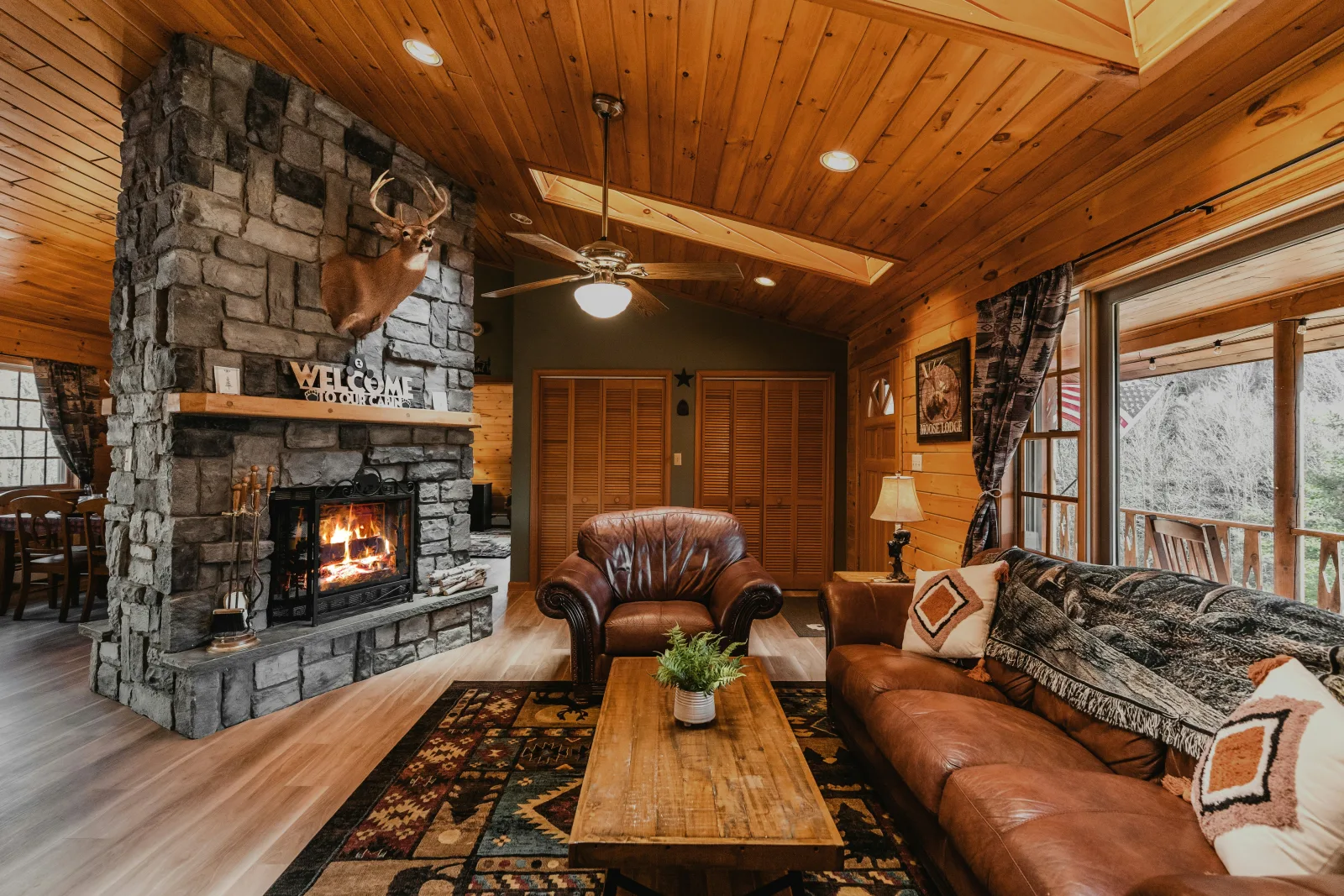
A 5BR/6.5BA ski-in chalet in Aspen Highlands’ Five Trees neighborhood, originally built in 2008 and substantially renovated 2022-2023 to a current ultra-luxury rental specification. The property sits 200 yards from the Aspen Highlands Skier Chalet ski-in/ski-out path, 4 minutes by ski to the base of the Exhibition lift. 6,200 sqft of conditioned space across three above-grade and one below-grade levels (the lower level is the dedicated ski-room, mudroom, wine cellar, and media room). Sleeps 14 across one master suite, three king secondaries, and a bunk room with 4 twins. Acquired in fall 2024 for $4.25M and immediately positioned as an ultra-luxury STR through Aspen Signature Properties (the local high-end rental management firm), with average peak-week rates of $14,500/night Christmas Week through Presidents’ Week and $4,200/night summer/shoulder. The property is Aspen Lodging Exempt classified, allowing unlimited STR nights.
After pulling $585K of land value (Aspen Highlands ski-in lots run roughly 13.7% of value due to the slope-side easements and HOA-allocated common ground), and another $215K of structural shell allocation in 27.5-year residential, the depreciable basis lands at $3.45M.
The cost segregation study identifies $268K in 5-year property: the complete ultra-luxury FF&E package: 5 complete bedroom sets (Hästens mattress in the master, Treca in two king secondaries, Stearns & Foster in the third king and bunk room, frames + linens × 4 sets per bed + nightstands + lamps + dressers + decor); the great-room living set (B&B Italia sectional, two custom-designed accent chairs, Roche Bobois coffee table, sculptural side tables, Restoration Hardware lounge furniture); dining for 14 (custom Frette-linened table for 10 plus 4-seat banquette); the master kitchen Sub-Zero/Wolf appliance package (48” range, double oven, two dishwashers, full-height refrigerator, separate freezer, ice maker, espresso system, microwave drawer, warming drawer, sous vide circulator, La Marzocco home espresso, full Vitamix and KitchenAid suite); the secondary butler’s-pantry kitchen (full secondary fridge, freezer, dishwasher, prep sink, secondary range); 12 smart TVs across the bedrooms, living spaces, and the home theater; the Crestron whole-home AV system with 12 zones of audio and 7.1 surround in the home theater; ski-room equipment (8 boot dryers, ski/board storage racks for 14, gear-drying infrastructure, premium loaner-gear inventory); bathroom Frette linens (5 sets per bath); two laundry pairs (main and lower-level); fire pit and outdoor seating sets; smart-home Lutron lighting, Ring/Arlo, and smart locks throughout. $22K in 7-year property: built-in master closet system, kitchen banquette and butler’s-pantry built-ins, ski-room custom built-ins, the home’s primary mudroom built-in storage, and the wine cellar’s custom redwood and cherry racking. $478K in 15-year property: the 8-zone hydronic radiant snowmelt driveway and walkway system, the heated roof edges and ice-dam mitigation, the in-floor radiant heating throughout four levels, the dedicated ski-room HVAC zone with separate furnace, the indoor lap pool with snow-management infrastructure and pool-room dedicated HVAC, the rear-yard hot tub on dedicated electrical and propane pad, the gourmet outdoor BBQ kitchen on the covered deck (gas line, refrigerator drawers, twin sinks, granite, exterior overhead heating), the gas-fed exterior fire pit, paver patios with snow-management drainage, the engineered hardscape and snow-load gates, exterior accent and security lighting throughout, the 240V Level 2 EV charger in the garage, the dedicated 2,500-gallon buried propane tank, the wine cellar’s WhisperKool climate control unit, the home theater’s projector and acoustic treatment, and the unit’s pro-rata share of Aspen Highlands’ base-area common improvements (heated pool deck at the Highlands Day Lodge, ski-club lockers, lounge facilities, parking garage striping).
Total reclassified: $1,035,000, or roughly 30% of the depreciable basis. At 37% federal and 4.4% Colorado, that is $382,950 federal + $45,540 Colorado = $428,490 in Year-1 combined savings.
The STR-positioning matters for material participation. Aspen Highlands ski rentals operate on weekly Saturday-to-Saturday turnover during peak ski season and a mix of nightly/weekly during summer, with overall average stay running 4.8 days, comfortably under the 7-day STR special test threshold. Material participation is established through the 100-hours-and-no-one-spending-more test. The owner (a Greenwich CT-based hedge fund principal with $4.5M+ AGI and 37% federal + 6.99% CT bracket on the home-state side) has a multi-property cost-seg playbook running through his family office, with Aspen Highlands, a Vail Village condo, and a Breckenridge Peak 8 ski-in townhouse all running cost segregation in the same tax year. He clears the 100-hour test on the Aspen property through guest communication, ski-season turnover-day quality control (he visits the property 12-16 weekends per year), supply runs, and direct property management coordination with Aspen Signature Properties. With material participation established, the federal accelerated deductions offset hedge-fund management-fee income directly.
Who Is Doing This in Aspen + Colorado Ski
The high-end Colorado ski investor profile is structurally different from any other US residential market. The buyer cohort is overwhelmingly ultra-high-net-worth individuals and family offices.
The New York / Northeast finance investor is the dominant Aspen Core, Vail Village, and Beaver Creek archetype. Hedge fund principals, private equity partners, BigLaw senior partners, NY-based family offices, and Greenwich CT financial services executives with $3M-$50M+ AGI. Many own primary residences in Manhattan / Greenwich / Westchester and acquire Aspen, Vail, or Beaver Creek as a winter-second-home with rental during off-weeks. Federal bracket 37% plus high-state-tax home jurisdiction (CT 6.99%, NY 10.9%, NJ 10.75%); the Colorado property generates clean Year-1 cost-seg savings that the home-state primary doesn’t.
The Bay Area tech investor is the second-largest cohort, particularly for Aspen Highlands and Vail / Beaver Creek slopeside. Senior engineering, product, or operations leaders at Google, Meta, Apple, Stripe, OpenAI, Anthropic, plus venture capital partners (Sequoia, A16Z, Benchmark, Founders Fund) with $2M-$50M AGI. Many use a §469(c)(7) REPS election to aggregate Aspen + a Bay Area rental + a Park City property into a single rental activity for material participation purposes.
The Texas / Houston / Dallas energy and finance investor is the third major cohort, particularly for Aspen and Vail acquisitions. Houston oil & gas executives, Dallas private equity partners, and Texas-based family offices acquiring Colorado properties as multi-decade family assets. The Texas zero-state-tax + Colorado 4.4%-on-CO-source-rental-income structure is unusually favorable for these investors: their primary income is Texas-source (no state tax) and the Colorado-source rental income captures the CO 4.4% benefit cleanly.
The Miami / Florida investor is the fourth growing cohort, particularly post-2020 with the Florida tax-domicile-relocation wave. Hedge funds, crypto wealth, and South American foreign-investor cohorts who have established Florida residency are acquiring Colorado properties as both lifestyle and rental-portfolio assets.
A fifth profile worth flagging: the multi-property Colorado-ski portfolio investor. Several investor families own 4-12 properties across Aspen, Vail, Beaver Creek, and Breckenridge, running cost segregation as a recurring annual practice on each acquisition plus periodic Form 3115 lookbacks on portfolio holdings. These investors often run §469(c)(7) REPS election with a family-office principal aggregating all properties into a single rental activity for material participation, or run a “ski property management” business operations entity that materially participates across the portfolio.
CO Tax Considerations
- Colorado has a 4.4% flat income tax in 2026 (down from 4.55% in earlier years). Cost segregation savings flow through to the Colorado return.
- Colorado fully conforms to federal bonus depreciation. The 100% bonus-depreciation amount on the federal return is allowed in the same Year-1 amount on the Colorado return: clean math, no straight-line MACRS state-conformity workaround.
- Colorado follows federal §179, so the federal limit ($2.5M for 2025, $2.56M for 2026) carries through to the Colorado return.
- Pitkin County (Aspen), Eagle County (Vail / Beaver Creek), and Summit County (Breckenridge) effective property tax rates run 0.50-0.65%, among the lowest in the country for resort markets. Property tax is unrelated to depreciation but the low rate is part of why ultra-high purchase prices pencil.
- Aspen STR licensing: Lodging Exempt (resort-zoned, unlimited nights), Owner-Occupied (120 nights/yr cap), Non-Owner-Occupied Type 2 (heavily restricted, current moratorium). Verify classification pre-acquisition.
- Vail and Beaver Creek STR rules: most resort-zoned properties have permanent STR rights; some Vail Village condo HOAs have additional restrictions.
- Breckenridge Type-A (resort-zoned, unlimited) vs Type-B (residential-zoned, 24 nights/yr cap): verify pre-acquisition.
- Colorado depreciation recapture on sale follows federal rules (25% on §1250 unrecaptured gain) plus the 4.4% Colorado ordinary income layer. Combined federal + state recapture rate: roughly 29.4%, substantially below CA, NY, or HI. 1031 exchanges fully recognized.
- Colorado short-term rental sales tax (varies 7.5-12% by jurisdiction) and lodging tax (additional 2-5%) apply to STR rental income, not to depreciation.
Common Aspen + Colorado Ski Investment Properties
- 5-7BR Aspen Core renovated mining-era SFR (West End, East End, Smuggler-Hunter Creek)
- 3-5BR Aspen Mountain or Aspen Highlands ski-in chalet (Five Trees, Tiehack, Maroon Creek)
- 2-4BR Snowmass Village condo or townhome (Top of the Village, Crestwood, Snowmass Mountain Chalet)
- 3-5BR Vail Village condo or chalet (Vista Bahn corridor, Forest Road, Mill Creek Circle)
- 2-3BR Lionshead condo (Vail Run, Lion Square Lodge, Marriott Streamside)
- 3-5BR Beaver Creek slopeside chalet (Strawberry Park, Bachelor Gulch, Strawberry Creek)
- 2-4BR Breckenridge Peak 7 or Peak 8 ski-in/ski-out condo (One Ski Hill Place, Crystal Peak Lodge, Mountain Thunder Lodge)
- 4-6BR Breckenridge town-core townhouse (Carter Park, French Street, Wellington-Watson)
- 2-3BR Keystone, Copper Mountain, or Arapahoe Basin condo
- 3-5BR Telluride or Crested Butte slopeside SFR
Depreciable Features We Commonly See in Aspen + Colorado Ski
- 6-12 zone hydronic radiant snowmelt driveways and walkways
- Heated roof edges with full ice-dam mitigation
- In-floor radiant heating throughout 3-4 building levels
- Dedicated ski-room HVAC zones with separate furnaces
- Multiple boot dryers (generally 6-12 per high-end property)
- Custom ski/board storage racks and gear-drying infrastructure
- Indoor lap pools with snow-management infrastructure
- Hot tubs on dedicated electrical and propane pads
- Gourmet outdoor BBQ kitchens on covered decks
- Gas-fed exterior fire pits and outdoor heating systems
- Wine cellars with WhisperKool / US Cellar Systems climate control
- Custom redwood, cherry, or mahogany wine racking (800-2,500+ bottle capacity)
- Home theaters with cinema-grade Crestron AV
- Sub-Zero/Wolf, Miele, or La Cornue kitchen appliance packages
- Secondary butler’s pantry kitchens with full appliance suites
- Hästens, Treca, or Stearns & Foster mattress sets in every bedroom
- Lutron whole-home lighting controls
- Smart-glass window treatments
- Multi-zone Crestron AV with 12+ audio zones
- Multi-zone Nest thermostats with smart-home integration
- 240V Level 2 EV chargers (often multiple per property)
- Whole-house Generac generators (30-50kW) with automatic transfer
- Buried propane tanks (1,500-3,000 gallon)
- Frette linens (5+ sets per bedroom)
- Pro-rata share of resort base-area common improvements
- HOA-allocated slopeside easements and lift-corridor rights
What People Worry About (and What Actually Happens)
“Aspen STR licensing is restrictive. How does that affect my cost seg analysis?”
The Aspen Lodging Exempt designation (for resort-zoned properties with unlimited STR nights) is critical for slopeside chalet investors and is verifiable pre-acquisition with the Aspen Community Development Department. For Lodging Exempt properties, the cost segregation analysis runs cleanly with full STR special-test material participation. For Aspen Owner-Occupied (120 nights/yr cap) properties, the rental-period cost segregation still works on the rental days: material participation is established under the standard rental rules during the rental period, and the §469 STR special test applies during rental periods even with the 120-night cap. The Year-1 cost-seg savings are unchanged for the rental year. What changes is the long-term hold strategy. Always verify the property’s Aspen STR classification pre-acquisition, because the moratorium on new Non-Owner-Occupied Type 2 permits makes some currently-licensed inventory worth a meaningful premium. Material participation pathway →
“My Vail / Beaver Creek property has an HOA-managed rental program. Does cost seg still work?”
Yes, and HOA-managed rental programs often produce cleaner cost-seg outcomes than owner-direct STR management. The HOA-rental program (Vail Marriott, Beaver Creek Lodge, Strawberry Park Beaver Creek, Vail Cascade) generally retains 35-50% of gross rental revenue but provides full distribution, housekeeping, maintenance, and guest services, with the owner receiving net rental revenue and a documented annual statement that supports the cost segregation depreciation deduction tracking. Material participation is established under standard rental rules (500-hour test, 100-hour-and-no-one-spending-more, or REPS); the HOA-rental program does NOT preclude material participation; it just shifts the relevant management activity to the owner’s coordination, supply, marketing-listing optimization, and guest-relationship work. Many Vail and Beaver Creek owners participate in their HOA-rental program with monthly portfolio review activity and clear the 100-hour test cumulatively. Cost segregation Year-1 federal + Colorado savings are unchanged. How material participation works for ski-rental investors →
“My Breckenridge property is Type-B (24 nights/yr cap). Is cost seg still worth it?”
Yes, but the analysis runs differently. For Breckenridge Type-B properties (residential-zoned, 24-night/yr STR cap), the property is primarily a personal-use second home with limited rental: the §280A vacation home rules apply, and the tax math considers the personal-use vs rental-use split. Cost segregation still produces reclassification dollars on the depreciable basis allocated to the rental-use period, but the Year-1 deduction is proportionally reduced. For most Type-B owners, the annual rental period (24 nights / 365 days = 6.6%) limits cost-seg ROI substantially. Many Type-B owners who acquire purely for personal use don’t run cost segregation at all. Type-B owners who actively rent close to the 24-night cap generally benefit from cost segregation on a 24/365-proportional basis. Pre-acquisition, the Type-A vs Type-B classification often determines whether a property pencils as a rental investment vs a personal-use second home. Cost segregation if you plan to sell soon →
Why Cost Segregation Works for Aspen + Colorado Ski Ultra-Luxury Rentals
The high-end Colorado ski markets produce the largest absolute cost segregation reclassifications of any non-multifamily residential category in the country. Three drivers explain why:
Per-property purchase prices are 3-5× higher than typical ski-resort markets. A $4.25M Aspen Core chalet generates roughly the same percentage reclassification rate (~30%) as a $1.4M Park City Old Town townhouse, but the absolute dollars are 3× larger. On a single property, this translates to $382K Year-1 federal savings vs $128K, meaningful at the family-office or hedge-fund-principal investor scale.
FF&E density treats the property as a private hotel. A $4M+ Colorado ski property is furnished closer to a Four Seasons or St. Regis than to a representative vacation rental. The 5-year FF&E bucket alone runs $185K-$285K, driven by Hästens or Treca mattresses, B&B Italia furniture, Sub-Zero/Wolf or Miele kitchens with secondary butler’s pantries, Crestron whole-home AV, dedicated wine cellars and home theaters, and Frette linens at hotel-grade quantity (5+ sets per bedroom).
Snowmelt and ski-resort site-improvement infrastructure is unprecedented. A typical $4M Colorado ski property carries: a 6-12 zone hydronic radiant snowmelt driveway and walkway system at $185K-$285K depreciable basis, in-floor radiant heating throughout four levels at $95K-$145K, an indoor lap pool with snow-management infrastructure at $45K-$85K (when present), a hot tub at $14K-$22K, a gourmet outdoor BBQ kitchen at $18K-$28K, gas-fed fire pits at $8K-$14K, and the dedicated ski-room HVAC and gear infrastructure at $14K-$24K. Combined: $325K-$485K of 15-year MACRS basis on a single $4.25M property.
The wine room and home theater categories are often missed by generic CPA depreciation software — and they’re substantial. Wine room equipment (climate control, custom racking, room finishes) reclassifies $35K-$85K. Home theater equipment (projector, screen, Crestron AV, acoustic treatment, theater seating) reclassifies $50K-$120K. Both bucket primarily into 5-year and 7-year MACRS, with the dedicated HVAC and structural finishes flowing into 15-year.
Colorado’s 4.4% flat tax with full federal conformity is the multiplier. The Colorado layer captures cleanly in Year 1, adding 12% to federal-only savings. On a $1.035M reclassification, that’s an additional $45,540 of Year-1 state-side savings.
With 100% bonus depreciation permanently restored under the One Big Beautiful Bill Act (signed July 2025), every reclassified dollar is deductible in the first year on both federal and Colorado returns. For owner-managed Colorado ski investors who clear material participation under the STR special test, these deductions offset hedge-fund management-fee income, tech executive W-2 income, or family-office investment income directly.
Who This Example Applies To
- Aspen Core, Aspen Highlands, Aspen Mountain, or Snowmass Village owner-managed STR investors
- Vail Village, Lionshead, or Beaver Creek slopeside chalet or condo investors
- Breckenridge Type-A (resort-zoned) ski-in/ski-out condo or chalet investors
- New York / Greenwich / Northeast finance professionals with $3M-$50M AGI
- Bay Area tech / venture capital investors using §469(c)(7) REPS election
- Texas energy / Florida finance investors holding Colorado as multi-property portfolio
- Multi-property Colorado-ski portfolio investors operating across Aspen + Vail + Breckenridge
- Family offices structuring Colorado ski as long-hold rental + family-use asset
- Taxpayers in the 37% federal bracket plus 4.4% Colorado bracket (or non-resident filing)
If your property is a smaller Breckenridge Type-A condo at $1.4M-$2M without the full ultra-luxury FF&E and snowmelt infrastructure stack, the absolute reclassification dollars compress substantially, but the percentage rate remains 27-30% and the cost-seg ROI is still strongly positive. The unique Aspen / Vail / Beaver Creek advantage is the combination of $4M+ purchase prices and ultra-luxury infrastructure density. Properties at lower price points still produce solid cost-seg outcomes; they just produce smaller absolute Year-1 savings. Actual results vary based on property classification (Aspen Lodging Exempt, Vail HOA-rental, Breckenridge Type-A vs Type-B), FF&E grade, snowmelt-system documentation, and HOA amenity-share allocations.
Compare: Aspen + Colorado Ski Properties at Different Price Points
| Price | Accelerated | Year-1 Combined Fed+CO Savings | Study Cost | ROI |
| $1.4M Breckenridge Peak 8 condo | $345,000 | $142,830 | $1,295 | 110x |
| $2.5M Snowmass Village townhouse | $625,000 | $258,750 | $1,995 | 130x |
| $3.5M Vail Village condo | $848,000 | $351,072 | $2,495 | 141x |
| $4.25M Aspen Highlands ski-in chalet | $1,035,000 | $428,490 | $3,995 | 107x |
| $6.5M Beaver Creek slopeside | $1,648,000 | $682,272 | $5,995 | 114x |
| $12M Aspen Core Red Mountain | $3,012,000 | $1,247,000 | $7,995 | 156x |
Compare: $4,250,000 Across Property Types
| Property Type | Accelerated | Year-1 Combined Fed+CO Savings | Study Cost | ROI |
| Aspen ski-in/ski-out STR | $1,035,000 | $428,490 | $895 | 479x |
| Vail Village luxury LTR/MTR | $815,000 | $337,410 | $895 | 377x |
| Beaver Creek HOA-rental program | $948,000 | $392,472 | $895 | 439x |
| Aspen small-MF (4-unit) | $1,098,000 | $454,572 | $995 | 457x |
Frequently Asked Questions
How much does a cost segregation study cost in Aspen? For a representative $4,250,000 Aspen investment property, a Cost Seg Smart study runs $3,995. Full pricing: $495 (under $300K), $895 ($300K–$700K), $995 ($700K–$1M), $1,295 ($1M–$1.5M), $1,595 ($1.5M–$2M), $1,995 ($2M–$3M), $2,495 ($3M–$4M), $3,995 ($4M–$6M), $5,995 ($6M–$8M), $7,995 ($8M–$10M). Commercial and 5+ unit multifamily studies start at $1,995; 2–4 unit multifamily from $995. Most residential studies are delivered the same business day once your documents are in, and all within two business days, with the CPA-Ready Guarantee: full refund if your CPA can’t use the report.
Why do high-end Colorado ski markets produce larger absolute cost-seg savings than other US residential categories?
Three structural drivers stack: (1) per-property purchase prices are $4M-$12M+ for slopeside chalets, multiples higher than non-Colorado ski markets; (2) FF&E density is structurally higher because these properties function as private hotels with hotel-grade kitchen and bedding standards (Hästens or Treca mattresses, Sub-Zero/Wolf or Miele kitchens, Frette linens at 5+ sets per bedroom); (3) snowmelt and ski-resort site-improvement infrastructure (6-12 zone hydronic radiant driveways, indoor lap pools, dedicated ski-room HVAC, wine cellars, home theaters) adds $325K-$485K of 15-year MACRS basis. Combined with Colorado’s 4.4% flat tax with full federal conformity, a single $4.25M Aspen chalet routinely produces $428K Year-1 combined savings, economics that compete directly with multifamily real estate.
How does Colorado conformity to federal bonus depreciation actually affect my Year-1 savings?
Cleanly. Unlike California, Massachusetts, or New York (which decouple state depreciation from federal bonus and require state-side benefit recovery over 5/7/15-year MACRS straight-line schedules), Colorado recognizes the full 100% bonus-depreciation amount in Year 1 on the Colorado return. On a $1.035M reclassification at 37% federal + 4.4% Colorado, you capture $382,950 federal + $45,540 Colorado = $428,490 in Year-1 combined savings, all in the year of the study. Colorado’s clean conformity adds roughly 12% to the Year-1 cost-seg ROI compared to a federal-only analysis, meaningful at the $4M+ property scale.
My CPA isn’t familiar with cost segregation on $4M+ ski chalets. Should I push back?
Most CPAs handle 27.5-year residential depreciation as a single-line entry on Form 4562 and rarely encounter the 5/7/15-year detailed reclassification work that cost segregation produces. Your CPA may be underestimating the reclassification opportunity simply because they haven’t seen ultra-luxury ski-property cost-seg work. The IRS Audit Techniques Guide for Cost Segregation explicitly contemplates and supports residential rental cost segregation across all price points; there’s no IRS preference for or against cost-seg on $4M+ vs $400K properties; the engineering analysis is the same. We provide a CPA-ready 40+ page report with line-item documentation, supporting cost-data citations, and the §1.481(a) adjustment for any Form 3115 lookback. Most CPAs accept and file the cost-seg report without difficulty once they see the documentation. If your CPA has questions or concerns, we coordinate directly with them. What your CPA needs to know →
Learn More About Cost Segregation
- What Is Cost Segregation?: Full explanation of how the study works and what you receive
- How Much Does a Cost Segregation Study Cost?: Pricing breakdown by property type and value
- State Tax Rules and Cost Segregation: How Colorado conformity (vs CA non-conformity) affects timing
- Form 3115 Lookback Study: Catch up missed depreciation on a property you already own
Ready to See Your Actual Aspen / Vail / Breckenridge Numbers?
Want a number for a specific Colorado ski property? Use the calculator; it’s pre-set with property-type defaults you can adjust to match your basis and tax bracket.
CPA use note: These figures estimate the size of the depreciation deduction. Whether the loss is usable in the current year depends on passive-activity rules, STR material participation, REPS status, entity structure, depreciable basis, and state conformity. Your CPA decides how and when it is applied. Specialty and site components (equipment, casework, docks, pools, arenas, tenant improvements, and similar) are only classified when you own them and they are included in the depreciable basis being studied.
How should Aspen, CO (Aspen + Vail + Breckenridge) investors choose a cost segregation provider?
For an Aspen, CO (Aspen + Vail + Breckenridge) investor buying a property in the $4,250,000 range, the choice of provider is a major controllable variable in the return. The IRS Audit Techniques Guide sets the quality characteristics an engineering-based study should meet — industry-standard construction cost data, MACRS classification, and component-level documentation — but it does not make every provider's work identical; rigor, cost, and turnaround still vary.
Traditional engineering studies often run several thousand dollars and can take several weeks, because they include on-site inspections, sales discovery calls, and scheduling overhead. The IRS Cost Segregation Audit Techniques Guide does not prescribe an on-site inspection as a standalone requirement; it sets out the quality characteristics of an engineering-based study — component-level classification, a documented and supportable cost derivation, and a clear audit trail — and describes how a physical inspection can contribute to meeting them.
Modern automated providers (such as Cost Seg Smart) deliver an engineering-based, IRS ATG-aligned study using property records, documents, photos, and recognized construction-cost data, typically from $495 and often the same day. For an Aspen, CO (Aspen + Vail + Breckenridge) investor at a high combined bracket, that cost and speed difference is meaningful. The CPA-Ready Guarantee (full refund if the report can't be used by your CPA) plus the 60-day money-back policy makes the decision essentially risk-free on the report itself.
The automated path is best-fit for owners who can provide closing documents and property photos online (no in-person visit required) and want the report in time to file the current year's return rather than the next one.
All Cost Seg Smart studies include the CPA-Ready Guarantee (full refund if your CPA can't use the report) plus a 60-day money-back policy. Straightforward residential studies are often delivered the same day and completed remotely; larger or more complex commercial studies take longer and may include an on-site observation.