Park City sits at the rare intersection of three structural advantages for cost segregation: high purchase prices ($1.2M median, $2.5M+ on Deer Valley and Empire Pass), Utah’s 4.55% flat tax with full conformity to federal bonus depreciation (clean state-side stacking with no timing-difference complications), and a generational STR investment cycle driven by the 2034 Winter Olympics buildout that is bringing $1.4B in upgraded infrastructure to the Wasatch Back. For investors holding ski-area properties through the Olympics window, Park City produces some of the cleanest per-dollar Year-1 federal-plus-state savings in the country.
- $253,000 Accelerated Depreciation
- $128,760 Est. Year-1 Federal Savings
- 162x Return on Study Cost
Want a number for a specific Park City property? Use the calculator — it’s pre-set with property-type defaults you can adjust to match your basis and tax bracket.
Cost Segregation in Park City, UT
Park City Investment Snapshot
- Representative Price Range $725K–$1.4M (Park Meadows, Pinebrook, Silver Springs SFR/condo); $1.2M–$2.5M (Old Town townhouse, Canyons Village condo); $2.5M–$8M+ (Deer Valley, Empire Pass, Promontory)
- Revenue Range $4,500–$12,000/peak ski week (December 26 – February 28); $145K–$385K annual gross on top-tier ski-in/ski-out rentals
- Common Property Types Old Town historic-renovated townhouse, Canyons Village ski-in condo, Deer Valley luxury chalet, Empire Pass slopeside, Pinebrook family SFR, Promontory mountain-club residence
- State Income Tax 4.55% flat (Utah, 2026)
- Bonus Depreciation Conformity ✅ Utah fully conforms to federal bonus depreciation
- §179 Conformity ✅ Utah conforms to federal §179
- STR Regulation Old Town has historic-overlay STR rules; Canyons/Deer Valley/Empire Pass are resort-zoned with permanent STR rights; some Park Meadows neighborhoods restrict STRs
- Top Submarkets Old Town, Canyons Village, Deer Valley, Empire Pass, Park Meadows, Promontory, Heber Valley
- Representative Year-1 Federal Savings $58,000–$185,000
The Park City Market
Park City’s investor map breaks across three resort areas (Park City Mountain, Canyons Village, now part of the merged Park City Mountain Resort under Vail Resorts, and Deer Valley) plus the surrounding non-resort residential neighborhoods. Each resort area has distinct ownership economics, STR-permitting frameworks, and cost-segregation profiles.
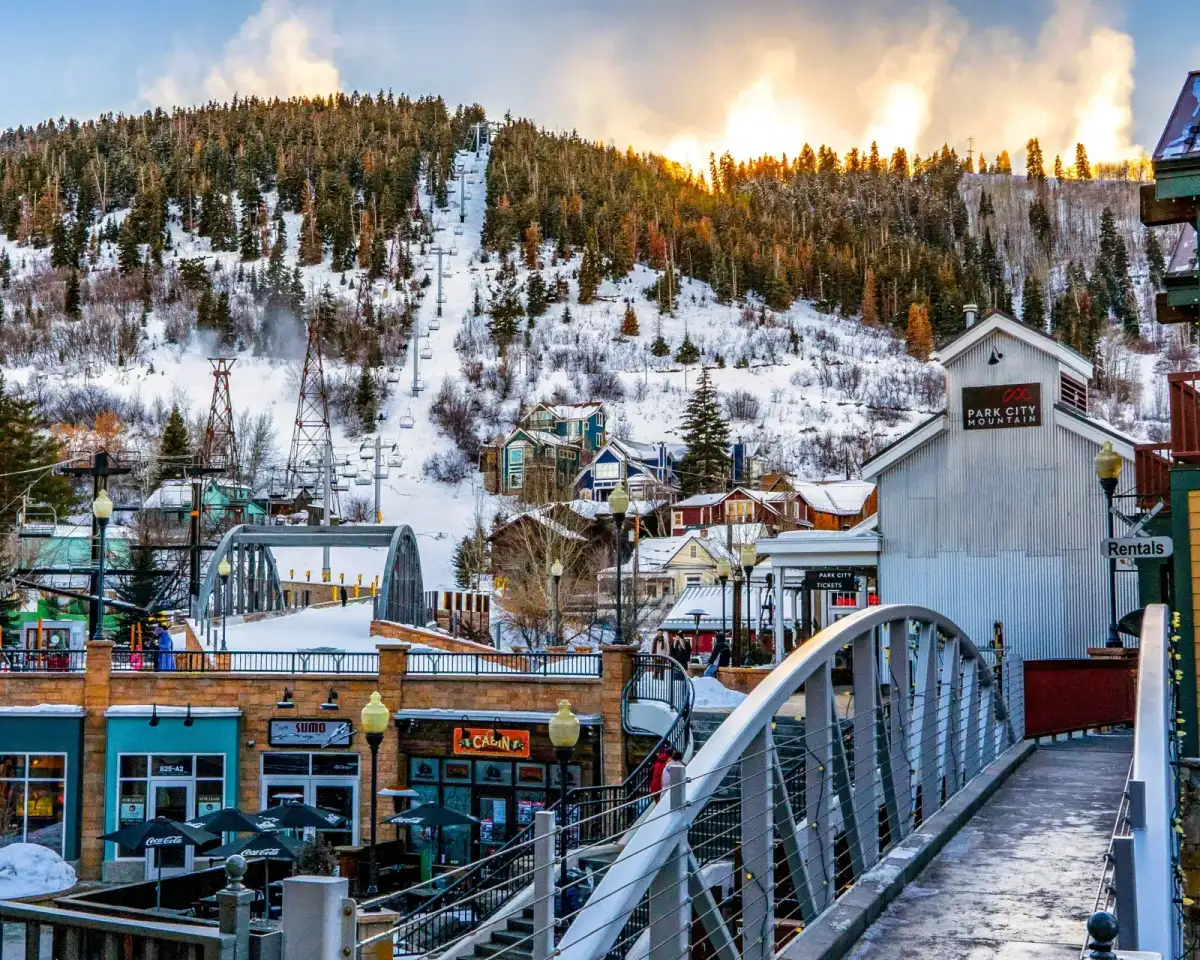
Old Town (Main Street historic core and surrounding hillside neighborhoods) is the heart of Park City’s STR market. The core historic district runs from Park City Mountain’s town lift down Main Street to Heber Avenue, with hillside residential extending up Sandridge Road, King Road, Empire Avenue, and Daly Avenue. Properties here are predominantly 1880s–1900s mining-era cottages and miners’ homes that have been gut-renovated into 3-4BR ski rentals over the past 20 years. Prices run $1.1M–$2.4M for a renovated 3BR with ski-in/ski-out access via the Town Lift or short walk. Old Town has a historic-overlay STR ordinance: the entire historic district is grandfathered for STRs with required city registration and the Park City Mountain Resort Town Lift area allows true ski-in/ski-out properties at premium pricing. The ski-in/ski-out properties on Empire Avenue (especially the slopeside Empire Avenue corridor) command $1.6M–$3.4M and represent the highest-rent STR product in Park City.
Canyons Village (now Park City Mountain’s Canyons base area) forms the second major STR ecosystem. Properties here are 1990s–2020s purpose-built ski condos and townhomes: Sundial Lodge, the Lift / Apex / Vue, Silverado Lodge, Westgate Park City, Hyatt Centric, and the new Pendry Park City. Prices run $725K–$2.4M for 1-3BR resort condos with ski-in/ski-out access via the Canyons Cabriolet or the Sunrise Express. Canyons Village is permanently resort-zoned with STR rights and has the strongest year-round rental performance of any Park City sub-market; Olympics 2034 demand will be heavily concentrated here.
Deer Valley and Empire Pass form the highest-end ski-rental market in North America. Deer Valley (the original Edgar Stern resort, now expanded into the Mayflower side) is famous for Mayflower Mountain Resort’s $1.2B 2024-2026 expansion that more than doubles the ski terrain and adds the Mayflower Hotel. Deer Valley properties run $2.5M–$8M+ for slopeside chalets and condos in Empire Pass, Silver Lake Village, Snow Park, and the new Mayflower neighborhoods. Empire Pass is the highest-elevation, highest-priced micro-market: slopeside ski-in/ski-out residences at Talisker Club, Stein Eriksen Lodge, and the Empire Pass HOA-managed properties. STRs are allowed but premium-managed (most owners use Stein Collection or Deer Valley Property Management for distribution, with owner-direct STR being uncommon).
Park Meadows, Pinebrook, and Silver Springs form the family-residential corridor: generally owner-occupied or LTR rather than STR, but some neighborhoods allow STRs. Properties run $725K–$1.6M for 4-5BR family SFRs. Pinebrook in particular has strong rental economics for traveling-clinician MTRs (the Park City Hospital and Intermountain Healthcare presence) and for tech-relocation MTRs (Salt Lake City’s tech corridor is 35 minutes away).
Promontory is the gated mountain-club community 10 miles north of Park City: Pete Dye and Jack Nicklaus golf courses, full equestrian center, swim club, summer-mountain-village amenities. Residences run $2.4M–$12M+. STR rules are governed by the Promontory HOA (heavily restrictive; most owners use full-service rental management when renting at all).
Heber Valley and Midway sit 15-20 minutes south over the pass: a separate Wasatch County market with lower prices ($625K–$1.4M for similar SFRs) and growing STR demand as Park City overflow. Heber’s Soldier Hollow (the 2002 Olympic venue, returning in 2034) is bringing fresh investor attention.
The Olympics 2034 cycle is the macro driver. The IOC awarded Salt Lake City the 2034 Winter Olympics in July 2024, with Park City and Heber Valley hosting most of the snow events: Park City Mountain (alpine skiing, snowboarding), Deer Valley (slopestyle, moguls), Soldier Hollow (cross-country, biathlon), and the Utah Olympic Park (ski jumping, bobsled, luge). Infrastructure investment has begun: $1.4B+ in transportation upgrades (Heber Bypass, Park City UDOT improvements), $300M+ in resort capacity (Mayflower Mountain Resort, Park City Mountain expansions, Deer Valley East Village), and $200M+ in housing/lodging. Investor demand is structurally elevated through 2034 and likely beyond.
Why Cost Segregation Hits Different in Park City
Park City’s cost-seg story is driven by four structural features: three that increase the FF&E and 15-year buckets, and one (Utah’s clean tax conformity) that compounds the federal benefit unusually well.
Ski-resort FF&E density runs higher than typical mountain rentals. A working Park City STR requires a complete ski-themed FF&E package: complete bedroom sets in 3-4 bedrooms (Stearns & Foster or comparable), living-room set with mountain-resort design, dining for 8-10, premium kitchen package (generally Sub-Zero/Wolf in Empire Pass and Deer Valley properties; Bosch/Thermador in Old Town renovations), full ski storage and gear infrastructure (boot dryers, ski lockers, gear-room shelving), hot tub on dedicated electrical pad, gourmet outdoor BBQ kitchen on covered deck, smart-home Lutron lighting and Crestron AV, premium audio across living spaces, dedicated ski-room with heated mudroom flooring, and the wall-to-wall Pendleton or Ralph Lauren Home decorative finishes that define the Park City rental aesthetic. On a $1.45M Old Town townhouse, the 5-year FF&E bucket alone routinely runs $68K-$92K, at the high end of any residential STR category we model.
Snow-load and mountain-climate construction adds 15-year MACRS basis. Park City sits at 7,000 feet elevation with 350+ inches of annual snowfall in the high country. Properties are built to handle snow loads the rest of the country never sees: heavy-duty heated driveways and walkways (mandatory in Empire Pass and most Deer Valley, common in Old Town and Canyons), heated roof edges and ice-dam mitigation systems, snow-management drainage and French-drain systems, hot-tub winterization infrastructure, dedicated boot-and-ski drying rooms with separate HVAC, in-floor radiant heating throughout (snow boots tracking in moisture necessitate this), and the multi-zone snow-melt systems on entries and roofs. The 15-year MACRS bucket on a representative $1.45M Old Town townhouse runs $115K-$165K, driven primarily by the heated driveway, hot tub, snowmelt systems, and exterior hardscaping.
Ski-in/ski-out access rights and slopeside infrastructure are documentable depreciable basis. Properties with true ski-in/ski-out access (Empire Avenue, Empire Pass slopeside, Silver Lake Village, Mayflower) carry HOA-allocated shares of slope-side easements, ski-trail grooming infrastructure, on-mountain warming hut, and the lift-corridor right-of-way improvements. These reclassify into 15-year MACRS as exterior land improvements at the unit level (pro-rata share). Even on Old Town properties with town-lift access, the elevated wood walkway infrastructure, ski-route signage, and the Town Lift base-area common improvements add depreciable 15-year basis at the unit level.
Utah flat-tax conformity is unusually clean. Utah moved to a 4.55% flat income tax in 2026 (down from 4.65% in prior years, with further reductions scheduled). Utah conforms to federal bonus depreciation: the same 100% bonus-depreciation amount the federal return shows is allowed on the Utah return. For an investor in the 37% federal bracket plus 4.55% Utah bracket, the combined Year-1 marginal rate on a reclassification is 41.55%. A $348K reclassification produces $128,760 federal + $15,834 Utah = $144,594 in combined Year-1 savings.
Worked Example: Park City
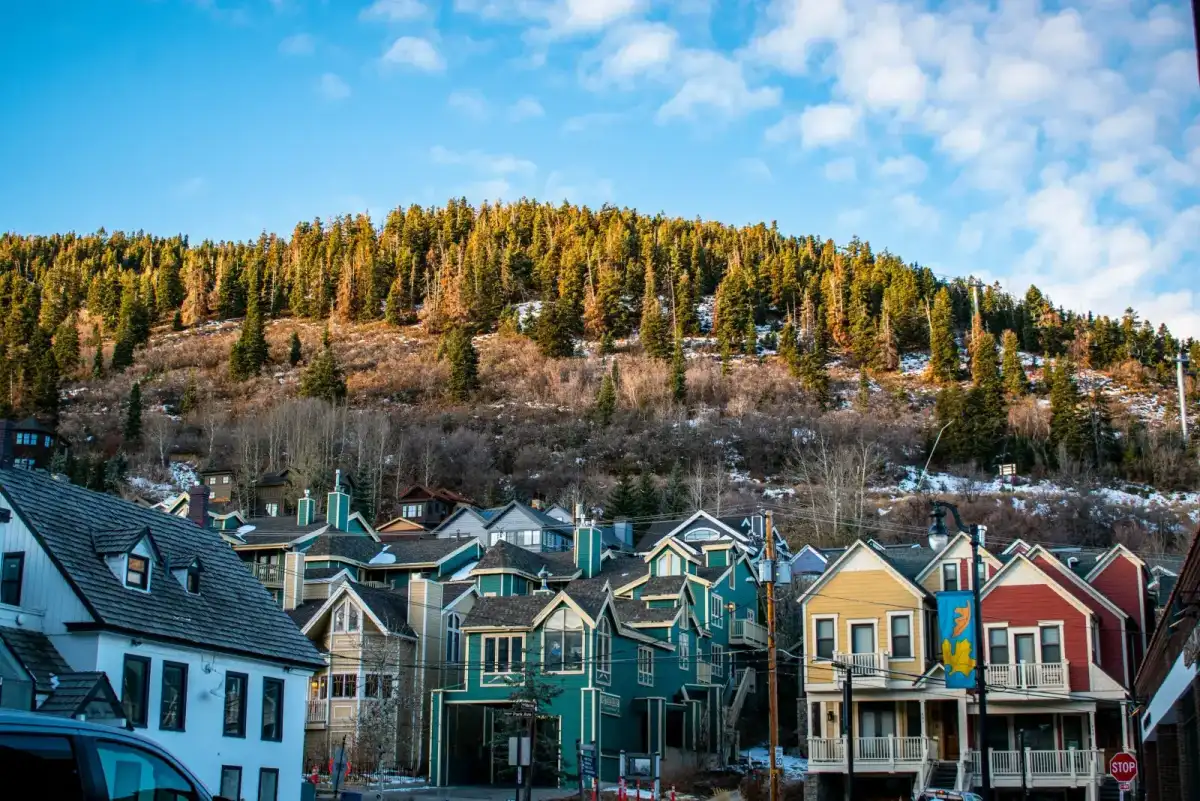
A 3BR/3.5BA renovated mining-era cottage in Old Town’s Empire Avenue ski-in/ski-out corridor, originally built in 1894 as a miners’ boarding house and gut-renovated in 2018-2020 to a high-end STR specification. The property sits 80 feet from the Park City Mountain Resort Town Lift base and offers true ski-in/ski-out access via the Empire Avenue ski path. Acquired in late 2024 for $1.45M. Sleeps 8 across a king master, queen suite, and a third bedroom with two queen beds. Operates as STR through Inhabit Park City and direct platforms (Airbnb, VRBO), averaging $1,150/night peak ski season (Dec 26-Feb 28) and $385/night summer/shoulder, generating roughly $185K gross annual revenue on 235 booked nights.
After pulling $145K of land value (Empire Avenue ski-in lots run roughly 10% of value due to the historic-overlay setbacks), the depreciable basis lands at $1.18M. Hold $125K of structural shell allocation in 27.5-year residential.
The cost segregation study identifies $86K in 5-year property: the complete ski-rental FF&E package (3 complete bedroom sets with Stearns & Foster mattress sets, pillow-top toppers, decorative pillows, lamps, nightstands, dressers, framed Park City Mountain artwork; living room set with leather sofa, two club chairs, coffee table, side tables; dining set for 10; bar/island seating for 4; 4 smart TVs across living room, master, and two bedrooms; kitchen appliance package (Sub-Zero side-by-side, Wolf 6-burner range, Wolf microwave drawer, Asko dishwasher, Wolf coffee system, KitchenAid stand mixer, Vitamix, complete cookware/dishware/glassware/flatware service for 12); bathroom linens (4 sets per bath, premium towels and robes); full ski-room equipment (6 boot dryers, ski/board storage racks for 8, gear-drying infrastructure, beanies/gloves loaner inventory); smart-home Lutron lighting controls and Crestron audio across all rooms; smart locks; Nest thermostats with multi-zone control; Ring/Arlo security; ski-room and laundry FF&E). $9K in 7-year property: built-in master closet system, kitchen banquette and built-in coffee bar, ski-room custom built-ins, the home’s primary mudroom built-in storage. $158K in 15-year property: the heated driveway and walkway snowmelt system (4-zone hydronic radiant), the heated roof edges and ice-dam mitigation system, the dedicated ski-room HVAC zone with separate furnace, the in-floor radiant heating throughout the main and lower levels, the ski-equipment rinse station with floor drain, the covered deck snow-management drainage, the rear-yard hot tub on dedicated electrical with cover lift assist, the gourmet outdoor BBQ kitchen on the covered deck (gas line, refrigerator drawer, sink, granite countertop, exterior overhead heating), the paver patios and snow-management drainage system, the fenced rear yard with snow-load gates, exterior accent and security lighting throughout, the 240V Level 2 EV charger in the garage, the dedicated 1,000-gallon propane tank for the hot tub heater and BBQ, and the unit’s pro-rata share of Empire Avenue’s elevated wood walkway and Town Lift base-area common improvements.
Total reclassified: $348K, or roughly 29.5% of the depreciable basis. At 37% federal and 4.55% Utah, that is $128,760 federal + $15,834 Utah = $144,594 in Year-1 combined savings.
The STR-positioning matters for material participation. Empire Avenue ski-in rentals operate on weekly Saturday-to-Saturday turnover during peak ski season and a mix of nightly/weekly during summer, with overall average stay running 5.2 days, comfortably under the 7-day STR special test threshold. Material participation is established through the 100-hours-and-no-one-spending-more test. The owner-investor (a Salt Lake City-based pediatric surgeon at Primary Children’s with $895K W-2 income and $185K annual locum 1099 income) clears the 100-hour test through guest communication, ski-season turnover-day quality control (he visits the property 14-18 weekends per year for hands-on management), supply runs, and direct property management coordination with Inhabit Park City. With material participation established, the federal accelerated deductions offset W-2 income directly.
Who Is Doing This in Park City
The Park City STR investor profile clusters around four buyer types, each with distinct economics and time-on-market patterns.
The Salt Lake City / Wasatch Front investor is the most common archetype: physicians, tech executives at Adobe / Domo / Lucid / Pluralsight, Goldman Sachs SLC operations leaders, mining and oil & gas executives, and senior university administrators. Annual income $400K-$1.5M, federal 35-37% bracket. They buy Park City as a second home with rental economics, drive up I-80 East over Parley’s Summit on weekends, and self-manage the rental between work weekdays. The Pinebrook and Park Meadows neighborhoods are dominated by this profile.
The Bay Area / mainland tech investor is the second-largest archetype, particularly for Empire Pass, Deer Valley, and Promontory acquisitions. Senior engineering, product, or operations leaders at Google, Meta, Apple, Stripe, OpenAI, Anthropic, and the Series-B-and-up tech ecosystem with $500K-$2M household income. Many own a primary residence in Atherton/Palo Alto/Marin and acquire Park City as a winter-second-home with rental during off-weeks. The combination of Utah’s federal-conforming tax structure (which their Bay Area properties don’t get on the CA side) plus the structural quality of Park City inventory drives meaningful capital flow from the Bay.
The mainland physician / surgeon investor (particularly orthopedic surgeons, cardiologists, anesthesiologists) represents 15-20% of Empire Pass and Deer Valley acquisitions. Many have a personal connection to Park City through years of family ski trips. The §469 STR special test plus material participation enables full W-2 offset on accelerated depreciation, which often saves $100K-$200K in federal taxes per acquisition year.
The institutional / multi-property STR operator is the fourth and growing profile. Several Park City-based investment groups (Inhabit Park City’s investment vehicle, Saxon Real Estate Partners, Stein Collection) are accumulating multi-unit Old Town and Canyons Village portfolios for institutional STR yield, with cost segregation as a recurring annual practice across the portfolio. These investors generally run §469(c)(7) REPS election with one principal aggregating all properties into a single rental activity for material participation.
A fifth profile worth flagging given the Olympics cycle: the foreign investor. The 2034 Olympic announcement has triggered increased Asian and European interest in Park City inventory (particularly Empire Pass and Deer Valley) at the institutional and ultra-high-net-worth tier. These transactions generally use Utah LLCs and require US-CPA-coordinated cost segregation under FIRPTA frameworks.
UT Tax Considerations
- Utah has a 4.55% flat income tax in 2026 (reduced from 4.65% in 2024). Cost segregation savings flow through to the Utah return.
- Utah fully conforms to federal bonus depreciation. The 100% bonus-depreciation amount on the federal return is allowed in the same Year-1 amount on the Utah return: clean math, no straight-line MACRS state-conformity workaround.
- Utah fully conforms to §179. The federal $1.16M annual cap applies on the Utah return as well.
- Summit County effective property tax rate runs 0.51-0.61%, among the lowest in the country. Property tax classification is uniform across primary, second-home, and STR uses (Utah does not impose a separate STR property-tax class). Property tax is unrelated to depreciation but the low rate is part of why Park City’s high acquisition prices pencil.
- Utah depreciation recapture on sale follows federal rules (25% on §1250 unrecaptured gain) plus the 4.55% Utah ordinary income layer. Combined federal + state recapture rate: roughly 29.55%, substantially below CA, NY, or HI.
- Utah’s Transient Room Tax applies to STR rental income at 3-4.25% (varies by jurisdiction); Summit County adds 4.25%. Total occupancy tax in Park City is roughly 12-13.25% combined sales + transient room. These are separate from the cost segregation analysis.
- 1031 exchanges fully recognized. Many multi-property Park City investors plan 1031 chains at the portfolio level to defer combined federal + state recapture indefinitely.
Common Park City Investment Properties
- 3-4BR Old Town historic-renovated mining-era cottage (Empire Avenue, Sandridge, King, Daly Avenue corridors)
- 2-3BR Canyons Village ski-in condo (Sundial, the Lift, Apex, Vue, Silverado)
- 2-3BR Old Town walking-distance condo (Park Avenue, Lower Main Street)
- Empire Pass / Silver Lake Village ski-in/ski-out chalet or condo
- Mayflower Mountain Resort condo or chalet (2024-2026 new construction)
- Deer Valley Snow Park or Silver Lake mid-mountain SFR
- 4-5BR Park Meadows or Pinebrook family SFR (often LTR/MTR rather than STR)
- Promontory mountain-club residence (full-service rental management)
- Heber Valley / Midway SFR (Park City overflow market)
Depreciable Features We Commonly See in Park City
- 4-zone hydronic radiant heated driveways and walkways (snowmelt systems)
- Heated roof edges and ice-dam mitigation systems
- In-floor radiant heating throughout main living levels
- Dedicated ski-room HVAC zone with separate furnace
- Boot dryers (multiple, generally 4-8 per property)
- Ski/board storage racks, gear-room shelving, mudroom built-ins
- Hot tubs on dedicated electrical pads with cover-lift assists
- Gourmet outdoor BBQ kitchens on covered decks
- Paver patios, fire pits, and outdoor entertainment hardscape
- Snow-management drainage and French-drain systems
- Sub-Zero/Wolf or Bosch/Thermador kitchen appliance packages
- Stearns & Foster, Tempur-Pedic mattress sets in every bedroom
- Lutron whole-home lighting controls and Crestron AV systems
- Multi-zone Nest thermostats with smart-home integration
- Ring/Arlo security cameras and smart locks
- 240V Level 2 EV chargers (mandatory in some HOA new-construction approvals)
- Whole-house generators (Generac 22-30kW)
- Ski-themed decorative finishes (Pendleton, Ralph Lauren Home, mountain-resort decor)
- Pro-rata share of resort base-area common improvements (15-year MACRS)
- HOA-allocated ski-trail and lift-corridor easements
What People Worry About (and What Actually Happens)
“My Old Town historic property has a historic-overlay STR ordinance. Does that affect cost seg?”
The Old Town historic-overlay STR ordinance grandfathers existing STRs in the historic district with city registration requirements. It does NOT affect the cost segregation engineering analysis at all: depreciable life and component classification are determined by the property’s components, not by the booking platform or zoning overlay. What the historic overlay DOES affect is the structural depreciation schedule on the historic shell: properties listed on the National Register of Historic Places or designated as Park City Historic Landmarks may qualify for the 20% Federal Historic Tax Credit on qualified rehabilitation expenditures. We coordinate with your CPA when the property has a Federal Historic Tax Credit overlay; the cost segregation analysis runs independently and complements (rather than conflicts with) the historic credit. Renovation and partial-disposition rules →
“Olympics 2034 demand is going to dominate my hold-period rental economics. How does that interact with cost seg timing?”
The Olympics 2034 demand cycle is structurally bullish for Park City rental income from 2030-2035, and the 2034 Games themselves will produce an unusual single-quarter revenue spike that may reach 8-15× normal February occupancy at premium rates. The cost segregation analysis at acquisition captures the depreciation deductions in Year 1 (or via Form 3115 lookback if you’ve already owned the property) regardless of future revenue patterns. What the Olympics cycle DOES affect is your sale timing strategy: many investors are explicitly targeting hold-through-2035 timelines and sale into the post-Olympics premium pricing window, with cost segregation accelerated depreciation enhancing annual cash flow during the hold. The §1250 recapture at sale can be deferred indefinitely via 1031 exchange. Selling after cost segregation →
“My CPA says the Sub-Zero/Wolf kitchen package goes on a 39-year commercial schedule because the property is being used as a STR business.”
Your CPA may be conflating two distinct concepts. The depreciable life of an asset is determined by its CLASS, not by how it’s used or whether the rental is STR vs LTR. A Sub-Zero refrigerator in a residential rental property is 5-year MACRS personal property under Asset Class 57.0 regardless of whether the property is STR or LTR. The MACRS class for the building shell (27.5-year residential vs 39-year commercial) is determined by whether the dwelling unit is “residential rental property” under §168(e)(2), which ALL Park City rentals (STR or LTR) qualify as because they’re dwelling units rented to provide living quarters. The STR classification under §469 affects material participation rules, not the MACRS recovery period. We document the residential-rental classification in every Park City report. Residential vs commercial cost segregation →
Why Cost Segregation Works for Park City Ski Rentals

Park City ski rentals carry the highest 15-year MACRS site-improvement bucket of any residential market we model nationally. The drivers are stacked: snowmelt-driveway and heated-walkway systems, heated roof edges, in-floor radiant heating, dedicated ski-room HVAC, hot tub infrastructure, gourmet outdoor BBQ kitchens on covered decks, snow-management drainage, multi-zone propane tank installations, EV chargers, and the HOA-allocated share of resort base-area common improvements. The 15-year bucket alone routinely runs 35-45% of the total accelerated reclassification, substantially higher than the 25-32% range we see in non-mountain residential markets.
A typical Old Town renovated townhouse carries: a heated driveway and walkway snowmelt system at $48K-$72K depreciable basis, an in-floor radiant heating system at $24K-$38K, a hot tub with infrastructure at $14K-$22K, a gourmet outdoor BBQ kitchen at $12K-$18K, and the dedicated ski-room HVAC and gear-drying infrastructure at $8K-$14K. Combined: $106K-$164K of 15-year MACRS basis on a $1.45M Old Town property, at the absolute high end of any residential category nationally.
Beyond the 15-year bucket, the 5-year FF&E side runs $68K-$92K on a representative Park City STR, driven by Sub-Zero/Wolf kitchen packages, Stearns & Foster mattress sets, Lutron/Crestron smart-home, and the ski-room equipment infrastructure (boot dryers, gear racks, mudroom built-ins).
Utah’s federal-conforming tax structure adds the final structural advantage. The 4.55% Utah Year-1 deduction stacks cleanly onto the 37% federal Year-1 deduction without timing-difference complications. On a $348K reclassification, the combined Year-1 savings are $144,594 — versus $128,760 federal-only on a Texas equivalent. Utah’s clean conformity is the multiplier.
With 100% bonus depreciation permanently restored under the One Big Beautiful Bill Act (signed July 2025), every reclassified dollar is deductible in the first year on both federal and Utah returns. For owner-managed Park City investors who clear material participation under the STR special test, these deductions offset W-2 and 1099 income directly without REPS qualification.
Who This Example Applies To
- Owner-managed Old Town, Canyons Village, Empire Pass, or Deer Valley STR investors
- Salt Lake City / Wasatch Front investors with $400K-$1.5M AGI in 35-37% federal bracket
- Bay Area / mainland tech investors holding Park City as second-home + STR
- Mainland physician / surgeon investors with ski-area family connection
- Multi-property Park City portfolio investors operating under §469(c)(7) REPS election
- Pinebrook / Park Meadows MTR investors targeting Park City Hospital traveling clinicians
- Heber Valley overflow investors with new construction in Olympic-zone neighborhoods
- Taxpayers in the 32-37% federal bracket plus 4.55% Utah bracket
If your property is a smaller condo or a non-ski Park Meadows family SFR without snowmelt and ski-room infrastructure, the 15-year bucket compresses substantially: the unusual Park City advantage is the snowmelt + ski-room + hot tub + outdoor BBQ stack that defines high-end ski rentals. Properties without these amenities still produce solid cost-seg outcomes (5-year FF&E and standard 15-year improvements), just at the lower end of the Park City range. Actual results vary based on property age, snowmelt-system documentation, ski-area access classification, and HOA amenity-share rights.
Compare: Park City Properties at Different Price Points
| Price | Accelerated | Year-1 Combined Fed+UT Savings | Study Cost | ROI |
| $725K Pinebrook 4BR SFR | $172,000 | $71,460 | $995 | 72x |
| $1.15M Canyons Village 2BR | $278,000 | $115,489 | $1,295 | 89x |
| $1.45M Old Town ski-in | $348,000 | $144,594 | $1,295 | 112x |
| $1.95M Deer Valley Snow Park | $478,000 | $198,609 | $1,595 | 125x |
| $3.4M Empire Pass slopeside | $848,000 | $352,344 | $2,495 | 141x |
| $5.5M Promontory residence | $1,348,000 | $560,094 | $3,995 | 140x |
Compare: $1,450,000 Across Property Types
| Property Type | Accelerated | Year-1 Combined Fed+UT Savings | Study Cost | ROI |
| Old Town ski-in/ski-out STR | $348,000 | $144,594 | $895 | 162x |
| Park Meadows family LTR | $268,000 | $111,354 | $895 | 124x |
| Pinebrook hospital MTR | $295,000 | $122,567 | $895 | 137x |
| Old Town small-MF (duplex) | $295,000 | $122,567 | $995 | 123x |
Frequently Asked Questions
How much does a cost segregation study cost in Park City? For a representative $1,450,000 Park City investment property, a Cost Seg Smart study runs $1,295. Full pricing: $495 (under $300K), $895 ($300K–$700K), $995 ($700K–$1M), $1,295 ($1M–$1.5M), $1,595 ($1.5M–$2M), $1,995 ($2M–$3M), $2,495 ($3M–$4M), $3,995 ($4M–$6M), $5,995 ($6M–$8M), $7,995 ($8M–$10M). Commercial and 5+ unit multifamily studies start at $1,995; 2–4 unit multifamily from $995. Most residential studies are delivered the same business day once your documents are in, and all within two business days, with the CPA-Ready Guarantee: full refund if your CPA can’t use the report.
Why does Park City produce a larger 15-year MACRS bucket than other ski markets?
Three structural drivers stack: (1) snowmelt-driveway systems are nearly universal at the $1M+ price point (heated driveways, walkways, and roof-edge systems are mandatory for HOA approval in most Old Town and Empire Pass developments and add $48K-$72K of depreciable 15-year basis on a representative property); (2) in-floor radiant heating is standard on the main and lower levels of high-end Park City rentals, a 15-year MACRS site improvement that adds $24K-$38K; (3) the gourmet outdoor BBQ kitchen on a covered deck (gas line, refrigerator drawer, granite countertop, exterior heating) adds another $12K-$18K. Combined with hot tub infrastructure, multi-zone propane tank installations, and HOA-allocated resort base-area common improvements, the 15-year bucket on a representative Park City property is 35-45% of total reclassification, substantially higher than non-mountain markets.
How does Utah conformity to federal bonus depreciation actually affect my Year-1 savings?
Cleanly. Unlike California, Massachusetts, or New York (which decouple state depreciation from federal bonus and require the state-side benefit to be recovered over 5/7/15-year MACRS straight-line schedules), Utah recognizes the full 100% bonus-depreciation amount in Year 1 on the Utah return. On a $348K reclassification at 37% federal + 4.55% Utah, you capture $128,760 federal + $15,834 Utah = $144,594 in Year-1 combined savings, all in the year of the study. This is structurally different from CA where the state-side $15K layer would be spread over 15 years. Utah’s clean conformity adds roughly 12% to the Year-1 cost-seg ROI compared to a federal-only analysis, meaningful at scale.
Olympics 2034 is 8 years away. Should I wait to acquire?
The IRR math generally argues against waiting. Cost segregation accelerates Year-1 deductions; Olympics 2034 demand will produce premium revenue from roughly 2030-2035; and the 2024-2026 acquisition window has Park City prices that, while at all-time highs, are likely lower than 2030-2034 pricing as Olympic-cycle demand compounds. Most investors targeting an Olympics hold are acquiring 2025-2027 with cost seg in Year 1, riding the demand cycle through 2034, and planning either a sale into the post-Olympic premium window or a 1031 exchange chain to defer recapture indefinitely. The Form 3115 lookback option also lets you optimize timing: acquire now, run cost seg in a year when other passive income materializes, or defer the lookback into a year of higher AGI.
Learn More About Cost Segregation
- What Is Cost Segregation?: Full explanation of how the study works and what you receive
- How Much Does a Cost Segregation Study Cost?: Pricing breakdown by property type and value
- State Tax Rules and Cost Segregation: How Utah conformity (vs CA non-conformity) affects timing
- Form 3115 Lookback Study: Catch up missed depreciation on a property you already own
Ready to See Your Actual Park City Numbers?
Want a number for a specific Park City property? Use the calculator — it’s pre-set with property-type defaults you can adjust to match your basis and tax bracket.
CPA use note: These figures estimate the size of the depreciation deduction. Whether the loss is usable in the current year depends on passive-activity rules, STR material participation, REPS status, entity structure, depreciable basis, and state conformity. Your CPA decides how and when it is applied. Specialty and site components (equipment, casework, docks, pools, arenas, tenant improvements, and similar) are only classified when you own them and they are included in the depreciable basis being studied.
How should Park City, UT investors choose a cost segregation provider?
For a Park City, UT investor buying a property in the $1,450,000 range, the choice of provider is a major controllable variable in the return. The IRS Audit Techniques Guide sets the quality characteristics an engineering-based study should meet — industry-standard construction cost data, MACRS classification, and component-level documentation — but it does not make every provider's work identical; rigor, cost, and turnaround still vary.
Traditional engineering studies often run several thousand dollars and can take several weeks, because they include on-site inspections, sales discovery calls, and scheduling overhead. The IRS Cost Segregation Audit Techniques Guide does not prescribe an on-site inspection as a standalone requirement; it sets out the quality characteristics of an engineering-based study — component-level classification, a documented and supportable cost derivation, and a clear audit trail — and describes how a physical inspection can contribute to meeting them.
Modern automated providers (such as Cost Seg Smart) deliver an engineering-based, IRS ATG-aligned study using property records, documents, photos, and recognized construction-cost data, typically from $495 and often the same day. For a Park City, UT investor at a high combined bracket, that cost and speed difference is meaningful. The CPA-Ready Guarantee (full refund if the report can't be used by your CPA) plus the 60-day money-back policy makes the decision essentially risk-free on the report itself.
The automated path is best-fit for owners who can provide closing documents and property photos online (no in-person visit required) and want the report in time to file the current year's return rather than the next one.
All Cost Seg Smart studies include the CPA-Ready Guarantee (full refund if your CPA can't use the report) plus a 60-day money-back policy. Straightforward residential studies are often delivered the same day and completed remotely; larger or more complex commercial studies take longer and may include an on-site observation.