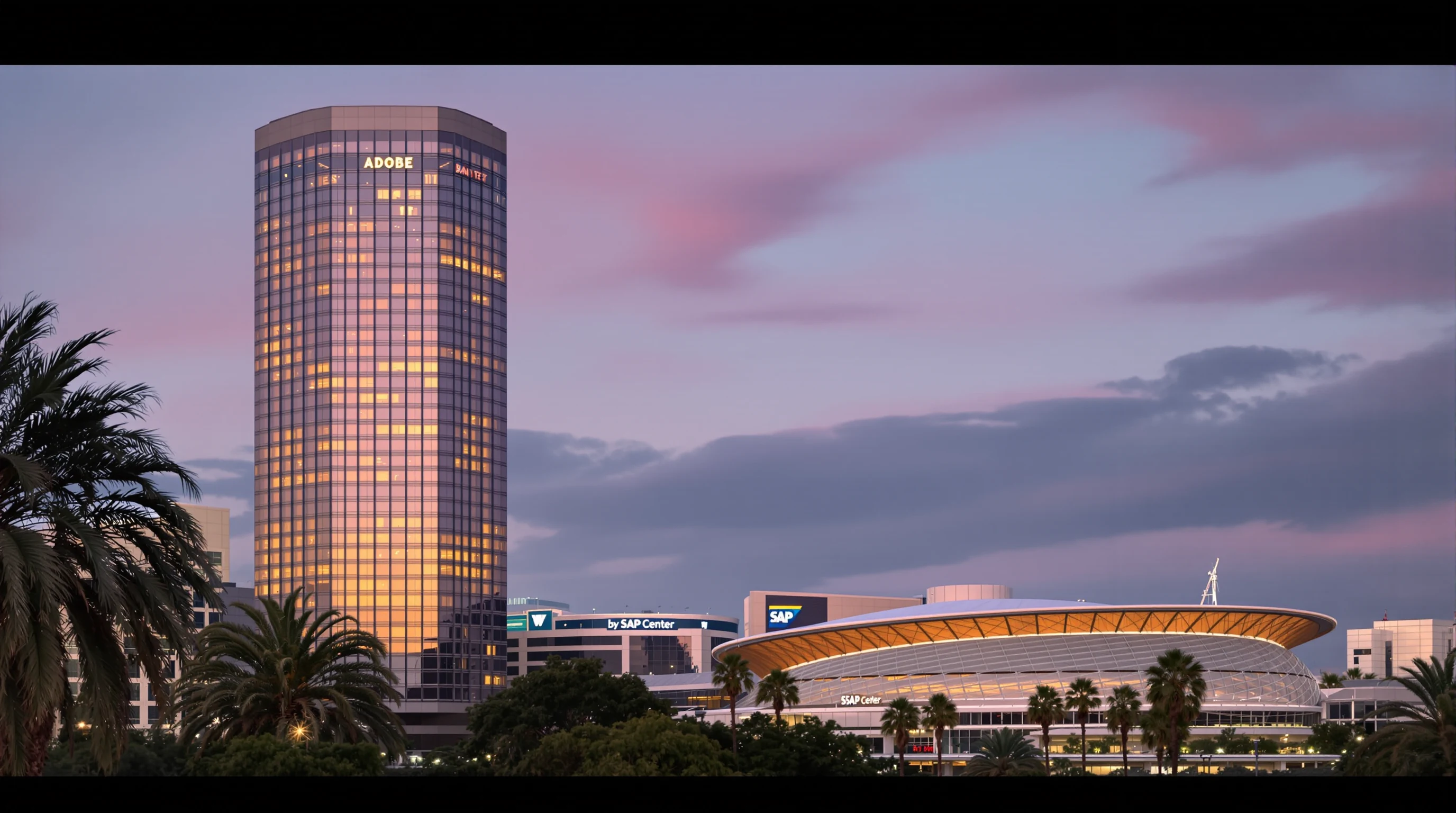
If you earn a senior W-2 + RSU in San Jose, Cupertino, Santa Clara, or anywhere in the South Bay, your Year-1 federal benefit on a cost-seg deduction runs ~40.8% (federal 37% + NIIT 3.8%). California does not conform to federal bonus depreciation, so the California share follows over the MACRS recovery period rather than Year 1. South Bay’s profile is older + more senior + more semiconductor-and-networking-heavy than Palo Alto’s startup-adjacent demographic, and the cost-seg strategy aligns differently as a result.
- $202,000 Accelerated Depreciation (typical premium STR worked example)
- $82,000 Est. Year-1 Tax Savings (federal 37% + NIIT 3.8%; California portion deferred over MACRS)
- 82x Return on Study Cost
Want a number for your specific situation? Use the calculator, preset for property-type defaults you can adjust to your basis and bracket.
Who are South Bay cost segregation investors?
San Jose’s cost-seg buyer pool is older, more senior, more semiconductor + networking than Palo Alto’s startup-equity demographic:
- Senior FAANG + Apple Cupertino (Senior Principal, Distinguished Engineer, Director-level engineering at Apple Park, Google Mountain View, Meta): $500K–$3M+ base + RSU
- Networking + semiconductor seniors (Cisco, NVIDIA, AMD, Broadcom, Marvell, Arista, Juniper): $400K–$2M+ base + RSU
- Big-tech IPO alumni and post-IPO senior employees (10+ years tenure at Adobe, Cisco, Symantec, eBay): $400K–$1.5M + accumulated equity
- Tech executives turned VC / angel investors: variable comp, often K-1 from advisory + LP positions
The Year-1 marginal-rate stack:
- Federal: 37%
- NIIT: 3.8%
- Year-1 combined (federal + NIIT): ~40.8%
California’s 13.3% rate applies to the same depreciation but over the MACRS recovery period, not as a Year-1 add. California does not conform to federal §168(k) bonus depreciation, so the California share follows over the MACRS recovery period rather than Year 1. See California bonus depreciation: non-conformity rules.
San Jose’s typical investor is older than Palo Alto’s: late 30s to mid 50s, often with kids, often with significant accumulated RSU wealth from a 10+ year tech career. The cost-seg strategy here is less about pre-IPO equity timing (Palo Alto’s edge) and more about deploying accumulated post-IPO RSU into yield-generating STR property that produces Year-1 tax deductions to offset ongoing high-bracket income.
Verify with your CPA. Combined-rate math depends on filing status, AGI thresholds for NIIT, and the property’s placed-in-service date for current CA-federal conformity treatment.
Why cost seg pays more if you live in the South Bay
A typical $800K–$1.5M out-of-state STR reclassifies 19–39% of basis under permanent federal 100% bonus depreciation. Every $1 of accelerated depreciation is worth ~$0.408 in Year-1 federal cash savings (37% + 3.8% NIIT). California does not conform to federal bonus depreciation, so the California share follows over the MACRS recovery period rather than Year 1.
For a senior FAANG or networking-tech investor with $1M+ annual W-2 + RSU income, a $200K accelerated-depreciation deduction in Year 1 generates ~$82K in Year-1 federal savings. That’s a significant offset against W-2/RSU income that compounds across multiple properties, with the California portion recovering over the standard MACRS schedules.
Earning W-2 income? The W-2 earner’s guide to cost segregation covers the seven-day rule, the participation tests, and a self-check for which test your hours meet.
Where do South Bay investors buy property?
South Bay investors flow capital to STR markets within a 3-5 hour drive or short flight:
- Lake Tahoe: Closest premium mountain/lake STR, 4-hour drive; CA combined bracket applies but premium ADR offsets.
- Park City, UT: Premium ski STR, UT 4.85% flat state tax adds modest savings.
- Maui, HI: Premium Pacific STR; direct flight from SJC.
- Sedona, AZ: Premium spiritual/wellness STR; AZ no state tax stack.
- Joshua Tree, CA: Design-driven desert STR.
The South Bay → Tahoe pipeline is most visible: Tahoe’s premium ADR + drivable access + senior FAANG investor profile aligns. Many South Bay investors also build a 2-3 property STR portfolio (Tahoe + Park City + Maui, for example) for diversification.
An illustrative San Jose investor’s worked example
An Apple Senior Engineering Manager earning $625K base + $400K RSU + $150K bonus, residing in Cupertino, buys a 4BR Park City ski-in cabin for $950K with $35K immediate FF&E. After $230K in land, the $720K adjusted basis includes $86K in 5-year assets (hot tub, ski-storage equipment, smart-home, theater, kitchen package, decorative lighting), $32K in 7-year assets (custom furniture, themed bunk rooms), and $84K in 15-year property (mountain-grade deck, retaining walls, snow-drainage drive, fencing).
That’s $202K reclassified into accelerated depreciation in Year 1. At the Year-1 federal rate (~40.8%; 37% + 3.8% NIIT), federal savings come to roughly $82,000. California does not conform to federal bonus depreciation, so the California share follows over the MACRS recovery period rather than Year 1. The Year-1 deduction offsets a large share of the federal tax impact on $200K+ of vesting-year income.
Who doesn’t qualify for cost segregation in South Bay?
REPS is structurally impossible for a full-time senior tech professional: the 750-hour + >50% test conflicts with engineering and management hours. The STR exception (Reg. §1.469-1T(e)(3)(ii), 7-day average stay + 100-hour material participation) is the alternative path.
The 100-hour material participation test means active management. For a South Bay investor with multiple STR properties, the time investment scales: managing 3 properties remotely can exceed 100 hours easily. A senior tech investor with a portfolio of 2-3 STR properties is generally well within the Reg. §1.469-1T(e)(3)(ii) safe harbor.
Frequently Asked Questions
How much does a cost segregation study cost in San Jose? For a representative $950,000 San Jose investment property, a Cost Seg Smart study runs $995. Full pricing: $495 (under $300K), $895 ($300K–$700K), $995 ($700K–$1M), $1,295 ($1M–$1.5M), $1,595 ($1.5M–$2M), $1,995 ($2M–$3M), $2,495 ($3M–$4M), $3,995 ($4M–$6M), $5,995 ($6M–$8M), $7,995 ($8M–$10M). Commercial studies start at $995 and 5+ unit multifamily at $1,995; 2–4 unit multifamily from $995. Most residential studies are delivered the next business day once your documents are in, and all within two business days, with the CPA-Ready Guarantee: free revisions if your CPA flags a problem, and a refund if the report still can’t be used.
How is San Jose different from Palo Alto for cost-seg purposes? Tax-wise, identical: both pay CA’s 13.3% top rate. Where they differ: San Jose skews older + more senior + accumulated post-IPO equity; Palo Alto skews younger + pre-IPO equity + RSU vesting cliffs. The South Bay’s portfolio-building strategy (multi-property STR investing) is more common than Palo Alto’s vesting-timing strategy.
Can I cost-seg multiple properties in the same tax year? Yes. Each property generates its own Year-1 accelerated depreciation deduction. For a senior FAANG investor with $1M+ annual income, deploying 2-3 STR properties in a single calendar year can stack the deductions for a substantial combined offset. Talk to your CPA about how the deductions interact with passive-activity loss limitations.
Does California really conform to federal bonus depreciation? No. California does not conform to federal §168(k) bonus depreciation (R&TC §17024.5) and never has, including after SB 711. You still claim the full federal Year-1 deduction; the California portion is not accelerated and instead recovers over the standard 5/7/15-year MACRS schedules, so it is deferred, not lost. Confirm the federal vs California schedules with your CPA (FTB Form 3885A).
Learn More About Cost Segregation
- What Is Cost Segregation?
- STR Losses Against W-2 Income
- Cost Segregation in Palo Alto — Adjacent Mid-Peninsula investor page
- Cost Segregation in San Francisco
Cost segregation data for San Jose, CA (South Bay) investors
The representative (median) outcome across 50 engine-modeled property scenarios matched to the San Jose, CA (South Bay) investor profile. Year-1 savings shown are the federal benefit (37% + 3.8% NIIT). This state does not conform to federal bonus depreciation, so the state share is not accelerated; it recovers over standard MACRS.
Representative scenarios modeled via Cost Seg Smart's proprietary
engine — IRS ATG-aligned methodology, industry-standard 2026 construction cost data base costs,
calibrated metro multipliers. n=50 fixtures matched to
San Jose, CA (South Bay) investor profile. Not derived from individual
client returns. Methodology v1.0.0, generated
May 2026 (reproducible seed: san-jose-ca_v1_2026-05-17).
Year-1 savings shown are the federal benefit only (37% + 3.8% NIIT). This state does not conform to federal §168(k) bonus depreciation, so the state share is deferred over standard MACRS rather than realized in Year 1; the federal benefit is unaffected. Confirm specifics with your CPA.
Tax law current as of July 2026. Federal: OBBBA restored 100% bonus depreciation under §168(k), permanent for property both acquired and placed in service after January 19, 2025 (property acquired or placed in service on or before that date remains under the prior 40% phase-down); 2026+ stays 100%. State conformity varies; verify with your CPA.
CPA use note: These figures estimate the size of the depreciation deduction. Whether the loss is usable in the current year depends on passive-activity rules, STR material participation, REPS status, entity structure, depreciable basis, and state conformity. Your CPA decides how and when it is applied. Specialty and site components (equipment, casework, docks, pools, arenas, tenant improvements, and similar) are only classified when you own them and they are included in the depreciable basis being studied.
How should San Jose, CA (South Bay) investors choose a cost segregation provider?
For a San Jose, CA (South Bay) investor buying a property in the $950,000 range, the choice of provider is a major controllable variable in the return. The IRS Audit Techniques Guide sets the quality characteristics an engineering-based study should meet — industry-standard construction cost data, MACRS classification, and component-level documentation — but it does not make every provider's work identical; rigor, cost, and turnaround still vary.
Traditional engineering studies often run several thousand dollars and can take several weeks, because they include on-site inspections, sales discovery calls, and scheduling overhead. The IRS Cost Segregation Audit Techniques Guide does not prescribe an on-site inspection as a standalone requirement; it sets out the quality characteristics of an engineering-based study — component-level classification, a documented and supportable cost derivation, and a clear audit trail — and describes how a physical inspection can contribute to meeting them.
Modern automated providers (such as Cost Seg Smart) deliver an engineering-based, IRS ATG-aligned study using property records, documents, photos, and recognized construction-cost data, typically from $495 and often by the next business day. For a San Jose, CA (South Bay) investor at a high combined bracket, that cost and speed difference is meaningful. The CPA-Ready Guarantee (free revisions if your CPA flags a problem, and a refund if the report still can't be used) makes the decision essentially risk-free on the report itself.
The automated path is best-fit for owners who can provide closing documents and property photos online (no in-person visit required) and want the report in time to file the current year's return rather than the next one.
All Cost Seg Smart studies include the CPA-Ready Guarantee (free revisions if your CPA flags a problem, and a refund if the report still can't be used). Straightforward residential studies are often delivered the next business day and completed remotely; larger or more complex commercial studies take longer and may include an on-site observation.