Commercial cost segregation services — by asset class.
Engineering-based reclassification studies for office, retail, restaurant, industrial, medical office, and mixed-use property — built on the IRS framework engineering firms use, with written audit-support scope and asset-class-specific methodology.
Reviewed by Cost Seg Smart Editorial Team · First published: · Last reviewed: · Sources
Commercial cost segregation is the engineering-based reclassification of a commercial property's depreciable basis from the default 39-year MACRS schedule into 5-, 7-, and 15-year property classes per Rev. Proc. 87-56.
| Asset class | Typical reclassification band | Illustrative Year-1 tax savings on $1.5M–$3M (37% bracket) | Study cost (from) |
|---|---|---|---|
| Office | 16–29% | $67K–$241K | $995 |
| Retail | 20–37% | $83K–$308K | $995 |
| Restaurant | 16–29% | $67K–$241K | $2,995 |
| Industrial / warehouse | 15–28% | $62K–$233K | $2,495 |
| Medical office | 16–29% | $67K–$241K | $2,995 |
| Mixed-use | 12–23% | $50K–$191K | $995 |
Six commercial asset classes, six engine paths.
A $2M restaurant doesn't reclassify like a $2M office condo. Different components, different IRS class lives, different math. We differentiate by asset class and by subtype within each class. Reclassification ranges below are the bands we publish per property type; your study's number depends on basis allocation, finish density, and use type.

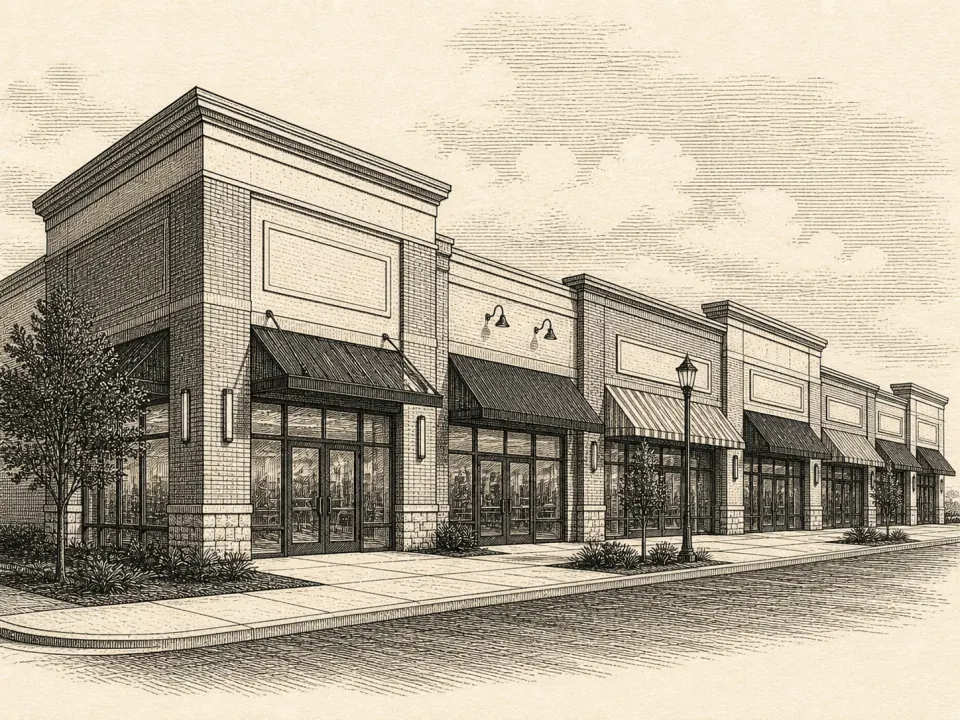
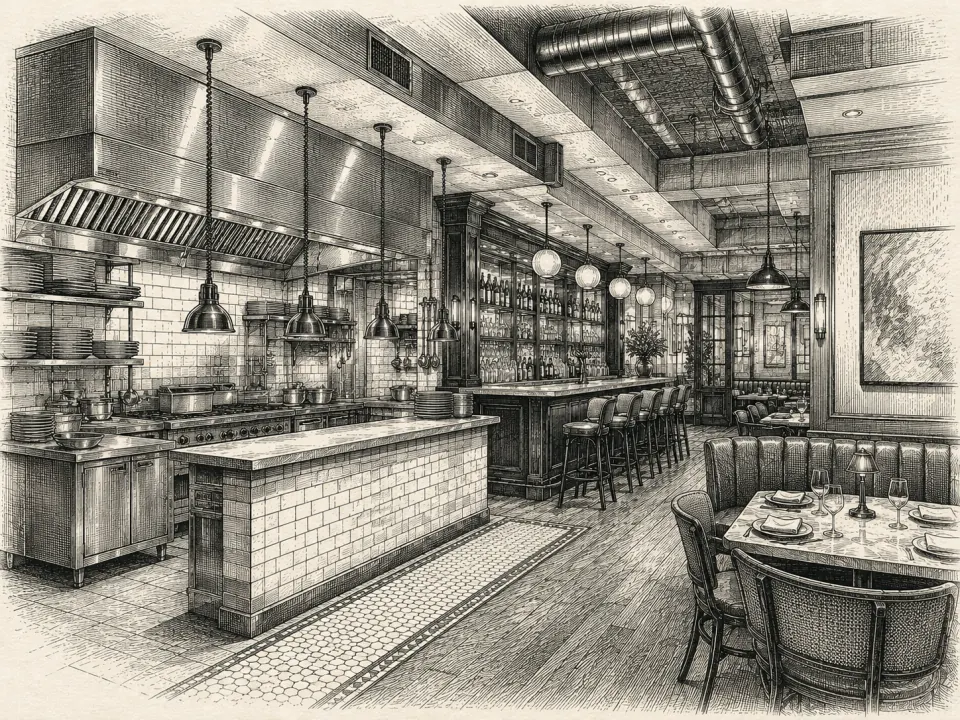
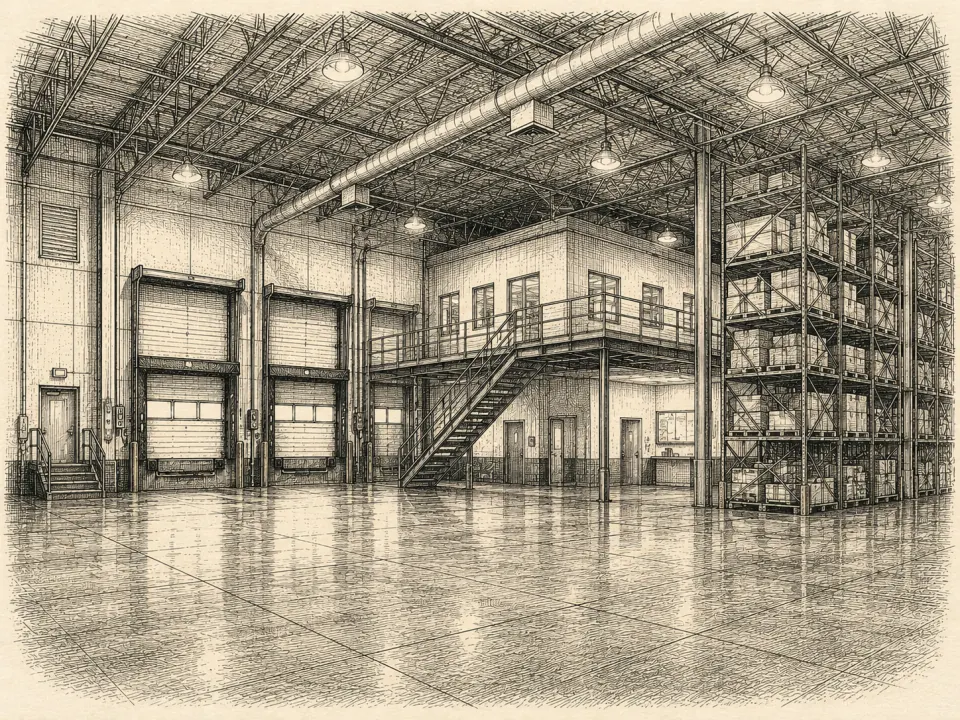
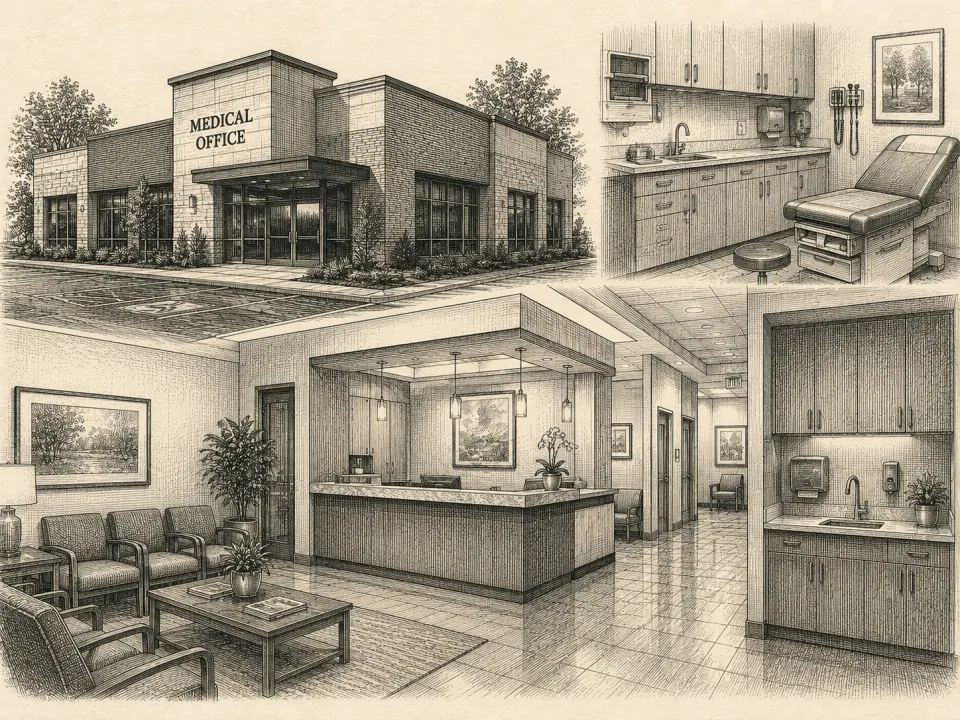

Deep-dives by property type: for an equipment-dense gas station / convenience store (dispensers, tanks, canopy, forecourt, plus the RMFO 15-year building rule), see gas station cost segregation; for single-tenant net-lease pads — QSR, pharmacy, c-store, bank, medical — see nnncostseg.com; for warehouse, distribution & light-industrial, see warehousecostseg.com. The latter two are part of the Cost Seg Smart network.
By metro: warehouse & distribution in Houston, Los Angeles, Miami, and Orlando; industrial & manufacturing in Orange County and Silicon Valley; full commercial market guides for Houston, Miami, Orlando, San Diego, Southern California, and the SF Bay Area.
How basis is reclassified across recovery periods.
Every commercial study reclassifies basis from the default 39-year structural shell into shorter MACRS classes per Rev. Proc. 87-56. 5-year is FF&E + decorative finishes; 15-year is land improvements + Qualified Improvement Property; 39-year is the building shell that doesn't reclassify.
Typical reclassification by asset class.
These are the bands we publish per property type: measured on our delivered studies where we have enough of a property type, and modeled by our engine on representative properties elsewhere. The Year-1 column is illustrative arithmetic at the representative rate, not a result for any specific property.
Nine commercial properties, nine outcomes.
Year-1 federal tax savings shown at top federal bracket, assuming 100% bonus depreciation on the reclassified portion. Your study's number will vary with basis allocation, finish density, and your CPA's review.









What makes commercial different from residential.
Commercial property doesn't follow the same classification path as a single-family rental. Five subtype-aware mechanisms differentiate the analysis — each grounded in the published IRS class-life and finish-density guidance, applied per property.
Office intensity tiers (economy / standard / premium / luxury)
Office reclassification depends heavily on tenant fit-out density. The engine separates economy (Class C suburban, basic finishes), standard (Class B with moderate tenant build-out), premium (Class A with executive suite finishes), and luxury (high-end law-firm or finance interiors). Each tier has its own component mix multipliers — premium finishes drive 5- and 7-year property up; economy keeps the building shell closer to the 39-year baseline. Result: a $2M Class A office surfaces ~32% reclassification while a $2M Class C economy office surfaces ~24%.
Restaurant subtype scaling (QSR / full-service / brewery)
Restaurant results are driven by FF&E density. The engine scales by subtype: quick-service restaurants have moderate kitchen equipment and standard finishes; full-service restaurants have full commercial kitchens, exhaust hood systems, and decorative front-of-house finishes; breweries add specialty MEP, fermentation equipment, and walk-in cold storage. A $1.6M brewery reclassifies more aggressively than a $1.6M fast-casual — the subtype scaling captures it without manual override.
Industrial finish-score classifier
Industrial results vary with finish level more than most asset classes. A finish-score classifier separates pure warehouse (low FF&E, low MEP, basic finishes; toward the low end of the industrial band) from flex bay (warehouse plus finished office combo) from industrial-office (close to commercial office economics) from light industrial and manufacturing (specialty MEP, process equipment). Mezzanines, dock equipment, and yard improvements get evaluated per case for 5- vs 15-year vs 39-year treatment.
Medical office multipliers (specialty plumbing + casework)
We apply medical-office-specific multipliers for specialty plumbing (medical gas, hand-wash stations, vacuum lines), specialty fixtures (exam-room casework, dental chairs, ambulatory surgery built-ins), specialty MEP, and decorative tenant-fit interiors. Multi-physician primary care, dental practices, and ambulatory surgery centers tend to carry more of these components than a general medical suite.
Mixed-use blending (residential + commercial mix)
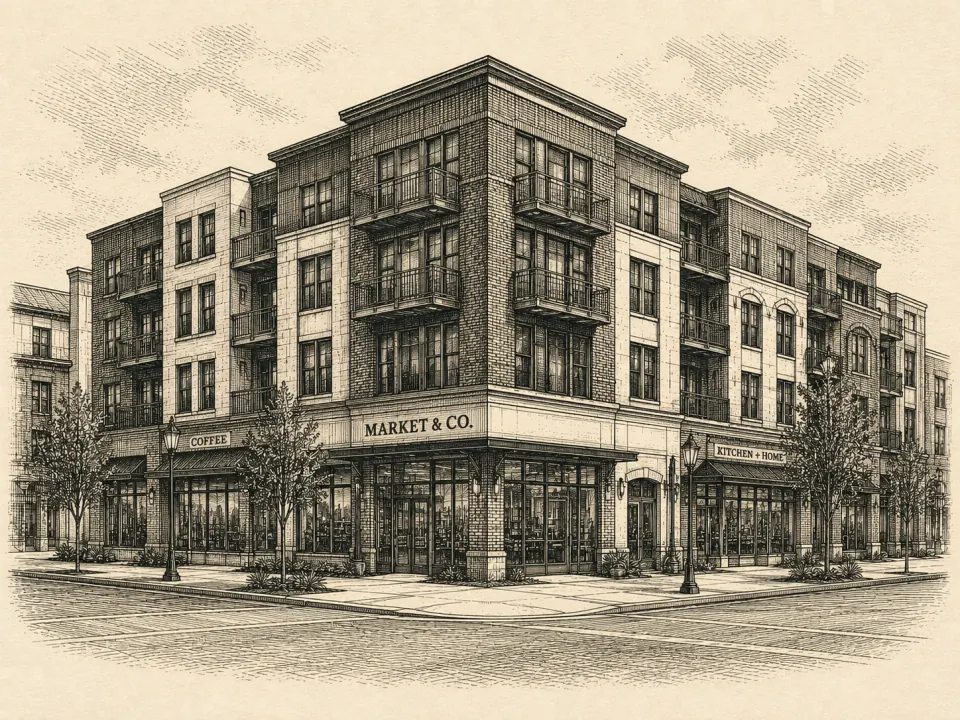
Mixed-use blends commercial and residential component economics. The engine handles the allocation per square footage: ground-floor retail follows commercial reclassification; upper-floor residential follows residential economics; shared building shell allocated proportionally. The result is a weighted reclassification specific to the property's mix — a 4,000 sf retail / 12,000 sf residential mixed-use will surface different ratios from a 8,000 sf retail / 8,000 sf residential mix at the same total basis.
Commercial study pricing.
Pricing scales by basis band and property type. Standard Commercial, Multifamily 5+, and Industrial / Warehouse each have their own band ladder; Specialty Commercial (medical, restaurant, hospitality, manufacturing) is scoped per engagement. Built on the same MACRS classification framework and IRS Pub. 5653 documentation standards engineering firms use — the price difference reflects an efficient delivery model, not lower rigor.
What we provide if your study is examined.
Audit-support scope is committed in writing — same posture as engineering firms charging $5,000–$15,000. We provide engineering documentation; your CPA, EA, or attorney provides taxpayer representation under Circular 230. The summary below is excerpted; full scope and 13-element ATG framework at /audit-defense/.
See the deliverable for your asset class.
Six commercial sample PDFs available — same structure for every study. Methodology section, full component schedule with cost-source line citations, year-by-year depreciation tables, land valuation methodology, MACRS classification with Rev. Proc. 87-56 anchor, quality checks, and Form 3115 readiness pack for lookback applicability.
When to skip this and use a traditional firm.
Not every commercial property fits a systematized engineering workflow. Below are four patterns where the right answer is to engage a traditional engineering firm with an on-site visit, even at $5,000–$15,000.
- $15M+ properties — basis large enough that even small reclassification differences justify on-site engineering and a custom scoping engagement. We'll quote on request.
- Ground-up development — cost segregation applies after a property is placed in service. During construction, basis is capitalized under §263A. Talk to your CPA about §263A capitalization first; cost-seg comes later.
- Multi-parcel campus deals — three or more parcels under a single acquisition with shared improvements requires custom basis allocation. Our automation isn't built for split-parcel basis. Refer to a traditional firm.
- Selling within 12 months without a §1031 exchange — recapture under §1245 + §1250 eats most of the benefit when held under 24 months. Pair with a §1031 to defer the recapture, or skip cost-seg and use straight-line.
Commercial cost-seg questions.
Does cost segregation work on a $1M+ commercial property?
How does cost seg differ for office vs. restaurant vs. industrial?
What's QIP and how is it treated?
Can I use cost seg on a property held in an LLC or S-corp?
Is cost seg compatible with §1031 exchanges?
What's partial disposition and when does it apply?
How is tenant improvement (TI) basis handled?
How does Cost Seg Smart handle warehouses with mezzanines or industrial flex?
What's the lookback option for properties already in service?
What if the IRS audits my commercial cost-seg study?
Sources & primary references.
- IRS Cost Segregation Audit Techniques Guide (Pub. 5653) — methodology framework for every defensible study.
- Rev. Proc. 87-56 — Asset Class Lives — IRS recovery period assignments per asset class.
- 26 U.S.C. §168 — MACRS — statutory basis for cost-seg reclassification + §168(k) bonus depreciation.
- 26 U.S.C. §481(a) — method-change adjustment statute permitting Form 3115 lookback.
- Hospital Corp. of America v. Commissioner, 109 T.C. 21 (1997) — Tax Court decision establishing engineering-based reclassification framework.
- AmeriSouth XXXII v. Commissioner, T.C. Memo. 2012-67 — documentation standards examiners apply today.
- Rev. Proc. 2015-13 — automatic-consent for depreciation method changes (DCN 7).
- Cost Seg Smart reclassification bands by property type — source for the reclassification ranges quoted on this page; measured on our delivered studies where we have enough of a property type, modeled elsewhere.
The next step depends on where you are in the evaluation. Most commercial owners start with the intake form for a property-specific written quote.
No checkout. Reclassification estimate, Form 3115 eligibility, sample report — within one business day.
Or skip ahead: run an instant estimate · order directly