Manufacturing cost segregation in Upstate South Carolina.
Advanced-manufacturing and industrial property along the I-85 corridor — Greenville, Spartanburg, Greer and Anderson, the automotive and aerospace belt anchored by BMW and Michelin. When a walkthrough would improve the study, we do it with you on a video call, at no charge, and most studies are delivered within about two weeks.
What makes Upstate manufacturing different for cost seg
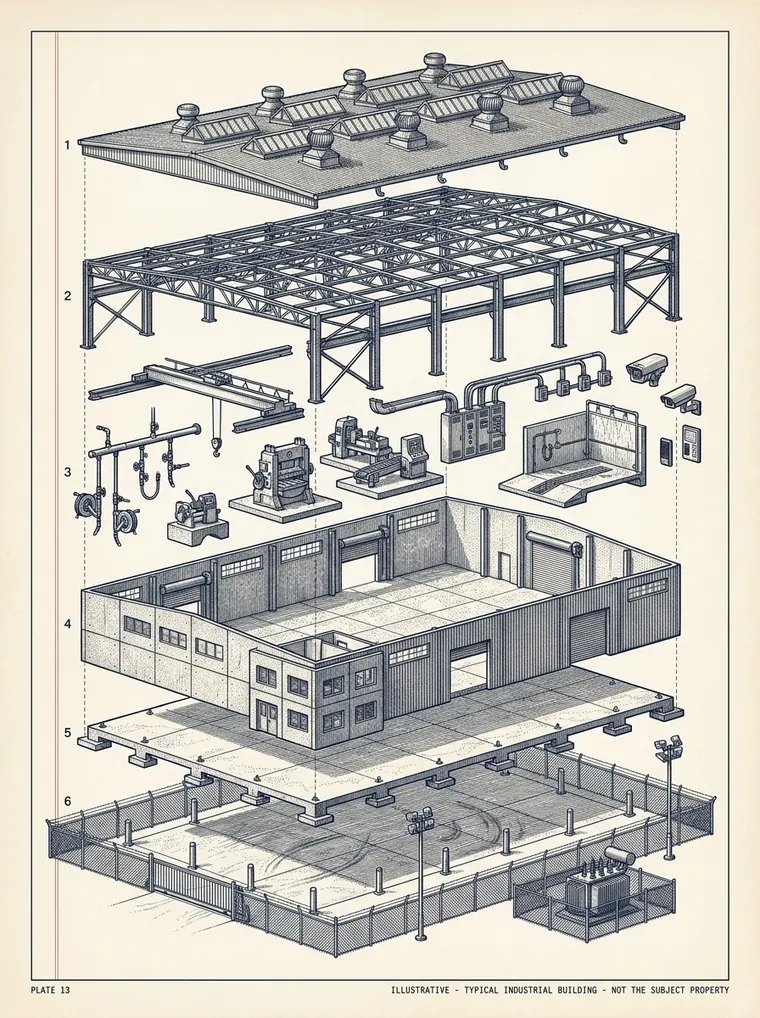
Upstate plant owners often have their study treated like a warehouse study — and lose money doing it. The I-85 corridor is one of the country's densest advanced-manufacturing belts, anchored by BMW's largest plant in the world and Michelin's North American headquarters, with 250-plus automotive companies among thousands of manufacturers. A warehouse is mostly shell and racking; a production plant hides most of its reclassifiable value inside the building's equipment-serving systems — high-amp electrical distribution and busway, compressed air and process-gas lines, dedicated process cooling, dust and fume exhaust, crane support steel, and reinforced equipment foundations that exist only to run machinery. These are building components that serve equipment, not the owner's machinery (which is already personal property), and a generic walk-through never itemizes them.
On a video walkthrough with you, and from your photos and records, our engineering review documents the equipment-serving infrastructure: service amperage, transformers, switchgear and busway dedicated to production lines, compressed-air and process-gas headers, process cooling, dust and fume exhaust, crane rails and their support steel, and reinforced equipment pads — tied to the system each serves, and drawing a bright line between these building systems and the owner's machinery. That is the §1245 value a warehouse-style study leaves on the table.
Why a production plant rewards a walkthrough
A plant's field checklist is fundamentally different from a warehouse's. The value is in the incoming service and busway dedicated to production lines, the compressed-air and process-gas headers, the dedicated cooling, the dust and fume exhaust, the crane support steel, and the reinforced slabs poured to carry equipment — none of it legible in a closing file or a square-footage rule of thumb.
A walkthrough of the plant, done with you on a video call, is how each of those systems is documented and tied to what it serves, so classification rests on observed evidence rather than a percentage. Where records already support the components at issue, our remote model applies and costs less.

Production power & busway
Incoming service amperage, transformers, switchgear and busway runs dedicated to production lines — distinguished from general building power. Equipment-serving electrical is where much of a plant's §1245 value sits, and we tie each feed to the equipment it serves.

Compressed air & process
Compressed-air and process-gas headers and drops, process piping and dedicated process-cooling loops, and dust collection and fume exhaust — documented as installed systems and evaluated on what they serve, not by label.

Cranes & equipment foundations
Crane rails and their structural support steel, equipment pads, and reinforced or thickened slab sections poured specifically to carry machinery — documented and tied to the equipment they support.

Yard, drainage & site
Truck court and yard paving, dock equipment, on-site drainage and detention, yard lighting, and fencing and gates — the 15-year land improvements separated from the shell.
One building, three kinds of answer
Illustrative. Actual classifications are made per property, on the facts.
High-amp power and busway to production equipment, compressed air and process-gas distribution, process cooling, dust and fume exhaust, crane support steel, and site improvements such as yard paving, drainage, detention and lighting.
Reinforced or thickened equipment slabs and foundations, specialty process piping, dedicated exhaust and make-up air, and heavy tenant build-out — turning on how each installation functions and what the records show.
The shell, structural frame, foundation and floor slab, exterior walls, roofing, and building-wide HVAC and fire protection are 39-year real property. Your production machinery is already personal property and is not part of this analysis — we classify the building's equipment-serving systems, not the machines themselves.
How the engagement works
Upstate submarkets we serve
Related: our Charleston warehouse and port logistics coverage, industrial cost segregation, the sample manufacturing report, and our South Carolina commercial hub.
Frequently asked
Do you visit manufacturing plants in the Upstate?
Not in person by default. When a walkthrough would improve the study, we do it with you on a video call, about 30 to 45 minutes, at no charge. You walk the property with your phone while our analyst directs the camera to the components that carry the value. An in-person visit is available by quote. On a production building the walkthrough matters most, because the value is in the equipment-serving power, air and process systems, which a warehouse-style review never itemizes.
How long does an Upstate manufacturing study take?
Most commercial studies are delivered within about two weeks once we have your records, varying with plant complexity and record availability.
How much does a manufacturing study cost?
Engineered commercial and industrial studies start at $2,495 and step with the improvement basis. You get a fixed written fee before any work begins, not a percentage of your deduction — or call us at (213) 444-2776.
Isn't my machinery already personal property?
Yes — your production machinery is already personal property, and we do not double-count it. The cost segregation opportunity is the building's equipment-serving infrastructure: the high-amp power and busway, compressed air and process piping, dedicated cooling, dust and fume exhaust, crane support steel, and reinforced equipment foundations that exist to run the machines. A warehouse-style study leaves that on the table.
Ready to scope your building?
Tell us the address, basis, and placed-in-service date. We generally return a written scope and quote within one business day — or call the office at (213) 444-2776.