Commercial and life-science cost segregation in San Diego.
Life-science, R&D, defense and commercial property across San Diego County — from Torrey Pines and UTC to Sorrento Valley and the defense corridor. Larger engagements include an in-person walkthrough; below that, we walk the property with you by video at no charge, or in person as an add-on. Most studies are delivered within about two weeks.
What makes San Diego life-science property different for cost seg
San Diego owners often underestimate how much of a life-science or R&D building's value is tangible personal property rather than shell. The county's core innovation submarkets — Torrey Pines, UTC and Sorrento Valley/Mesa, plus the defense and precision-manufacturing base — are defined by wet-lab and specialized interior build-out: fume hoods and casework, dedicated and emergency power, specialty HVAC and exhaust, process piping and cleanroom infrastructure. After the boom, a large amount of that lab space is being repositioned and converted, and a study on an acquisition or a conversion is where the equipment-dense basis gets captured.
On a walkthrough, in person or by video, our engineering review documents the lab and R&D build-out — casework and fume hoods, dedicated and emergency power, specialty HVAC and exhaust, process piping and cleanroom envelopes — the §1245 and short-life value that defines San Diego life-science property, rather than assuming a large exterior site allocation the parcel doesn't have.
Why life-science and R&D property rewards a walkthrough
A lab or R&D building hides its value indoors. The components that matter most — dedicated power, specialty HVAC and exhaust, process infrastructure, casework and cleanroom envelopes — are installed and removed by successive tenants, and none of it is described in a closing file or a listing photo.
A walkthrough, in person or by video, is how the build-out, the specialty systems, and the improvement generations become a documented record instead of an assumption. Where records already support the components at issue, our remote model applies and costs less.

Dedicated & emergency power
Lab and R&D buildings carry power well beyond general building service — dedicated circuits, emergency and standby systems, upsized service. We document service size, panel labels, and the equipment served before treating a circuit as equipment-related.

Lab, cleanroom & process systems
Fume hoods, specialty HVAC and exhaust, process piping and specialty gas, compressed air, and cleanroom envelopes — documented as installed systems and evaluated on what they serve, not by label.

Casework & tenant improvements
Lab benches and casework, specialty finishes, partitions, and office build-out. San Diego lab space is repeatedly retrofitted and converted, so one shell can carry several generations of improvements with different vintages.

Site & service improvements
Service and loading areas, parking, drives and aprons, exterior lighting, landscaping and drainage, fencing and gates — real but a smaller share than the interior on lab and R&D product.
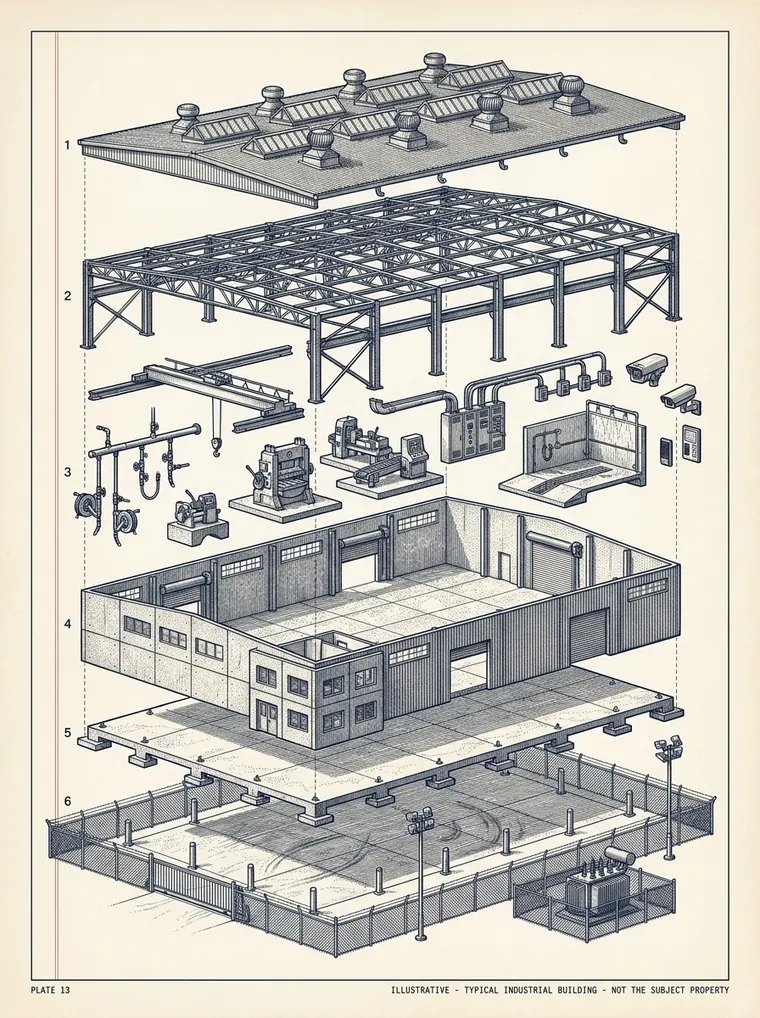
One building, three kinds of answer
Illustrative. Actual classifications are made per property, on the facts.
Dedicated and emergency power, process and equipment electrical, compressed air, removable lab casework and benches, specialty exhaust and make-up air serving identified equipment, office and lab finishes, and site improvements such as parking and lighting.
Cleanroom envelopes and their dedicated HVAC and filtration, tenant and conversion build-out of uncertain vintage, floor reinforcement and equipment pads, and vibration isolation — turning on how each installation functions and what the records show.
Shell, structural frame, foundation and floor slab, exterior walls, roofing, general-purpose lighting, and building-wide HVAC, plumbing and fire protection — nonresidential real property depreciated over 39 years.
How the engagement works
San Diego submarkets we serve
Related: our Orange County industrial coverage (a similar lab-and-flex profile), industrial cost segregation, the sample manufacturing report, and our Southern California commercial hub.
Frequently asked
Do you visit life-science and R&D buildings in San Diego?
On commercial engagements of $3 million or more, an in-person walkthrough by our team is included. Below that, an in-person site visit is available as an add-on for $895, travel included; otherwise, when a walkthrough would improve the study, we do it with you on a video call, about 30 to 45 minutes, at no charge. On lab and R&D product the walkthrough matters more than usual, because the specialized interior build-out is rarely legible from a closing file.
How long does a San Diego commercial study take?
Most commercial studies are delivered within about two weeks once we have your records, varying with build-out complexity and record availability.
How much does a San Diego commercial or life-science study cost?
Engineered commercial studies start at $995 (warehouse and industrial from $2,495) and step with the improvement basis. You get a fixed written fee before any work begins, not a percentage of your deduction — or call us at (213) 444-2776.
What makes San Diego life-science property distinctive for cost segregation?
The value is indoors. Wet-lab and R&D build-out — fume hoods and casework, dedicated and emergency power, specialty HVAC and exhaust, process piping and gas, and cleanroom infrastructure — carries a large share of the basis, and it is exactly the kind of construction successive tenants install and remove. With the current wave of lab space being repositioned and converted, a study on an acquisition or a conversion is where that basis gets captured.
We are converting office or flex space to lab. Does that change the study?
It changes what there is to examine, and it is often the strongest case for one. A lab conversion adds dedicated power, specialty HVAC and exhaust, process infrastructure and finishes — much of it separately identifiable — placed in service in its own year. Bring the improvement invoices and drawings; that evidence does more work here than on a plain shell.
Ready to scope your building?
Tell us the address, basis, and placed-in-service date. We generally return a written scope and quote within one business day — or call the office at (213) 444-2776.