Warehouse and logistics cost segregation in the East Bay.
Distribution, cold-storage and industrial-outdoor-storage property along the I-880 corridor — Oakland, San Leandro, Hayward, Union City and Fremont, anchored by the Port of Oakland. When a walkthrough would improve the study, we do it in person or by video, and most studies are delivered within about two weeks.
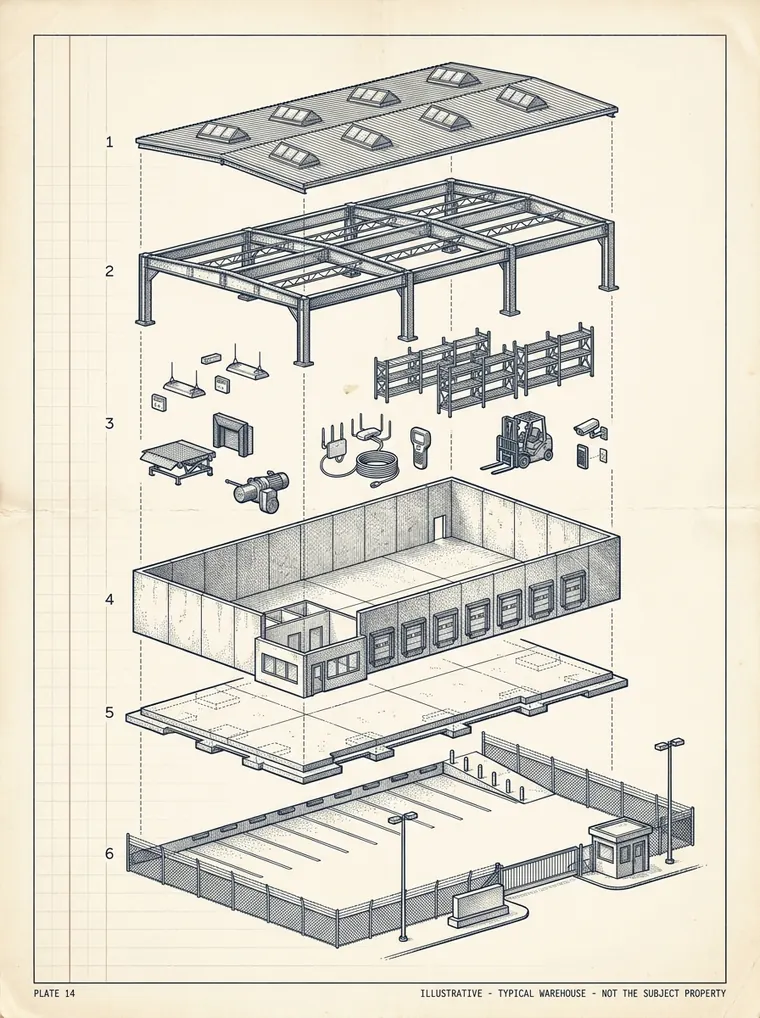
What makes East Bay warehouses different for cost seg
East Bay owners often expect the accelerated value to sit inside the building, when on a tight seaport site much of it is outside. The Port of Oakland makes the I-880 corridor a dense last-mile market, and the yards themselves trade as their own asset class — industrial outdoor storage — so the paved truck court, trailer yard, dock equipment and heavy electrical can carry more 5- and 15-year value than a greenfield big-box would suggest. Two things sharpen it here: the port's Clean Ports push is putting real capital into on-site drayage charging and upsized service, and much of the stock is older, repositioned infill on the Hayward Fault, so retrofits and tenant build-out land on the shell in different years.
On a walkthrough, in person or by video, and from your site plan, photos and records, our engineering review documents the truck court and trailer yard, counts dock positions and equipment, and records heavy service, EV/drayage charging and yard lighting. Those are the components that carry the most accelerated value on a land-constrained distribution site, and the ones a closing file is least able to show. On a declared yard we honor the measurement rather than substituting a market assumption.
Why distribution property rewards a walkthrough
A distribution building carries much of its value outside the walls. Paving area and section, dock equipment counts, yard lighting, and the heavy electrical service that feeds equipment and charging are the largest reclassification lines, and they are the ones least visible in a closing file.
A walkthrough of the site, in person or by video, is how the yard, the equipment and the service become a documented record instead of an estimate. Where records already support the components at issue, our remote model applies and costs less.

Truck court & trailer yard
We document paved area, paving section and heavy-versus-light-duty construction, striping, curbing and trailer storage. On a tight infill site the yard is a large 15-year land-improvement line a closing file underweights — and a declared yard is honored, not raised to a market floor.

Dock & material handling
Dock positions, levelers, seals and shelters, bumpers, and any conveyor, racking support or in-building material handling — documented as named §1245 equipment rather than assumed from door count.

Heavy service & charging
Panel and switchgear capacity, dedicated equipment feeds, reefer power for cold and food distribution, and EV/drayage charging infrastructure — separating equipment-serving 5-year power from the 39-year shell.

Site lighting & improvements
Yard light poles and fixtures, drives and aprons, fencing and gates, drainage, and — on repositioned older stock — seismic and tenant build-out layered onto the shell in later years.
One building, three kinds of answer
Illustrative. Actual classifications are made per property, on the facts.
Truck court and trailer-yard paving, dock levelers and equipment, yard light poles and fixtures, dedicated equipment power and reefer feeds, EV/drayage charging, fencing and gates, and site drainage and landscaping.
Cold-storage refrigeration and insulated panels, heavy-duty slab and equipment pads, seismic bracing added to an older shell, and tenant build-out of uncertain vintage — turning on how each installation functions and what the records show.
Shell, structural frame, foundation and floor slab, exterior walls, roofing, general-purpose lighting, and building-wide HVAC, plumbing and fire protection — nonresidential real property depreciated over 39 years.
How the engagement works
East Bay submarkets we serve
Related: our Silicon Valley R&D and flex coverage, industrial cost segregation, the sample manufacturing report, and our San Francisco Bay Area commercial hub.
Frequently asked
Do you visit warehouses in the East Bay?
It depends on the engagement. On commercial engagements of $3 million or more, an in-person walkthrough by our team is included. Below that, an in-person site visit is available as an add-on for $895, travel included; otherwise, when a walkthrough would improve the study, we do it with you on a video call, about 30 to 45 minutes, at no charge. On distribution property the walkthrough is where the yard, paving and equipment get documented rather than assumed.
How long does an East Bay industrial study take?
Most commercial studies are delivered within about two weeks once we have your records and any site visit is complete, varying with site complexity and record availability.
How much does an East Bay warehouse study cost?
Engineered commercial and industrial studies start at $2,495 and step with the improvement basis. You get a fixed written fee before any work begins, not a percentage of your deduction — or call us at (213) 444-2776.
My building has a small yard. Does that lower the study's value?
It changes the mix, not necessarily the result. On tight infill sites the paved truck court, heavy electrical service, dock equipment and yard lighting can still carry substantial 5- and 15-year value. We document the yard you actually have, and we honor a declared yard rather than substituting a market assumption.
Ready to scope your building?
Tell us the address, basis, and placed-in-service date. We generally return a written scope and quote within one business day — or call the office at (213) 444-2776.