Industrial and flex cost segregation in Orlando.
Simulation, defense, photonics and light-industrial flex property across Central Florida Research Park, east Orlando and the UCF corridor. When a walkthrough would improve the study, we do it with you on a video call, at no charge, and most studies are delivered within about two weeks.
What makes Research Park flex different for cost seg
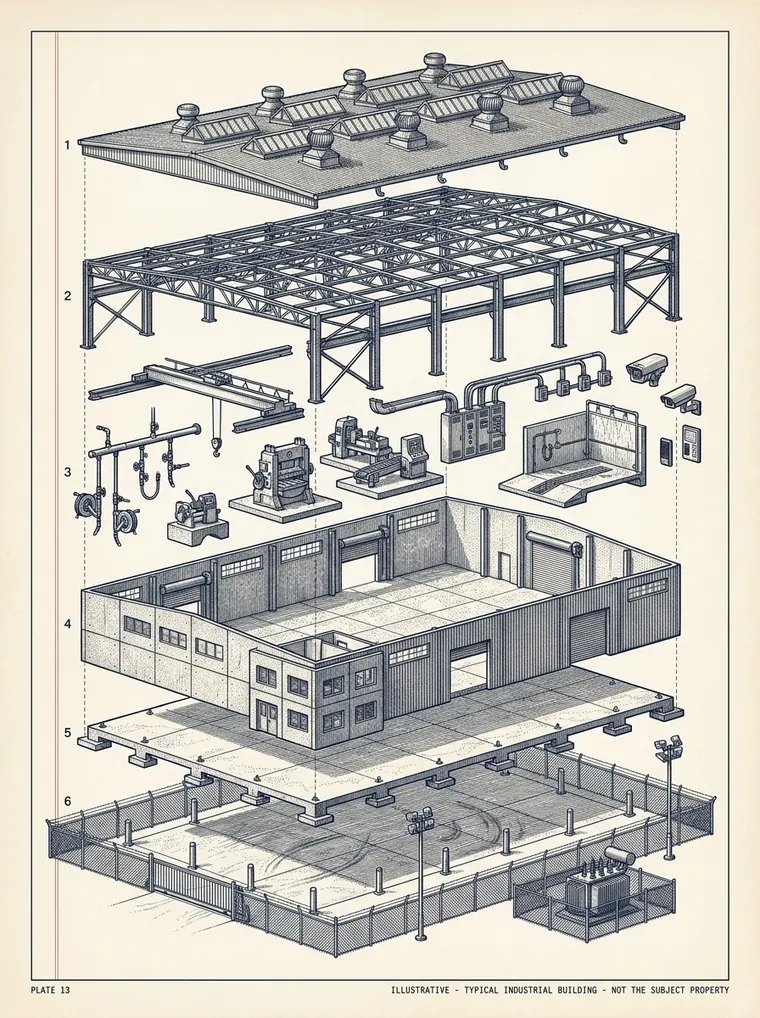
Orlando flex owners often think of the value as "the building," when on Research Park product the tilt-wall box is the least of it. Central Florida Research Park, next to UCF, hosts the world's largest cluster of modeling, simulation and training companies and the military's simulation commands, alongside a defense presence (Lockheed) and UCF's CREOL optics and photonics cluster. That tenant base loads cost into specialty and high-amp power, dedicated and process cooling, raised floors, cleanroom and optics build-out, and lab and test casework — much of it §1245 rather than 39-year shell. And because Central Florida requires on-site retention, even the paved yard tends to carry 15-year land-improvement value the shell doesn't. Two identical-looking flex shells can produce very different studies.
On a video walkthrough with you, and from your photos and records, our engineering review documents the interior build-out: specialty and high-amp power and backup generation, dedicated and process cooling, cleanroom and optics build-out, and lab and test casework, plus the paved yard and required retention. That is the §1245 and 15-year value that defines a Research Park building, rather than assuming the shell carries it.
Why flex and R&D property rewards a walkthrough
A flex or R&D building hides its value indoors — and, in Central Florida, in the yard. The components that matter most — specialty and high-amp power, dedicated cooling, cleanroom and optics build-out, lab casework, and the retention-served yard — are installed and removed by successive tenants or engineered into the site, and none of it is described in a closing file or a listing photo.
A walkthrough, done with you on a video call, is how the build-out, the specialty systems and the site become a documented record instead of an assumption. Where records already support the components at issue, our remote model applies and costs less.

Specialty & high-amp power
Dedicated and redundant service, high-amp feeds serving simulation, test and lab equipment, UPS, backup generation and transfer gear, transformers and sub-panels — the equipment-serving power that defines a simulation, defense or photonics tenant. We document service size and what each feed serves.

Cooling, cleanroom & process
Dedicated and process cooling, CRAC/CRAH units, cleanroom wall and ceiling systems and filtration, optics-grade environmental controls, and process piping — documented as installed systems, not building HVAC.

Lab casework & build-out
Raised access flooring, lab and test benches and casework, specialty finishes and partitions, and heavy tenant build-out that serves the equipment. These buildings are re-fit repeatedly, so one shell can carry several improvement generations.

Yard, retention & site
The paved truck court and yard, on-site retention and drainage, yard lighting, and fencing and gates photographed and checked against your site plan so declared yard dimensions rest on documented evidence, and the 15-year land improvements are separated from the shell.
One building, three kinds of answer
Illustrative. Actual classifications are made per property, on the facts.
Dedicated and high-amp power, UPS and backup generation, dedicated and process cooling, raised access flooring, removable lab and test casework, process piping, and site improvements such as yard paving, retention, drainage and lighting.
Cleanroom and optics envelopes and their dedicated HVAC and filtration, supplemental cooling of mixed use, equipment pads and floor reinforcement, and tenant build-out of uncertain vintage — turning on how each installation functions and what the records show.
Shell, structural frame (including tilt-wall panels), foundation and floor slab, exterior walls, roofing, general-purpose lighting, and building-wide HVAC, plumbing and fire protection — nonresidential real property depreciated over 39 years.
How the engagement works
Orlando flex submarkets we serve
Related: our Orlando warehouse and Lake Nona medical & research coverage, data-center cost segregation, and our Orlando commercial hub.
Frequently asked
Do you visit flex and R&D buildings in Orlando?
Not in person by default. When a walkthrough would improve the study, we do it with you on a video call, about 30 to 45 minutes, at no charge. You walk the property with your phone while our analyst directs the camera to the components that carry the value. An in-person visit is available by quote. On simulation, defense and R&D product the walkthrough matters more than usual, because the specialty power, cooling and lab build-out that carries the value is rarely legible from a closing file.
How long does an Orlando industrial study take?
Most commercial studies are delivered within about two weeks once we have your records, varying with build-out complexity and record availability.
How much does an Orlando flex or R&D study cost?
Engineered commercial and industrial studies start at $2,495 and step with the improvement basis. You get a fixed written fee before any work begins, not a percentage of your deduction — or call us at (213) 444-2776.
What makes Research Park flex property distinctive for cost segregation?
The value is in the interior. Specialty and high-amp power, dedicated cooling, cleanroom and optics build-out, and lab and test casework carry a large share on simulation, defense and photonics product — and two identical-looking flex shells can produce very different studies depending on the tenant fit-out inside.
Ready to scope your building?
Tell us the address, basis, and placed-in-service date. We generally return a written scope and quote within one business day — or call the office at (213) 444-2776.