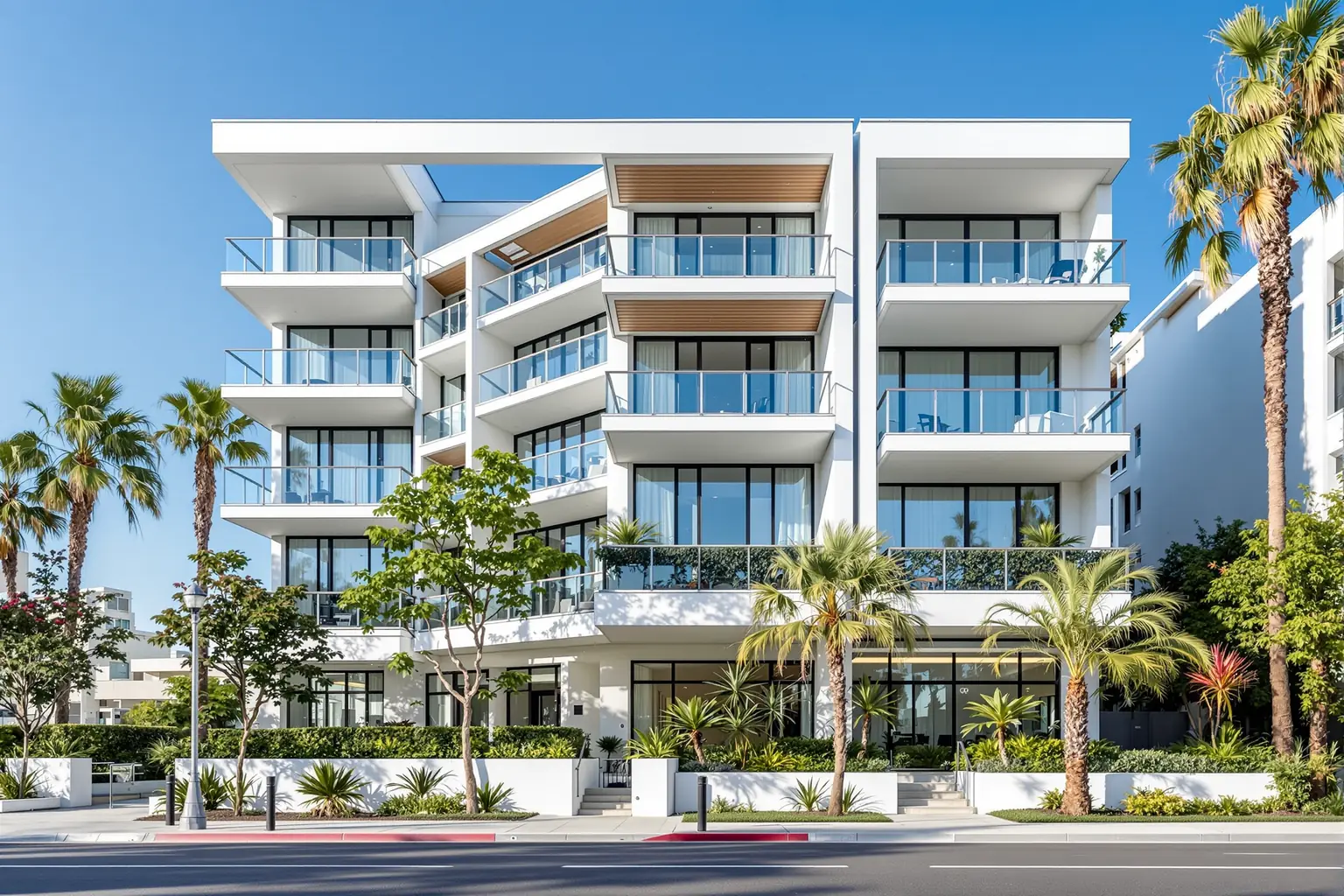
The most common objection a Santa Monica landlord raises is that a rental loss cannot offset a big salary anyway, so why bother. It usually cannot in year one, and here is the part even sophisticated owners miss: the loss is not lost. Under IRC §469 a passive loss carries forward indefinitely, shelters future passive income, and is released in full when you sell the property in a fully taxable sale, at which point it can offset active and portfolio income. So a study front-loads a deduction that either shelters future rental income or lands as a large ordinary offset at exit.
Want a number for a specific Santa Monica property? Use the calculator. It is pre-set with property-type defaults you can adjust to match your basis and tax bracket.
Cost Segregation in Santa Monica, CA
The loss is not trapped, it is deferred
Most Santa Monica luxury-rental and multifamily owners are passive investors with high W-2 or business income and professionally managed buildings. Their cost-seg-driven paper loss is a passive activity loss that generally cannot offset wages in year one, unless they qualify as a real estate professional or meet the limited $25,000 active-participation allowance, which phases out entirely above $150,000 of income. But suspended passive losses are not forfeited: under §469 they carry forward and release in full at a fully taxable sale. The honest promise is acceleration and timing, never instant free money.
California does not conform to federal bonus
Get this exactly right, because it is where national pages gloss over. California does not conform to federal §168(k) bonus depreciation and did not adopt the 2025 federal law that restored it. SB 711, signed in October 2025, moved California’s conformity date to January 1, 2025, but that date predates and excludes the federal change, so bonus is still added back on the California return. California also caps §179 expensing at $25,000. One cost-seg study therefore feeds two schedules: federally, the reclassified 5-, 7-, and 15-year property is eligible for 100% bonus; for California, the same property is depreciated on accelerated MACRS over its shorter lives. California still benefits, because shorter recovery periods pull deductions forward relative to 27.5-year straight-line, but as timing spread over years rather than one first-year write-off. See bonus depreciation by state, and route the California mechanics to your CPA.
A multifamily building reclassifies more than a house
A single house has one kitchen, one or two baths, one appliance set. A six-unit Santa Monica apartment building has six kitchens, six to twelve baths, six appliance sets, and six sets of unit finishes and dedicated circuits, plus shared components a house does not have at all. The repeating per-unit §1245 finishes and the building-scale §1250 site work are precisely what a template built for a house misses. An engineering study evaluates components like subterranean parking structures and their ramps and ventilation, EV charging equipment, pools and spas and amenity decks, common-area landscaping and hardscape, elevators and their equipment, and per-unit appliances and floor coverings.
We keep contested items conservative. Aggressive 5-year treatment of residential cabinetry and decorative finishes is unsettled: in AmeriSouth, an apartment-building case, the Tax Court reclassified cabinets and certain finishes back to the building. The defensible multiplier lives in genuine equipment and site improvements, and those are the hero here.
Worked example (modeled)
Consider a six-unit Downtown or Mid-City Santa Monica apartment acquired for $4,500,000. Every figure here is a modeled illustration, not a measured result or a promise; your study and CPA determine the actual amounts.
Coastal Los Angeles land is a high share of value, so land comes out first (the exact percentage is property-specific, set from the assessor split or an appraisal, never assumed). That leaves a depreciable building basis of roughly $2,700,000. Multifamily reclassifies higher than a single house because unit fixtures multiply; an engineering-based study commonly reclassifies 14–26% of building basis on a 5-plus-unit apartment. Modeled at about 26%, that is roughly $700,000 reclassified: on the order of $390,000 of 5-year personal property (per-unit appliances, floor coverings, and EV and amenity equipment), $290,000 of 15-year land improvements (site paving, hardscape, landscaping, and site lighting; the subterranean parking structure itself stays in the building class), and a small 7-year slice.
Under 100% bonus, that reclassified amount is deductible in year one on the federal return. At a 37% bracket the modeled first-year federal tax reduction is about $259,000. For a passive owner the loss suspends and releases at sale, as above; for California it is added back and depreciated on accelerated MACRS. Treat it as a timing benefit, not a permanent elimination of tax.
Why the STR ban and rent control do not shrink the opportunity
Santa Monica effectively bans the classic investor short-term rental: under the Home-Sharing Ordinance, only hosted home-sharing in the host’s primary residence is allowed, and enforcement resumed in April 2025. That simply relocates the cost-seg audience to long-term-rental and multifamily owners, and cost segregation applies to any income-producing property regardless of rental term. Rent control cuts the same way: Santa Monica’s charter regime caps how fast an owner can raise rents on covered pre-1979 multifamily, which makes front-loading depreciation to improve after-tax cash flow more valuable, not less, because tax timing is one of the few levers left.
Done remotely for most residential properties
The study is engineering-based but conducted remotely from your closing statement, cost records, rent roll, and photos. For most residential properties there is no on-site visit. We use industry-standard, nationally recognized construction cost data to support the component allocation. See how remote cost segregation works and what a cost segregation study is.
Santa Monica submarkets
- Downtown and Mid-City: newer, larger multifamily with subterranean parking, elevators, amenity decks, pools, and EV chargers, so the highest-value cost-seg target in the city.
- Wilshire-Montana: dense older, often rent-controlled multifamily where per-unit fixtures multiply and tuck-under parking is common.
- North of Montana and Ocean Park: luxury single-family and view properties held as long-term rentals, with extensive millwork, landscaping, and hardscape; high absolute basis, so the land carve-out discipline matters.
Learn more about cost segregation
- Remote cost segregation: how an engineering-based study is delivered without a site visit
- What is cost segregation?: the full explanation of how the study works and what you receive
- Bonus depreciation by state: how California non-conformity affects timing
- Material participation for STR owners: passive vs. non-passive losses and the §469 rules
- By property type: multifamily, short-term rentals, single-family rentals, warehouse & industrial
Ready to see your actual Santa Monica numbers?
Want a number for a specific Santa Monica property? Use the calculator, or start a preliminary analysis. Figures on this page are modeled illustrations; your study and CPA determine the actual amounts.
CPA use note: These figures estimate the size of the depreciation deduction. Whether the loss is usable in the current year depends on passive-activity rules, STR material participation, REPS status, entity structure, depreciable basis, and state conformity. Your CPA decides how and when it is applied. Specialty and site components (equipment, casework, docks, pools, arenas, tenant improvements, and similar) are only classified when you own them and they are included in the depreciable basis being studied.
How should Santa Monica, CA investors choose a cost segregation provider?
For a Santa Monica, CA investor buying a property in the $4,500,000 range, the choice of provider is a major controllable variable in the return. The IRS Audit Techniques Guide sets the quality characteristics an engineering-based study should meet — industry-standard construction cost data, MACRS classification, and component-level documentation — but it does not make every provider's work identical; rigor, cost, and turnaround still vary.
Traditional engineering studies often run several thousand dollars and can take several weeks, because they include on-site inspections, sales discovery calls, and scheduling overhead. The IRS Cost Segregation Audit Techniques Guide does not prescribe an on-site inspection as a standalone requirement; it sets out the quality characteristics of an engineering-based study — component-level classification, a documented and supportable cost derivation, and a clear audit trail — and describes how a physical inspection can contribute to meeting them.
Modern automated providers (such as Cost Seg Smart) deliver an engineering-based, IRS ATG-aligned study using property records, documents, photos, and recognized construction-cost data, typically from $495 and often within 1–2 business days. For a Santa Monica, CA investor at a high combined bracket, that cost and speed difference is meaningful. The CPA-Ready Guarantee (free revisions if your CPA flags a problem, and a refund if the report still can't be used) makes the decision essentially risk-free on the report itself.
The automated path is best-fit for owners who can provide closing documents and property photos online (no in-person visit required) and want the report in time to file the current year's return rather than the next one.
All Cost Seg Smart studies include the CPA-Ready Guarantee (free revisions if your CPA flags a problem, and a refund if the report still can't be used). Straightforward residential studies are often delivered in 1–2 business days and completed remotely; larger or more complex commercial studies take longer and may include an on-site observation.