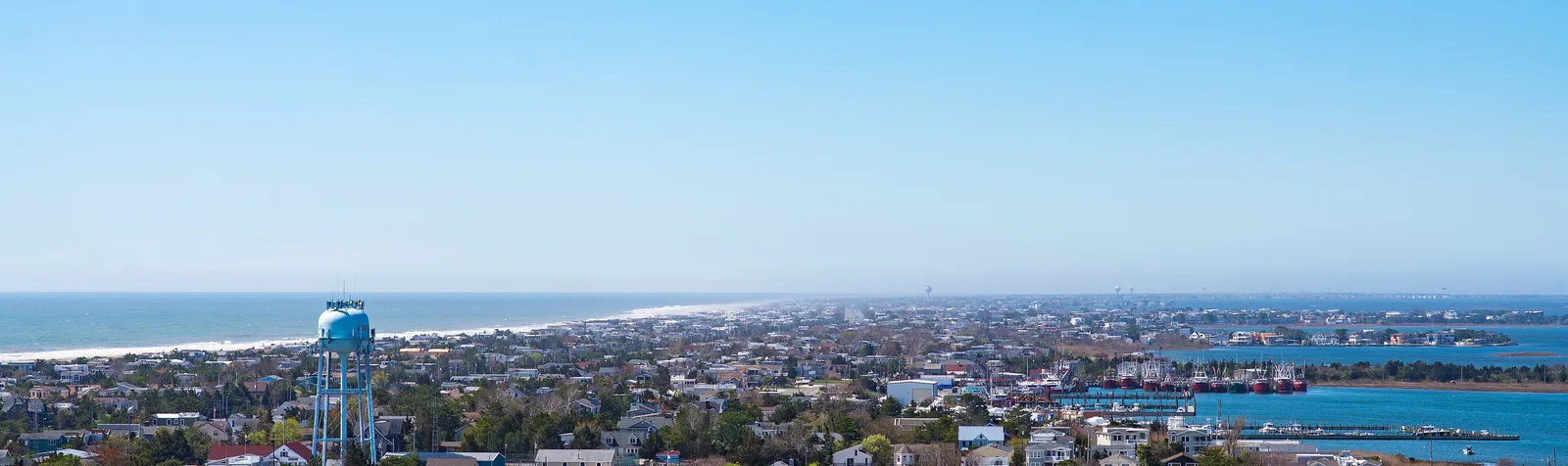
Long Beach Island is eighteen miles of barrier island a few hundred yards wide, reachable by a single causeway. Hurricane Sandy came ashore near here in 2012, and the rebuild that followed reshaped the housing stock: elevation requirements, new flood maps, and a decade of new construction replacing what the storm took.
For cost segregation that history is unusually favourable. A house built or substantially rebuilt after 2013 is modern construction with modern documentation — a builder’s schedule of values, permit records, and components installed recently enough to be identified precisely rather than allocated from a lump-sum price. The modelled example reclassifies 23.6% of depreciable basis despite a high 32% land share, which for a barrier-island property is a strong result and is driven almost entirely by the newness of the stock.
- $232,495 accelerated into 5-, 7- and 15-year property
- $225,802 additional Year-1 depreciation
- $83,547 estimated Year-1 federal tax at the 37% bracket
Want a number for a specific LBI property? Use the calculator. It is pre-set with property-type defaults you can adjust to match your basis and bracket.
LBI Investment Snapshot
- Representative price range $750K–$1.2M (bayside, Ship Bottom, Surf City); $1.3M–$2.5M (oceanside or bayfront, Beach Haven, Harvey Cedars); $3M–$10M+ (Loveladies, North Beach oceanfront)
- Season Memorial Day to Labor Day, with a compressed and intense peak and a modest shoulder
- Common property types post-Sandy elevated SFR, reverse-living house, bayfront with dock, older raised cottage, Beach Haven duplex
- New Jersey income tax graduated to 10.75% top rate
- Bonus depreciation New Jersey does not conform to federal §168(k) for gross income tax purposes
- Lodging tax New Jersey state occupancy fee and sales tax on short-term rentals, with a broker exemption
- Typical land share 28–40% of price
- Representative Year-1 federal benefit $45,000–$220,000 depending on basis and finish
The LBI Market
Beach Haven at the southern end is the island’s town centre — the boardwalk-adjacent commercial strip, restaurants, and the widest inventory including duplexes. Prices span $900K–$3M.
Ship Bottom and Surf City in the middle are the volume market and the most year-round of the island’s communities. Bayside properties here are the practical entry point at $750K–$1.3M.
Harvey Cedars is narrow, quiet and expensive, with substantial dune protection built after Sandy.
Barnegat Light at the northern tip has the lighthouse, the commercial fishing fleet and the most distinct character on the island.
Loveladies and North Beach hold the largest oceanfront and bayfront properties, $3M and well up, more second home than rental.
Rental rules are set municipality by municipality — the island contains six separate municipalities, and Long Beach Township alone covers several non-contiguous stretches. Registration requirements and minimum-stay rules differ. Confirm at the address.
Why Cost Segregation Hits Different on LBI
Post-Sandy elevation is the market’s defining feature and it changes the schedule. Houses were raised on pilings, which puts the living space a full storey above grade and creates a ground level that is typically an open or breakaway-enclosed area for parking, storage and outdoor showers. The elevated decks, the exterior stairs, the ground-level enclosure and the reconfigured drives are all substantial site work, and much of it dates from a documented rebuild.
New construction documents well. A house built in 2014 has a builder’s schedule of values. That is the best possible input to a study, and it is why LBI outperforms its land share.
Reverse-living layouts concentrate finish upstairs. The common LBI plan puts kitchen and living space on the top floor for the view, with bedrooms below. It does not change classification, but it does mean the highest-cost finishes and appliances are concentrated in one area, which makes a component analysis cleaner.
Bayfront properties add dock and bulkhead structures. Bulkheading is close to universal on the bay side and is a substantial land improvement, alongside docks, lifts and the associated electrical.
The land share is genuinely high, 28–40%, because eighteen miles of barrier island a few hundred yards wide is a fixed supply. That constrains the percentage, and the newness of the stock is what pushes back.
Worked Example — Long Beach Island
A 5-bedroom post-Sandy elevated beach house in Beach Haven, roughly 2,400 square feet, built in 2014, acquired for $1,450,000 and placed in service in March 2026. Land is taken at 32% of price. Depreciable basis lands at $986,000.
Running that property through our engine produces $232,495 of reclassified property, or 23.6% of depreciable basis:
| Class | Amount | What it is |
|---|---|---|
| 5-year | $178,790 | Furnishings, appliances, floor coverings, decorative lighting, window treatments |
| 7-year | $4,705 | Built-in casework and fixed storage |
| 15-year | $49,000 | Elevated decks and stairs, drive and parking, outdoor shower, landscape, exterior lighting |
| Total | $232,495 |
Under 100% bonus depreciation the additional Year-1 deduction is $225,802. At a 37% federal bracket that is $83,547 in Year-1 federal tax.
Note what a 32% land share still produced. Cannon Beach at 34% land reclassified 22.2%; LBI at 32% reclassifies 23.6% on a newer house. Construction age is doing the work.
What is real and what is assumed. The split is a real engine run. The inputs are a representative post-Sandy elevated house, not a specific address. An older unraised cottage will reclassify lower; a bayfront with bulkhead and dock will carry a larger 15-year figure.
Who Is Doing This on LBI
The Philadelphia and central New Jersey buyer is the core, and LBI has been their shore for generations.
The New York buyer appears more at the northern end and in Loveladies.
The duplex owner in Beach Haven runs two rental units on one lot, which is a distinct and common LBI structure worth modelling deliberately.
NJ Tax Considerations
New Jersey levies a graduated gross income tax reaching 10.75%.
New Jersey does not conform to federal bonus depreciation for gross income tax purposes, and the state’s individual tax is structurally unusual — it does not start from federal taxable income, treats income categories separately, and does not allow the same loss offsets. The federal Year-1 deduction is unaffected; the New Jersey treatment is genuinely different rather than simply deferred and depends on your entity and income category. At a 10.75% top rate that is worth asking about specifically.
New Jersey applies sales tax and the state occupancy fee to short-term rentals of fewer than 90 days booked other than through a licensed real estate broker. Many LBI owners rent through local agencies, which changes the treatment — a genuine New Jersey quirk worth confirming.
Flood insurance is a large operating line here rather than a depreciation item, but elevation certificates and the rebuild documentation that supports them are frequently the same records a study wants.
Common LBI Investment Properties
- The post-Sandy elevated SFR, $1.3M–$2.5M, the market’s core product and the best-documented
- The bayside house with bulkhead and dock, larger 15-year bucket
- The Beach Haven duplex, two units on one lot
- The older raised cottage, cheaper, less documentation, lower percentage
- The Loveladies oceanfront, $3M+, high land share
Depreciable Features We Commonly See on LBI
Full furniture packages sized to sleeping capacity. Kitchen appliance packages, often high-end in reverse-living plans. Floor coverings replaced often because of sand. Decorative lighting. Window treatments. Elevated decks, multiple levels, with railings and exterior stairs. Ground-level enclosures, parking pads and paver drives. Outdoor showers, universal here. Hot tubs on dedicated electrical. Landscape and irrigation on limited lots. Fencing. Exterior lighting rated for salt exposure. On bayside properties, bulkheading, docks, lifts and their electrical service.
What People Worry About (and What Actually Happens)
“My house was raised after Sandy.” That is an advantage. The rebuild produced documentation, and the elevated structure created deck, stair and ground-level work that reclassifies.
“My land is 35% of the price.” It probably is, and the newness of the stock is what keeps the percentage competitive anyway.
“I rent through a local agency.” That can change the New Jersey occupancy fee and sales tax treatment. It is a collection question rather than a deduction one, but confirm it.
Why Cost Segregation Works for LBI Summer Rentals
LBI runs heavily on Saturday-to-Saturday weekly summer rentals, putting average guest stay right at seven days, with shoulder-season short stays pulling it below. The §469 short-term rental exception turns on an average of seven days or fewer, so the actual figure across your booking year is worth computing rather than assuming — and it is a question for your CPA.
Who This Example Applies To
The worked example assumes a 37% federal bracket, 100% bonus depreciation, a March 2026 placed-in-service date, a 32% land share, and post-2013 construction. At a 32% bracket, scale the Year-1 federal figure by roughly 0.86.
Compare: LBI Properties at Different Price Points
| Price | Typical property | Rough basis at 32% land | Indicative Year-1 federal at 37% |
| $895,000 | 3BR bayside, Ship Bottom | $608,600 | $48,000–$55,000 |
| $1,450,000 | 5BR elevated, Beach Haven | $986,000 | $83,547 (modelled above) |
| $2,900,000 | 6BR oceanside, Harvey Cedars (38% land) | $1,798,000 | $145,000–$165,000 |
Rows other than the modelled one are indicative ranges scaled from that run, not separate engine runs.
Frequently Asked Questions
Does New Jersey conform to federal bonus depreciation? No, and its gross income tax is structurally different from most states’. The federal deduction is unaffected; ask your CPA about your entity and income category.
Are elevated decks and stairs depreciable? Deck and stair structures are generally land improvements or building components depending on construction, and on a raised LBI house they are a meaningful share of site cost. A study should identify them rather than absorbing them.
Is bulkheading depreciable? Bulkhead, dock and lift structures on the bay side are generally 15-year land improvements and are a substantial line on a bayfront property.
Does the rebuild documentation help? A great deal. A builder’s schedule of values from a post-Sandy rebuild is the best input a study can have.
My weekly rentals are exactly seven days. Does that qualify? The exception turns on an average of seven days or fewer. Shoulder-season short stays typically pull the average below the line, but compute it rather than assume.
Learn More About Cost Segregation
- How cost segregation works
- Bonus depreciation by state
- The Form 3115 lookback
- Cost segregation calculator
Ready to See Your Actual LBI Numbers?
Studies start at $495 and most residential studies are delivered the next business day, with the CPA-Ready Guarantee: if your CPA flags a problem we revise the report free, and if it still can’t be used you get a full refund. Start a study or run your numbers first.
CPA use note: These figures estimate the size of the depreciation deduction. Whether the loss is usable in the current year depends on passive-activity rules, STR material participation, REPS status, entity structure, depreciable basis, and state conformity. Your CPA decides how and when it is applied. Specialty and site components (equipment, casework, docks, pools, arenas, tenant improvements, and similar) are only classified when you own them and they are included in the depreciable basis being studied.
How should Long Beach Island, NJ investors choose a cost segregation provider?
For a Long Beach Island, NJ investor buying a property in the $1,450,000 range, the choice of provider is a major controllable variable in the return. The IRS Audit Techniques Guide sets the quality characteristics an engineering-based study should meet — industry-standard construction cost data, MACRS classification, and component-level documentation — but it does not make every provider's work identical; rigor, cost, and turnaround still vary.
Traditional engineering studies often run several thousand dollars and can take several weeks, because they include on-site inspections, sales discovery calls, and scheduling overhead. The IRS Cost Segregation Audit Techniques Guide does not prescribe an on-site inspection as a standalone requirement; it sets out the quality characteristics of an engineering-based study — component-level classification, a documented and supportable cost derivation, and a clear audit trail — and describes how a physical inspection can contribute to meeting them.
Modern automated providers (such as Cost Seg Smart) deliver an engineering-based, IRS ATG-aligned study using property records, documents, photos, and recognized construction-cost data, typically from $495 and often by the next business day. For a Long Beach Island, NJ investor at a high combined bracket, that cost and speed difference is meaningful. The CPA-Ready Guarantee (free revisions if your CPA flags a problem, and a refund if the report still can't be used) makes the decision essentially risk-free on the report itself.
The automated path is best-fit for owners who can provide closing documents and property photos online (no in-person visit required) and want the report in time to file the current year's return rather than the next one.
All Cost Seg Smart studies include the CPA-Ready Guarantee (free revisions if your CPA flags a problem, and a refund if the report still can't be used). Straightforward residential studies are often delivered the next business day and completed remotely; larger or more complex commercial studies take longer and may include an on-site observation.