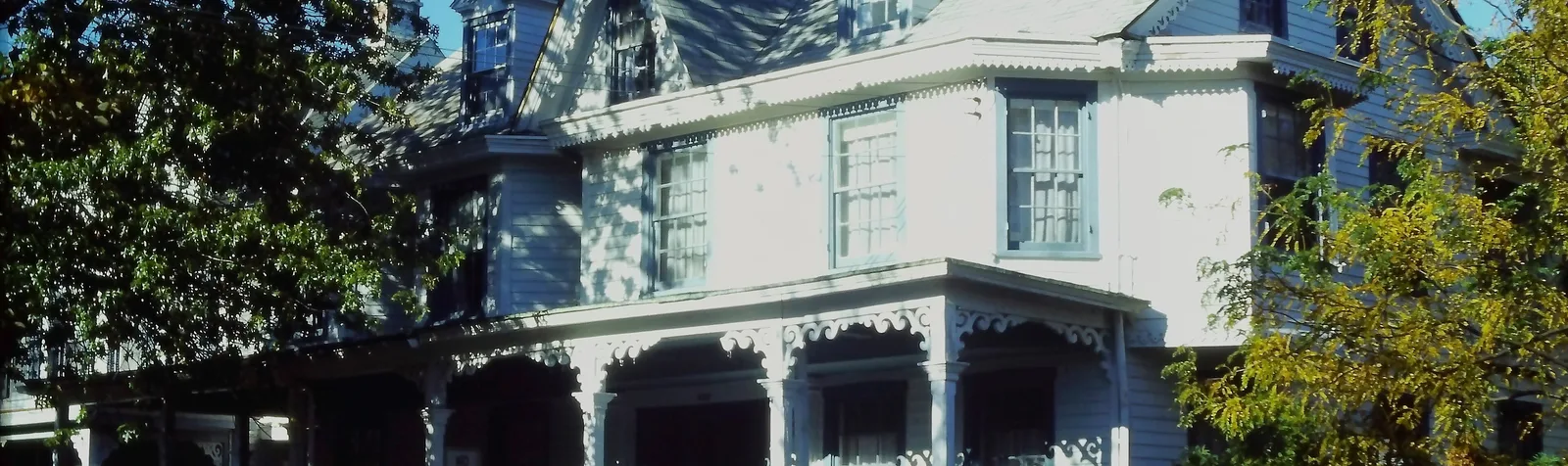
Cape May is the oldest seaside resort in the country and the only city in the United States designated in its entirety as a National Historic Landmark. Roughly six hundred Victorian buildings survive, most of them rebuilt after the fire of 1878, and the town’s identity is bound up in the gingerbread trim, the wraparound porches and the painted-lady colour schemes that define its streets.
That history sets the tax picture. A 19th-century frame house puts most of its cost into the 27.5-year shell. The modelled example reclassifies 19.1% of depreciable basis — below what a modern beach house produces, above what a log cabin does. There is less modern componentry to move than in new construction, and a beach-block lot in a landmark district carries a high land share.
What partly compensates is unusually good documentation. Almost every rentable Victorian here has been renovated at least once — kitchens, baths, systems, often several times — and those renovation invoices identify components directly rather than requiring anyone to allocate an undifferentiated purchase price. On a historic property that documentation is worth more than it is anywhere else, because without it the shell swallows the analysis.
- $153,982 accelerated into 5-, 7- and 15-year property
- $149,549 additional Year-1 depreciation
- $55,333 estimated Year-1 federal tax at the 37% bracket
Want a number for a specific Cape May property? Use the calculator. It is pre-set with property-type defaults you can adjust to match your basis and bracket.
Cost Segregation in Cape May, NJ
Cape May Investment Snapshot
- Representative price range $550K–$850K (West Cape May, off-beach cottage or condo); $900K–$1.8M (historic district, beach-block Victorian); $2M–$6M+ (Beach Avenue frontage, large restored painted lady)
- Season Memorial Day to Labor Day peak, with a genuinely strong shoulder — Victorian Weekend, the birding migrations, and a December holiday trade
- Common property types restored Victorian, converted guest house, West Cape May cottage, Beach Avenue condo, Cape May Point bungalow
- New Jersey income tax graduated to 10.75% top rate
- Bonus depreciation New Jersey does not conform to federal §168(k) for gross income tax purposes
- Lodging tax New Jersey state occupancy fee and sales tax on short-term rentals, plus any municipal tax
- Typical land share 28–38% of price on the beach blocks
- Representative Year-1 federal benefit $32,000–$150,000 depending on basis and finish
The Cape May Market
The beach blocks and Beach Avenue form the premium zone — the promenade, the ocean frontage, and the largest of the restored Victorians. Prices run $1.4M into the several millions. Rental rates here are the highest in the county.
The historic district inland of the beach blocks is where most of the six hundred Victorians actually sit: Hughes, Columbia, Washington and the streets between. Prices run $900K–$1.8M. Many operate as guest houses and small inns, which is a different tax classification from a residential rental and is covered below.
West Cape May, a separate borough immediately inland, is the practical value market — smaller cottages, fewer restrictions, $550K–$1.1M, and a short walk or ride to the beach.
Cape May Point at the southern tip is quiet, largely residential, and constrained by the state park and the lighthouse. A small market with a devoted following.
Wildwood Crest and the Stone Harbor corridor to the north are the alternatives: Wildwood is mid-century and cheaper, Stone Harbor and Avalon are modern and more expensive.
The defining regulatory fact is the Historic Preservation Commission. Exterior work in the district is reviewed, and that review shapes what a renovation can and cannot do. It does not change the depreciation rules, but it does change project scope, cost and timeline in ways that matter to an investor.
Why Cost Segregation Hits Different in a Landmark District
The shell dominates, and there is no way around that. A frame Victorian built in 1880 carries its value in structure. Reclassification finds the modern components installed since — kitchens, baths, floor coverings, lighting, HVAC, furnishings — and the more recent the renovation, the more there is to find.
Renovation evidence is disproportionately valuable here. On new construction a study can allocate from a builder’s schedule of values. On a 145-year-old house it depends on what was installed and documented. A property taken through a full renovation in the last decade will reclassify meaningfully above the modelled 19.1%; one that has not been touched since the 1980s will reclassify below it.
Porches are a real and often overlooked category. Cape May’s architecture is defined by deep wraparound porches, and on a rental property the porch decking, railings, ceiling fans and lighting are substantial. Porch structure attached to the building is generally part of the building, but the finishes, fixtures and any freestanding elements are frequently reclassifiable, and a study that skips the porch on a Cape May house is skipping one of its largest features.
The high land share is the honest constraint. A beach-block lot in the only landmark city in America is expensive dirt. At 28–38% of price, less of what you paid is depreciable improvements.
The historic rehabilitation credit belongs in the same conversation. A certified rehabilitation of a certified historic structure may qualify for the federal credit under §47. That is an entirely separate mechanism from cost segregation, it interacts with basis, and the two are far easier to optimise together than sequentially. If you are buying here with renovation in mind, raise both before work starts.
Worked Example — Cape May
A 5-bedroom Victorian beach-block rental, roughly 2,600 square feet, built in 1905 and renovated since, acquired for $1,150,000 and placed in service in March 2026. Land is taken at 30% of price. Depreciable basis lands at $805,000.
Running that property through our engine produces $153,982 of reclassified property, or 19.1% of depreciable basis:
| Class | Amount | What it is |
|---|---|---|
| 5-year | $107,608 | Furnishings, appliances, floor coverings, decorative lighting, window treatments |
| 7-year | $2,689 | Built-in casework and fixed storage |
| 15-year | $43,685 | Walks and drive, porch and deck elements, fencing, landscape, exterior lighting |
| Total | $153,982 |
Under 100% bonus depreciation the additional Year-1 deduction is $149,549 — the Year-1 deduction with the study minus the Year-1 deduction without it. At a 37% federal bracket that is $55,333 in Year-1 federal tax.
What is real and what is assumed. The split is a real engine run at the same code that produces a delivered study. The inputs are a representative beach-block Victorian, not a specific address. A recently and fully renovated house will reclassify above this; an unrenovated one below.
Who Is Doing This in Cape May
The Philadelphia buyer is the historic core of this market — under two hours, and generations of Philadelphians have summered here.
The northern New Jersey and New York buyer comes for the architecture as much as the beach and tends to buy in the historic district proper.
The guest-house operator is a distinct and important cohort here. Cape May has an unusual density of small inns and B&Bs, and an owner-operated guest house is a trade or business rather than a rental activity. That changes the §469 analysis fundamentally, brings the 39-year nonresidential structural life into play, and adds a hotel’s FF&E categories. Get hospitality-experienced advice rather than a residential template.
NJ Tax Considerations
New Jersey levies a graduated gross income tax reaching 10.75%, one of the highest state rates in the country.
New Jersey does not conform to federal bonus depreciation for gross income tax purposes. New Jersey’s individual tax is structurally unusual — it does not begin from federal taxable income, it treats categories of income separately, and it does not allow the same loss offsets available federally. The full federal Year-1 deduction is available; the New Jersey treatment is genuinely different rather than simply deferred, and it depends on your entity and income category. At a 10.75% top rate the stakes are higher than in most states, which makes this a question to ask specifically rather than assume. The Year-1 figure on this page is a federal number.
New Jersey applies state sales tax and the state occupancy fee to short-term rentals of fewer than 90 days booked other than through a licensed real estate broker, and municipalities may add their own. These are collected from the guest and remitted rather than paid from your income. The broker exemption is a genuine New Jersey quirk worth understanding if you rent through a local agency rather than a platform.
Common Cape May Investment Properties
- The restored beach-block Victorian, $1.4M–$3M, the market’s signature
- The historic district Victorian, $900K–$1.8M, often a guest house
- The West Cape May cottage, $550K–$1.1M, fewer restrictions, better reclassification percentage
- The Beach Avenue condo, shared amenities off your schedule
- The Cape May Point bungalow, quiet, small market
Depreciable Features We Commonly See in Cape May
Full furniture packages, often period-appropriate and expensive. Kitchen appliance packages from recent renovations. Floor coverings. Decorative and period lighting, which on a restored Victorian is a substantial category. Window treatments. Porch ceiling fans, lighting and furnishings. Outdoor showers, standard on beach-block properties. Decking and railings. Brick and paver walks. Fencing, which in the district is often ornamental and reviewed. Landscape and irrigation. Off-street parking pads, which are scarce and valuable here. HVAC serving the unit. And on any property through a recent renovation, everything the invoices itemise — which on a 19th-century house is where nearly all the reclassifiable value sits.
What People Worry About (and What Actually Happens)
“My house is from 1880. Is it too old?” Age does not disqualify anything. It shifts the balance toward the shell and makes renovation documentation the deciding factor.
“I run it as a B&B.” Then it is likely a trade or business rather than a rental, with a 39-year structural life and hotel FF&E categories. A residential template will get it wrong.
“We’re planning a certified rehabilitation.” Raise the §47 credit and the cost segregation study together before work begins. They interact through basis.
Why Cost Segregation Works for Cape May Seasonal Rentals
Cape May rentals run on weekly summer bookings plus a substantial two- and three-night shoulder trade, which for most properties puts average guest stay under seven days. That places a property inside the short-term rental exception under §469 — not automatically a passive rental activity, so an owner who materially participates may be able to apply losses against non-passive income. If you operate a guest house rather than a rental, the analysis is different and generally more favourable.
Who This Example Applies To
The worked example assumes a 37% federal bracket, 100% bonus depreciation, a March 2026 placed-in-service date, and a 30% land share. At a 32% bracket, scale the Year-1 federal figure by roughly 0.86.
Compare: Cape May Properties at Different Price Points
| Price | Typical property | Rough basis at 30% land | Indicative Year-1 federal at 37% |
| $725,000 | 3BR West Cape May cottage (24% land) | $551,000 | $38,000–$44,000 |
| $1,150,000 | 5BR beach-block Victorian | $805,000 | $55,333 (modelled above) |
| $2,400,000 | 7BR Beach Avenue restored painted lady (36% land) | $1,536,000 | $100,000–$118,000 |
Rows other than the modelled one are indicative ranges scaled from that run, not separate engine runs.
Frequently Asked Questions
Does New Jersey conform to federal bonus depreciation? No, and New Jersey’s gross income tax is structurally different from most states’ — it does not start from federal taxable income and treats income categories separately. The federal deduction is unaffected; ask your CPA about your specific entity and income category.
Does the historic district affect my study? Not the classification rules. It affects renovation scope, cost and timeline, and therefore what components exist to reclassify.
Can I combine this with the historic rehabilitation credit? Possibly, and they interact through basis. Coordinate the §47 credit and the study before a certified rehabilitation begins rather than afterwards.
Is my porch depreciable? Porch structure attached to the building generally follows the building. The finishes, lighting, ceiling fans and furnishings frequently reclassify, and on a Cape May Victorian the porch is large enough that skipping it materially understates the study.
I rent through a local real estate broker. Does that change my taxes? It can change the New Jersey occupancy fee and sales tax treatment of the rental, which is a collection question rather than a deduction one. Confirm with your CPA and your agency.
Learn More About Cost Segregation
- How cost segregation works
- Bonus depreciation by state
- The Form 3115 lookback
- Cost segregation calculator
Ready to See Your Actual Cape May Numbers?
Studies start at $495 and most residential studies are delivered the next business day, with the CPA-Ready Guarantee: if your CPA flags a problem we revise the report free, and if it still can’t be used you get a full refund. Start a study or run your numbers first.
CPA use note: These figures estimate the size of the depreciation deduction. Whether the loss is usable in the current year depends on passive-activity rules, STR material participation, REPS status, entity structure, depreciable basis, and state conformity. Your CPA decides how and when it is applied. Specialty and site components (equipment, casework, docks, pools, arenas, tenant improvements, and similar) are only classified when you own them and they are included in the depreciable basis being studied.
How should Cape May, NJ investors choose a cost segregation provider?
For a Cape May, NJ investor buying a property in the $1,150,000 range, the choice of provider is a major controllable variable in the return. The IRS Audit Techniques Guide sets the quality characteristics an engineering-based study should meet — industry-standard construction cost data, MACRS classification, and component-level documentation — but it does not make every provider's work identical; rigor, cost, and turnaround still vary.
Traditional engineering studies often run several thousand dollars and can take several weeks, because they include on-site inspections, sales discovery calls, and scheduling overhead. The IRS Cost Segregation Audit Techniques Guide does not prescribe an on-site inspection as a standalone requirement; it sets out the quality characteristics of an engineering-based study — component-level classification, a documented and supportable cost derivation, and a clear audit trail — and describes how a physical inspection can contribute to meeting them.
Modern automated providers (such as Cost Seg Smart) deliver an engineering-based, IRS ATG-aligned study using property records, documents, photos, and recognized construction-cost data, typically from $495 and often by the next business day. For a Cape May, NJ investor at a high combined bracket, that cost and speed difference is meaningful. The CPA-Ready Guarantee (free revisions if your CPA flags a problem, and a refund if the report still can't be used) makes the decision essentially risk-free on the report itself.
The automated path is best-fit for owners who can provide closing documents and property photos online (no in-person visit required) and want the report in time to file the current year's return rather than the next one.
All Cost Seg Smart studies include the CPA-Ready Guarantee (free revisions if your CPA flags a problem, and a refund if the report still can't be used). Straightforward residential studies are often delivered the next business day and completed remotely; larger or more complex commercial studies take longer and may include an on-site observation.