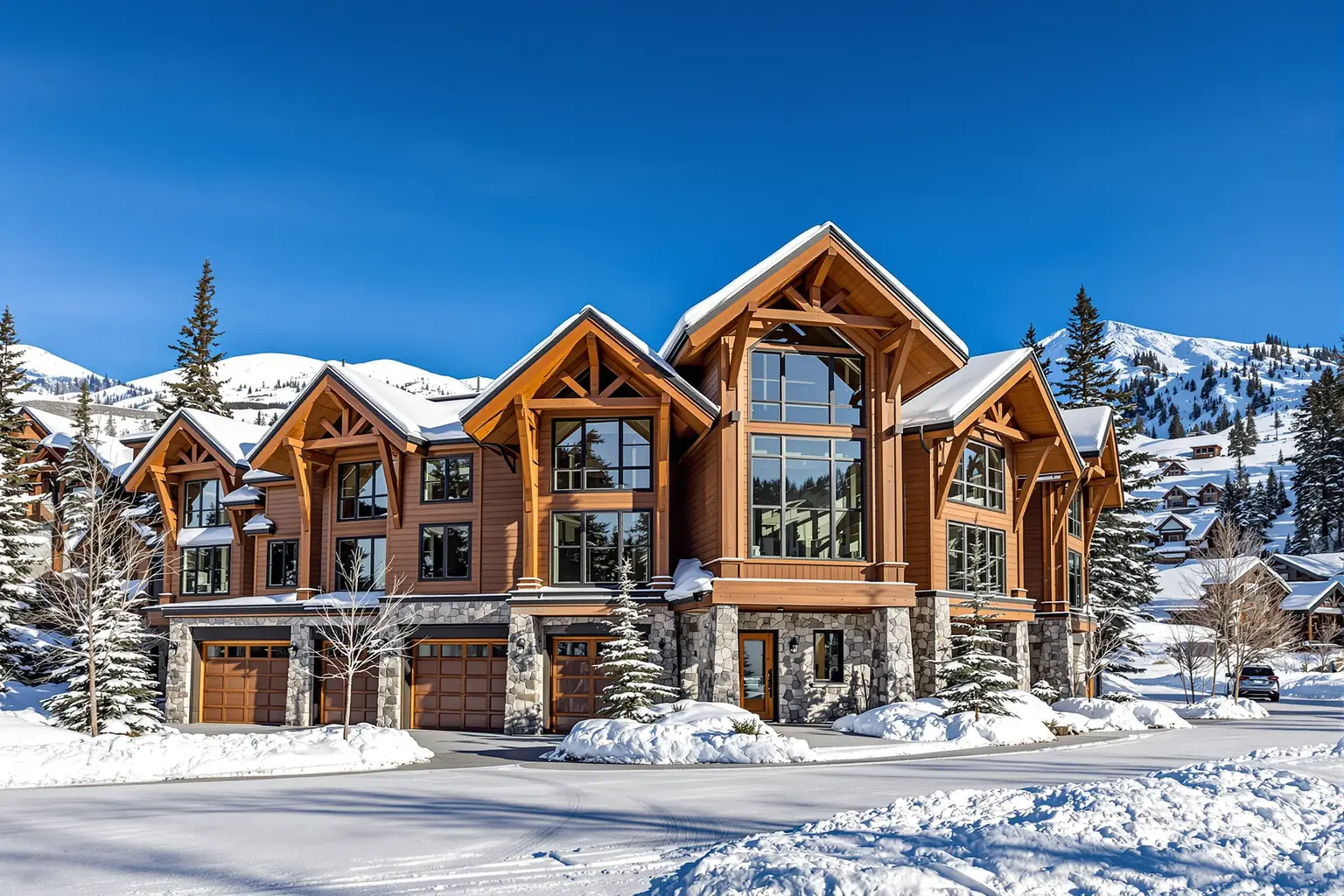
A Frisco-area owner faces something a single-jurisdiction market does not: two separate, capped short-term-rental regimes depending on which side of the town line a property sits on. The Town of Frisco caps licenses at about 900, roughly a quarter of housing stock, and that cap has been full since February 2023, so new applicants join a waitlist. Just outside town, unincorporated Summit County runs overlay zones, some uncapped and some full by basin. The practical effect is that an already-licensed Frisco rental is a scarce, capitalized asset, and the tax analysis on it is worth doing well. This is a genuinely different market from the ultra-luxury Eagle County resorts; see Vail for that end of the Colorado ski spectrum.
Want a number for a specific Frisco property? Use the calculator. It is pre-set with property-type defaults you can adjust to match your basis and tax bracket.
Cost Segregation in Frisco, CO
Licensing depends on your jurisdiction, and it is capped
The Town of Frisco requires a license for any rental under 30 consecutive days and holds a full cap with a waitlist. Unincorporated Summit County uses a Resort Overlay Zone (Copper Mountain, parts of Keystone) with no cap and Neighborhood zones that cap non-primary licenses by basin, several of which are at or over cap. Breckenridge, Dillon, and Silverthorne each run their own ordinances. Verify your exact parcel with the correct authority, and remember that none of it gates cost segregation, which applies to any income-producing property, including a long-term rental in a capped zone.
What a Summit County ski condo is made of
Summit County sits above 9,000 feet with heavy snow load and long winters, which puts real dollars into short-life components a generic 27.5- or 39-year schedule buries in the shell. Because the stock here is more mid-market condo than trophy home, the story is shared amenity systems and cold-climate mechanicals rather than couture finishes. An engineering study evaluates named components like these:
- Snowmelt and heat-trace systems on driveways, walkways, entries, and roof edges: exterior snowmelt embedded in slabs is a 15-year land improvement, with the dedicated boiler and controls reviewed separately. This is the standout Summit County component.
- Hot tubs and spas and their pumps, heaters, and controls, plus boilers, hydronic pumps, and humidification.
- Structured or heated parking, steep-lot site work (retaining walls, drainage, regrading), and site lighting and hardscape.
- Resort-condo amenity-share: an undivided fractional interest in shared 15-year site improvements and amenities, included only where the declaration, purchase allocation, and ownership documents establish a depreciable interest, never assumed.
- Furnished nightly-rental FF&E: appliances, furniture, window treatments, and floor coverings.
Decorative lighting and cabinetry as 5-year property is contested (AmeriSouth) and CPA-gated, so we classify to the evidence and keep those conservative.
Colorado lets you keep the federal bonus
Unlike California, New York, New Jersey, and Massachusetts, Colorado currently follows federal §168(k) bonus depreciation with no state add-back. Colorado uses rolling conformity, begins from federal taxable income, and has not decoupled, so 100% federal bonus generally flows straight through to Colorado taxable income at the flat rate near 4.4%. One caveat worth stating plainly: state conformity can change. A 2026 decoupling bill, HB26-1222, was introduced and failed in committee, so treat conformity as current law but not permanent, and confirm the current year with your CPA. See bonus depreciation by state.
Worked example (modeled)
Consider a mid-market Frisco or Summit County ski condo acquired for $900,000, a more attainable tier than Vail’s trophy homes. Every figure here is a modeled illustration, not a measured result or a promise; your study and CPA determine the actual amounts.
A resort condo sits on shared land with an undivided common-area interest, so the land allocation runs lower than a detached home and follows the declaration and assessor split; it comes out first. Modeled here, that leaves a depreciable building basis of roughly $765,000. Snowmelt, site work, and resort amenity-share push the 15-year bucket higher than a plain rental; an engineering-based study commonly reclassifies 19–39% of building basis. Modeled at about 25%, that is roughly $191,000 reclassified: on the order of $100,000 of 5-year personal property (furnishings, spa and equipment), $86,000 of 15-year land improvements (snowmelt, site work, amenity-share), and a small 7-year slice.
Under 100% bonus, that reclassified amount is deductible in year one on the federal return. At a 35% bracket the modeled first-year federal tax reduction is about $67,000, roughly 67 times a typical study fee, and under current Colorado conformity the acceleration also reduces Colorado taxable income at the flat rate. Whether the loss offsets your other income depends on §469 material participation, a CPA determination. Treat it as a timing benefit, not a permanent elimination of tax.
Done remotely for most residential properties
The study is engineering-based but conducted remotely from your closing and cost records, the declaration or HOA budget, and photos. For most residential properties there is no on-site visit. We use industry-standard, nationally recognized construction cost data to support the component allocation. See how remote cost segregation works and what a cost segregation study is.
Frisco and Summit County submarkets
- Historic Frisco and Peak One: condos and townhomes near the core, subject to the town cap, often with retrofitted heat-trace and radiant systems and structured parking. Note that deed-restricted units are typically not short-term-rental eligible.
- Bill’s Ranch: quieter, wooded, larger-lot cabins near the lake, where steep and wooded lots drive 15-year site work.
- Copper Mountain and Keystone (unincorporated county): much of Copper sits in the uncapped Resort Overlay Zone with heavy shared amenities, so a strong amenity-share story; verify each parcel’s zone.
- Dillon and Silverthorne: each has its own municipal short-term-rental rules; treat them as separate jurisdictions.
Learn more about cost segregation
- Remote cost segregation: how an engineering-based study is delivered without a site visit
- What is cost segregation?: the full explanation of how the study works and what you receive
- Bonus depreciation by state: how Colorado conformity affects timing
- Material participation for STR owners: the 7-day rule and passive vs. non-passive losses
- By property type: short-term rentals, multifamily, single-family rentals, warehouse & industrial
Ready to see your actual Frisco numbers?
Want a number for a specific Frisco property? Use the calculator, or start a preliminary analysis. Figures on this page are modeled illustrations; your study and CPA determine the actual amounts.
CPA use note: These figures estimate the size of the depreciation deduction. Whether the loss is usable in the current year depends on passive-activity rules, STR material participation, REPS status, entity structure, depreciable basis, and state conformity. Your CPA decides how and when it is applied. Specialty and site components (equipment, casework, docks, pools, arenas, tenant improvements, and similar) are only classified when you own them and they are included in the depreciable basis being studied.
How should Frisco, CO investors choose a cost segregation provider?
For a Frisco, CO investor buying a property in the $900,000 range, the choice of provider is a major controllable variable in the return. The IRS Audit Techniques Guide sets the quality characteristics an engineering-based study should meet — industry-standard construction cost data, MACRS classification, and component-level documentation — but it does not make every provider's work identical; rigor, cost, and turnaround still vary.
Traditional engineering studies often run several thousand dollars and can take several weeks, because they include on-site inspections, sales discovery calls, and scheduling overhead. The IRS Cost Segregation Audit Techniques Guide does not prescribe an on-site inspection as a standalone requirement; it sets out the quality characteristics of an engineering-based study — component-level classification, a documented and supportable cost derivation, and a clear audit trail — and describes how a physical inspection can contribute to meeting them.
Modern automated providers (such as Cost Seg Smart) deliver an engineering-based, IRS ATG-aligned study using property records, documents, photos, and recognized construction-cost data, typically from $495 and often within 1–2 business days. For a Frisco, CO investor at a high combined bracket, that cost and speed difference is meaningful. The CPA-Ready Guarantee (free revisions if your CPA flags a problem, and a refund if the report still can't be used) makes the decision essentially risk-free on the report itself.
The automated path is best-fit for owners who can provide closing documents and property photos online (no in-person visit required) and want the report in time to file the current year's return rather than the next one.
All Cost Seg Smart studies include the CPA-Ready Guarantee (free revisions if your CPA flags a problem, and a refund if the report still can't be used). Straightforward residential studies are often delivered in 1–2 business days and completed remotely; larger or more complex commercial studies take longer and may include an on-site observation.