Most content aimed at real estate investors sells the short-term-rental loophole. A Huntsville buy-and-hold investor reads that, assumes cost segregation only helps real estate professionals or Airbnb operators, and walks away. That is the mistake. On a long-term rental the deduction is a matter of timing, not eligibility, and for the investor building a portfolio of Rocket City doors, that timing works out in your favor.
Want a number for a specific Huntsville property? Use the calculator. It is pre-set with property-type defaults you can adjust to match your basis and tax bracket.
Cost Segregation in Huntsville, AL
Cost seg almost always still pays on a long-term rental
A long-term rental is a passive activity under IRC §469, so a big first-year deduction usually creates a passive loss that offsets passive income rather than your salary. But a suspended passive loss is not lost: it carries forward indefinitely and releases in two ways, against passive income from your other rentals, and fully against the gain when you sell the property in a taxable disposition. So the deduction is a timing benefit, not an eligibility gate. The growing Huntsville investor accumulating a second, third, and fourth door is exactly the person whose suspended losses get absorbed by later rental income, and every study front-loads deductions that shelter that future rent. Using the loss against W-2 income requires real-estate-professional status or the limited $25,000 allowance, which is a CPA determination, and this is not the short-term-rental loophole, which needs an average stay of 7 days or less.
Why Huntsville’s new-build stock is a strong candidate
Huntsville is one of the country’s build-to-rent capitals, with a large share of recently built rental inventory feeding a relocation-driven, defense-and-aerospace renter base (Redstone Arsenal, NASA Marshall, Cummings Research Park). New construction helps a study in three ways:
- Original-use property. A new build placed in service on or after January 19, 2025 is original-use property, eligible for permanent 100% bonus depreciation, sidestepping used-property complications.
- Builder cost data. New builds come with developer cost breakdowns, plans, and spec sheets, exactly the documentation a remote study uses, so the accelerated buckets are supportable without a site visit.
- A component mix that favors the accelerated buckets. Southern new-build stock concentrates value in 5-year personal property (flooring, cabinets, appliances, dedicated electrical) and 15-year land improvements (driveways, walks, landscaping, irrigation, fencing, and site drainage), and build-to-rent subdivisions carry unusually heavy sitework.
Decorative lighting and cabinetry as 5-year property is contested (AmeriSouth) and CPA-gated, so we keep those conservative.
Alabama conforms to federal bonus
Unlike many states, Alabama conforms to federal bonus depreciation through its rolling-conformity regime (Ala. Code § 40-18-33), so 100% bonus on reclassified components is available on both the federal and the Alabama return, and the Department of Revenue issued an OBBBA impact analysis in October 2025 confirming it. Alabama’s top individual rate is 5%, so the state benefit is a modest, additive layer on top of the federal driver. Rolling conformity means the legislature could decouple in the future, so confirm the current-year treatment with your CPA. See bonus depreciation by state.
Worked example (modeled)
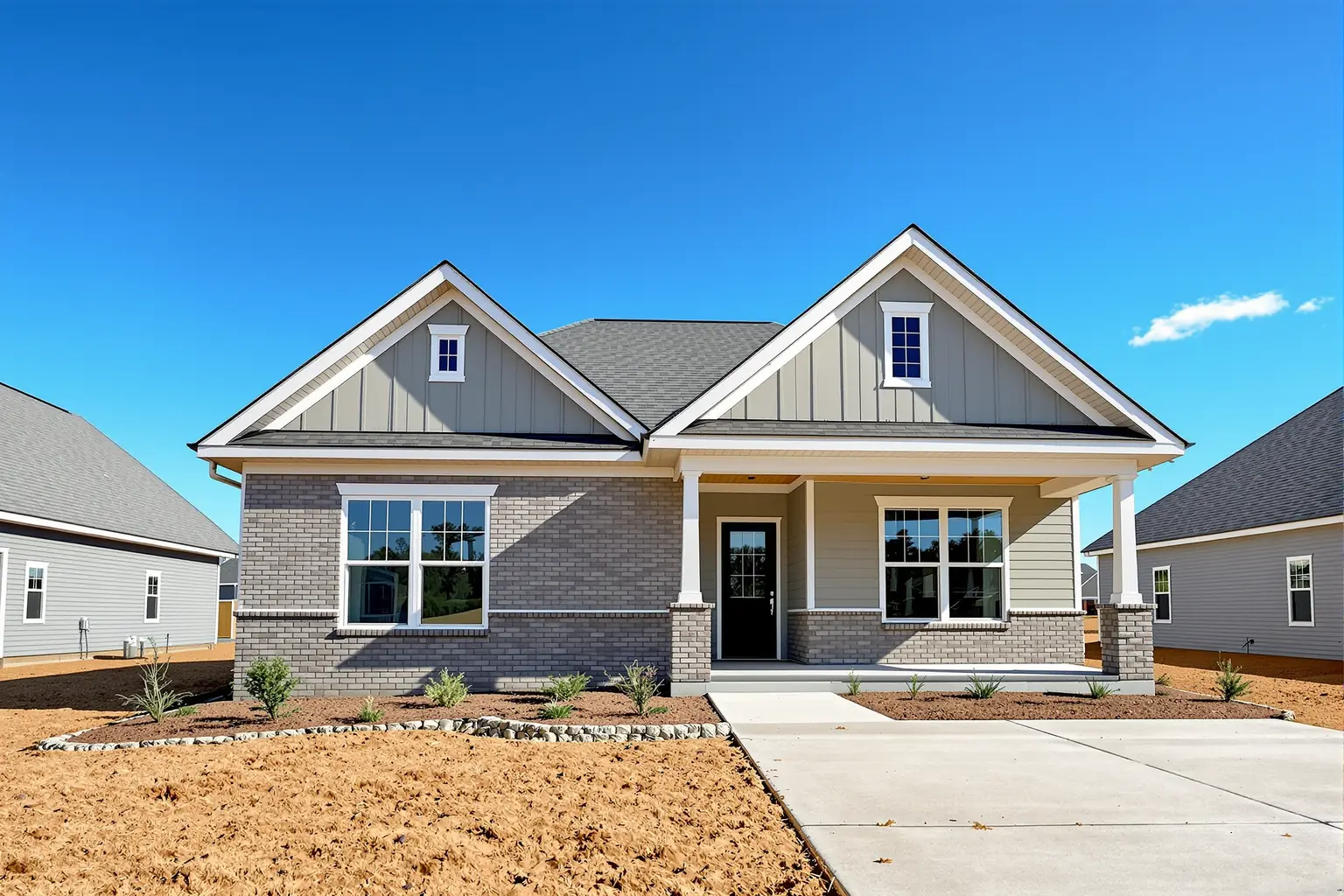
Consider a newly built single-family rental in a Madison or Hampton Cove-style new-construction subdivision, acquired and placed in service in 2025 for $340,000. Every figure here is a modeled illustration, not a measured result or a promise; your study and CPA determine the actual amounts.
After a property-specific land carve-out of about 20%, the depreciable building basis is roughly $272,000. A new-build single-family study commonly reclassifies 16–22% of building basis into shorter recovery periods, with build-to-rent sitework weighting the 15-year bucket. Modeled at about 22%, that is roughly $60,000 reclassified: on the order of $32,000 of 5-year personal property (flooring, cabinets, appliances, dedicated electrical) and $26,000 of 15-year land improvements (driveway, walks, landscaping, site drainage, fencing), plus a small 7-year slice.
Under 100% bonus, that reclassified amount is deductible in year one on the federal return, and Alabama conforms. At a roughly 37% combined bracket the modeled first-year federal tax reduction is about $22,000, subject to the §469 passive-loss rules above. Treat it as a timing benefit, not a permanent elimination of tax.
Done remotely for most residential properties
The study is engineering-based but conducted remotely from your closing documents, builder and developer cost breakdowns, plans, and photos. For most residential properties there is no on-site visit, which keeps turnaround fast and fees fixed for out-of-state investors. We use industry-standard, nationally recognized construction cost data to support the component allocation. See how remote cost segregation works and what a cost segregation study is.
Huntsville submarkets
- Madison and Hampton Cove: the heaviest new-construction activity and the prime new-build long-term-rental targets, with a professional and military tenant base.
- Providence: walkable, mixed-use with townhomes, relevant to small-multifamily and townhome build-to-rent investors.
- Jones Valley and Blossomwood: established, mountain-view areas for existing-home buy-and-hold, still study-eligible via a Form 3115 lookback.
- Build-to-rent subdivisions: the named trend, where sitework-heavy new construction produces a large 15-year bucket.
Learn more about cost segregation
- Remote cost segregation: how an engineering-based study is delivered without a site visit
- What is cost segregation?: the full explanation of how the study works and what you receive
- Bonus depreciation by state: how Alabama conformity affects timing
- Material participation for STR owners: passive vs. non-passive losses and the §469 rules
- By property type: single-family rentals, multifamily, short-term rentals, warehouse & industrial
Ready to see your actual Huntsville numbers?
Want a number for a specific Huntsville property? Use the calculator, or start a preliminary analysis. Figures on this page are modeled illustrations; your study and CPA determine the actual amounts.
CPA use note: These figures estimate the size of the depreciation deduction. Whether the loss is usable in the current year depends on passive-activity rules, STR material participation, REPS status, entity structure, depreciable basis, and state conformity. Your CPA decides how and when it is applied. Specialty and site components (equipment, casework, docks, pools, arenas, tenant improvements, and similar) are only classified when you own them and they are included in the depreciable basis being studied.
How should Huntsville, AL investors choose a cost segregation provider?
For a Huntsville, AL investor buying a property in the $340,000 range, the choice of provider is a major controllable variable in the return. The IRS Audit Techniques Guide sets the quality characteristics an engineering-based study should meet — industry-standard construction cost data, MACRS classification, and component-level documentation — but it does not make every provider's work identical; rigor, cost, and turnaround still vary.
Traditional engineering studies often run several thousand dollars and can take several weeks, because they include on-site inspections, sales discovery calls, and scheduling overhead. The IRS Cost Segregation Audit Techniques Guide does not prescribe an on-site inspection as a standalone requirement; it sets out the quality characteristics of an engineering-based study — component-level classification, a documented and supportable cost derivation, and a clear audit trail — and describes how a physical inspection can contribute to meeting them.
Modern automated providers (such as Cost Seg Smart) deliver an engineering-based, IRS ATG-aligned study using property records, documents, photos, and recognized construction-cost data, typically from $495 and often the same day. For a Huntsville, AL investor at a high combined bracket, that cost and speed difference is meaningful. The CPA-Ready Guarantee (full refund if the report can't be used by your CPA) plus the 60-day money-back policy makes the decision essentially risk-free on the report itself.
The automated path is best-fit for owners who can provide closing documents and property photos online (no in-person visit required) and want the report in time to file the current year's return rather than the next one.
All Cost Seg Smart studies include the CPA-Ready Guarantee (full refund if your CPA can't use the report) plus a 60-day money-back policy. Straightforward residential studies are often delivered the same day and completed remotely; larger or more complex commercial studies take longer and may include an on-site observation.