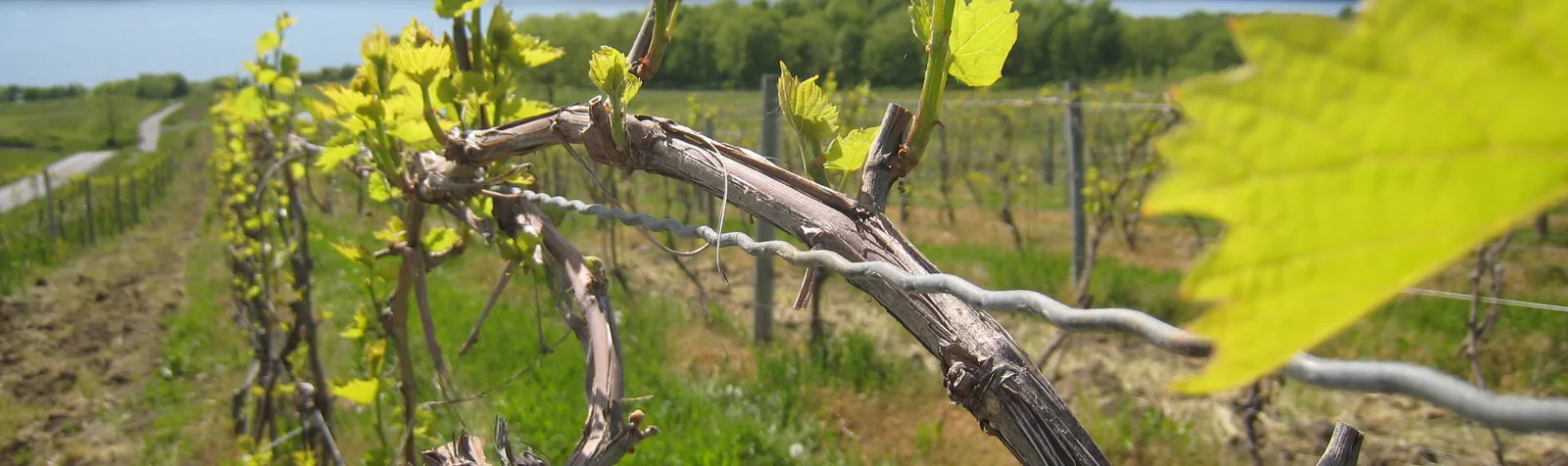
The Finger Lakes are eleven long glacial lakes across central New York, and around them one of the largest wine regions in the country — well over a hundred wineries, concentrated on Seneca, Cayuga and Keuka. The rental economy runs on wine tourism, on Watkins Glen International, on the state parks and gorges, and on Cornell and Ithaca College traffic at the southern end of Cayuga.
For cost segregation this is a quietly efficient market. Land runs a low 20–26% of price — the shoreline is long, the region is rural, and dirt is not scarce the way it is on a barrier island — and the housing stock is conventionally framed with ordinary interior finishes. The modelled example reclassifies 26.4% of depreciable basis, among the highest percentages on this site, on a $585,000 property.
- $120,394 accelerated into 5-, 7- and 15-year property
- $116,928 additional Year-1 depreciation
- $43,263 estimated Year-1 federal tax at the 37% bracket
Want a number for a specific Finger Lakes property? Use the calculator. It is pre-set with property-type defaults you can adjust to match your basis and bracket.
Finger Lakes Investment Snapshot
- Representative price range $250K–$425K (off-water or village house); $450K–$850K (lakefront cottage or wine-country rental); $900K–$2.5M (Skaneateles or Canandaigua lakefront)
- Season May through October, with a strong autumn harvest peak and a quiet winter
- Common property types lakefront cottage, wine-trail farmhouse, Watkins Glen race-weekend rental, Ithaca house, Skaneateles village property
- New York income tax graduated to 10.9% top rate
- Bonus depreciation New York does not conform to federal §168(k)
- Lodging tax county occupancy tax, varying by county, plus state and local sales tax
- Typical land share 18–28% of price
- Representative Year-1 federal benefit $18,000–$110,000 depending on basis and finish
The Finger Lakes Market
Seneca Lake and Watkins Glen form the densest wine corridor and the strongest rental market. Watkins Glen adds two demand spikes nothing else here has: the state park gorge and the racetrack, whose race weekends fill everything usually the next business day.
Cayuga Lake and Ithaca at the southern end have a genuine year-round economy from Cornell and Ithaca College, plus Taughannock Falls. This is the least seasonal part of the region.
Keuka Lake and Hammondsport are quieter and more traditional, with the Y-shaped lake and the oldest wineries in the region.
Skaneateles at the eastern end is the wealthiest market — a pristine lake, a walkable village, and prices that run several times the regional average.
Canandaigua at the western end is closest to Rochester and functions partly as a commuter and second-home market.
Geneva at the north end of Seneca is the region’s small city, with a Hobart and William Smith economy and cheaper stock.
The rental picture varies by town and county. Several municipalities here have adopted short-term rental registration in recent years, and New York State’s broader regulatory posture toward short-term rentals has tightened. Confirm current rules at the address.
Why Cost Segregation Hits Different in the Finger Lakes
The low land share is the headline. At 18–28%, more of what you pay is depreciable improvements than in any coastal market on this site. That alone lifts the percentage several points.
Conventional construction helps too. These are framed, drywalled, ordinarily finished houses rather than log or timber shells, which is the profile a study is built for.
Gorge and hillside lots carry real site work. Much of the Seneca and Cayuga shoreline rises steeply from the water, so bank stairs, retaining, drainage and long drives on grade are common — and the region’s famous gorges exist because water cuts through this terrain aggressively.
Wells and septic are the norm outside the villages, both meaningful 15-year land improvements.
Docks are generally simpler here than on a permitted reservoir — seasonal removable docks are common, and those are treated differently from permanent cribbing. A study should distinguish them.
Winterisation matters. Many lake cottages are seasonal, carrying heat tape, drain-downs and dedicated shutoffs that are worth identifying rather than absorbing into the shell.
Worked Example — the Finger Lakes
A 4-bedroom wine-country rental near Watkins Glen on Seneca Lake, roughly 2,400 square feet, built in 2004, acquired for $585,000 and placed in service in March 2026. Land is taken at 22% of price. Depreciable basis lands at $456,300.
Running that property through our engine produces $120,394 of reclassified property, or 26.4% of depreciable basis:
| Class | Amount | What it is |
|---|---|---|
| 5-year | $93,058 | Furnishings, appliances, floor coverings, decorative lighting, hot tub equipment, window treatments |
| 7-year | $2,770 | Built-in casework and fixed storage |
| 15-year | $24,566 | Drive, deck and bank stairs, retaining and drainage, landscape, exterior lighting |
| Total | $120,394 |
Under 100% bonus depreciation the additional Year-1 deduction is $116,928. At a 37% federal bracket that is $43,263 in Year-1 federal tax.
Note the efficiency: $43,263 of Year-1 federal tax on a $585,000 property. Compare Cape May at $55,333 on $1,150,000 — nearly twice the price for 28% more benefit, because Cape May’s land share is 30% and its shell is 120 years old. Land share and construction age are the two variables that matter most, and this market is favourable on both.
What is real and what is assumed. The split is a real engine run. The inputs are a representative Seneca Lake rental, not a specific address. A Skaneateles lakefront will carry a higher land share and a lower percentage.
Who Is Doing This in the Finger Lakes
The Rochester, Syracuse and Ithaca buyer is closest and most common, often using the property personally, which brings §280A into play.
The New York City and Westchester buyer is four to five hours out, treats it as an investment, and rents harder.
The winery-adjacent operator running guest accommodation alongside a tasting room is a distinct case — that is frequently a trade or business rather than a rental, with a different analysis.
NY Tax Considerations
New York levies a graduated income tax reaching 10.9%.
New York does not conform to federal bonus depreciation under §168(k). New York requires an add-back of the federal bonus deduction, with depreciation recomputed on a regular schedule for state purposes. The full federal Year-1 deduction is available; the New York benefit is spread across the recovery period. Deferred, not lost. The Year-1 figure on this page is a federal number and should not be grossed up by 10.9%.
County occupancy taxes vary across the region and the Finger Lakes span many counties. Rates and registration requirements differ, and several municipalities have adopted short-term rental rules recently. Confirm at the address.
New York’s broader short-term rental posture has tightened in recent years, and the state has taken an active regulatory interest. That is a rental-authority question rather than a depreciation one, but it bears on whether your §469 analysis holds over the life of the investment.
Common Finger Lakes Investment Properties
- The Seneca or Cayuga lakefront cottage, $450K–$850K, the core rental product
- The wine-trail farmhouse, larger, group-oriented, often on acreage
- The Watkins Glen race-weekend rental, demand spikes rather than steady occupancy
- The Ithaca house, least seasonal, university-driven
- The Skaneateles or Canandaigua lakefront, $900K–$2.5M, higher land share
Depreciable Features We Commonly See in the Finger Lakes
Full furniture packages. Kitchen appliance packages. Floor coverings. Hot tubs on dedicated electrical. Decorative and exterior lighting. Decks and screened porches. Engineered bank stairs down steep lake lots. Retaining walls and drainage. Long drives on grade. Fire pits and patio hardscape. Landscape. Drilled wells with pump and pressure tank. Engineered septic. Propane tanks. Seasonal dock equipment and permanent cribbing where present, treated distinctly. Winterisation infrastructure. Detached garages and outbuildings, common on farmhouse properties.
What People Worry About (and What Actually Happens)
“New York doesn’t conform. Worth it?” Yes. The federal deduction is the larger one and is unaffected; the state portion is deferred.
“My dock comes out every winter.” A seasonal removable dock is treated differently from permanent cribbing. A study should distinguish them rather than lumping them together.
“Rules keep changing.” New York’s short-term rental posture has tightened. That affects rental authority rather than the accuracy of a study, but it affects the §469 analysis over time.
Why Cost Segregation Works for Finger Lakes Rentals
Finger Lakes rentals run heavily on two- and three-night wine-trail weekends plus race weekends and summer weeks, putting average guest stay comfortably under seven days. That places a property inside the short-term rental exception under §469 — not automatically a passive rental activity, so an owner who materially participates may be able to apply losses against non-passive income.
Who This Example Applies To
The worked example assumes a 37% federal bracket, 100% bonus depreciation, a March 2026 placed-in-service date, and a 22% land share. At a 32% bracket, scale the Year-1 federal figure by roughly 0.86.
Compare: Finger Lakes Properties at Different Price Points
| Price | Typical property | Rough basis at 22% land | Indicative Year-1 federal at 37% |
| $385,000 | 3BR off-water village house | $300,300 | $27,000–$31,000 |
| $585,000 | 4BR Seneca Lake wine-country rental | $456,300 | $43,263 (modelled above) |
| $1,200,000 | 5BR Skaneateles lakefront (30% land) | $840,000 | $70,000–$80,000 |
Rows other than the modelled one are indicative ranges scaled from that run, not separate engine runs.
Frequently Asked Questions
Does New York conform to federal bonus depreciation? No. New York requires an add-back and recomputes depreciation on a regular schedule for state purposes, so the state benefit is deferred.
Why is the reclassification percentage so high here? Land share and construction. At 18–28% land and conventional framing, more of the purchase price is depreciable improvements than in a coastal or historic market.
Is my seasonal dock depreciable? Removable seasonal dock equipment is treated differently from permanent cribbing and foundations. A study should separate them.
Are bank stairs depreciable? Engineered stairs down a steep lake bank are generally 15-year land improvements and are common on Seneca and Cayuga.
I have guest rooms at my winery. Same analysis? Probably not. Accommodation operated alongside a tasting room is frequently a trade or business rather than a rental activity, with a different structural life and a different §469 analysis.
Learn More About Cost Segregation
- How cost segregation works
- Bonus depreciation by state
- The Form 3115 lookback
- Cost segregation calculator
Ready to See Your Actual Finger Lakes Numbers?
Studies start at $495 and most residential studies are delivered the next business day, with the CPA-Ready Guarantee: if your CPA flags a problem we revise the report free, and if it still can’t be used you get a full refund. Start a study or run your numbers first.
CPA use note: These figures estimate the size of the depreciation deduction. Whether the loss is usable in the current year depends on passive-activity rules, STR material participation, REPS status, entity structure, depreciable basis, and state conformity. Your CPA decides how and when it is applied. Specialty and site components (equipment, casework, docks, pools, arenas, tenant improvements, and similar) are only classified when you own them and they are included in the depreciable basis being studied.
How should Finger Lakes, NY investors choose a cost segregation provider?
For a Finger Lakes, NY investor buying a property in the $585,000 range, the choice of provider is a major controllable variable in the return. The IRS Audit Techniques Guide sets the quality characteristics an engineering-based study should meet — industry-standard construction cost data, MACRS classification, and component-level documentation — but it does not make every provider's work identical; rigor, cost, and turnaround still vary.
Traditional engineering studies often run several thousand dollars and can take several weeks, because they include on-site inspections, sales discovery calls, and scheduling overhead. The IRS Cost Segregation Audit Techniques Guide does not prescribe an on-site inspection as a standalone requirement; it sets out the quality characteristics of an engineering-based study — component-level classification, a documented and supportable cost derivation, and a clear audit trail — and describes how a physical inspection can contribute to meeting them.
Modern automated providers (such as Cost Seg Smart) deliver an engineering-based, IRS ATG-aligned study using property records, documents, photos, and recognized construction-cost data, typically from $495 and often by the next business day. For a Finger Lakes, NY investor at a high combined bracket, that cost and speed difference is meaningful. The CPA-Ready Guarantee (free revisions if your CPA flags a problem, and a refund if the report still can't be used) makes the decision essentially risk-free on the report itself.
The automated path is best-fit for owners who can provide closing documents and property photos online (no in-person visit required) and want the report in time to file the current year's return rather than the next one.
All Cost Seg Smart studies include the CPA-Ready Guarantee (free revisions if your CPA flags a problem, and a refund if the report still can't be used). Straightforward residential studies are often delivered the next business day and completed remotely; larger or more complex commercial studies take longer and may include an on-site observation.