Self-Rentals and Cost Segregation: The Loss Trap Owners Miss (2026)
If you rent a building to your own business, cost segregation can create a first-year loss you can't use — unless you plan for the self-rental rule first.
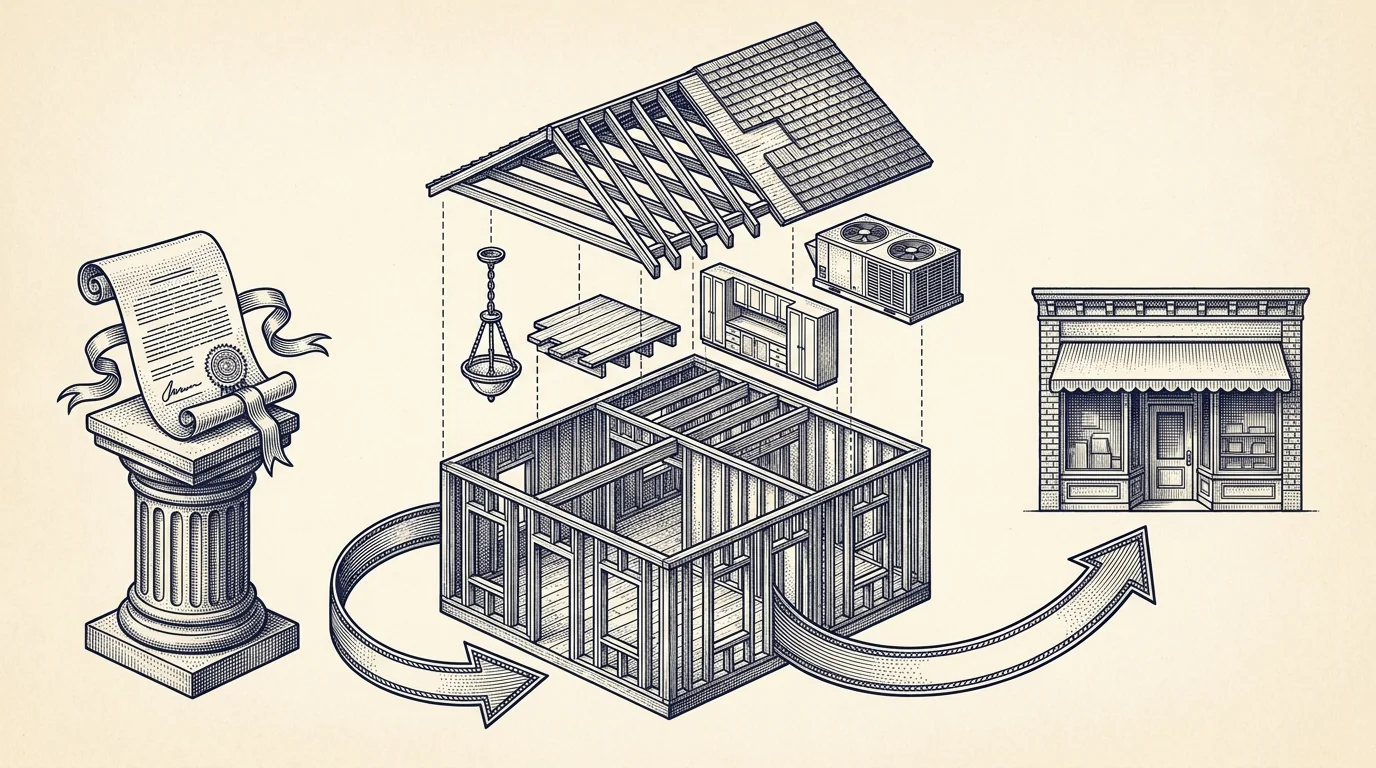
A self-rental is when you rent property to a business you materially participate in. Under the self-rental rule (Reg. 1.469-2(f)(6)), net rental income is treated as non-passive, but a net loss stays passive. Cost segregation often creates a first-year loss, which a self-rental owner may not be able to deduct against business income unless they make a grouping election.
This is general information, not tax advice. The self-rental rules interact with your entity structure, ownership percentages, and participation. Confirm the treatment with your CPA before relying on any position below.
A self-rental is when you rent property to a business you own and work in. The classic case: one LLC holds your building, and it leases the space to your operating company — your practice, your firm, your shop — which you also own. It is one of the most common structures for owner-operators, and it comes with a tax rule that quietly changes how a cost segregation study pays off.
The self-rental rule, in plain terms
Under Treasury Regulation 1.469-2(f)(6), when you rent to a business you materially participate in, the tax code stops treating that rental like a normal passive investment. Specifically:
- Net rental income is recharacterized as non-passive (active).
- A net rental loss stays passive.
That asymmetry is the whole point of the rule. Congress did not want owners renting to their own businesses to manufacture “passive” income that could soak up passive losses from unrelated investments. So income gets pulled out of the passive bucket, but losses are left behind in it.
For most self-rental owners in a normal year, this is invisible — the building throws off a small profit, and it is simply taxed as active income. Cost segregation is where it starts to matter.
Why cost segregation collides with the self-rental rule
A cost segregation study accelerates depreciation by reclassifying parts of the building into 5, 7, and 15-year property. On many properties, that front-loaded deduction is large enough to turn a modestly profitable self-rental into a net loss in year one.
Here is the trap: that loss is passive. Under the self-rental rule, your rental income would have been active — but your rental loss is not. And a passive loss can generally only offset passive income. If your only other income is the active income from your operating business and your W-2, you may have no passive income for the loss to offset, so the deduction is suspended and carried forward instead of hitting your return this year.
In other words: you paid for the study, you generated a real deduction, and the self-rental rule can leave it stranded — unless you plan ahead.
The fix: a grouping election
The most common solution is a grouping election under Treasury Regulation 1.469-4. Grouping lets you treat the rental activity and the operating business as a single activity when they form an “appropriate economic unit.” For the typical owner-operator, the relevant condition is proportionate ownership — you own the building entity and the operating company in the same percentages.
When the two are grouped and you materially participate in the combined activity, the rent between them essentially washes out, and the depreciation loss is treated as non-passive — currently deductible against the business income you actually have.
Two cautions that make this a plan-before-you-buy decision:
- Grouping is generally binding. Once you group activities, you usually cannot ungroup them absent a material change in facts. That has consequences for material participation testing and for how gains and suspended losses are treated when you eventually sell.
- The election has to exist for the year the loss lands. Deciding to group after a study has already generated a suspended loss is far messier than structuring it up front.
This is why we flag self-rentals before a study runs, not after.
Free preliminary depreciation estimate — property summary, basis allocation, five-year schedule. We do the work; you get the PDF.
See my estimated Year-1 savings →Other paths that can free the loss
Grouping is the cleanest fix, but not the only one. Depending on your facts, a loss may also become usable through:
- Real estate professional status (IRC Section 469(c)(7)), which can make rental losses non-passive if you meet the hours and material-participation tests.
- The short-term rental position — if the average stay is seven days or less, the activity is generally not a rental activity for passive-loss purposes, which changes the analysis entirely.
- Other passive income on your return that the suspended loss can offset.
- Disposition — suspended passive losses are generally freed when you sell the activity in a fully taxable transaction.
Each of these is fact-specific and none is automatic. The point is not that self-rental owners should avoid cost segregation — the benefit is usually still substantial — but that the timing of the deduction depends on structure you set up in advance.
The takeaway
Cost segregation works on a self-rental. What changes is when you get to use the deduction. If you rent to your own business, the self-rental rule can suspend a first-year loss unless a grouping election (or another path) is in place. Raise it with your CPA before the study, and the study and the structure can be lined up so the deduction lands the year you want it.
See what a study would surface on your property, then take the numbers to your CPA alongside the grouping question.
Frequently asked
What is a self-rental?
A self-rental is an arrangement where you rent real estate to a trade or business in which you materially participate — most commonly when one entity you own holds the building and leases it to a separate operating company you also own, such as your medical practice, law firm, or dental office. The IRS treats these related-party rentals differently from arm's-length rentals under the self-rental rule.
What is the self-rental rule?
Under Treasury Regulation 1.469-2(f)(6), net rental income from property you rent to a business you materially participate in is recharacterized as non-passive (active) income. The rule is asymmetric: net income becomes non-passive, but a net rental loss remains passive. This prevents owners from generating 'passive' income to absorb passive losses from other investments, while still limiting the deductibility of self-rental losses.
Can I still do cost segregation on a self-rental?
Yes. Cost segregation applies to a self-rental the same way it applies to any building — it accelerates depreciation on 5, 7, and 15-year components. The complication is not whether you can do the study; it is whether you can use the resulting loss in the year you generate it. Because cost segregation often turns a self-rental into a net loss, and that loss stays passive under the self-rental rule, the deduction may be suspended unless you plan for it.
How do I use a self-rental loss from cost segregation?
The most common path is a grouping election under Treasury Regulation 1.469-4, which treats the rental and the operating business as a single activity when they form an appropriate economic unit and ownership is proportionate. If you materially participate in the combined activity, the rental loss becomes non-passive and currently deductible against business income. Grouping is generally binding once made, so it should be evaluated with your CPA before the study, not after.
Does the self-rental rule apply to short-term rentals?
Not always. A rental with an average guest stay of seven days or less is generally not treated as a rental activity under the passive activity rules, so the self-rental recharacterization may not apply in the usual way. Short-term rental treatment is fact-specific and interacts with material participation tests. Confirm the classification with your CPA before relying on it.