REPS Hour Log: Template, Test Calculator & 750-Hour Rules (2026)
Free Excel template plus a filled-in example. Five categories of qualifying hours, the more-than-half-of-personal-services trap, and how to log contemporaneously — not in April.

Free Excel template plus a filled-in example. Five categories of qualifying hours, the more-than-half-of-personal-services trap, and how to log contemporaneously — not in April.
Real Estate Professional Status (REPS) is the IRC §469(c)(7) election that converts rental losses from passive to non-passive — making cost-segregation deductions usable against W-2 and active business income with no $25,000 cap and no AGI phase-out. The test has two parts, both required every year: (1) more than 750 hours of personal services in real property trades or businesses in which you materially participate, and (2) more than half of all personal services across all trades and businesses performed in real estate. The IRS expects contemporaneous documentation — a date-stamped log of activities, not a year-end reconstruction. This article covers exactly what to track, the spouse-aggregation trap most people get wrong, and includes a free Excel template.
Key Takeaways
- REPS requires two simultaneous tests every year: 750+ hours in real estate trades/businesses where you materially participate, AND more than 50% of all your personal services performed in real estate. Both per IRC §469(c)(7)(B).
- You cannot aggregate spouse hours for the REPS 750-hour test. One spouse must independently qualify. Treas. Reg. §1.469-9(c)(4) is unambiguous on this — couples who split 400/400 each fail.
- Eleven qualifying activities under Treas. Reg. §1.469-9(b)(2): development, redevelopment, construction, reconstruction, acquisition, conversion, rental, operation, management, leasing, brokerage. Investor activities (passive portfolio monitoring) do not count.
- W-2 employee hours don’t qualify unless you own at least 5% of the employer (Treas. Reg. §1.469-9(c)(5)). This is why most W-2 earners cannot reach REPS — their day job hours always exceed their real estate hours.
- Material participation aggregation is a separate election. Once one spouse qualifies as REPS, both spouses’ material participation hours count at the individual-property level (Treas. Reg. §1.469-5T(f)(3)). You also need to file a §469(c)(7)(A) election to treat all rentals as one activity.
- Documentation must be contemporaneous. Tax Court has repeatedly rejected reconstructed logs (Bailey v. Commissioner, Moss v. Commissioner). Date, duration, specific activity, property. Calendar entries, email timestamps, and management software logs strengthen the log.
- REPS converts ALL rental losses to non-passive, not just one property. This is why cost segregation studies pair so naturally with REPS — a 27.5-year shell reclassified into 5/7/15-year property under cost seg produces large Year-1 losses, and REPS lets you actually use them.
REPS vs. material participation — they’re different tests
This is the most-misunderstood part of §469. Two separate hurdles, both required to use rental losses against active income:
| Test | What it does | Threshold | Statute |
|---|---|---|---|
| REPS (750-hour + more-than-half) | Converts your rental real estate from a per se passive activity into a non-passive activity (subject to material participation at each property) | 750+ hours real estate AND >50% of total personal services in real estate | IRC §469(c)(7)(B) |
| Material participation (per property) | Determines whether you participate in a specific rental activity. Seven possible tests; only one needs to be met. Spouse hours aggregate. | Most commonly: 500 hours, or 100 hours plus more than anyone else | Treas. Reg. §1.469-5T(a) |
| §469(c)(7)(A) election | Treats all of your rental real estate as one activity for material participation purposes. Once filed it’s binding for all future years unless revoked with IRS consent. | One election filed with your return | Treas. Reg. §1.469-9(g) |
The standard order: clear the REPS test individually → file the §469(c)(7)(A) aggregation election → satisfy material participation across the aggregated activity → use rental losses against W-2 income.
Five categories of qualifying hours
Treas. Reg. §1.469-9(b)(2) lists eleven qualifying real property trades or businesses. For practical hour-logging purposes, those collapse into five categories where most owner-operator hours land:
1. Operations and management
Day-to-day operating work on properties you own and materially participate in. Tenant communication, lease execution, rent collection, vendor coordination, maintenance scheduling, bookkeeping for the rental operation, property tax handling, insurance management, utility setup and transitions, eviction proceedings. Time spent in property management software, scheduling tools, and accounting software all counts when logged with activity-level detail.
2. Acquisition and disposition
Pre-purchase due diligence on properties you intend to own and operate: showing visits, inspections, financing coordination, appraisal review, closing-document review, title work. Disposition activities count too: marketing preparation, showing coordination, repair coordination for sale prep, closing coordination. Casual market-watching does not qualify — Treas. Reg. §1.469-5T(f)(2) explicitly excludes investor activities like reviewing financial statements or studying markets for properties not owned.
3. Construction, reconstruction, and redevelopment
Major renovation, rehab, build-out, or development work on properties in your portfolio. Sourcing contractors, permit work, plan review, site visits, change-order management, materials sourcing, scheduling coordination. Hours spent personally swinging hammers count if they’re related to a property you own and materially participate in. Hours spent on someone else’s project (helping a friend renovate) do not.
4. Leasing and brokerage
Tenant screening, lease drafting, marketing activities (listing creation, photography coordination, ad placement), showing prospective tenants, negotiating lease terms. If you have a real estate license and broker commissioned transactions for others, those hours qualify too — Treas. Reg. §1.469-9(b)(2) explicitly names brokerage as a qualifying trade or business.
5. Travel directly related to operations
Travel time to and from rental properties for active operations or management work qualifies under most Tax Court interpretations (Pourmirzaie v. Commissioner, Goshen v. Commissioner). Commuting to a passive investment property to check on it is investor activity — does not qualify. Commuting to perform actual operations work does. Log the activity, not just the drive.
The 750-hour threshold — and the trap that kills most W-2 filers
Test 1: more than 750 hours of personal services in qualifying real property trades or businesses in which you materially participate.
Test 2: more than half of the personal services you performed across all trades and businesses during the tax year were performed in real property trades or businesses in which you materially participated.
Both tests must be met by the same individual. You cannot aggregate spouse hours for either test under Treas. Reg. §1.469-9(c)(4). The most common failure mode for high-W-2 earners: they hit 750 in real estate, but they also worked 2,000 hours at their day job — so real estate is less than half their total personal services, and they fail Test 2.
Three workarounds for high-W-2 households:
- The lower-earning spouse qualifies. If one spouse has a non-real-estate W-2 income and the other is a stay-at-home parent or part-time worker, the non-W-2 spouse is the one to qualify. Their REPS status converts the rental activities to non-passive; the high earner’s W-2 income can then be offset.
- Reduce the W-2 hours. Switching to part-time, contract, or sabbatical work in a year you specifically want to qualify. The W-2 hours must genuinely be less than the real estate hours — not just on paper. Tax Court rejects employment arrangements that exist primarily to manipulate the more-than-half test.
- Five-percent-or-more ownership. Under Treas. Reg. §1.469-9(c)(5), employee hours of an entity in which you own 5% or more count toward your real property trades or businesses (if the entity is in a qualifying trade or business). For owner-operators of real-estate businesses (a brokerage, a development LLC), this can solve the more-than-half test.
The 100-hour fallback — when REPS doesn’t pencil
If neither spouse can realistically clear the 750-hour and more-than-half tests, REPS is off the table — but you may still have access to the short-term rental exception under Treas. Reg. §1.469-1T(e)(3)(ii). Short-term rental activities (average customer use ≤ 7 days, or ≤ 30 days with substantial personal services) are not per se rental activities under §469, so they aren’t subject to the passive-loss cap. Material participation at the activity level (100 hours and more than anyone else, or 500 hours) is what unlocks loss-against-W-2 deductibility for STR owners. See the STR material participation log for the parallel framework.
REPS is the path for long-term rental investors. The STR exception is the path for short-term rental investors. Most W-2 earners have one or the other available, not both.
The free REPS log template
The template you can download with the link below has the five categories pre-set, weekly summary rows, and quarterly checkpoints showing pace against the 750-hour target. Filled-in example shows a real estate professional who manages four long-term rentals and one duplex personally — clears 750 by mid-November with 47 hours of pad. Specific cell formulas:
- Date · Activity · Property · Category · Hours — five columns, one row per logged activity
- Weekly summary — auto-sums hours by category for the week
- Quarterly pacing — running total with target of 187.5 hours per quarter to clear 750 by Q4
- W-2 / non-real-estate hours column — runs in parallel so the more-than-half test is calculable in real time, not after year-end
- Audit-defense notes column — optional cell for the email timestamp, calendar event, or document that backs up each logged entry
After you qualify: maximizing the REPS year
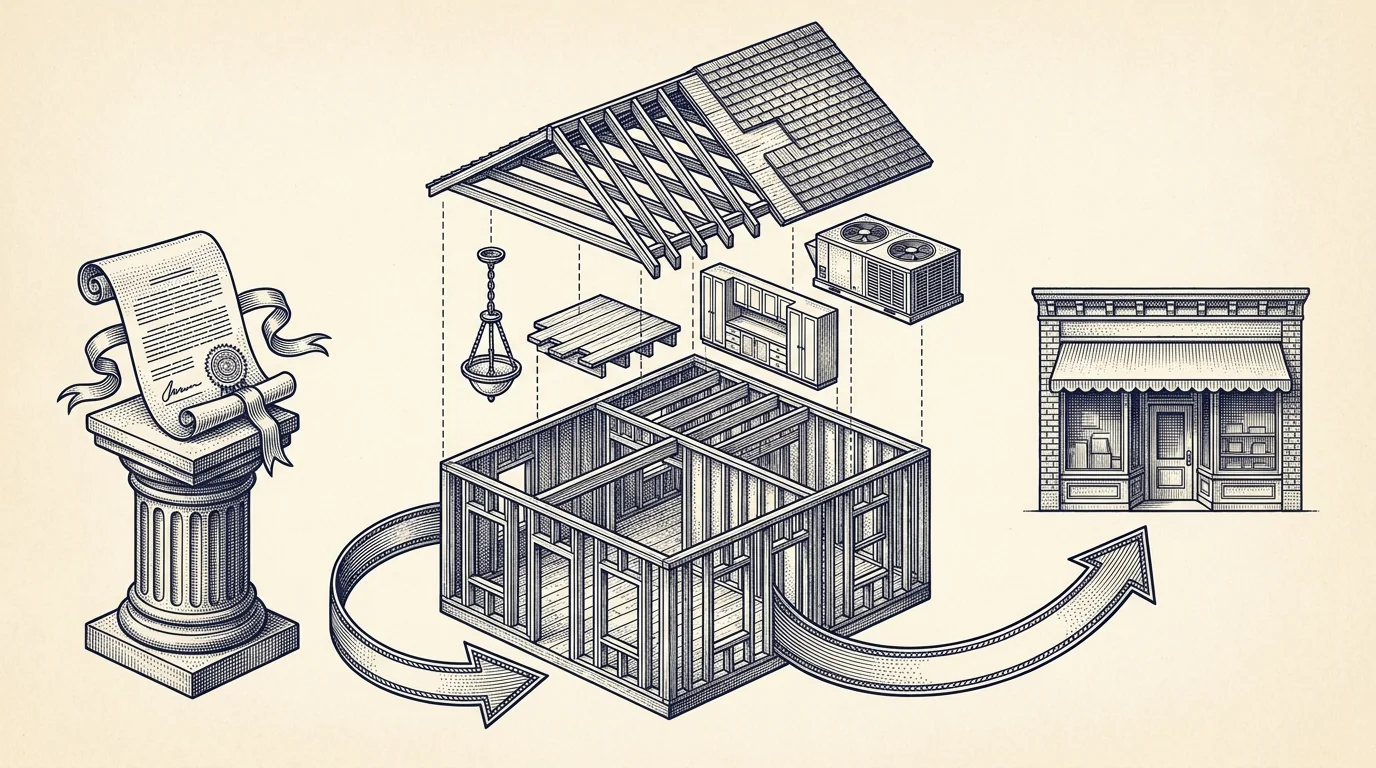
REPS status converts your rental real estate from passive to non-passive — but the size of the deductions you can use depends on how aggressively you’ve front-loaded depreciation. The mechanical pairing:
- REPS qualifies the loss as non-passive. The §469 passive-activity limitation is removed.
- §469(c)(7)(A) aggregation election consolidates all rentals as one activity for material participation purposes. Without aggregation, material participation has to be tested property-by-property.
- Cost segregation accelerates depreciation. A 27.5-year residential shell gets reclassified into 5/7/15-year buckets per IRS Cost Segregation Audit Techniques Guide (Pub 5653). Typical reclassification ratios run 18–24% for unfurnished long-term rentals, 24–32% for furnished.
- 100% bonus depreciation under OBBBA (2025+) lets the reclassified components be fully expensed in Year 1.
- §481(a) adjustment via Form 3115 if the property was placed in service in a prior year without cost seg — claim the missed depreciation as a current-year deduction without amending returns.
For a $1M rental at the 37% federal bracket with REPS active and a fresh cost-seg study producing 24% reclassification, the Year-1 federal deduction lands roughly $200K, generating ~$74K of cash tax savings usable against W-2 income. Run your specific numbers in the calculator — the REPS status is what unlocks usability of the result, not the size of the result itself.
Common traps the IRS catches
- Reconstructed logs. Tax Court has repeatedly rejected logs created at year-end or during audit prep. Bailey v. Commissioner (TC Summary 2014-114) is the canonical example — the taxpayer’s log was rejected because it was prepared “in connection with the audit” rather than contemporaneously.
- Investor activities miscoded as operations. Reviewing financial statements, monitoring markets, attending real estate seminars without specific application to owned properties — all explicitly excluded under Treas. Reg. §1.469-5T(f)(2). The log column “category” should never be “investor” if you intend the hours to count.
- Hours on properties where you don’t materially participate. Test 1 (the 750-hour test) requires hours in real property trades and businesses in which you materially participate. If you own a 5% interest in a syndication but don’t actually participate, those hours don’t count toward your 750.
- Wife logs 400, husband logs 400, total 800 = pass. No. The 750-hour test must be met by one spouse individually (Treas. Reg. §1.469-9(c)(4)).
- W-2 employee hours of someone else’s business. Unless you own 5% or more of the entity, your W-2 employee hours don’t qualify under Treas. Reg. §1.469-9(c)(5). The hours probably still count against the more-than-half test, so they hurt both tests.
- Travel hours without activity logs. A four-hour drive to inspect a property is fine if there’s a logged activity at the destination (“inspected roof leak, met handyman, reviewed quotes”). A four-hour drive with no activity log gets coded as commuting and excluded.
Frequently asked
Each FAQ on this page is also embedded as FAQPage schema for AI extraction. The summarized answers cover the four most-common pre-purchase REPS questions; the full content above contains the operational detail.
Sources
- 26 U.S.C. § 469 — Passive activity losses and credits limited
- 26 U.S.C. § 469(c)(7) — Real estate professional exception
- Treas. Reg. §1.469-9 — Rules for certain rental real estate activities
- Treas. Reg. §1.469-5T — Material participation
- IRS Publication 925 — Passive Activity and At-Risk Rules
- IRS Publication 946 — How to Depreciate Property
- IRS Cost Segregation Audit Techniques Guide — Publication 5653
Run your numbers. Cost-seg with REPS converts the depreciation acceleration into cash tax savings against W-2 income. Estimate Year-1 federal tax savings for a specific property, or order an engineered cost segregation study — 40+ page engineering-based PDF, delivered in under 1 hour. For the parallel STR-owner framework (no REPS required), see the STR material participation log. For the lookback strategy on properties owned in prior years, see Form 3115 §481(a) catch-up worksheet.
Frequently asked
What is the 750-hour test for REPS?
The 750-hour test is the IRC §469(c)(7)(B) threshold that defines a Real Estate Professional. You must spend more than 750 hours of personal services during the tax year in real property trades or businesses in which you materially participate. The hours requirement is one of two simultaneous tests — you also must perform more than half of all your personal services across all trades and businesses in real estate. Both tests have to be met every year separately; status doesn't carry forward. Documentation is contemporaneous: a date-stamped log of activities, not a year-end reconstruction.
Does my spouse's hours count toward my 750?
No — and this is the most common REPS mistake. Under Treas. Reg. §1.469-9(c)(4), the 750-hour test and the more-than-half-of-personal-services test must each be met by ONE spouse individually. You cannot aggregate spouse hours to clear 750. However, once one spouse qualifies as a real estate professional, the spouses can aggregate material participation hours at the individual-property level — which is a different test under Treas. Reg. §1.469-5T(f)(3). The order matters: one spouse must independently qualify as REPS first, then both spouses' material participation hours count at each property.
What real estate activities count toward the 750?
Treas. Reg. §1.469-9(b)(2) lists eleven qualifying real property trades or businesses: development, redevelopment, construction, reconstruction, acquisition, conversion, rental, operation, management, leasing, and brokerage. Hours you spend personally on any of these in trades or businesses in which you materially participate count toward the 750. Investor activities (reviewing financial statements, studying markets for non-owned properties, casual portfolio monitoring) explicitly do not count under Treas. Reg. §1.469-5T(f)(2). If you have a non-real-estate W-2 job, the hours you spend there do not count, and they also have to be less than your real estate hours under the more-than-half test.
Why does REPS matter for cost segregation?
REPS converts rental losses from passive to non-passive under IRC §469(c)(7). Without REPS (and without the short-term rental exception under Treas. Reg. §1.469-1T(e)(3)(ii)), rental losses from long-term residential rentals are capped at $25,000 per year and phase out completely above $150,000 AGI. With REPS, the entire loss — including cost-seg-amplified depreciation — can offset W-2 and active business income with no cap. On a $1M rental with a cost segregation study, that can mean $80K–$150K of Year-1 federal deductions usable against your paycheck rather than suspended as passive losses until the property is sold.