Cost Segregation for a Farm: What Depreciates, and How Fast
A farm is several kinds of property bought for one price. The house, the barn, the well, the irrigation, the fences and the trees each have their own recovery period, and most of them are shorter than the house's.
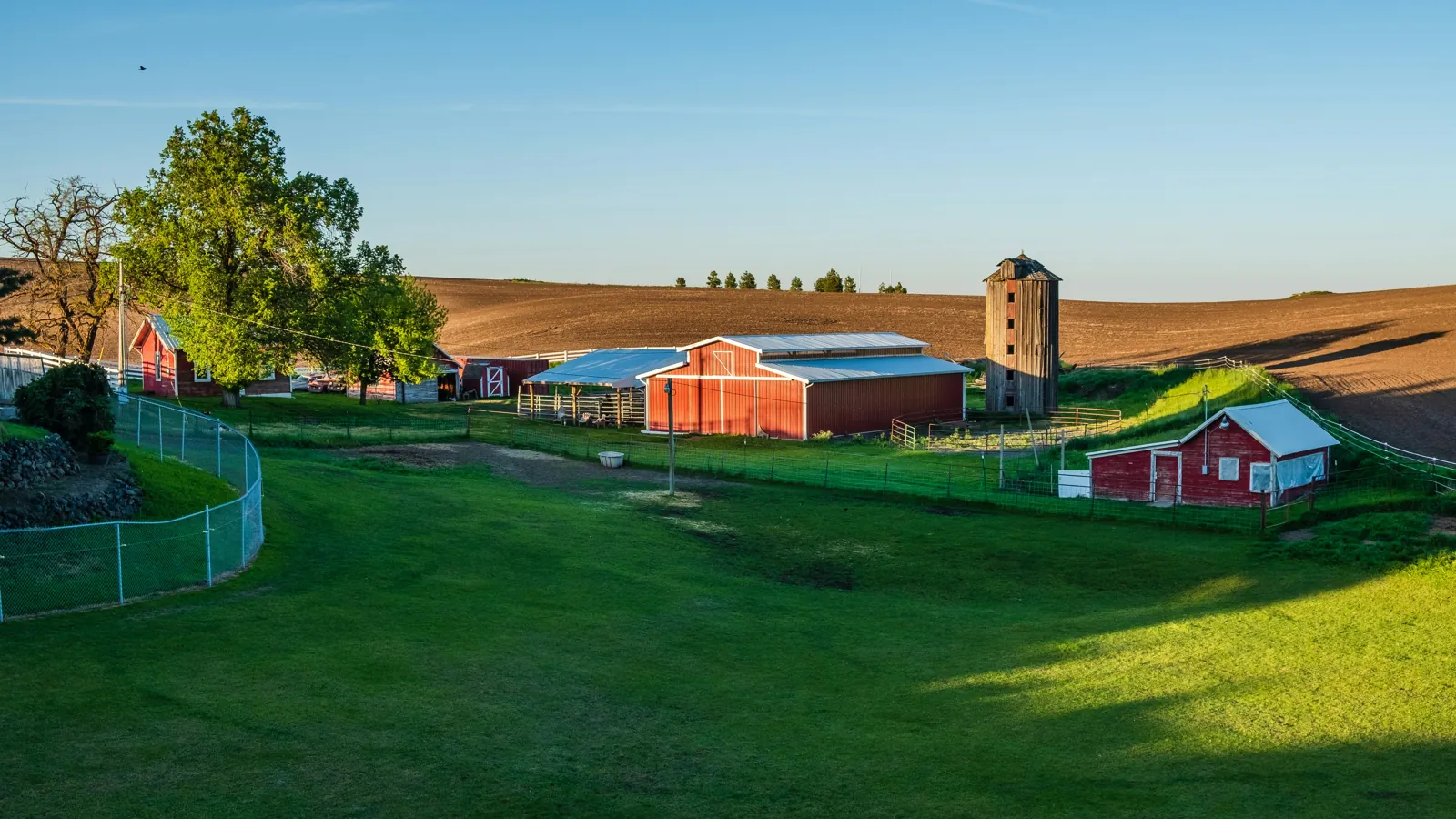
On a farm, land is not depreciable, a rental house is 27.5-year property, a general barn or machine shed used in farming is 20-year, a well or buried irrigation pipe is 15-year, fruit and nut trees are 10-year straight line, and fences, grain bins and machinery that came with the farm are 7-year. A cost segregation study divides the purchase price among them.
A farm is not one building. It is a house or two, a barn, a shed, a well, a pump, a mile of fence, an irrigation system and a block of trees, bought together for one price. Most returns depreciate that price as if it were a single rental house, over 27.5 years. The tax code does not. Each of those things has its own recovery period, and most of them are shorter.
A cost segregation study for a farm does one job: it divides the purchase price among what was actually bought, and gives each part the recovery period the law assigns it.
What is on a farm, and how long each part takes
| What it is | Recovery period | Method |
| Land, and preparing land for planting | Not depreciable | |
| The structure of a rental house | 27.5 years | Straight line |
| A general barn, hay barn, shop or machine shed used in farming | 20 years | 150% declining balance |
| A well, buried irrigation pipe, drainage tile, concrete flatwork | 15 years | 150% declining balance |
| Trees and vines that bear fruit or nuts | 10 years | Straight line, required |
| A structure built and used for one purpose: a milking parlor, a poultry house, a greenhouse | 10 years | 200% declining balance |
| Fences, grain bins, pumps, above-ground irrigation, machinery that came with the farm | 7 years | 200% declining balance |
| Appliances and flooring inside a rental house; farm machinery bought new | 5 years | 200% declining balance |
These come from IRS Publication 225, the Farmer’s Tax Guide, and Rev. Proc. 87-56, whose class lives are reproduced in IRS Publication 946.
The barn is the clearest example
Take a barn that carries $27,000 of the purchase price. Left inside a 27.5-year rental, it produces about $700 of depreciation in its first year. Classified as a 20-year farm building, and with bonus depreciation available, the whole $27,000 can be deducted in the first year.
That turns on one fact: the barn has to be used in farming. A barn the landlord uses to store things for the rental houses is not a farm building. It looks identical from the road. So the question gets asked, and the answer is written down.
Trees are an asset of their own
Trees and vines that bear fruit or nuts are 10-year property, and they are the one class on a farm where the method is fixed by statute: straight line. What matters more than the period is the value, because it has to come from somewhere a preparer can point to:
- An appraisal, or a value stated in the purchase documents.
- The county’s own figure. Some counties assess trees and vines separately from land and buildings. Scaled to the purchase price, that is a documented number.
- What the trees cost to establish, reduced for how much of their productive life is left.
An old orchard is worth little. Almond trees with three productive years left out of twenty-five are near the end, and a study should say so rather than value them as if they were young.
Land decides more than anything else
Land is not depreciable, and on a farm it is usually most of the price. A farm where land is 60% of the purchase has 40% left to depreciate, whatever is standing on it.
That is why we will not set farm land from a statistical estimate. Those models were built for houses and commercial lots. A farm’s land figure has to come from the county roll, an appraisal, the closing documents or a reviewer’s documented work before a study is final.
Three questions for your tax preparer
Farms have elections that other rental property does not, and any one of them changes the result:
- an election under section 163(j)(7)(C) as an electing farming business;
- an election not to apply the section 263A uniform capitalization rules to plants;
- an election of the alternative depreciation system.
Each can move property onto the alternative depreciation system, which removes bonus depreciation and lengthens the recovery periods. Most small farms have made none. If one has been made, or nobody is sure, the study should wait for the answer.
What a farm study looks like
We publish one. It is an illustrative sample on a made-up 18-acre almond farm with two rental houses, a barn, a machine shed, a well, irrigation and a fence, bought for $1,850,000:
| Amount | Share of basis | |
|---|---|---|
| Land, not depreciable | $1,073,000 | |
| Depreciable basis | $777,000 | 100% |
| Property with a recovery period of 20 years or less | $328,239 | 42.2% |
| 27.5-year, the structure of the two houses | $448,761 | 57.8% |
That is one result, not a typical one. Across the farms we have modeled, the share with a recovery period of 20 years or less runs 8–65%. A farm that is mostly house lands near the bottom. A farm with a barn, a well, irrigation and bearing trees lands in the middle, as this one does. An orchard with no house at all can land near the top.
The sample farm report walks through all 72 pages.
How to get one for your farm
A farm study is quoted from a list, because a farm has no typical percentage to estimate from. Tell us what is on the farm: each house and building with its size and what it is used for, the well and irrigation, the fences, and the trees or vines with their acreage and age. We reply with a fixed fee and an estimate for your farm. The fee follows the purchase price, from $995.
More on the type, including what we do not yet study, is on the farm cost segregation page.
Frequently asked
Is a barn 20-year or 27.5-year property?
It depends on what the barn is used for. A general barn, hay barn, shop or machine shed used in a farming business is 20-year property. The same building used to store things for the rental houses follows the houses. Nobody can tell which from the outside, so a study has to ask, and the answer belongs in the workpapers.
Can I depreciate the trees in an orchard I bought?
Usually yes. Trees and vines that bear fruit or nuts are 10-year property, and the law requires straight-line depreciation for them rather than the declining-balance method. What they are worth has to be supported: by an appraisal, by the county's separate tree and vine value where the county publishes one, or by what trees of that age cost to establish. Trees near the end of their productive life carry little value.
Is farmland depreciable?
No. Land is never depreciable, and the cost of clearing, levelling and ripping land to prepare it for planting is part of the land. On a farm the land is usually the largest part of the purchase price, so the land figure decides more of the result than any other input.
Is farm equipment that came with the property 5-year or 7-year?
Seven-year. The five-year period is for new farm machinery and equipment, meaning its original use begins with you. Anything acquired with the farm was used before you owned it, so it is 7-year property, along with agricultural fences and grain bins.
Does a farm get bonus depreciation?
Property with a recovery period of 20 years or less can qualify, which on a farm covers almost everything except the houses and the land. It depends on when the property was acquired and placed in service, and on three elections. If the taxpayer has made the electing farming business election for interest deductions, has elected out of the uniform capitalization rules for plants, or has elected the alternative depreciation system, bonus depreciation is not available on the affected property and the recovery periods are longer. Your tax preparer knows whether any of them was made.
How is a farm study ordered?
From a list. Tell us what is on the farm: each house and building with its size and what it is used for, the well and irrigation, the fences, and the trees or vines with their acreage and age. We reply with a fixed fee and an estimate built from that list. A farm has no typical percentage to estimate from, so we do not quote one from the price alone.