Cost Segregation on Inherited Property: §1014 Stepped-Up Basis + Form 3115
Inherited rentals reset to FMV at date of death under §1014. Cost seg accelerates depreciation against the fresh basis; Form 3115 §481(a) catches prior-year deductions.
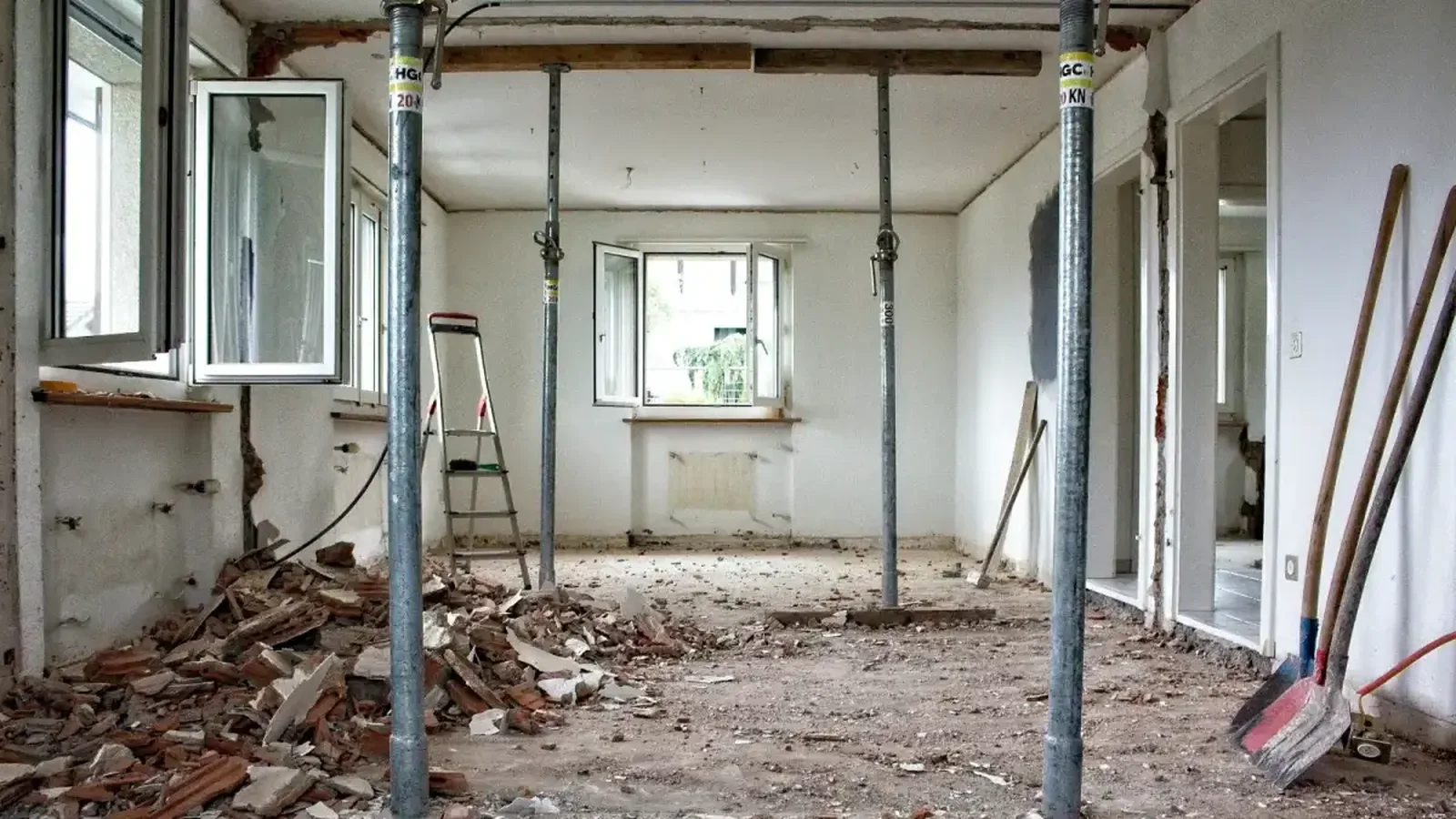
Inherited rentals reset to FMV at date of death under §1014. Cost seg accelerates depreciation against the fresh basis; Form 3115 §481(a) catches prior-year deductions.
The Bottom Line
- Inherited property receives a stepped-up basis to fair market value at the date of death
- This resets the depreciation clock entirely—prior depreciation is irrelevant
- The full FMV (minus land) becomes your new depreciable basis, which makes cost segregation particularly effective
- With 100% bonus depreciation restored permanently under the One Big Beautiful Bill Act, reclassified components are deductible in full in Year 1
Inherited property receives a stepped-up basis to fair market value at the date of death. This resets your depreciable basis—and makes cost segregation potentially very powerful.
If you’ve recently inherited a rental property, or you’re converting an inherited home into a rental, the tax situation is different from a standard purchase. The IRS gives you a fresh start on depreciation, regardless of what the original owner paid or how long they held the property. That fresh start, combined with a cost segregation study, can produce substantial first-year tax deductions that most heirs don’t realize they’re entitled to.
Here’s how it works, when it makes sense, and what you need to get started.
How Stepped-Up Basis Works
When someone dies and leaves you real property, the IRS doesn’t carry over the original owner’s cost basis. Instead, under IRC §1014, the property’s basis is “stepped up” (or in rare cases, stepped down) to its fair market value on the date of the decedent’s death.
This matters enormously for depreciation. Suppose your parents bought a rental property in 1995 for $200,000. They’ve been depreciating it for 30 years. By the time you inherit it, the property is worth $650,000. Your depreciable basis isn’t the original $200,000 minus 30 years of depreciation. It’s $650,000 minus land—a completely new number.
The prior owner’s depreciation history disappears. Their remaining useful life doesn’t carry over. You start a brand-new 27.5-year (residential) or 39-year (commercial) depreciation schedule from the date you place the property in service. It’s as if you bought the property at today’s market value, without actually spending the cash.
The stepped-up basis also eliminates capital gains on all the appreciation that occurred during the original owner’s lifetime. This is one of the most significant tax provisions in the code for real estate investors who inherit property. The reset applies regardless of building type — single-family, duplex, triplex, small multifamily, or commercial — and the higher per-unit FF&E density in small-multifamily configurations means the inherited basis often unlocks bigger Year-1 reclassification than the prior owner ever captured.

Why Inherited Property Is Ideal for Cost Segregation
Cost segregation reclassifies building components from the default 27.5-year or 39-year recovery period into 5-year, 7-year, and 15-year MACRS classes. With 100% bonus depreciation permanently restored under the One Big Beautiful Bill Act, every reclassified dollar is deductible in Year 1.
Inherited property is particularly well-suited for this because of three factors that tend to align at once:
Full FMV as your basis. You’re depreciating today’s market value, not some decades-old purchase price. A property bought for $180,000 in 1998 that’s now worth $550,000 gives you $550,000 (minus land) as your depreciable starting point. Cost segregation applied to that higher basis produces proportionally larger deductions.
No prior depreciation to complicate things. When you buy a property from a living seller, there can be questions about depreciation recapture, prior cost seg studies, and remaining useful life on individual components. None of that applies here. The stepped-up basis gives you a clean slate—no depreciation history, no recapture considerations from the prior owner, no partial-year complications from their schedule.
Older properties often have more to reclassify. Properties that have been held for decades tend to have significant site improvements (mature landscaping, established driveways, fencing, patios) and component differentiation that newer builds don’t. A 1985 ranch with a detached garage, pool, and renovated kitchen has more individually identifiable short-life components than a 2024 spec home. As our benchmark data shows, older properties consistently produce reclassification rates at the upper end of their range. Inherited $650K Rental — Stepped-Up Basis in Action Original purchase price (1995) $200,000 Fair market value at date of death $650,000 Land allocation (18%) $117,000 Depreciable basis (new) $533,000 Reclassified to 5/7/15-year (18%) $95,940 Year 1 bonus depreciation (100%) $95,940 Est. federal tax savings (32% bracket) $30,701
Without cost segregation, that same property would produce only $19,382 in standard straight-line depreciation in Year 1 ($533,000 / 27.5). The cost seg study front-loads an additional $76,558 in deductions into the first year—a meaningful difference for an heir who may also be dealing with estate settlement costs, property maintenance, or renovation expenses.

When to Order the Study
Timing matters. The cost segregation study should be ordered as soon as the property is placed in service as a rental or used in a trade or business. “Placed in service” means the property is available and ready for its intended use—not the date of death, and not the date the estate is settled.
If you inherit a property that was already a rental, the placed-in-service date for your new depreciation schedule is typically the date of death (since the property was already in rental service and continues to be). If you inherit a primary residence and convert it to a rental, the placed-in-service date is the day you make it available for rent—list it, advertise it, or accept a tenant.
The ideal sequence is:
Steps After Inheriting a Property
- Establish fair market value. Get an appraisal as of the date of death. This is often done for estate purposes regardless, but make sure you have documentation. The FMV becomes your depreciable basis.
- Decide on the property’s use. Will it be a long-term rental? A short-term rental? Used in your business? The intended use determines when you place it in service and what depreciation schedule applies.
- Place the property in service. Make it available for its intended income-producing use. Document the date.
- Order the cost segregation study. Ideally in the same tax year as the placed-in-service date, so you capture the full Year 1 bonus depreciation benefit.
- Give the report to your CPA. They’ll use the depreciation schedules from the study when filing your return. No Form 3115 is needed if the study is done in the first year of ownership.
If you missed the first year, you can still do the study and file a lookback via Form 3115 to claim the missed accelerated depreciation. Our Form 3115 filing guide walks through the full process. There’s no deadline—the IRS allows catch-up at any point—but doing it in Year 1 is the simplest path and produces the largest immediate tax benefit. Concerned about IRS scrutiny? See does cost segregation increase audit risk.
What You Need to Get Started
A cost segregation study on inherited property requires three things that a standard study doesn’t always need:
Date of death. This determines your stepped-up basis date and, if the property was already a rental, your new placed-in-service date. It’s the anchor for the entire tax calculation.
Fair market value at date of death. A formal appraisal is the gold standard. If the estate went through probate, there’s likely already an appraisal on file. If not, your CPA or estate attorney can advise on what documentation will satisfy the IRS. The FMV minus land becomes your depreciable basis—the number the entire cost segregation study is built on.
Property address. We use this to pull county assessor data, satellite imagery, construction details, and geographic cost indices. Combined with the FMV, this is enough to produce a full engineering-based cost segregation report with component-level depreciation schedules.
how cost segregation studies work →
You do not need the original purchase documents, the prior owner’s depreciation schedule, or any records from the original acquisition. The stepped-up basis makes all of that irrelevant.
For a broader overview of documentation requirements, see what documents you need for a cost segregation study.
A cost seg study on your inherited property probably makes sense if any of these are true:
- → You inherited the property in the last 1–7 tax years and converted it to a rental. (Date of death FMV is your stepped-up basis under IRC §1014, often much higher than the original purchase price.)
- → The stepped-up FMV was at least $250K. Below that, the study fee starts eating the benefit.
- → You have rental income from this property (or other passive income) to offset the deduction against. If it’s a furnished short-term rental and you materially participate, you can offset W-2 income too.
- → You have a copy of the date-of-death appraisal (or can pull tax-assessor and county records to support FMV). The study reclassifies on top of that basis figure.
- → You have a Year-1 tax bill the deduction can actually reduce, or you’re willing to carry forward passive losses against future rental income.
It probably doesn’t make sense if you’re keeping the property as a primary residence (no depreciation), if the stepped-up FMV is under $200K, if you plan to sell within the next year (depreciation recapture would erase most of the benefit), or if no estate appraisal exists and you can’t document the basis defensibly. Run your numbers in 60 seconds → See a finished sample report
Stepped-up basis rules under IRC §1014 and the recapture interaction depend on your specific estate situation. Examples are illustrative. Confirm with your CPA before filing.
See Your Inherited Property’s Depreciation Breakdown
Free preliminary depreciation estimate — property summary, basis allocation, five-year schedule. We do the work; you get the PDF.
See my estimated Year-1 savings →Related Reading [

Tax Strategy
Lookback Studies: How to Claim Missed Depreciation
Missed your cost seg study in Year 1? Form 3115 lets you catch up without amending prior returns. 9 min read ](/regulations/form-3115/) [

Analysis
Frequently asked
Can I do a cost segregation study on a property I inherited?
Yes. As long as the inherited property is placed in service as a rental or used in a trade or business, it qualifies for cost segregation. Your depreciable basis is the fair market value at the date of the decedent's death (the stepped-up basis), minus land. This is true regardless of what the original owner paid or how long they held the property.
Do I need an appraisal to do cost segregation on inherited property?
You need a defensible fair market value at the date of death. A formal appraisal is the gold standard and is often required for estate tax purposes anyway. If the estate did not commission an appraisal, a CPA may accept a well-supported comparable market analysis from a licensed appraiser or real estate professional. The FMV determination is separate from the cost segregation study itself — the study uses whatever basis you and your CPA establish.
What if the inherited property was already being depreciated by the original owner?
The stepped-up basis resets everything. It does not matter how much depreciation the prior owner had taken or how many years remained on their depreciation schedule. You start fresh with a new depreciable basis equal to the FMV at date of death, a new placed-in-service date, and a full 27.5-year or 39-year recovery period. Cost segregation then reclassifies components of that new basis into shorter recovery periods, just as it would for a newly purchased property.