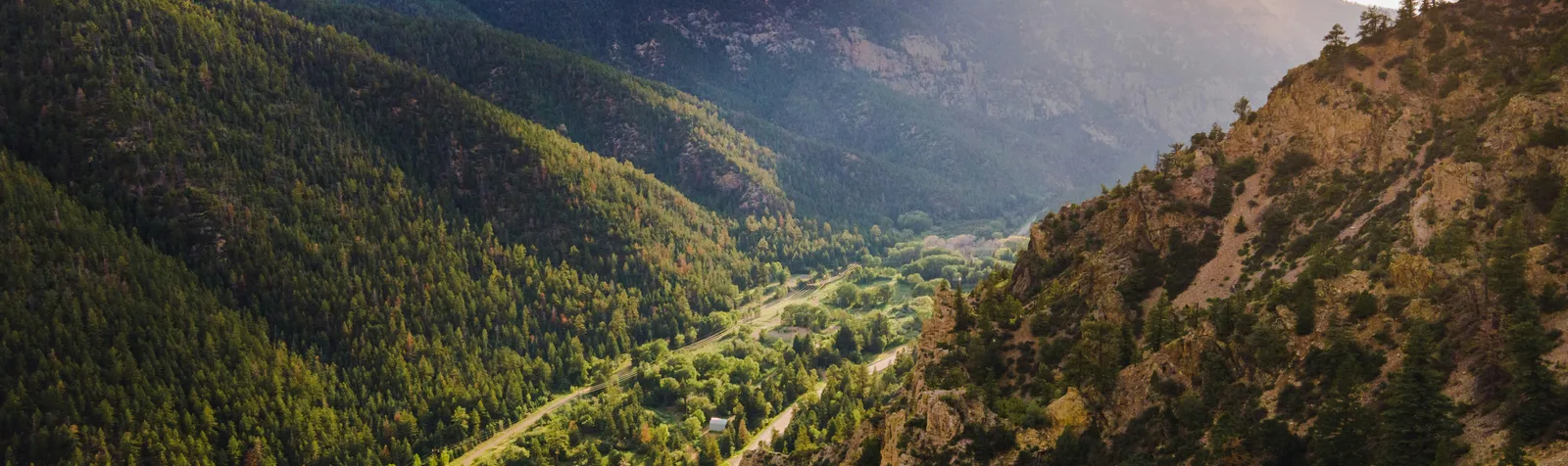
Red River sits at 8,750 feet in the Sangre de Cristo range, a former mining camp turned small ski town with a Main Street you can walk end to end in ten minutes. It is not Taos and it does not try to be. The mountain is modest, the lifts are short, and the customer is overwhelmingly a family from Texas or Oklahoma making an annual trip that their parents also made.
That customer profile is the market. Red River’s occupancy is built on repeat multi-generational visits and on the Enchanted Circle summer season — motorcycle rallies, fishing on the Red River and Eagle Nest Lake, and hiking. It is a two-season town with a genuinely quiet spring and autumn.
For cost segregation, expect a modest percentage. The modelled example reclassifies 17.1% of depreciable basis — cabin construction again, where the timber shell serves as both structure and finish. What lifts it above the North Georgia and Hocking Hills figures is snow-country site work: at this altitude a property needs drainage built for spring melt, drives engineered for grade and ice, and utility infrastructure that survives sustained sub-freezing conditions. The 15-year bucket carries $29,210 against $42,452 of 5-year — a 41% share.
- $71,662 accelerated into 5- and 15-year property
- $69,599 additional Year-1 depreciation
- $25,752 estimated Year-1 federal tax at the 37% bracket
Want a number for a specific Red River property? Use the calculator. It is pre-set with property-type defaults you can adjust to match your basis and bracket.
Cost Segregation in Red River, NM
Red River Investment Snapshot
- Representative price range $225K–$375K (1–2BR condo or small cabin); $400K–$750K (3–4BR cabin); $800K–$1.6M (large lodge, riverfront, Angel Fire golf-corridor house)
- Season two — roughly Thanksgiving through March, and June through September
- Common property types timber cabin, ski-in condo, riverfront cabin, Angel Fire or Eagle Nest alternative
- New Mexico income tax graduated to a 5.9% top rate
- Bonus depreciation New Mexico does not conform to federal §168(k)
- Lodging tax municipal lodgers’ tax on short-term stays, plus gross receipts tax
- Typical land share 15–25% of price
- Representative Year-1 federal benefit $13,000–$70,000 depending on basis and finish
The Red River Market
Downtown Red River along Main Street is the walkable core, with lift access at both ends of town and the highest rental demand. Condos and small cabins here trade at $225K–$500K and rent on convenience.
The Upper Red River Valley, east toward Bobcat Pass, holds the larger cabins on bigger lots — $450K–$1.2M — with more privacy, longer drives, and heavier site work.
Eagle Nest and the Moreno Valley, over the pass, is a different climate and a different product: high open valley, Eagle Nest Lake, cheaper land, and a fishing-and-summer profile more than a ski one.
Angel Fire, the other side of the valley, is the larger and better-capitalised resort — a bigger mountain, a golf course, and a country club. Prices run higher and the inventory is more modern. Many investors comparing Red River are really comparing it to Angel Fire.
Questa, down the canyon toward Taos, is the practical services town and the cheapest entry, with a long history tied to the molybdenum mine that closed in 2014.
The market’s defining constraint is scale. Red River is a village of a few hundred permanent residents with a finite building footprint hemmed in by national forest. Inventory turns slowly, the same properties trade repeatedly, and there is very little new construction. That makes it stable rather than fast-growing, and it means most acquisitions here are older buildings that have been renovated at least once — which, as always, is where the best study evidence lives.
Why Cost Segregation Hits Different at 8,750 Feet
Cabin construction sets the ceiling. A timber-shell cabin puts more cost into 27.5-year structure and less into the reclassifiable interior. At 17.1% the modelled example is honest about that, and it is consistent with what we see across every cabin market we model.
Altitude and snow load put real money into the 15-year bucket. Spring melt at this elevation is not a drizzle; it is a river. Properties need engineered drainage and culverts, drives built and maintained for grade and ice, retaining on cut slopes, and snow-shed roofing details with the ground-level protection that follows from them. Add propane infrastructure — most of this valley heats and cooks on propane rather than natural gas — and dedicated freeze-protection on plumbing runs, and the site work is a much larger share of the total than a lowland rental produces.
Hot tubs are near-universal and are worth their own line. In a ski town at altitude the hot tub is a headline amenity. It is 5-year personal property, with the pad, the dedicated 240V run and any surrounding deck treated separately.
Condo owners should expect a lower percentage. Red River’s ski-adjacent condo buildings hold their parking, common decks and shared hot-tub facilities at the association level. You depreciate what you own, and shared amenities are not on your schedule.
Seasonal shutdown infrastructure is real property here. Buildings that sit unoccupied through mud season carry heat tape, dedicated shutoffs, drain-down systems and in many cases a generator. These are frequently absorbed into the structural shell when they should be identified.
Worked Example — Red River
A 3-bedroom ski-season mountain cabin, roughly 1,800 square feet, built in 1999, acquired for $525,000 and placed in service in March 2026. Land is taken at 20% of price. Depreciable basis lands at $420,000.
Running that property through our engine produces $71,662 of reclassified property, or 17.1% of depreciable basis:
| Class | Amount | What it is |
|---|---|---|
| 5-year | $42,452 | Furnishings, appliances, floor coverings, decorative lighting, hot tub equipment |
| 7-year | $0 | No qualifying built-in casework on this archetype |
| 15-year | $29,210 | Drive on grade, decks and stairs, retaining and drainage, propane infrastructure, landscape, exterior lighting |
| Total | $71,662 |
Under 100% bonus depreciation the additional Year-1 deduction is $69,599 — the Year-1 deduction with the study minus the Year-1 deduction without it. At a 37% federal bracket that is $25,752 in Year-1 federal tax.
What is real and what is assumed. The split is a real engine run at the same code that produces a delivered study. The inputs are a representative Upper Valley cabin, not a specific address. A downtown condo will reclassify lower because the amenities are common property; a newer Angel Fire house with conventional framing and finish will reclassify higher.
Who Is Doing This in Red River
The Texas family buyer is the market. Dallas–Fort Worth, Amarillo, Lubbock and Midland–Odessa account for a large share of both guests and owners, and many owners bought in a town they had been visiting since childhood. This profile uses the property personally a great deal, which makes §280A the first thing to model.
The Oklahoma buyer follows the same pattern from Oklahoma City and Tulsa.
The New Mexico and Colorado regional investor is a smaller cohort buying on yield rather than nostalgia, renting harder and visiting less — a cleaner tax position.
NM Tax Considerations
New Mexico levies a graduated income tax reaching 5.9%.
New Mexico does not conform to federal bonus depreciation under §168(k). New Mexico requires depreciation computed without the federal bonus deduction for state purposes, so the state deduction follows a regular schedule. The full federal Year-1 benefit is available; the New Mexico benefit is spread across the recovery period rather than taken up front. Deferred, not lost. The Year-1 figure on this page is a federal number and should not be grossed up by 5.9%.
The Town of Red River levies a lodgers’ tax on short-term stays, and New Mexico’s gross receipts tax applies to lodging. Both are collected from the guest and remitted rather than paid from your income. New Mexico’s gross receipts tax is structurally different from a conventional sales tax — it is imposed on the seller rather than the buyer, even though it is customarily passed through — and if you are managing your own rentals rather than going through a platform that handles it, that distinction is worth confirming with your CPA.
The personal-use question is acute in this market, more so than the numbers alone suggest. Red River owners are frequently multi-generational visitors who block out the same weeks every year. Under §280A, personal use above the greater of 14 days or 10% of fair-market rental days limits deductions, and a family that takes three weeks at Christmas and two in July is at 35 days against a threshold that will usually be lower. Model it before you order.
Common Red River Investment Properties
- The downtown condo, $225K–$450K, lowest entry, lower reclassification percentage
- The 3–4BR Upper Valley cabin, $400K–$900K, the market’s core rental product
- The riverfront cabin, premium rates, additional site and bank work
- The Angel Fire golf-corridor house, newer, conventionally built, higher reclassification percentage
- The Eagle Nest lake property, summer-weighted, cheaper land
Depreciable Features We Commonly See in the Sangre de Cristos
Hot tubs on dedicated electrical. Full furniture packages sized to bunk and bedroom count, since these are family rentals. Kitchen appliance packages. Floor coverings rated for ski-boot and snow traffic. Mudroom and boot-storage millwork. Wood stoves and gas fireplace inserts. Decorative and exterior lighting. Decks, stairs and covered entries built for snow load. Drives on grade with ice management. Culverts and spring-melt drainage. Retaining walls on cut slopes. Propane tanks and lines. Heat tape and freeze-protection infrastructure. Generators. Well and septic on properties outside the town system. Fire pits and patio hardscape. Game-room equipment on larger lodges.
What People Worry About (and What Actually Happens)
“17% seems low.” It is consistent with cabin construction everywhere we model. The 41% share sitting in the 15-year bucket is what altitude and snow buy you.
“We use it every Christmas and every summer.” That is the classic Red River ownership pattern and it is exactly the §280A case. Count the days before you order.
“New Mexico doesn’t conform. Worth it?” Yes. The federal deduction is the large one and is unaffected. Non-conformity defers the 5.9% state portion across the recovery period.
Why Cost Segregation Works for Red River Ski Rentals
Red River rentals mix ski weeks with three- and four-night winter stays and summer weekends, which for most properties puts average guest stay under seven days. That places a property inside the short-term rental exception under §469 — not automatically a passive rental activity, so an owner who materially participates may be able to apply losses against non-passive income. In a market where owners block out long family stays, that test and the personal-use limitation have to be worked through together.
Who This Example Applies To
The worked example assumes a 37% federal bracket, 100% bonus depreciation, a March 2026 placed-in-service date, a 20% land share, and no §280A limitation. At a 32% bracket, scale the Year-1 federal figure by roughly 0.86.
Compare: Red River Properties at Different Price Points
| Price | Typical property | Rough basis at 20% land | Indicative Year-1 federal at 37% |
| $310,000 | 2BR downtown condo | $248,000 | $13,000–$16,000 |
| $525,000 | 3BR Upper Valley cabin | $420,000 | $25,752 (modelled above) |
| $950,000 | 5BR lodge or Angel Fire house | $760,000 | $46,000–$54,000 |
Rows other than the modelled one are indicative ranges scaled from that run, not separate engine runs.
Frequently Asked Questions
Does New Mexico conform to federal bonus depreciation? No. New Mexico computes state depreciation without the federal bonus deduction, so the state benefit is spread across the recovery period rather than taken in Year 1.
Why does a cabin reclassify lower than a conventional house? The timber shell serves as both structure and interior finish, so more cost sits in 27.5-year structural property and less in the components a study reclassifies.
Is propane infrastructure depreciable? Tanks, lines and associated equipment serving the property are generally land improvements or equipment rather than structural, and in a valley that runs on propane they are worth identifying rather than absorbing into the shell.
What about a condo with a shared hot tub? The association owns it, so it is not on your schedule. Expect a lower reclassification percentage than a detached cabin at the same price.
Should I compare this to Angel Fire? Many investors do. Angel Fire’s newer, conventionally framed inventory generally reclassifies at a higher percentage than a Red River timber cabin. Both are real engine questions rather than opinions, and a study will answer them for your specific property.
Learn More About Cost Segregation
- How cost segregation works
- Bonus depreciation by state
- The Form 3115 lookback
- Cost segregation calculator
Ready to See Your Actual Red River Numbers?
Studies start at $495 and most residential studies are delivered the next business day, with the CPA-Ready Guarantee: if your CPA flags a problem we revise the report free, and if it still can’t be used you get a full refund. Start a study or run your numbers first.
CPA use note: These figures estimate the size of the depreciation deduction. Whether the loss is usable in the current year depends on passive-activity rules, STR material participation, REPS status, entity structure, depreciable basis, and state conformity. Your CPA decides how and when it is applied. Specialty and site components (equipment, casework, docks, pools, arenas, tenant improvements, and similar) are only classified when you own them and they are included in the depreciable basis being studied.
How should Red River, NM investors choose a cost segregation provider?
For a Red River, NM investor buying a property in the $525,000 range, the choice of provider is a major controllable variable in the return. The IRS Audit Techniques Guide sets the quality characteristics an engineering-based study should meet — industry-standard construction cost data, MACRS classification, and component-level documentation — but it does not make every provider's work identical; rigor, cost, and turnaround still vary.
Traditional engineering studies often run several thousand dollars and can take several weeks, because they include on-site inspections, sales discovery calls, and scheduling overhead. The IRS Cost Segregation Audit Techniques Guide does not prescribe an on-site inspection as a standalone requirement; it sets out the quality characteristics of an engineering-based study — component-level classification, a documented and supportable cost derivation, and a clear audit trail — and describes how a physical inspection can contribute to meeting them.
Modern automated providers (such as Cost Seg Smart) deliver an engineering-based, IRS ATG-aligned study using property records, documents, photos, and recognized construction-cost data, typically from $495 and often by the next business day. For a Red River, NM investor at a high combined bracket, that cost and speed difference is meaningful. The CPA-Ready Guarantee (free revisions if your CPA flags a problem, and a refund if the report still can't be used) makes the decision essentially risk-free on the report itself.
The automated path is best-fit for owners who can provide closing documents and property photos online (no in-person visit required) and want the report in time to file the current year's return rather than the next one.
All Cost Seg Smart studies include the CPA-Ready Guarantee (free revisions if your CPA flags a problem, and a refund if the report still can't be used). Straightforward residential studies are often delivered the next business day and completed remotely; larger or more complex commercial studies take longer and may include an on-site observation.