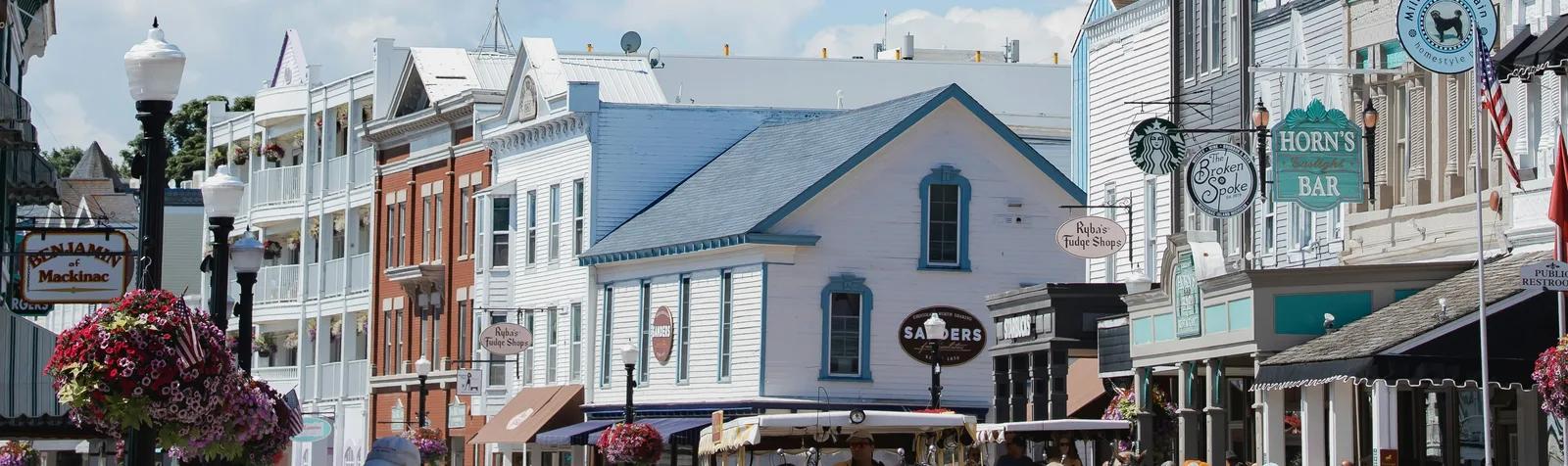
Mackinac Island is unlike any other market on this site, and the tax profile is unlike any other too. Cars have been banned since 1898. Everything arrives by ferry and moves by horse or bicycle. Over 80% of the island is state park. The building stock is overwhelmingly Victorian, much of it within a National Historic Landmark district, and the commercial lodging inventory — inns, small hotels, guest houses — dominates what an investor can actually buy.
Two numbers below are worth reading together, because they are the most extreme pair in our sixteen markets.
The reclassification percentage is 9.2%, the lowest we model. A century-old timber-framed inn puts an enormous share of cost into the 27.5- or 39-year structural shell. There is comparatively little modern interior componentry to move, land on a car-free island in a National Historic Landmark district is genuinely scarce, and the assumed land share is a high 28%.
But the 15-year share is 63% of the reclassified total — by far the highest we model. Look at the split: $99,893 of 15-year property against $58,046 of 5-year. Everywhere else on this site the ratio runs the other way. On Mackinac the site work dominates because a commercial lodging property here carries extensive hardscape, walkways, porches, drainage, exterior lighting, fencing and landscape — and because a car-free island means service access, deliveries and grounds are built and maintained differently.
- $159,720 accelerated into 5-, 7- and 15-year property
- $156,478 additional Year-1 depreciation
- $57,897 estimated Year-1 federal tax at the 37% bracket
Want a number for a specific Mackinac property? Use the calculator. It is pre-set with property-type defaults you can adjust to match your basis and bracket.
Cost Segregation in Mackinac Island, MI
Mackinac Island Investment Snapshot
- Representative price range $650K–$1.4M (small cottage or guest house); $1.5M–$4M (boutique inn, 8–20 rooms); $4M+ (bluff cottage, larger hotel)
- Season roughly May through October, with a very small winter population and most businesses closed
- Common property types Victorian inn, Main Street mixed-use with retail below, East or West Bluff cottage, Harrisonville year-round house
- Michigan income tax 4.25% flat
- Bonus depreciation Michigan does not conform to federal §168(k)
- Lodging tax state use tax on transient lodging plus local assessments
- Typical land share 25–35% of price
- Representative Year-1 federal benefit $25,000–$140,000 depending on basis and property type
The Mackinac Market
Main Street is the commercial spine — the fudge shops, the bicycle liveries, the hotels — and Main Street property is typically mixed-use, with retail at grade and lodging or residential above. That mix matters for a study: commercial and residential portions carry different recovery periods for the structural shell (39 versus 27.5 years), and the allocation has to be right.
Market Street, a block inland, holds the older civic and residential fabric, including some of the island’s earliest structures.
The East and West Bluffs carry the Victorian cottages that define the island’s image — large, elaborate, and largely private residences rather than rental inventory. The Grand Hotel sits on the West Bluff.
Harrisonville, the island’s interior, is where the year-round residents live. Housing is modest, cheaper, and generally not investment lodging.
Mackinaw City and St. Ignace on the mainland are the practical alternatives — ferry terminals, motels and rental houses at a fraction of island prices, with a similar seasonal guest and none of the island’s logistical constraints.
The market’s defining feature is scarcity plus difficulty. Inventory is small and turns rarely. Every renovation must move materials by ferry and dray, which raises construction cost substantially over a mainland equivalent. Much of the island sits in a National Historic Landmark district, so exterior work is reviewed. And the season is genuinely short: a lodging business here earns essentially all its revenue between May and October.
Why Cost Segregation Hits Different on Mackinac
A century-old structure reclassifies low, and there is no way around that. The shell is the bulk of the value, and the shell is 27.5- or 39-year property. At 9.2% the modelled example is honest about it. If a provider quotes you 25% on a Victorian inn, ask which components they are moving.
The 15-year bucket is where the value actually is here, which reverses the usual pattern. Commercial lodging on this island carries extensive porches and decking, stone and paver walkways, service and delivery access, drainage on sloped bluff sites, extensive exterior lighting, fencing, and landscape and grounds maintained to a resort standard. Sixty-three percent of the reclassified total sits there. A study built on the assumption that furnishings dominate — the correct assumption almost everywhere else — will materially understate a Mackinac property.
Commercial lodging is a different classification from a residential rental, and the distinction matters. An inn or hotel is nonresidential real property with a 39-year structural life rather than 27.5, and its FF&E and equipment profile is a hotel’s rather than a house’s: commercial kitchen equipment, guest-room casegoods bought in quantity, laundry equipment, front-desk and reservation systems, commercial HVAC. Those are real categories a residential-oriented study will miss.
Island logistics raise the cost of everything you install, which is not a tax argument but does mean the installed cost of a given component is genuinely higher here than the same component on the mainland. A study that prices from generic cost data without accounting for that will understate.
Renovation documentation is disproportionately valuable. Given how little a century-old shell yields on its own, the components that do reclassify are mostly the ones installed in recent renovations — and those arrive as invoices.
Worked Example — Mackinac Island
A 14-room Victorian boutique inn, roughly 9,000 square feet, built in 1905, acquired for $2,400,000 and placed in service in March 2026. Land is taken at 28% of price. Depreciable basis lands at $1,728,000.
Running that property through our engine produces $159,720 of reclassified property, or 9.2% of depreciable basis:
| Class | Amount | What it is |
|---|---|---|
| 5-year | $58,046 | Guest-room furnishings, appliances, floor coverings, decorative lighting, window treatments |
| 7-year | $1,781 | Built-in casework and fixed storage |
| 15-year | $99,893 | Porches and decking, walkways and hardscape, drainage, exterior lighting, fencing, landscape and grounds |
| Total | $159,720 |
Under 100% bonus depreciation the additional Year-1 deduction is $156,478 — the Year-1 deduction with the study minus the Year-1 deduction without it. At a 37% federal bracket that is $57,897 in Year-1 federal tax.
Two things about this example deserve emphasis. First, the percentage is the lowest on this site and the absolute figure is still substantial, because the basis is large. Nine percent of $1.7 million is more money than twenty-seven percent of $540,000. Percentage efficiency and dollar outcome are different questions.
Second, the 15-year figure is nearly double the 5-year figure, which is the reverse of every other market here. That is the finding a generic study would miss, and it is why an inn on this island should not be modelled as a large house.
What is real and what is assumed. The split is a real engine run at the same code that produces a delivered study, modelled as commercial lodging rather than as a residential rental. The inputs are a representative boutique inn, not a specific address. A property with a recent full renovation will reclassify meaningfully higher.
Who Is Doing This on Mackinac
The owner-operator is the dominant profile here, and it is genuinely different from the rest of this site. Island lodging is usually bought by people who intend to run it — often living on the island through the season. That has a direct tax consequence: an owner-operator running a hotel business is generally not in a passive rental activity at all, so the §469 analysis that dominates every other page here frequently does not apply in the same way.
The Michigan and Chicago investor group buying a small inn as a managed asset is the secondary profile, and this is where the passive-activity questions do arise.
The mainland operator in Mackinaw City or St. Ignace runs a different and lower-cost business serving the same visitors.
MI Tax Considerations
Michigan levies a 4.25% flat income tax.
Michigan does not conform to federal bonus depreciation under §168(k). Michigan requires an add-back and allows depreciation on the regular MACRS schedule for state purposes, so the state benefit is spread across the recovery period. Deferred, not lost. The Year-1 figure on this page is a federal number and should not be grossed up by 4.25%.
Three points specific to this property type and place:
Commercial lodging is nonresidential real property. The structural shell recovers over 39 years rather than 27.5. That lengthens the structural schedule and, incidentally, increases the relative value of moving components out of it.
A hotel or inn is usually a trade or business rather than a rental activity. That changes the §469 analysis fundamentally — an owner-operator materially participating in a lodging business is generally not subject to the passive activity limitations in the way a residential landlord is. It also brings self-employment tax and other considerations into view. This is a genuine structural difference from every other page on this site and it belongs with a CPA who handles hospitality.
Historic district status may open a separate credit. Property within a National Historic Landmark district that undergoes a certified rehabilitation may qualify for the federal historic rehabilitation tax credit under §47. That is an entirely different mechanism from cost segregation, it interacts with basis, and the two need to be planned together rather than sequentially. If you are buying a Mackinac property with renovation in mind, raise it before the work starts.
Common Mackinac Investment Properties
- The boutique inn, 8–20 rooms, $1.5M–$4M, the island’s core investment product
- The Main Street mixed-use, retail at grade with lodging above, split classification
- The bluff cottage, $2M+, largely private residence rather than rental
- The Harrisonville house, year-round, modest, not investment lodging
- The mainland motel or rental house in Mackinaw City or St. Ignace, a fraction of island cost
Depreciable Features We Commonly See on Mackinac
Guest-room casegoods bought in quantity. Commercial kitchen equipment. Commercial laundry equipment. Front-desk, reservation and point-of-sale systems. Floor coverings across guest rooms and corridors. Decorative lighting and period fixtures. Window treatments. Commercial HVAC serving guest areas. Extensive porches, verandas and decking — a defining feature of the island’s architecture. Stone and paver walkways and courtyards. Service and delivery access suited to horse-drawn dray. Drainage on sloped bluff sites. Exterior and landscape lighting. Fencing and gates. Landscape and grounds maintained to resort standard. Bicycle storage. And on any recently renovated property, everything the invoices itemise — which given the shell’s age is where most of the reclassifiable value sits.
What People Worry About (and What Actually Happens)
“9.2% seems very low.” It is the lowest on this site and it is correct for a 1905 structure. The absolute figure is still $159,720 of reclassified property and $57,897 of Year-1 federal tax, because the basis is large.
“My inn is a business, not a rental.” Correct, and that is a meaningful distinction. The passive-activity analysis on the rest of this site frequently does not apply to an owner-operated lodging business. Get hospitality-experienced advice.
“We are planning a historic rehabilitation.” Then raise the §47 rehabilitation credit and the cost segregation study together before work begins. They interact through basis and are much harder to optimise after the fact.
Why the §469 Analysis Is Different Here
Every other page on this site turns on the short-term rental exception under §469 — an average guest stay of seven days or fewer taking a property out of automatic passive treatment. On Mackinac that framing frequently does not apply, because an inn or small hotel operated by its owner is generally a trade or business rather than a rental activity. The practical effect is often more favourable, not less: material participation in an active business is a different and frequently easier test than material participation in a rental. But it is a different analysis, with its own consequences including self-employment tax, and it should not be assumed from a residential template.
Who This Example Applies To
The worked example assumes a 37% federal bracket, 100% bonus depreciation, a March 2026 placed-in-service date, a 28% land share, and commercial lodging classification. At a 32% bracket, scale the Year-1 federal figure by roughly 0.86. A recently renovated property will reclassify meaningfully higher.
Compare: Mackinac Properties at Different Price Points
| Price | Typical property | Rough basis at 28% land | Indicative Year-1 federal at 37% |
| $1,100,000 | 6-room guest house | $792,000 | $24,000–$29,000 |
| $2,400,000 | 14-room Victorian inn | $1,728,000 | $57,897 (modelled above) |
| $4,500,000 | 30-room hotel with restaurant | $3,240,000 | $105,000–$130,000 |
Rows other than the modelled one are indicative ranges scaled from that run, not separate engine runs.
Frequently Asked Questions
Why is the reclassification percentage so low? A 1905 timber-framed structure puts most of its value in the shell, which is 39-year nonresidential real property for a lodging business. There is comparatively little modern interior componentry to reclassify.
Why is the 15-year share so high? Because commercial lodging here carries extensive porches, walkways, hardscape, drainage, lighting, fencing and grounds. On this archetype the 15-year class is 63% of the reclassified total — the reverse of every other market on this site, and the thing a generic study would miss.
Does Michigan conform to federal bonus depreciation? No. Michigan requires an add-back and allows regular MACRS depreciation for state purposes, so the state benefit is deferred.
Is my inn residential or nonresidential property? Transient lodging is generally nonresidential real property with a 39-year structural life. A Main Street building with retail below and long-term residential above may need a split allocation.
Can I combine this with the historic rehabilitation credit? Possibly, and they interact through basis. If a certified rehabilitation is planned, coordinate the §47 credit and the cost segregation study before work begins rather than afterwards.
Learn More About Cost Segregation
- How cost segregation works
- Bonus depreciation by state
- The Form 3115 lookback
- Cost segregation calculator
Ready to See Your Actual Mackinac Numbers?
Studies start at $495 and most residential studies are delivered the next business day, with the CPA-Ready Guarantee: if your CPA flags a problem we revise the report free, and if it still can’t be used you get a full refund. Start a study or run your numbers first.
CPA use note: These figures estimate the size of the depreciation deduction. Whether the loss is usable in the current year depends on passive-activity rules, STR material participation, REPS status, entity structure, depreciable basis, and state conformity. Your CPA decides how and when it is applied. Specialty and site components (equipment, casework, docks, pools, arenas, tenant improvements, and similar) are only classified when you own them and they are included in the depreciable basis being studied.
How should Mackinac Island, MI investors choose a cost segregation provider?
For a Mackinac Island, MI investor buying a property in the $2,400,000 range, the choice of provider is a major controllable variable in the return. The IRS Audit Techniques Guide sets the quality characteristics an engineering-based study should meet — industry-standard construction cost data, MACRS classification, and component-level documentation — but it does not make every provider's work identical; rigor, cost, and turnaround still vary.
Traditional engineering studies often run several thousand dollars and can take several weeks, because they include on-site inspections, sales discovery calls, and scheduling overhead. The IRS Cost Segregation Audit Techniques Guide does not prescribe an on-site inspection as a standalone requirement; it sets out the quality characteristics of an engineering-based study — component-level classification, a documented and supportable cost derivation, and a clear audit trail — and describes how a physical inspection can contribute to meeting them.
Modern automated providers (such as Cost Seg Smart) deliver an engineering-based, IRS ATG-aligned study using property records, documents, photos, and recognized construction-cost data, typically from $495 and often by the next business day. For a Mackinac Island, MI investor at a high combined bracket, that cost and speed difference is meaningful. The CPA-Ready Guarantee (free revisions if your CPA flags a problem, and a refund if the report still can't be used) makes the decision essentially risk-free on the report itself.
The automated path is best-fit for owners who can provide closing documents and property photos online (no in-person visit required) and want the report in time to file the current year's return rather than the next one.
All Cost Seg Smart studies include the CPA-Ready Guarantee (free revisions if your CPA flags a problem, and a refund if the report still can't be used). Straightforward residential studies are often delivered the next business day and completed remotely; larger or more complex commercial studies take longer and may include an on-site observation.