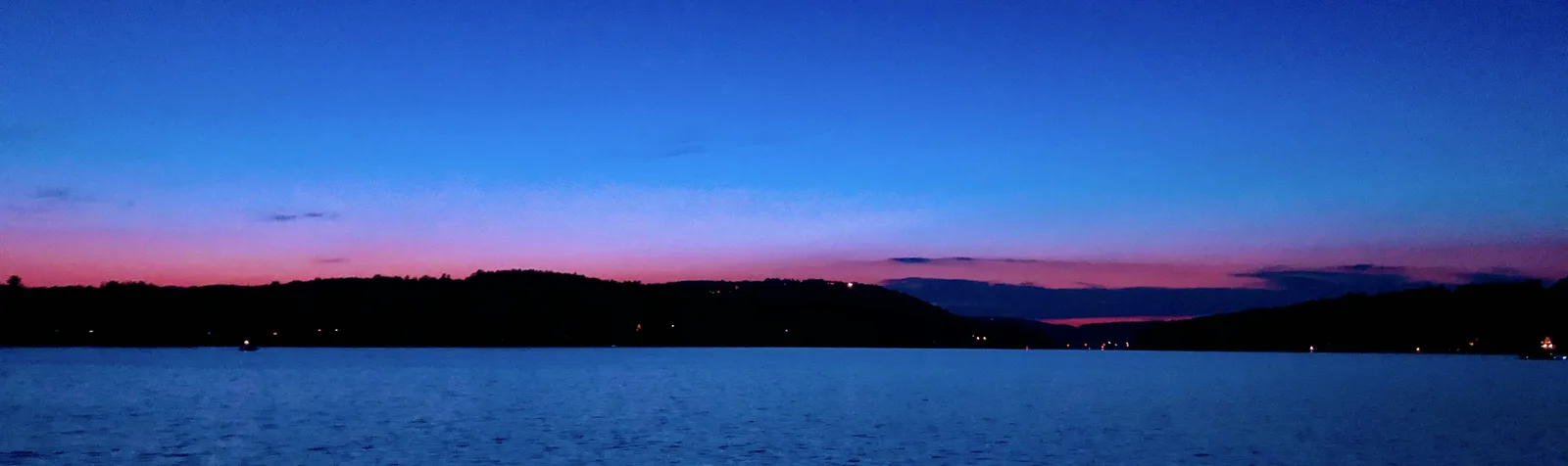
Deep Creek Lake is Maryland’s largest lake and its only mountain resort, sitting at about 2,500 feet in Garrett County on the Allegheny plateau. It is a genuinely four-season market: Wisp Resort skis in winter, the lake fills summer, and the Youghiogheny whitewater and state forests carry spring and autumn. Washington and Baltimore are around three hours, Pittsburgh two and a half.
The market’s defining physical fact is that the lake is privately owned in a way most lakes are not. Deep Creek was built as a hydroelectric impoundment and the lakebed and shoreline buffer are controlled by the state under a management agreement, with lake access governed by permits — dock permits, buoy permits, and defined lake-access rights that attach to specific properties. For cost segregation this matters directly: whether a dock is a depreciable asset on your schedule depends on what you actually own versus what you hold under permit. It is the first thing to establish.
The modelled example reclassifies 21.9% of depreciable basis — solidly mid-range, reflecting a conventionally built lodge on a lakefront lot with a 24% land share.
- $158,390 accelerated into 5-, 7- and 15-year property
- $153,830 additional Year-1 depreciation
- $56,917 estimated Year-1 federal tax at the 37% bracket
Want a number for a specific Deep Creek property? Use the calculator. It is pre-set with property-type defaults you can adjust to match your basis and bracket.
Cost Segregation in Deep Creek Lake, MD
Deep Creek Lake Investment Snapshot
- Representative price range $325K–$550K (off-lake chalet or condo); $600K–$1.2M (lake-access or Wisp-corridor house); $1.3M–$3M+ (lakefront with dock, large group lodge)
- Season four genuine ones, with a summer peak, a real ski season at Wisp, and strong autumn
- Common property types lakefront lodge, Wisp-corridor chalet, lake-access house with buoy, condo at the resort, farmhouse on acreage
- Maryland income tax graduated to 5.75% state, plus a county income tax — Garrett County adds its own
- Bonus depreciation Maryland does not conform to federal §168(k)
- Lodging tax Garrett County hotel rental tax on short-term stays plus state sales tax
- Typical land share 20–32% of price, higher on lakefront
- Representative Year-1 federal benefit $22,000–$150,000 depending on basis and finish
The Deep Creek Market
McHenry and the Wisp corridor at the north end is the resort core — the ski area, the Adventure Sports Center’s whitewater course, the marinas and most of the commercial activity. This is where the highest-turnover rental inventory sits, and where a property can rent in both seasons.
Thayerville in the middle of the lake is the older established shoreline, with a mix of original cottages and substantial rebuilds.
Swanton and the eastern shore are quieter, with larger lots, more privacy, and a longer drive to the resort.
Deep Creek Lake State Park occupies a stretch of the eastern shoreline and constrains development there, which supports values on adjacent private frontage.
Accident and Friendsville are the off-lake Garrett County towns — cheaper, more rural, and closer to the Youghiogheny for the whitewater guest.
The regulatory situation matters more here than in most markets. Garrett County licenses short-term rentals and has adopted rules addressing occupancy limits, parking, septic capacity and inspection. Occupancy is frequently tied to septic capacity rather than to bedroom count alone, which means a six-bedroom house may be licensed for fewer guests than it sleeps. Since capacity drives rate, and rate drives the investment case, that is worth confirming at the address before anything else.
Why Cost Segregation Hits Different at Deep Creek
The dock question decides a meaningful part of your 15-year bucket. Deep Creek’s shoreline is managed under state permit. Some properties own dock structures outright, some hold buoy permits with no physical structure, some have deeded lake access through a community area, and some have none. A study should reflect what you own, not what you use. This is the most common place a Deep Creek analysis goes wrong.
Septic capacity is both a regulatory constraint and a depreciable asset. Most of the lake is unsewered, and systems are engineered and permitted to a specific occupancy. A system sized for a six-bedroom rental is a substantial installed cost and a 15-year land improvement — and it is simultaneously the thing that caps your licensed occupancy. Worth understanding from both directions.
Four-season use accelerates the 5-year cycle. A property renting through ski season as well as summer turns over far more than a purely seasonal lake house, so furnishings, floor coverings and appliances are replaced faster. Every replacement is a new 5-year asset.
Sloped lakefront lots carry real site work. Bank stairs down to the water, retaining, drainage for snowmelt and heavy rainfall on the plateau, and drives built for winter grade. All 15-year.
Group lodges dominate the upper market and carry the associated equipment — game rooms, theatres, bunk rooms, hot tubs, sometimes indoor pools — all 5-year and all routinely under-counted.
Worked Example — Deep Creek Lake
A 6-bedroom lakefront rental lodge near McHenry, roughly 3,200 square feet, built in 2003, acquired for $950,000 and placed in service in March 2026. Land is taken at 24% of price. Depreciable basis lands at $722,000.
Running that property through our engine produces $158,390 of reclassified property, or 21.9% of depreciable basis:
| Class | Amount | What it is |
|---|---|---|
| 5-year | $119,289 | Furnishings, appliances, floor coverings, decorative lighting, hot tub equipment, window treatments |
| 7-year | $2,943 | Built-in casework and fixed storage |
| 15-year | $36,158 | Drive and walks, decks and stairs, retaining and drainage, landscape, exterior lighting |
| Total | $158,390 |
Under 100% bonus depreciation the additional Year-1 deduction is $153,830 — the Year-1 deduction with the study minus the Year-1 deduction without it. At a 37% federal bracket that is $56,917 in Year-1 federal tax.
The 15-year figure here assumes no owned dock structure. If you own a permitted dock outright, that is additional 15-year property and the total rises. If you hold a buoy permit with no structure, or community access, it does not. Establish which before ordering, because it is the difference between an accurate study and an optimistic one.
What is real and what is assumed. The split is a real engine run at the same code that produces a delivered study. The inputs are a representative McHenry-area lodge, not a specific address.
Who Is Doing This at Deep Creek
The Washington and Baltimore professional is the largest cohort — three hours out, and this has been the DC region’s mountain-lake destination for decades. Personal use tends to be substantial, which makes §280A the first thing to model.
The Pittsburgh buyer is closer at two and a half hours and shows a similar pattern.
The Northern Virginia group-lodge investor buys the large 8–12 bedroom properties specifically as rental businesses, uses them rarely, and has the cleanest tax position.
MD Tax Considerations
Maryland levies a graduated state income tax reaching 5.75%, plus a county income tax that varies by county — Garrett County imposes its own, and your own county of residence determines what you pay on this income. That two-layer structure is unusual and worth flagging: Maryland’s effective top marginal rate for a resident is meaningfully above the headline 5.75%.
Maryland does not conform to federal bonus depreciation under §168(k). Maryland requires an add-back of the federal bonus deduction, with depreciation recomputed on the regular schedule for state purposes. The full federal Year-1 deduction is available; the Maryland benefit is spread across the recovery period. Deferred, not lost. The Year-1 figure on this page is a federal number and should not be grossed up by any Maryland rate.
Garrett County levies a hotel rental tax on short-term stays alongside state sales tax, collected from the guest and remitted.
The Garrett County licensing regime deserves a direct conversation before you build a tax plan. Licensed occupancy tied to septic capacity, inspection requirements and any density limits all bear on whether the property can generate the rental days your §469 analysis assumes. A study is accurate regardless; whether the losses are usable against non-passive income depends on facts the county partly controls.
Common Deep Creek Investment Properties
- The lakefront lodge, $1.3M–$3M, 6–10BR, group rentals, heaviest equipment and site work
- The lake-access house with buoy, $600K–$1.2M, water use without owned dock structure
- The Wisp-corridor chalet, $450K–$900K, two-season rental economics
- The resort condo, lowest entry, shared amenities off your schedule
- The off-lake farmhouse on acreage, well and septic, heavier 15-year site work
Depreciable Features We Commonly See in Garrett County
Full furniture packages sized to licensed occupancy. Bunk-room build-outs. Kitchen appliance packages, often doubled on group lodges. Floor coverings on a fast four-season replacement cycle. Hot tubs on dedicated electrical, close to universal. Game-room equipment — pool tables, arcade cabinets, shuffleboard — 5-year and routinely under-counted. Home theatres and seating. Saunas. Decorative and exterior lighting. Multi-level decks and bank stairs down to the water. Drives built for winter grade. Retaining and snowmelt drainage. Fire pits and hardscape. Engineered septic sized to licensed occupancy. Drilled wells. Propane tanks. Boat lifts and dock structures where genuinely owned. Detached garages and storage.
What People Worry About (and What Actually Happens)
“Do I own my dock?” Frequently not in the way owners assume. Deep Creek’s shoreline is state-managed under permit, and buoy permits, community access and owned structures are three different things with three different tax answers.
“My county caps my occupancy below what the house sleeps.” That is common here and it is usually a septic-capacity question. It affects your revenue model rather than your depreciation schedule, but it affects the investment case either way.
“Maryland doesn’t conform. Worth it?” Yes. The federal deduction is the larger one and is unaffected.
Why Cost Segregation Works for Deep Creek Group Rentals
Deep Creek rentals mix summer weeks with two- and three-night ski and shoulder stays, which for most properties puts average guest stay under seven days. That places a property inside the short-term rental exception under §469 — not automatically a passive rental activity, so an owner who materially participates may be able to apply losses against non-passive income. In a three-hour drive market where owners visit often, that test needs working through alongside the §280A personal-use limitation.
Who This Example Applies To
The worked example assumes a 37% federal bracket, 100% bonus depreciation, a March 2026 placed-in-service date, a 24% land share, and no owned dock structure. At a 32% bracket, scale the Year-1 federal figure by roughly 0.86.
Compare: Deep Creek Properties at Different Price Points
| Price | Typical property | Rough basis at 24% land | Indicative Year-1 federal at 37% |
| $525,000 | 3BR Wisp-corridor chalet | $399,000 | $28,000–$33,000 |
| $950,000 | 6BR lakefront lodge | $722,000 | $56,917 (modelled above) |
| $1,900,000 | 10BR group lodge with owned dock (30% land) | $1,330,000 | $105,000–$120,000 |
Rows other than the modelled one are indicative ranges scaled from that run, not separate engine runs.
Frequently Asked Questions
Does Maryland conform to federal bonus depreciation? No. Maryland requires an add-back and recomputes depreciation on the regular schedule for state purposes, so the state benefit is deferred across the recovery period.
Is my dock depreciable? Only if you own the structure. Deep Creek’s shoreline is state-managed under permit, and a buoy permit or community lake access is a different arrangement from an owned dock. Establish which you have before the study.
Why is my licensed occupancy lower than my bedroom count? Garrett County commonly ties occupancy to septic capacity. It is a revenue constraint rather than a depreciation one, but it shapes the investment case.
Is the septic system depreciable? Yes, generally as a 15-year land improvement. On an unsewered lake where systems are engineered to a permitted occupancy, it is a substantial line.
Does Maryland’s county income tax affect my study? Not the study. It affects your marginal rate and therefore the value of the deduction, and Maryland’s two-layer structure puts the effective rate above the 5.75% headline for most residents.
Learn More About Cost Segregation
- How cost segregation works
- Bonus depreciation by state
- The Form 3115 lookback
- Cost segregation calculator
Ready to See Your Actual Deep Creek Numbers?
Studies start at $495 and most residential studies are delivered the next business day, with the CPA-Ready Guarantee: if your CPA flags a problem we revise the report free, and if it still can’t be used you get a full refund. Start a study or run your numbers first.
CPA use note: These figures estimate the size of the depreciation deduction. Whether the loss is usable in the current year depends on passive-activity rules, STR material participation, REPS status, entity structure, depreciable basis, and state conformity. Your CPA decides how and when it is applied. Specialty and site components (equipment, casework, docks, pools, arenas, tenant improvements, and similar) are only classified when you own them and they are included in the depreciable basis being studied.
How should Deep Creek Lake, MD investors choose a cost segregation provider?
For a Deep Creek Lake, MD investor buying a property in the $950,000 range, the choice of provider is a major controllable variable in the return. The IRS Audit Techniques Guide sets the quality characteristics an engineering-based study should meet — industry-standard construction cost data, MACRS classification, and component-level documentation — but it does not make every provider's work identical; rigor, cost, and turnaround still vary.
Traditional engineering studies often run several thousand dollars and can take several weeks, because they include on-site inspections, sales discovery calls, and scheduling overhead. The IRS Cost Segregation Audit Techniques Guide does not prescribe an on-site inspection as a standalone requirement; it sets out the quality characteristics of an engineering-based study — component-level classification, a documented and supportable cost derivation, and a clear audit trail — and describes how a physical inspection can contribute to meeting them.
Modern automated providers (such as Cost Seg Smart) deliver an engineering-based, IRS ATG-aligned study using property records, documents, photos, and recognized construction-cost data, typically from $495 and often by the next business day. For a Deep Creek Lake, MD investor at a high combined bracket, that cost and speed difference is meaningful. The CPA-Ready Guarantee (free revisions if your CPA flags a problem, and a refund if the report still can't be used) makes the decision essentially risk-free on the report itself.
The automated path is best-fit for owners who can provide closing documents and property photos online (no in-person visit required) and want the report in time to file the current year's return rather than the next one.
All Cost Seg Smart studies include the CPA-Ready Guarantee (free revisions if your CPA flags a problem, and a refund if the report still can't be used). Straightforward residential studies are often delivered the next business day and completed remotely; larger or more complex commercial studies take longer and may include an on-site observation.