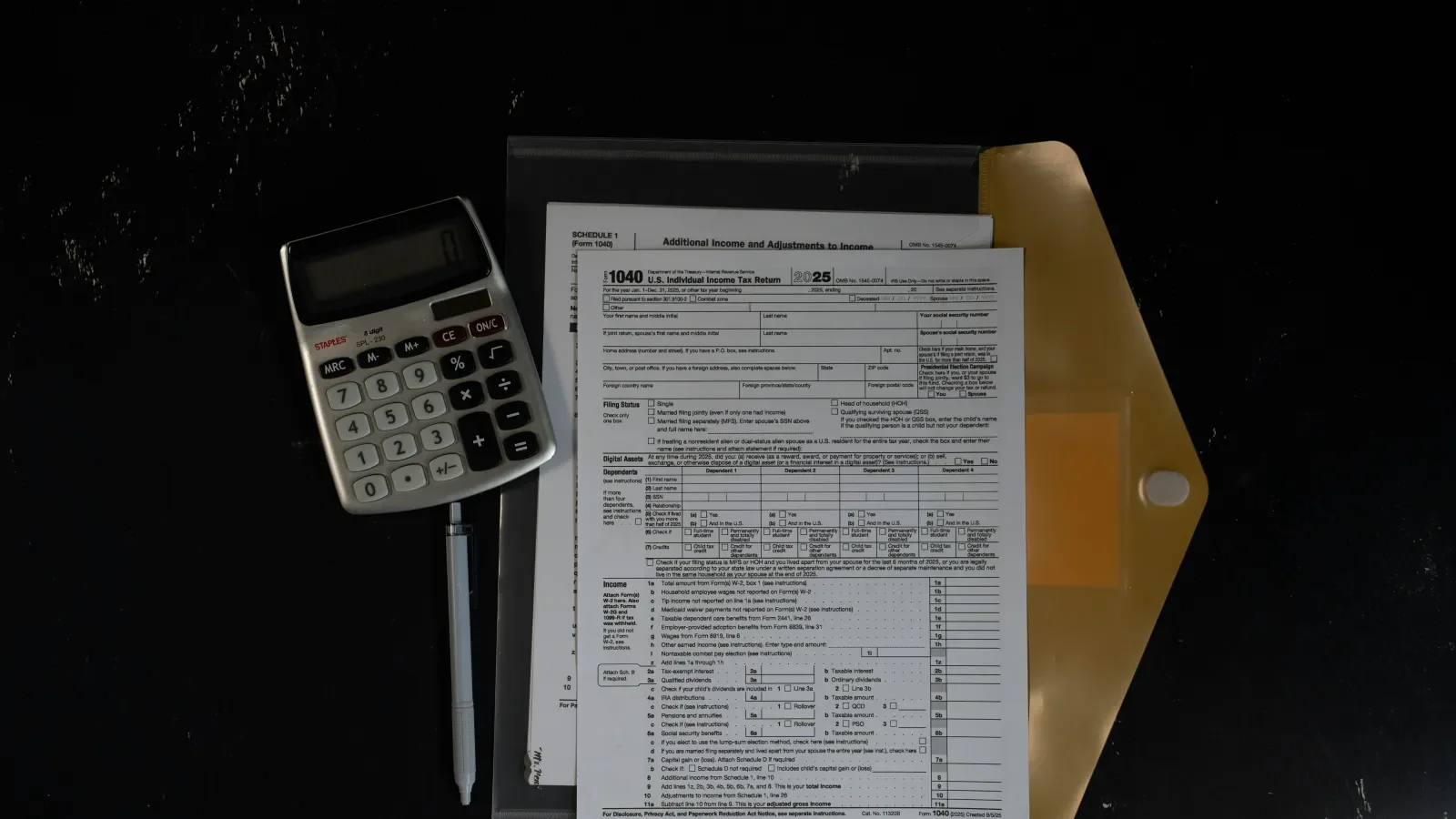
How Cost Segregation Shows Up on Your Tax Return
Step-by-step breakdown of how a cost seg study flows through Schedule E, Form 4562, and Form 3115. No jargon, real examples.

Step-by-step breakdown of how a cost seg study flows through Schedule E, Form 4562, and Form 3115. No jargon, real examples.
Your cost segregation study doesn’t go on your tax return directly — your CPA uses it to populate IRS Form 4562 (depreciation schedule), which flows to Schedule E (rental income) and your Form 1040. For properties owned in prior years, Form 3115 catches up missed depreciation in a single Section 481(a) adjustment. No amended returns needed, no advance IRS approval.
The Confusion Is Real
You ordered a cost segregation study. Or you’re thinking about it. But you keep running into the same questions: Schedule C or Schedule E? Can it offset my W-2 income? Is Form 3115 always required? Do I need to amend my prior returns? Why does every Reddit thread give a different answer?
The confusion is understandable. Cost segregation sits at the intersection of engineering analysis, depreciation tax law, and passive activity rules. Most CPAs handle a few of these studies per year at most. Many property investors get secondhand information from online forums where confident-sounding advice and actual IRS guidance get mixed together freely.
This article is the reference you can hand to your CPA. It walks through exactly which forms are involved, which lines matter, what changes for new versus existing properties, and how the deductions actually hit your return. No jargon, no hedging, no “it depends” without explaining what it depends on.
The 30-Second Version
A cost segregation study reclassifies components of your building — things like flooring, cabinetry, landscaping, electrical, plumbing fixtures, and appliances — from the default 27.5-year (residential) or 39-year (commercial) depreciation schedule into shorter 5-year, 7-year, and 15-year categories under IRC Section 168.
With 100% bonus depreciation (restored permanently for 2025 and beyond by the One Big Beautiful Bill Act), those reclassified components are deducted in full in Year 1. The deduction is reported on Form 4562 (Depreciation and Amortization). It flows to Schedule E, Line 18 for rental properties. Your CPA handles the filing. That’s the entire mechanism.
The study itself does not change your tax return. It provides the engineering documentation aligned with IRS guidance that justifies reclassifying building components into shorter depreciation categories. Your CPA uses the study’s data to prepare the forms.
Which Form Goes Where
Four IRS forms are involved in implementing a cost segregation study. Not every return uses all four — it depends on your situation. Here’s the map:
| Form | What It Does | When It’s Needed |
|---|---|---|
| Schedule E | Reports rental income and expenses. Line 18 is where total depreciation shows up. | Every rental property owner. (Business properties use Schedule C instead.) |
| Form 4562 | Breaks down depreciation by MACRS asset class (5yr, 7yr, 15yr, 27.5yr/39yr). Section 168(k) bonus depreciation is reported here. | Every return that claims depreciation. This is the core form. |
| Form 3115 | Change of Accounting Method. Creates a Section 481(a) catch-up adjustment for missed depreciation from prior years. | Only for “lookback” studies — properties placed in service in a prior tax year. |
| Form 8582 | Passive Activity Loss Limitations. Determines how much of your rental loss you can deduct if it exceeds your passive income. | When rental losses exceed passive income. Not needed if you qualify for an exception (STR material participation, REPS, or the $25K allowance). |
For most rental property investors, the flow is straightforward: cost seg data goes into Form 4562, total depreciation flows to Schedule E Line 18, and the net effect reduces your taxable rental income (or creates a paper loss).

The W-2 Offset Question
This is the question that generates the most confusion — and the most bad advice. Can cost segregation depreciation offset your W-2 salary? The answer depends entirely on how the IRS classifies your rental activity.
Long-term rentals (passive activity). Under IRC Section 469, rental activities are generally classified as passive. Losses from passive activities can only offset passive income — not your W-2 wages, salary, or active business income. There is one limited exception: if your modified adjusted gross income is below $100,000, you may deduct up to $25,000 in passive rental losses against non-passive income. This phases out between $100,000 and $150,000 AGI. For most investors doing cost segregation studies, their income exceeds these thresholds.
Short-term rentals with material participation (potentially non-passive). Under Treasury Regulation 1.469-1T(e)(3)(ii), rental properties with an average guest stay of 7 days or fewer are not classified as “rental activities” for passive activity purposes. If you also materially participate in the STR activity — typically by meeting the 500-hour test under IRC Section 469(h) — the losses may be treated as non-passive. Non-passive losses can potentially offset W-2 and other active income. Your CPA determines whether you meet these tests based on your specific facts.
Real Estate Professional Status (REPS). If you qualify as a real estate professional under IRC Section 469(c)(7), all of your rental activity losses become non-passive. But REPS has strict requirements: you must spend more than 750 hours per year in real estate trades or businesses, and more than half of your total working hours must be in real estate. Most W-2 employees do not qualify.
We break down material participation, the 7-day rule, and how cost seg creates paper losses that may offset your salary — with real numbers. Read the Full STR Analysis →
New Property vs. Existing Property
The mechanics are different depending on when you placed the property in service. This is the single biggest variable in how cost seg shows up on your return.
Scenario 1: New acquisition (current tax year). This is the simpler case. You bought the property this year, you get a cost seg study, and your CPA enters the reclassified depreciation amounts directly into Form 4562. Bonus depreciation applies at the current rate (100% for 2025 and beyond). There is no need for Form 3115. The accelerated depreciation simply shows up on your current-year return as though the property was always classified this way.
Scenario 2: Existing property (prior tax year). This is where Form 3115 comes in. If you’ve been depreciating the property on a straight-line basis over 27.5 or 39 years, switching to the cost seg classification requires a change of accounting method. Your CPA files Form 3115 with your current-year return (it’s filed with the return, not separately to the IRS in advance). The form creates a Section 481(a) adjustment: the cumulative difference between the depreciation you actually claimed and the depreciation you would have claimed if you’d had the cost seg study from the beginning.
The Section 481(a) adjustment is actually favorable. All the “missed” accelerated depreciation from prior years gets claimed in one lump sum on your current-year return. You don’t amend any prior returns. You don’t restate anything. The catch-up happens automatically through the 3115 process.
If your property was placed in service in a prior year, the lookback study with Form 3115 is often more valuable than a current-year study. You get all the missed depreciation from prior years in a single deduction, plus the correct depreciation schedule going forward. Many investors are surprised to learn they can claim several years of missed accelerated depreciation without touching their prior returns. Learn about Form 3115 for lookback elections and estimate your catch-up deduction — we also run a dedicated §481(a) calculator at catchupdepreciation.com with worked examples for properties bought 2-10 years ago.
What Your CPA Actually Does With the Study
One of the reasons property investors hesitate on cost segregation is they don’t know what happens after they receive the report. Here’s the actual workflow, step by step:
- Opens the report, finds the Fixed Asset Summary. This is a one-page table that shows total cost allocated to each MACRS class: 5-year personal property, 7-year property, 15-year land improvements, 27.5-year or 39-year real property, and land. This is the page your CPA needs most.
- Enters each asset class into their tax software. Whether they use Lacerte, UltraTax, Drake, ProSeries, or another platform, every professional tax software has fields for entering depreciation by asset class. The numbers from the summary table map directly to these fields.
- Form 4562 auto-generates. Once the asset data is entered, the software populates Form 4562 automatically — including the bonus depreciation calculation under Section 168(k).
- Schedule E picks up the total. The combined depreciation from all asset classes flows to Schedule E, Line 18 (or Schedule C for business properties). This reduces your taxable rental income.
- If it’s a lookback study, Form 3115 is prepared. Your CPA calculates the Section 481(a) adjustment and includes the 3115 with your return. Most tax software has a 3115 module for this purpose.
For a CPA who has worked with cost seg reports before, this process takes 30 to 60 minutes. The report is designed to be CPA-ready — the numbers map to the forms. Your CPA doesn’t need to verify the engineering. That’s what the study is for.
A Real Example: $600K Short-Term Rental
Here’s how cost segregation flows through the return for a hypothetical $600,000 STR purchase (for illustration purposes — actual results depend on your specific property and tax situation): Property: $600,000 STR in Pigeon Forge, TN (built 1998, fully furnished) Purchase price $600,000 Land value (20%) ($120,000) Depreciable basis $480,000 5-year personal property (cabinets, flooring, appliances, FF&E) $96,000 15-year land improvements (landscaping, paving, fencing) $48,000 27.5-year real property (structural components) $336,000 Bonus depreciation on 5yr + 15yr (100%): $96K + $48K $144,000 Straight-line on 27.5yr component: $336K / 27.5 $12,218 Total Year 1 depreciation (Form 4562 → Schedule E, Line 18) $156,218 Estimated tax impact at 37% bracket ~$57,800
Without cost segregation, the entire $480,000 depreciable basis would be depreciated straight-line over 27.5 years: $17,454 per year. With cost segregation, Year 1 depreciation is $156,218 — nearly nine times more. The difference is $138,764 in additional deductions, which at a 37% bracket represents approximately $51,300 in tax savings in Year 1 alone.
On the return, this shows up as: Form 4562 breaks out the $96,000 (5-year), $48,000 (15-year), and $336,000 (27.5-year) asset classes. The 100% bonus depreciation on the 5-year and 15-year categories is calculated on Form 4562. The total $156,218 flows to Schedule E, Line 18. If the property generates, say, $35,000 in net rental income before depreciation, the $156,218 depreciation creates a paper loss of approximately $121,218 on the property.
Common Misconceptions
“Cost segregation is a scam.” Cost segregation is codified in IRC Section 168. The IRS published a 200+ page Cost Segregation Audit Techniques Guide (ATG) specifically to help its own auditors evaluate cost seg studies. The technique has been upheld in Tax Court cases going back to Hospital Corporation of America v. Commissioner (1997). It’s been a standard practice in commercial real estate since the 1960s. It is not aggressive, novel, or controversial.
“You’ll get audited.” The IRS ATG exists because the IRS expects taxpayers to do cost segregation. What increases audit risk is claiming accelerated depreciation without a supporting engineering study. A properly prepared study is the audit defense. The report itself — with its component-level detail, cost basis, and engineering narrative — is exactly what an IRS examiner would request. Having the study is what makes the deduction defensible.
“It only works for commercial properties.” Cost segregation applies to any depreciable property: single-family rentals, short-term rentals, duplexes, condos, multifamily, office, retail, industrial, and mixed-use. The IRC does not distinguish. A $400,000 SFR and a $4 million office building both have components that can be reclassified into shorter depreciation lives. The dollar amounts differ, but the mechanism is identical.
our Airbnb tax strategy guide →
“You have to do a site visit.” The IRS ATG describes several acceptable methodologies for cost segregation studies, including detailed engineering analysis that does not require a physical site visit. Remote analysis using construction cost data, property records, satellite imagery, and assessor data is a recognized approach. What matters is the engineering basis for the classifications, not whether someone walked through the building.
“My CPA said it’s too aggressive.” This usually means your CPA hasn’t worked with cost segregation studies before. It’s worth understanding the distinction between aggressive tax positions and well-established provisions of the tax code. Cost segregation is the latter. If your CPA is hesitant, the IRS ATG is a good starting point — it demonstrates that the IRS itself considers cost segregation standard practice. A second opinion from a CPA with real estate experience may be helpful.
The Bottom Line
Cost segregation is not a black box. It produces a report. That report has a summary table. Your CPA enters the numbers from that table into their tax software. Form 4562 auto-generates. The depreciation flows to Schedule E. If it’s a lookback study, Form 3115 handles the catch-up. The process is well-defined, well-documented, and takes your CPA about 30 to 60 minutes.
The study is the starting point. It provides the documentation aligned with IRS guidance that justifies the deduction. Your CPA is the one who implements it on your return. The two work together — the engineering analysis from the study, and the tax preparation expertise of your CPA.
If you’ve been sitting on a rental property without a cost seg study because you weren’t sure how it worked on the filing side, now you know. The forms, the lines, the process — it’s all standard. The only question left is whether the numbers make sense for your property.
Free preliminary depreciation estimate — property summary, basis allocation, five-year schedule. We do the work; you get the PDF.
See my estimated Year-1 savings →Frequently Asked Questions Which IRS forms are affected by a cost segregation study?
A cost segregation study flows through three primary forms. Form 4562 (Depreciation and Amortization) is where the reclassified components are entered as separate asset classes with their respective depreciation methods and recovery periods. Schedule E (Supplemental Income and Loss) is where the total depreciation deduction reduces your rental income. For lookback studies on properties you already own, your CPA also files Form 3115 (Application for Change in Accounting Method) to claim the cumulative missed depreciation as a Section 481(a) adjustment. Does my CPA need special training to use a cost segregation report?
No. Any CPA who handles rental property depreciation can use a cost segregation report. The report provides the exact line items, MACRS class, recovery period, depreciation method, and dollar amounts for each component category. Your CPA enters these as separate asset classes on Form 4562. Cost Seg Smart reports include a CPA-Ready Guarantee and are formatted to match the way CPAs set up depreciation schedules in tax preparation software. If your CPA has questions, our support team is available. What is Form 3115 and when do I need it?
Form 3115 (Application for Change in Accounting Method) is required when you perform a lookback cost segregation study on a property you have been depreciating using the standard straight-line method. It allows you to change your depreciation method and catch up on all missed accelerated depreciation in a single tax year through a Section 481(a) adjustment. This is an automatic-consent filing under Revenue Procedure 2015-13 — no IRS pre-approval needed. Your CPA files it with your current-year return. You do not need Form 3115 if the cost seg study is done in the year the property is first placed in service. How fast can I get a cost segregation report to give my CPA?
Cost Seg Smart delivers reports in under one hour from the time you submit property details. The report is a CPA-ready PDF with component-level breakdowns, MACRS depreciation schedules, engineering rationale, and methodology documentation. Studies start at $495 for residential properties. Traditional firms take 4-8 weeks and charge $5,000-$15,000. Both use the same industry-standard construction cost data and IRS classification methodology.
Frequently asked
Which IRS forms are affected by a cost segregation study?
A cost segregation study flows through three primary forms. Form 4562 (Depreciation and Amortization) is where the reclassified components are entered as separate asset classes with their respective depreciation methods and recovery periods. Schedule E (Supplemental Income and Loss) is where the total depreciation deduction reduces your rental income. For lookback studies on properties you already own, your CPA also files Form 3115 (Application for Change in Accounting Method) to claim the cumulative missed depreciation as a Section 481(a) adjustment.
Does my CPA need special training to use a cost segregation report?
No. Any CPA who handles rental property depreciation can use a cost segregation report. The report provides the exact line items, MACRS class, recovery period, depreciation method, and dollar amounts for each component category. Your CPA enters these as separate asset classes on Form 4562. Cost Seg Smart reports include a CPA-Ready Guarantee and are formatted to match the way CPAs set up depreciation schedules in tax preparation software.
What is Form 3115 and when do I need it?
Form 3115 (Application for Change in Accounting Method) is required when you perform a lookback cost segregation study on a property you have been depreciating using the standard straight-line method. It allows you to change your depreciation method and catch up on all missed accelerated depreciation in a single tax year through a Section 481(a) adjustment. This is an automatic-consent filing under Revenue Procedure 2015-13 — no IRS pre-approval needed. Your CPA files it with your current-year return. You do not need Form 3115 if the cost seg study is done in the year the property is first placed in service.
How fast can I get a cost segregation report to give my CPA?
Cost Seg Smart delivers reports in under one hour from the time you submit property details. The report is a CPA-ready PDF with component-level breakdowns, MACRS depreciation schedules, engineering rationale, and methodology documentation. Studies start at $495 for residential properties. Traditional firms take 4-8 weeks and charge $5,000-$15,000. Both use the same industry-standard construction cost data and IRS classification methodology.