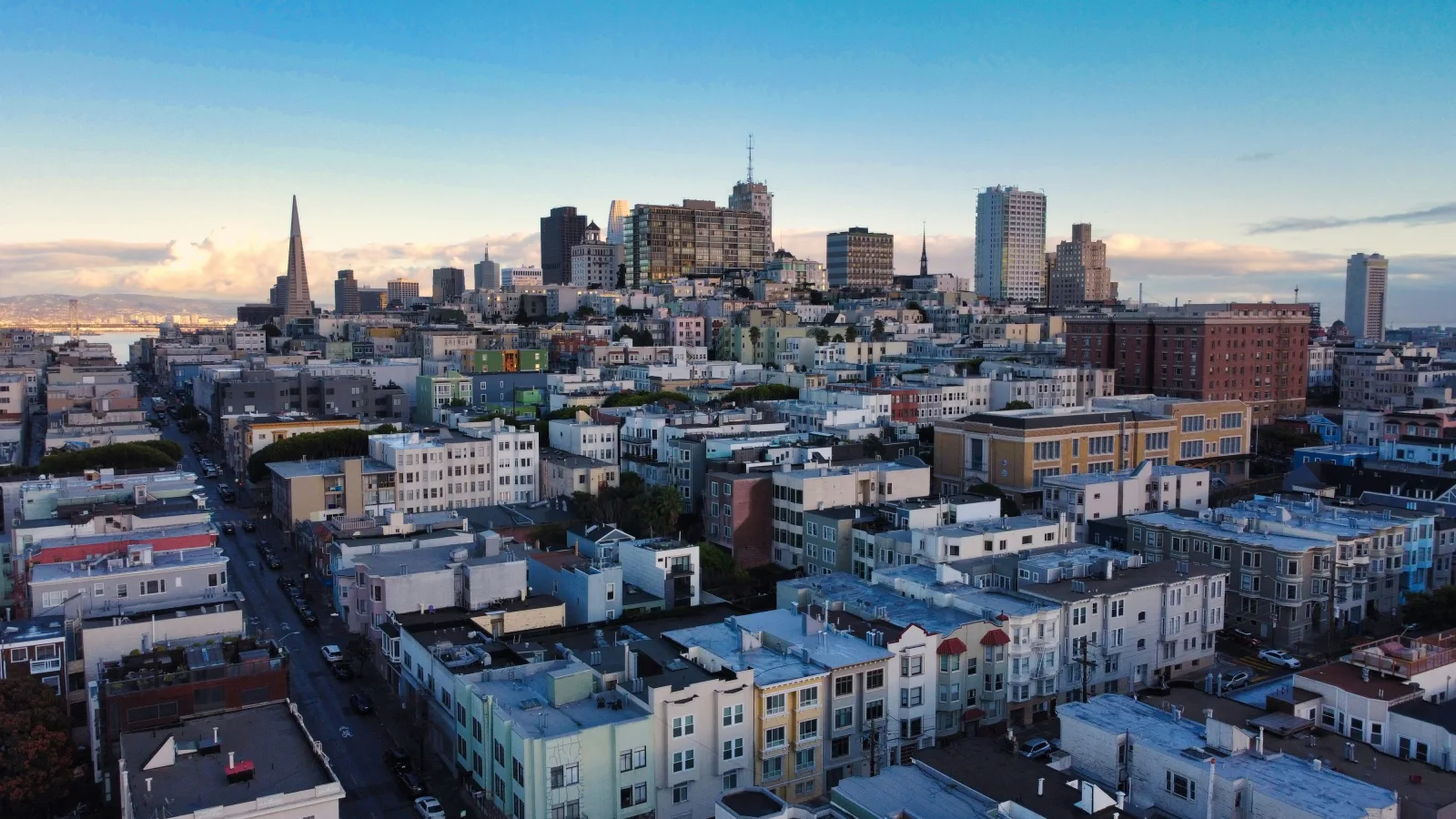
San Francisco is the highest-stakes cost-seg market in the country: the highest absolute Year-1 federal savings ($90K–$160K is routine on a single property), paired with the most-cited concern (California does not conform to bonus depreciation, so state-side savings are limited to MACRS-straight-line). Investors who model both layers honestly — and who structure around CA’s STR Office controls — find that an SF MTR still produces some of the strongest pure-federal cost-seg outcomes in any major metro. We are direct about both sides of the math here.
- $305,000 Accelerated Depreciation
- $112,850 Est. Year-1 Federal Savings
- 142x Return on Study Cost
Want a number for a specific SF property? Use the calculator — it’s pre-set with property-type defaults you can adjust to match your basis and tax bracket. Model both the federal benefit and CA-state non-conformity.
If you live in the Bay Area but invest out-of-state
Bay Area FAANG and tech-executive W-2 + RSU comp combined with CA’s 13.3% top rate produces some of the highest combined brackets in the country (~50.3% at the top). Same federal+state stack as LA. Many Bay Area investors hold SF MTR locally, but a larger share buy out-of-state STR in markets where occupancy economics + state-tax treatment compound.
Where Bay Area investors are buying out-of-state:
- Lake Tahoe — Closest mountain/lake STR, 3-hour drive. CA combined bracket applies but premium ADR offsets.
- Big Bear, CA — Mountain/lake STR weekend market.
- Joshua Tree, CA — Design-driven desert STR.
- Maui, HI — Premium Pacific STR; direct flight from SFO.
- Midwest multifamily — Cash-flow markets like Chicago and Indianapolis where Bay Area capital flows for yield + accelerated depreciation. See cost segregation for multifamily.
Verify with your CPA — CA combined-rate math depends on filing status and the property’s placed-in-service date for state conformity treatment.
Cost Segregation in San Francisco, CA
San Francisco Investment Snapshot
- Typical Price Range $1.2M–$2.2M (SFR/condo MTR), $2.5M–$5M+ (Pacific Heights, Russian Hill, Marina single-family)
- Revenue Range $7,500–$14,000/mo MTR (tech-exec relocation, healthcare, finance corporate housing)
- Common Property Types Pac Heights flat, Marina single-family, Russian Hill condo, Noe Valley Edwardian, Mission/SOMA loft, Sunset SFR
- State Income Tax 13.3% top marginal (highest in US)
- Bonus Depreciation Conformity ❌ — CA does not conform to federal bonus
- §179 Conformity Limited (CA caps §179 at $25,000 vs federal $1.16M)
- STR Regulation Strict — 60-night cap on un-hosted stays, primary residence requirement, registration mandatory
- Top Submarkets Pacific Heights, Marina, Russian Hill, Noe Valley, Mission, SOMA, Sunset
- Typical Year-1 Federal Savings $80,000–$165,000
The San Francisco Market
The SF Bay Area investor map runs on three distinct economic engines: tech-executive corporate housing, healthcare contract housing (UCSF Mission Bay, CPMC, Stanford), and finance/legal short-engagement housing (the Financial District, Embarcadero, SOMA financial-and-legal corridor). All three drive demand for furnished mid-term rentals — typically 60-to-180 day stays — because San Francisco’s STR ordinance (Chapter 41A of the Administrative Code) imposes a 90-night annual cap on un-hosted short-term rentals, requires the host to be a primary resident, and mandates city registration. The result is that pure STR economics do not work at the investment-property scale, and the entire investor market has shifted to MTR.
Pacific Heights, Russian Hill, and the Marina form the high-end MTR corridor. These neighborhoods serve relocations of L7+ tech executives (incoming from Microsoft to OpenAI/Anthropic, Meta to Stripe, Google to a Series-B startup with a Pacific Heights office), Big Law partners on multi-month rotations, and senior healthcare contractors at CPMC California Pacific or UCSF Parnassus. Property prices run $1.6M–$3.2M for a 2-3BR flat or single-family, $3.5M–$8M+ for a Pacific Heights mansion or Russian Hill view condo. Furnished MTR rents run $9,500–$14,000/month. Average tenancy is 4–9 months.
Noe Valley and the Mission form the mid-tier MTR market — younger tech employees (L5/L6 senior engineers, design leads), early-stage startup founders, and the “bridge tenant” market between primary-residence purchases. Properties run $1.4M–$2.4M for a 2-3BR Edwardian or modern condo. Furnished MTR rents run $7,500–$10,500/month. Mission lofts (live-work, ex-warehouse spaces) carry exceptional FF&E density because the units typically include built-in desks, integrated tech infrastructure, premium kitchen finishes, and full furniture packages.
SOMA and Mission Bay form the corporate-tower-adjacent MTR market — UCSF Mission Bay healthcare contracts, the cluster of biotech around 16th and Mission Bay Boulevard, and the law-firm short-engagement market for trial and deal-closing housing. Properties are predominantly 1BR/2BR luxury condos in the high-rise buildings (Lumina, Infinity, ORO, the Avery, 415 Natoma). Prices run $1.2M–$2.4M. Furnished MTR rents run $7,000–$10,000/month.
The Sunset and Richmond form the lower-tier ($950K–$1.5M) family-SFR rental market — long-term unfurnished 12-month leases to families and roommate groups. Cost segregation outcomes here are at the lower end of SF range because FF&E is minimal on unfurnished LTRs, but 15-year site improvements (yards, garages, retrofits) still produce meaningful reclassifications.
Why Cost Segregation Hits Different in San Francisco — And Where the Math Gets Complicated
There are three forces unique to SF cost segregation. Two help; one needs to be modeled honestly.
Purchase prices anchor the largest absolute reclassifications in the country. A $1.75M Pacific Heights property with 76% improvement basis carries $1.33M of depreciable basis. Even at a conservative 23% reclassification rate, that is $305K of accelerated depreciation — the largest absolute single-property reclassification we run nationally outside of multifamily. Per-property savings dollars dominate the math.
Tech-relocation and healthcare-contract MTRs carry FF&E density that exceeds even Bellevue or Manhattan. A typical Pacific Heights L8+ tech-exec relocation MTR is furnished to design-magazine standards: Restoration Hardware or B&B Italia furniture, Stearns & Foster or Hästens mattresses, Sub-Zero/Wolf kitchen package, full Lutron home-automation, Crestron AV, smart-glass window treatments, EV charging, and 1Gbps fiber with structured AV cabling. On a $1.75M MTR, the 5-year FF&E bucket alone routinely runs $90K–$120K — a level we don’t see in any other US market.
California does not conform to federal bonus depreciation, and §179 is capped. This is the math you cannot avoid. Federal returns show 100% bonus on the entire reclassified basis in Year 1. California state returns require MACRS straight-line depreciation on the same components — meaning the state-side benefit is spread over the 5/7/15-year recovery periods rather than concentrated in Year 1. On a $305K reclassification, the federal Year-1 deduction is $305K (at 100% bonus); the California Year-1 deduction is roughly $30K–$45K (the straight-line MACRS first-year amount across the bucket). The 13.3% top-marginal CA bracket therefore captures only a fraction of the Year-1 stacked benefit you’d see in TX or WA.
The honest math on a $1.75M Pacific Heights MTR:
- Federal: $305K reclassified × 37% = $112,850 Year-1 savings
- California: ~$38K Year-1 straight-line deduction × 13.3% = ~$5,050 Year-1 state savings
- Total Year-1: ~$117,900
Compare to a $925K Seattle MTR (zero state tax):
- Federal: $195K × 37% = $72,150
- Total Year-1: $72,150
The SF property still produces $45K+ more Year-1 cash benefit despite CA’s non-conformity — but the relative advantage is narrower than the federal-only math suggests. Investors should model both layers and validate with their CPA before assuming SF dominates the West Coast cost-seg landscape.
Property tax under Prop 13 is favorable. Once acquired, your assessed value is capped at the purchase price plus 2% annual escalation — very different from Texas or Washington reassessment cycles. This is unrelated to depreciation, but it’s the structural reason high-end SF rentals can pencil despite extreme purchase prices.
Worked Example — San Francisco

A 3BR/2.5BA Pacific Heights flat (the parlor floor of an Edwardian Italianate, fully renovated 2021) at the corner of Vallejo and Octavia, 4 blocks from the Lyon Street steps and 8 blocks from Fillmore. Purchased for $1.75M in late 2024 and immediately positioned as a tech-executive relocation MTR through Blueground, Sonder, and direct relationships with Stripe, OpenAI, and Anthropic relocation managers. After pulling $385K of land value (Pac Heights land share is meaningful but below SOMA or Mission high-rise condo allocations), the depreciable basis lands at $1.325M. The cost seg study identifies $108K in 5-year property (full FF&E — Restoration Hardware bedroom and dining sets, B&B Italia living-room sectional, Stearns & Foster mattresses in three bedrooms, Sub-Zero/Wolf kitchen package including 48” range and built-in espresso machine, full cookware and dishware to professional standards, Frette linens in three sets per bed, Aerin lamps and decor, Lutron lighting controls throughout, Crestron AV system with whole-home audio, Nest and Ecobee thermostats, Ring/Arlo security, smart locks, full FF&E to corporate-relocation-package standards), $14K in 7-year property (custom-built dining banquette and bar millwork, kitchen island, integrated home office), and $183K in 15-year property (paver garden patio, mature landscape with citrus and Japanese maple, irrigation, rear deck with built-in benches, fenced rear courtyard with gate access, EV charger in garage, structured wiring and 1Gbps fiber backbone, smart-glass window treatments at street-facing rooms, exterior lighting, refinished crown molding and ceiling medallions documented as decorative finishes). Total reclassified: $305K. At 37% federal: $112,850. At 13.3% CA state on roughly $38K straight-line first-year MACRS: $5,050. Total Year-1: $117,900.
The MTR positioning is operationally critical. Stays at this property are 90-180 days (executive relocation packages typically run 90 or 120 days). The owner — a Bay Area tech founder who also owns a Noe Valley primary residence — clears material participation through direct property management between board meetings, tenant communication, and turnover coordination. With material participation established under the standard 100-hour test (not the STR-specific test), the federal accelerated deductions offset the founder’s W-2 income at his prior tech employer and his ongoing 1099 advisory income.
Who Is Doing This in San Francisco
The SF investor profile is the most narrow we see in any market: roughly 80% are themselves senior tech employees or tech founders/operators, with smaller pockets of healthcare and finance professionals.
The dominant profile is the L7+ tech operator (engineering director, principal PM, GM-level) at $400K–$900K W-2 income, plus equity vesting that puts AGI well above the 37% federal threshold. They use cost segregation primarily to offset the W-2 portion of their compensation through material participation in the rental — and increasingly to offset 1099 advisory income from former employers (typical for ex-Google, ex-Meta, ex-Stripe directors who consult on the side).
The second profile is the tech founder / operator — an early Stripe, Airbnb, Square, Notion, or OpenAI employee with significant exit liquidity who acquired a Pacific Heights, Russian Hill, or Noe Valley property post-IPO and runs it as an MTR while traveling for new ventures. These investors often have multiple properties and aggregate hours across them to clear material participation.
The third profile is the healthcare professional — UCSF, CPMC, or Stanford Bay-area clinicians — running smaller (1–2 property) MTR portfolios targeting traveling clinicians at the same institutions. Volume is small but per-property savings are high.
The fourth profile worth flagging is the out-of-state investor doing 1031 exchanges into SF from lower-tax markets (typically WA, TX, or NV) for SF’s tenant-quality and property-tax stability. These investors often have CA-non-resident filing status, which changes the state-tax math: as a non-resident, their CA-source rental income is taxed at CA rates, but their other income is not — meaning the CA non-conformity to bonus depreciation has more limited interaction with their broader tax picture.
CA Tax Considerations — The Non-Conformity Math You Cannot Avoid
- CA does not conform to federal bonus depreciation. This is the central state-tax issue for SF cost seg. Federal returns recognize 100% bonus depreciation on reclassified components in Year 1; California requires MACRS straight-line over the 5/7/15-year recovery periods. Result: the state-side Year-1 benefit is roughly 12–18% of the federal Year-1 benefit, recovered over time.
- §179 is capped at $25,000 in CA (vs $1.16M federal in 2025). For most residential cost-seg work, §179 is not the primary mechanism (bonus is) — but for any §179 elections, the CA cap matters.
- CA conforms to MACRS recovery periods and methods. The 5/7/15-year MACRS classifications established in the federal cost seg study are valid for CA — the difference is only on bonus and §179, not on the reclassification itself. This means the cost segregation engineering work flows through to CA returns; only the timing of state-side deductions differs.
- Top marginal CA rate is 13.3% (plus 1.1% mental health surcharge above $1M income, total 14.4% effective). For high-income SF investors, the state-side deduction (over time) is meaningful even if delayed.
- Recapture on sale follows federal rules at the federal level (25% on §1250 unrecaptured gain) plus CA-state recapture at the marginal CA rate. Long-term planning around 1031 exchanges or held-until-death step-up matters more in CA than in zero-state-tax markets.
- AMT — California’s alternative minimum tax may interact with cost segregation in ways the federal AMT does not. CPA validation matters here.
- SF property tax is locked at acquisition under Prop 13, escalating at 2% annually. This is structurally different from TX or WA and is one reason high-end SF rentals can pencil at extreme prices.
The honest framing: SF cost segregation produces the highest absolute Year-1 federal savings of any non-multifamily residential market in the country. CA’s non-conformity to bonus depreciation means the state-side benefit is delayed (not lost — recovered over 5–15 years). Run the federal math first, then layer the CA timing-difference math, then validate the combined picture with your CPA before ordering. We model both layers in every SF report.
Common San Francisco Investment Properties
- Pacific Heights flat (parlor floor of Edwardian or Italianate Victorian)
- Russian Hill view condo (8th-30th floor units in pre-war or post-war high-rise)
- Marina single-family or 2-unit (Chestnut Street, Marina Boulevard corridor)
- Noe Valley Edwardian or modern infill SFR
- Mission Edwardian, modern condo, or live-work loft
- SOMA / Mission Bay luxury high-rise condo (Lumina, Infinity, ORO, the Avery, 415 Natoma)
- Sunset or Richmond family SFR (Inner Sunset, Outer Richmond)
Depreciable Features We Commonly See in SF
- Designer furniture packages (Restoration Hardware, B&B Italia, Crate&Barrel)
- High-end mattresses (Stearns & Foster, Hästens, Casper at minimum)
- Sub-Zero/Wolf or Miele kitchen appliance packages
- Lutron whole-home lighting control, Crestron AV systems
- Smart-glass window treatments (electrochromic glazing in premium properties)
- 240V Level 2 EV chargers (and increasingly Level 3 fast chargers)
- 1Gbps fiber with structured AV/data cabling backbone
- Earthquake retrofits (foundation bolt, cripple-wall bracing) on pre-1980 structures
- Mature landscape — Japanese maples, citrus, tropical specimens, irrigation
- Decorative crown molding, ceiling medallions, period millwork (in Edwardians/Victorians)
- Solar PV with battery backup (Tesla Powerwall increasingly common)
What People Worry About (and What Actually Happens)
“My CPA says CA non-conformity makes cost segregation pointless in San Francisco.”
The math says otherwise — but only if you model honestly. CA non-conformity to federal bonus depreciation means the state-side benefit is delayed, not eliminated. On a $305K SF reclassification, you capture $112K+ in Year-1 federal savings (immediate, full-rate) plus roughly $40K in additional CA-state savings recovered over 5–15 years through MACRS straight-line. Total lifetime tax benefit on the property is ~$152K vs a federal-only Year-1 view of $112K. The federal Year-1 number is what dominates IRR; the CA timing difference is real but recoverable. We model both layers in every SF report so the CPA conversation is grounded in actual numbers.
“SF’s STR ordinance kills my MTR strategy.”
It doesn’t — but the booking duration matters. The SF STR ordinance (Chapter 41A) caps un-hosted stays at 90 nights/year, requires primary-residence status for the host, and mandates registration. For 30-and-under stays, this is binding. For 30+ day stays (the MTR window), the ordinance does not apply — the property is treated as a regular furnished residential rental, not a regulated STR. Most SF MTR investors target 60-180 day stays (relocations, contracts, executive transitions) precisely because this avoids the ordinance entirely while preserving the FF&E density of an STR product.
“What about CA depreciation recapture if I sell?”
CA recaptures depreciation at the marginal CA rate at sale (up to 14.4% with surcharge) on the same §1250 unrecaptured gain that the federal return recognizes at 25%. This makes 1031 exchanges or held-until-death step-up substantially more valuable in CA than in zero-state-tax markets. Many SF investors plan 1031 chains explicitly to defer the CA recapture indefinitely — the cost seg accelerated depreciation enhances ongoing cash flow during the hold period, while the 1031 strategy defers the recapture liability.
How to reduce depreciation recapture →
Why Cost Segregation Works for SF Tech-Executive MTRs

The SF tech-executive MTR carries the highest 5-year FF&E density of any residential cost-seg profile we run nationally — driven by the relocation stipend levels (Stripe, OpenAI, Anthropic, and the Series-B tech ecosystem regularly pay $12K–$18K/month for executive temporary housing) and the design standard expected by L7+ tenants. A typical Pacific Heights or Russian Hill MTR is furnished closer to a Sonder Premier or Blueground Signature product than to a typical Airbnb — Sub-Zero/Wolf kitchen, Restoration Hardware furniture, full Lutron and Crestron home-automation, smart-glass treatments, premium AV systems, and design-forward decor across every room.
A Pacific Heights $1.75M MTR carries a 5-year FF&E bucket of $90K–$120K — and this is before any 7-year built-in millwork or 15-year site improvements. The 15-year bucket on a Pac Heights property runs $150K–$220K — driven by paver patios, mature landscape, EV chargers, the structured wiring backbone supporting the smart-home integration, smart-glass window treatments, and the high-end exterior finishes preserved or restored during renovation. The 7-year bucket on a fully-renovated Edwardian or modern infill — built-in millwork, custom kitchen islands, integrated home offices — adds another $14K–$25K.
Beyond FF&E and site improvements, SF’s pre-1980 housing stock often carries earthquake retrofits with documented engineering reports — foundation bolts, cripple-wall bracing, sheer-wall plywood reinforcement, and ancillary equipment (auto-shutoff valves, anchored water heaters). The retrofit ancillary equipment is 5-year MACRS; the structural retrofits are 27.5-year (residential) on the building. We document the retrofit invoices and engineer-stamped reports in every pre-1980 SF property.
With 100% bonus depreciation permanently restored under the One Big Beautiful Bill Act (signed July 2025), every reclassified dollar is deductible in the first year on the federal return. CA continues to require straight-line MACRS, so the state-side benefit is recovered over 5/7/15 years — material but delayed.
Who This Example Applies To
- SF MTR investors targeting tech-executive relocations (60-180 day stays, $9K-$14K/mo gross)
- Pacific Heights, Russian Hill, Marina single-family or flat owners
- Noe Valley, Mission, SOMA condo or loft investors
- Healthcare-contract MTR investors near UCSF, CPMC, or Stanford
- Tech founders or L7+ operators with SF investment property and CA AGI in the 37%+ federal bracket
- Out-of-state 1031 exchange investors (CA non-resident filing status changes the state-tax math)
- Pre-1980 SF properties with documented earthquake retrofits
If your property is unfurnished and rented purely on 12-month leases, the FF&E reclassification will be limited and SF’s headline savings number compresses substantially. SF works best for furnished MTR strategies targeting the executive-relocation, healthcare-contract, or finance-rotation tenant pool. Actual results vary based on property age, condition, renovations, retrofit history, and local construction costs. And: every SF investor should validate the federal-plus-CA combined picture with their CPA — this is not a market where the federal-only Year-1 number tells the full story.
Compare: SF Properties at Different Price Points
| Price | Accelerated | Year-1 Fed Savings | Study Cost | ROI |
| $1.2M Mission/SOMA loft | $215,000 | $79,550 | $1,295 | 61x |
| $1.75M Pac Heights flat | $305,000 | $112,850 | $1,295 | 87x |
| $2.4M Noe Valley SFR | $415,000 | $153,550 | $1,595 | 96x |
| $3.2M Russian Hill condo | $548,000 | $202,760 | $1,595 | 127x |
| $4.5M Pacific Heights mansion | $762,000 | $281,940 | $1,895 | 149x |
Compare: $1,750,000 Across Property Types
| Property Type | Accelerated | Year-1 Fed Savings | Study Cost | ROI |
| Tech-exec MTR (60-180 day) | $305,000 | $112,850 | $1,295 | 87x |
| Long-term unfurnished LTR | $258,000 | $95,460 | $1,295 | 74x |
| Marina 2-unit (owner + tenant) | $278,000 | $102,860 | $1,395 | 74x |
Frequently Asked Questions
Does cost segregation make sense in California given the bonus-depreciation non-conformity?
Yes — but only if you model both layers honestly. The federal Year-1 benefit dominates the IRR (full-rate 37% on the entire reclassified basis under 100% bonus). The CA state-side benefit is delayed, recovered over 5/7/15-year MACRS straight-line, and amounts to 12–18% of the federal Year-1 number per year over the recovery period. Total lifetime tax benefit (federal + CA) is ~135–145% of the federal-only Year-1 number, but only the federal portion is captured in Year 1. For high-income SF investors at 37%+ federal and 13.3%+ CA, the math still produces compelling per-property savings — but the framing “you save $112K in Year 1” is federal-only; the full picture requires the CA timing-difference layer.
How does the SF STR ordinance interact with cost segregation?
The SF STR ordinance (Chapter 41A) regulates short-term stays (under 30 days) — capping un-hosted nights, requiring primary-residence status, and mandating registration. It does NOT apply to mid-term rentals (30+ days). Most SF MTR investors target 60-180 day stays explicitly to avoid the STR ordinance while preserving STR-density FF&E for cost-seg purposes. The depreciable life and component classifications in the cost segregation study depend on the property’s structure and contents, not the booking duration — so a 90-day MTR carries the same 5-year FF&E classification as a 7-day STR. Material participation, however, follows the standard 500-hour or 100-hour-with-no-one-more test for 30+ day stays, not the STR-specific 7-day-average test.
What happens to my SF cost seg if I sell after 5 years?
Federal §1250 unrecaptured gain at 25% applies to depreciation taken (cost-seg-accelerated or otherwise). California recapture at the marginal CA rate (up to 14.4% with the mental-health surcharge) applies on top. Combined recapture rate on sale: roughly 35–40%. This is why 1031 exchanges are particularly valuable in CA — the recapture liability is deferred indefinitely as long as you continue rolling into like-kind property. Many SF investors plan 1031 chains specifically to defer CA recapture, and the cost seg accelerated depreciation enhances annual cash flow during the hold period without creating a near-term recapture event.
Selling after cost segregation →
Learn More About Cost Segregation
- What Is Cost Segregation? — Full explanation of how the study works and what you receive
- How Much Does a Cost Segregation Study Cost? — Pricing breakdown by property type and value
- State Tax Rules and Cost Segregation — How CA non-conformity and other state rules affect timing
- How to Reduce Depreciation Recapture — 1031 strategies and stepped-up basis at death
Ready to See Your Actual SF Numbers — Federal and CA?
Want a number for a specific SF property? Use the calculator — and run both the federal and CA-state layers. Every SF report we produce models both.