Cost Segregation in Gulf Shores, AL: $20K-$40K Year 1
Entry prices run 20-40% below Destin/PCB but rents match. Alabama's 5% state tax means combined federal + state savings on every reclassified dollar.
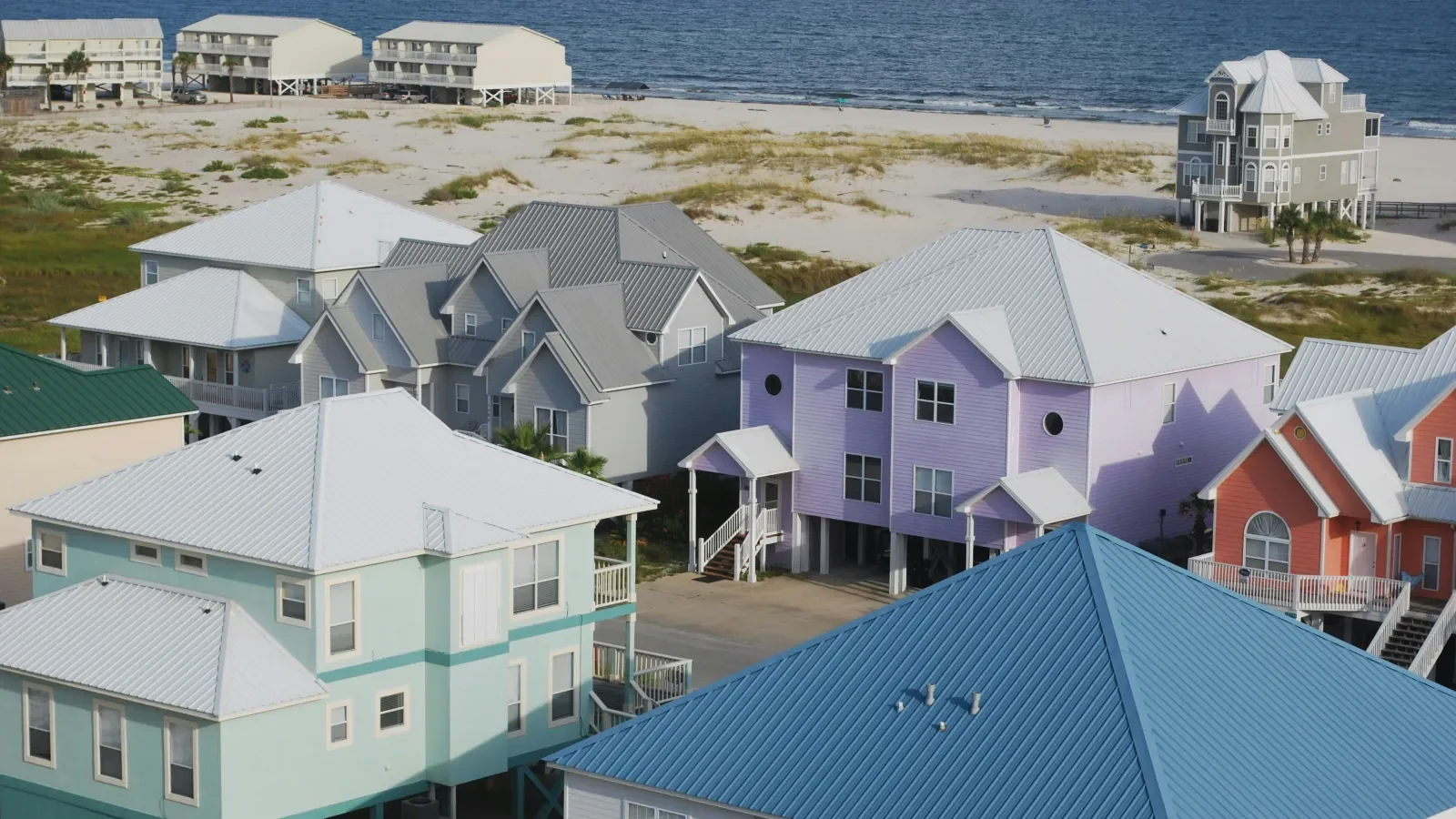
Entry prices run 20-40% below Destin/PCB but rents match. Alabama's 5% state tax means combined federal + state savings on every reclassified dollar.
Gulf Shores combines affordable beach inventory ($300K–$400K median) with Alabama’s low property tax (0.45%) and reasonable state tax treatment — a cost seg sweet spot for small-to-mid vacation rental investors. A typical furnished STR accelerates $20K–$40K in Year 1 deductions at the 37% federal bracket. Dock access, landscaping, and beach-adjacent exterior features push additional basis into 15-year land improvement categories.
Alabama’s Beach Market Deserves More Credit
Everyone talks about Destin and Panama City Beach. And then there’s Gulf Shores and Orange Beach—32 miles of white sand coastline in Alabama that somehow flies under the radar of the national STR conversation, even though it’s one of the best cash-flow markets on the entire Gulf Coast.
Here’s why: entry prices are 20–40% lower than comparable properties across the Florida state line. A 2-bedroom Gulf-front condo in Orange Beach that would cost $550,000 in Destin goes for $375,000–$450,000 here. Beach houses that would be $700,000+ in PCB sell for $500,000–$600,000. The rental income? Roughly the same. Summer occupancy in Gulf Shores runs 85–95%, and nightly rates on well-managed properties rival Destin’s.
Better entry price, comparable income, better cash flow. So what’s the catch? There isn’t one—except that most Gulf Shores investors are leaving $20,000–$40,000 in tax deductions on the table because they haven’t done a cost segregation study. And unlike Florida, Alabama has a 5% state income tax, which means accelerated depreciation saves you money on both your federal and state returns.
Alabama has a 5% state income tax—which means cost segregation delivers a double benefit. Accelerated depreciation reduces both your federal and Alabama state taxable income. On a $425K condo, that’s roughly $30K in combined federal + state Year 1 savings.
Affordable beach market with strong STR returns. Top investment areas: Gulf Shores, Orange Beach, Fort Morgan, Perdido Key.
Source: Public assessor data, Zillow, AirDNA estimates. Values are approximate metro-area medians.
What Makes Gulf Shores Properties Ideal for Cost Seg
Cost segregation is an engineering-based study that reclassifies components of your property from the default 27.5-year depreciation schedule into shorter recovery periods: 5-year, 7-year, and 15-year property. With 100% bonus depreciation permanently restored under the One Big Beautiful Bill Act (signed July 2025), all qualifying components can be deducted entirely in Year 1.
Gulf Shores and Orange Beach vacation rentals hit the sweet spot for cost segregation: they’re fully furnished, they’re loaded with amenities, and they’re at price points where the study cost ($895) represents a tiny fraction of the potential savings. Our full Airbnb cost segregation guide explains why furnished STRs consistently outperform unfurnished rentals in reclassification rates.
Walk through any vacation rental in the area and count the short-life depreciable components:
5-Year Property—the biggest category, and where furnished beach condos really perform. All furniture in every room: beds, dressers, nightstands, sofas, recliners, dining tables, barstools. Every appliance—refrigerator, dishwasher, microwave, oven, washer/dryer (most Gulf Shores condos have in-unit laundry). Televisions—typically one per bedroom plus the living area. Window treatments, blinds, and curtains. All linens, towels, kitchenware, and decorative items. Bathroom fixtures and vanities. Cabinetry and countertops. Flooring—tile, vinyl plank, carpet. Light fixtures and ceiling fans. Bunk beds in kid-friendly units (extremely common in Gulf Shores, which markets heavily to families).
15-Year Property—exterior and land improvements. Balcony railings and decking. Pool and lazy river equipment (many Gulf Shores condo complexes feature elaborate pool areas—your allocated share of these common-area improvements is depreciable). Outdoor showers. Parking lot improvements. Exterior lighting. Walkways and boardwalks to the beach. Landscaping and irrigation systems. Fencing. For beach houses: driveways, patios, fire pits, and outdoor living areas.
A typical fully furnished Gulf Shores condo sees 24–28% of the depreciable basis reclassified to accelerated schedules. Beach houses with private pools, outdoor kitchens, and extensive furnishing packages can approach 30%.
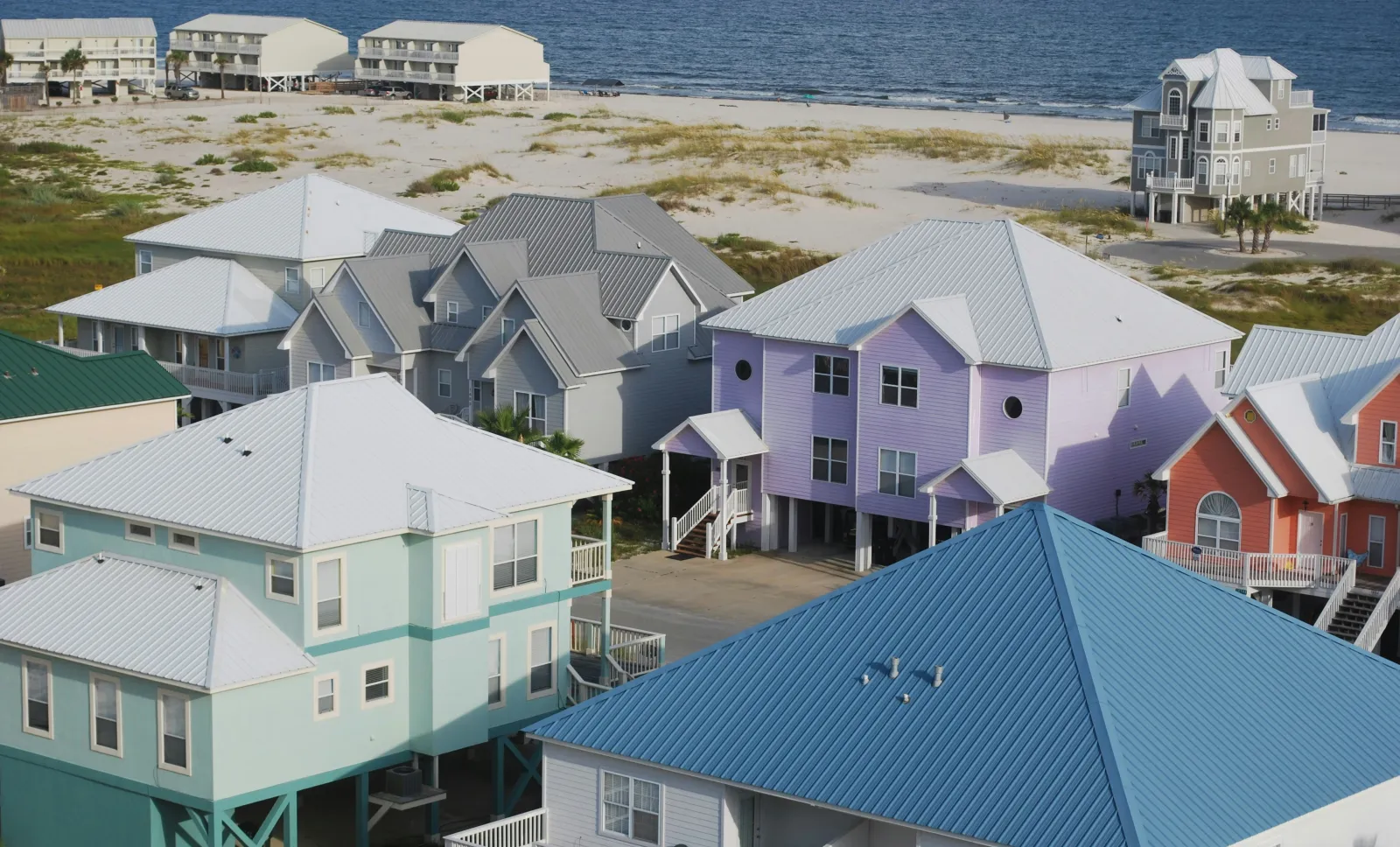
A Concrete Example: 2BR Condo in Orange Beach
Let’s run the numbers. You bought a 2-bedroom Gulf-front condo in Orange Beach for $425,000 in 2023. It’s fully furnished with coastal decor, king bed in the master, bunks in the second bedroom (this is a family market), full kitchen with stainless appliances, TVs in every room, tile and vinyl plank flooring, and a balcony with outdoor seating overlooking the Gulf.
| Item | Amount |
|---|---|
| Purchase price | $425,000 |
| Land allocation (11%)* | $46,750 |
| Depreciable basis | $378,250 |
| Accelerated components (~26%) | $98,345 |
| Year 1 accelerated deduction (100% bonus) | $98,345 |
| Federal tax savings at 37% bracket | $36,388 |
| Alabama state tax savings at 5% | $4,917 |
| Total estimated Year 1 tax savings | $41,305 |
*Gulf Shores condos typically carry a 10–13% land allocation. Beachfront units trend toward the higher end, but condo towers concentrate most of the value in the structure and improvements.
Without cost segregation, you’d take roughly $13,754 per year in straight-line depreciation ($378,250 / 27.5). With cost segregation, you’re pulling $98,345 forward into Year 1. That’s 7.1 years of depreciation captured immediately.
The combined federal and Alabama state savings of roughly $41,000 on a $425,000 property is significant. That’s nearly 10% of your purchase price returned through tax savings in Year 1. Compare that to Destin, where a comparable condo costs $550,000 but generates no state tax savings because Florida has no income tax. Dollar for dollar, Gulf Shores investors may actually get more after-tax benefit from cost segregation than their Florida neighbors.
If you bought your Gulf Shores condo in 2022, 2023, or 2024, you can still claim these deductions through a lookback study. Your CPA files Form 3115, and the cumulative missed accelerated depreciation flows through your current-year tax return. No amended returns needed.
Orange Beach vs. Gulf Shores: Subtle Differences That Matter
The two towns are adjacent, but the STR dynamics differ in ways that affect cost segregation:
Gulf Shores—more family-oriented, with more modestly priced condos in the $300,000–$450,000 range. Properties along West Beach Boulevard and the main beach strip tend to be older towers (1990s–2000s construction), which actually works in your favor for cost segregation. Older properties typically have higher reclassification percentages because they’ve accumulated more depreciable improvements and upgrades. The family market also means bunk beds, game consoles, board games, and kid-friendly furnishings—all 5-year property.
Orange Beach—slightly more upscale, with newer condo developments like Turquoise Place and Phoenix West that command $450,000–$700,000+. These newer towers have modern fixtures, high-end appliances, and luxury furnishing packages that classify well under cost segregation. Orange Beach also has more beach houses and raised cottages, which come with additional 15-year property: elevated foundations, extensive decking, ground-level storage areas, driveways, and outdoor living spaces.
cost segregation methodology →
Fort Morgan—the less-developed peninsula west of Gulf Shores. Properties here tend to be beach houses rather than condos, with larger lots and more land improvements. Fort Morgan houses often have elevated construction (common post-hurricane), long driveways, and expansive outdoor areas—all of which create larger 15-year property allocations.
The Alabama Tax Angle: Double Benefit
Let’s talk about something Florida investors don’t get: state-level tax savings. Alabama imposes a 5% state income tax on individuals. That means every dollar of accelerated depreciation from your cost segregation study reduces both your federal taxable income and your Alabama taxable income.
For out-of-state investors (and many Gulf Shores properties are owned by investors from Tennessee, Georgia, Mississippi, and Texas), here’s the wrinkle: Alabama requires non-resident owners of Alabama rental property to file an Alabama state return and pay Alabama income tax on their Alabama-source income. The cost segregation deduction reduces that Alabama tax liability directly.
If you’re a Tennessee resident (no state income tax) who owns a Gulf Shores condo, the Alabama-source rental income is subject to Alabama’s 5% tax—but the cost segregation deduction offsets that income, potentially eliminating your Alabama state tax liability entirely in Year 1 while also reducing your federal taxes.
If you’re a Georgia resident (5.75% state tax), you may be able to claim the depreciation deduction on both your Alabama and Georgia returns (subject to credit for taxes paid to Alabama on the same income). Talk to your CPA about the multistate mechanics—but the bottom line is that the combined federal + state benefit of cost segregation on Gulf Shores properties is larger than many investors realize.

Material Participation: The Key That Changes Everything
Here’s the rule that makes STR investing fundamentally different from traditional landlording: if the average guest stay at your property is 7 days or fewer, the IRS does not automatically classify it as a rental activity for passive loss purposes. Gulf Coast vacation rentals almost universally meet this test—average stays in Gulf Shores and Orange Beach run 4–6 nights.
If you materially participate—spending more than 100 hours per year on the property and more than anyone else—your losses become non-passive. They can offset your W-2 salary, your business income, your consulting fees. Everything.
100 hours sounds like a lot until you break it down: that’s 8.3 hours per month. Less than 2 hours per week. If you’re responding to guest messages, managing your Airbnb or VRBO listing, coordinating turnovers, adjusting seasonal pricing, dealing with maintenance requests, reviewing property management reports, shopping for replacement linens and supplies, handling HOA correspondence, or reviewing your P&L—you’re almost certainly exceeding 100 hours. Keep a simple time log to document your activities.
When you combine material participation with cost segregation, the accelerated depreciation creates a paper loss that directly reduces your taxable income from all sources. For a Birmingham dentist who bought an Orange Beach condo as an investment, this can mean $30,000–$40,000 in combined federal and state tax savings in Year 1.
Post-Hurricane Rebuilds: A Special Opportunity
Gulf Shores and Orange Beach have been hit by several major hurricanes over the past two decades—Ivan (2004), Katrina (2005, indirect), Sally (2020). Many properties have been substantially rebuilt or renovated after storm damage.
Here’s where it gets interesting for cost segregation: if you purchased a property that was rebuilt or significantly renovated after a hurricane, the renovated components are newer and typically higher-value than what was there before. Hurricane-code construction requirements also mean more depreciable structural components—impact windows, reinforced roofing systems, elevated foundations, storm shutters—some of which qualify as shorter-life property under cost segregation.
Additionally, if you’ve made improvements to your property after purchase (whether storm-related or not), those improvement costs can be separately segregated. A $50,000 kitchen renovation or a $30,000 balcony replacement creates additional depreciable basis that should be run through a cost segregation analysis.
100% Bonus Depreciation Is Permanently Back
Bonus depreciation had been phasing down—80% in 2023, 60% in 2024—but the One Big Beautiful Bill Act, signed in July 2025, permanently restored 100% bonus depreciation for 2025 and beyond. Every dollar of 5-year, 7-year, and 15-year property identified in your cost segregation study can be deducted in full in the year you place the property in service (or the year you file a lookback study).
For Gulf Shores investors who have been waiting, the timing is optimal. Full bonus depreciation, combined with Alabama’s state tax savings, means maximum benefit per dollar of study cost.
Free preliminary depreciation estimate — property summary, basis allocation, five-year schedule. We do the work; you get the PDF.
See my estimated Year-1 savings →How It Works: Simple, Not Complicated
Modern cost segregation studies don’t require a physical visit to your condo. Engineering-based studies use property data, building component databases, and IRS-recognized valuation methodologies to classify your property’s components remotely. You provide your property details—purchase price, square footage, year built, property type, furnishing level—and receive a CPA-ready PDF report, typically in under an hour.
The report breaks down every component by depreciation class, with detailed schedules your CPA can apply directly to your tax return. For lookback studies on properties purchased in prior years, your CPA files Form 3115 (automatic consent—no separate approval needed), and the cumulative missed depreciation hits your current-year return.
Cost Seg Smart is the modern cost segregation company. Reports delivered in under an hour—not six weeks. Studies start at $495. For a condo purchased at $425,000, that’s $895 to potentially save $30,000–$40,000 in combined federal and state taxes. You’re leaving more money on the table every month than the entire cost of the study. And unlike your property management company, this actually puts money back in your pocket. Get it done right now.
Related Reading
- What Percentage Should You Actually Expect From a Cost Segregation Study? (Real Data, Not Marketing)
- Is Bonus Depreciation Permanent? What the OBBBA Means for 2025 and Beyond
- You Paid $1.2M for a Key West Cottage. The IRS Owes You $80K.
Federal + State Savings. One Study. Under an Hour.
Run the calculator on your specific property.
Run the calculator on your specific property — or Get your study → if the numbers already pencil.