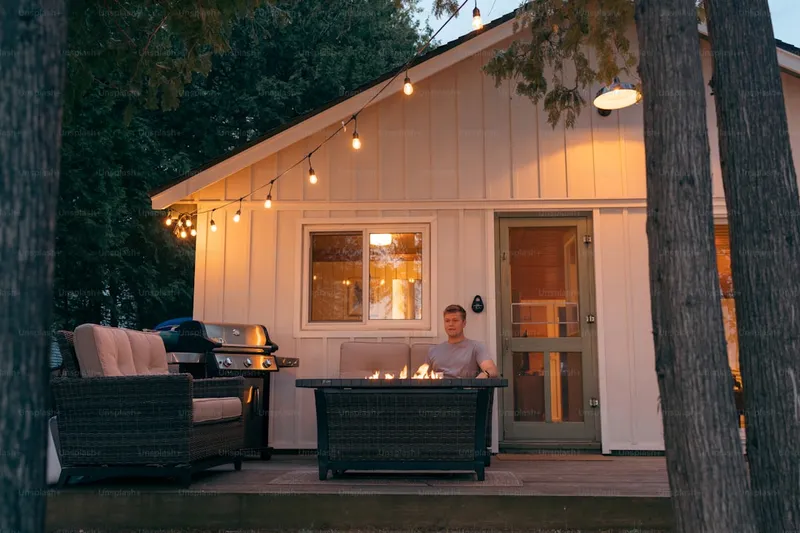
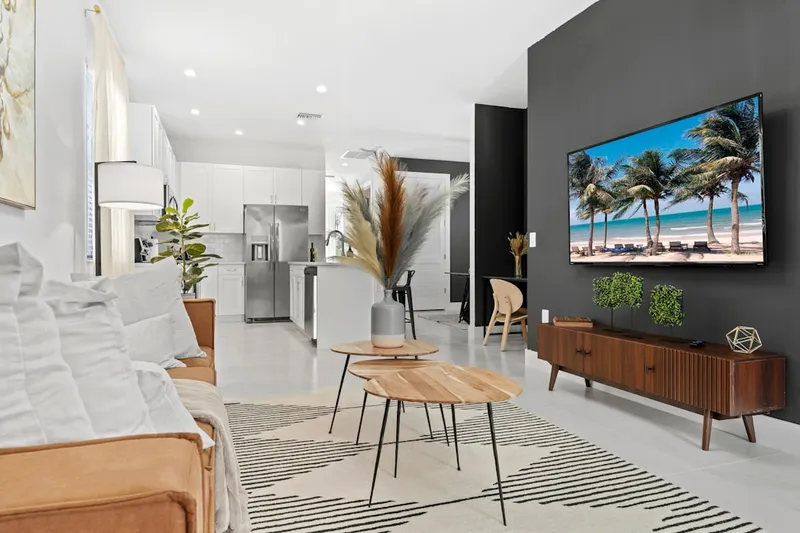
Santa Rosa Beach · 30A · $985K
Furnished 4-bedroom with private pool, summer kitchen, and paver drive
Est. Year-1 accelerated deduction
~$197,000
A furnished 30A, Destin, or Panama City Beach vacation rental carries two of the heaviest reclassification buckets in residential real estate — the furnishings inside and the pool, deck, and site work outside. An engineering-based study typically moves 19–39% of your basis into faster depreciation. Enter your purchase price below for a free estimate.
Scanned this from a postcard? You're in the right place — the estimate below is the free 1-page analysis it mentioned. No account, no obligation.

Pre-set to short-term-rental defaults. Adjust the purchase price and your bracket to match your property — the result updates as you type.
Illustrative estimate using a representative reclassification rate for a furnished short-term rental and 100% bonus depreciation, on the same engineering-based methodology as the study. Current-year usability depends on your material-participation status and the federal passive activity, at-risk, and basis rules. Your engineered study produces the filing figure.
Florida short-term-rental cost segregation is an engineering-based study that reclassifies a furnished vacation rental's components out of the 27.5-year residential schedule into faster 5-, 7-, and 15-year MACRS classes per 26 U.S.C. § 168 and Rev. Proc. 87-56. A furnished Gulf-Coast rental typically reclassifies 19–39% of depreciable basis, and under OBBBA's 100% bonus depreciation (for qualified property placed in service after January 19, 2025) that amount is generally deductible in Year 1.
Two things make Florida distinctive. First, the state has no personal income tax (Fla. Const. Art. VII, §5), so the whole play is federal — no state add-back, no parallel state depreciation book. Second, if your average guest stay is 7 days or less and you materially participate, the activity can be treated as non-passive under §469, so the accelerated loss can offset W-2 and other active income — without Real Estate Professional Status. Confirm material participation and the average-stay calculation with your CPA.
South Walton's 30A corridor is one of the most concentrated luxury vacation-rental markets in the country, and Gulf-Coast homes tend to trade turnkey — sold fully furnished. That matters for a study in a specific way: the furniture, kitchenware, and decor already in the home are 5-year personal property, and when they convey with the sale the furnishings basis is often already documented on the closing side rather than something we have to reconstruct.
The bigger surprise is usually the site. A beach rental is built for outdoor living, so the parcel carries a dense 15-year bucket a plain rental house doesn't: private pool and pool equipment, a spa, a summer kitchen, paver drives and pool decks, screened porches, and — on a Gulf-front or near-front lot — the boardwalks and dune walkovers permitted across the dune. Those are separately identifiable land improvements, not part of the 27.5-year shell.
Because the engine works from county assessor records, the furnishings inventory, and satellite imagery, we can identify and value those outdoor components without a site visit — which is where much of a 30A rental's acceleration actually lives. Whether the loss is usable against your active income comes back to material participation and the 7-day-average test, which your CPA confirms.
Illustrative only. The figure shown is the estimated Year-1 accelerated deduction — depreciable basis (purchase price less roughly 20% land) multiplied by a representative reclassification rate in the 19–39% band — not a tax saving and not a promised amount. Your actual deduction, and how much of it you can use this year, depend on basis, land allocation, component mix, your bracket, and your material-participation status. Not specific properties.
Most rental losses are passive under §469, which means they can only offset passive income and otherwise get suspended. A short-term rental can be different. Under Treas. Reg. § 1.469-1T(e)(3)(ii)(A), when the average guest stay is 7 days or less, the activity is not treated as a rental for passive-loss purposes. If you then materially participate — the common tests are 100+ hours and more than anyone else, or 500+ hours in the year — the activity is generally non-passive, and a non-passive loss can offset W-2 and other active income.
Two points worth being precise about. This is not Real Estate Professional Status; you do not need REPS if the average-stay and material-participation tests are met. And nothing here is automatic — the average-stay calculation and your participation hours are specific to your facts, and the result depends on the federal at-risk and basis rules as well. Treat this page as a framing to take to your CPA, not a determination. See the verbatim §1.469-1T reference and the 7-day rule explainer.
Yes. A furnished Gulf-Coast short-term rental is one of the stronger residential cases, because two buckets are unusually heavy: the furnishings (FF&E) inside and the outdoor site work outside. A study typically reclassifies 19–39% of depreciable basis out of the 27.5-year residential schedule into 5- and 15-year MACRS classes, and under 100% bonus depreciation that reclassified amount is generally deductible in Year 1. Your actual result depends on basis, condition, and component mix.
It simplifies things. Florida imposes no personal income tax (Florida Constitution, Article VII, Section 5), so for an individual investor there is no Florida return that adds back or defers the federal deduction, and no parallel state depreciation book to maintain. The entire strategy is federal. Whether you can use the full federal deduction in the current year still depends on federal limits — the passive activity, at-risk, and basis rules — so confirm your situation with your CPA.
When the average guest stay is 7 days or less and you materially participate in the activity, the rental is generally treated as non-passive under §469 rather than as a passive rental. Losses from a non-passive activity can offset W-2 and other active income. This is distinct from Real Estate Professional Status (REPS) — you do not need REPS if the 7-day-average and material-participation tests are met. Material participation and the average-stay calculation are specific to your facts; confirm both with your CPA before assuming the offset.
Inside, the furnishings a turnkey Gulf-Coast rental already carries — beds, sofas, dining and bunk-room sets, TVs, kitchenware, decor, window treatments, smart locks — are generally 5-year personal property. Outside, the pool and pool equipment, spa, summer kitchen, paver drives and walkways, decks, boardwalks and dune walkovers, fencing, and landscaping are generally 15-year land improvements. The shell, framing, foundation, roof, and building-wide systems stay on the 27.5-year residential schedule. Classification of any specific asset depends on its facts and is documented in the study.
No. If the property was placed in service in a prior year and depreciated without a study, a federal Form 3115 lets you claim the missed depreciation as a current-year §481(a) catch-up adjustment under the IRS automatic-consent procedures, generally without amending prior returns. The cumulative catch-up flows through in a single year. Because Florida has no personal income tax, there is no parallel state adjustment to reconcile.
Property address, purchase price, square footage, year built, and whether the home is furnished. A closing statement and tax assessment improve accuracy but are not required, and no site visit is needed — the engine uses nationally-recognized 2026 construction cost data, county assessor records, and satellite imagery. Most residential studies are emailed back in 1–2 business days as a 40+ page engineering-based PDF your CPA files from, with the MACRS schedule and a Form 3115 lookback section where it applies.
Drop your email and we'll unlock all sample reports — STR, SFR, multifamily, commercial, per-city. No spam, no nag.
One email unlocks every sample on the site. We use it to send the reports + an optional 5-day cost-seg primer (unsubscribe anytime).