
Houston is the largest city in the country without a state income tax, and the only one with two distinct, separately-priced investor markets feeding it: the Texas Medical Center mid-term rental ecosystem and the Energy Corridor expat-housing pipeline. Both buckets produce FF&E density that rivals an Austin Airbnb without any of the city ordinance risk, and Houston’s heat-and-hurricane climate generates a 15-year site improvement bucket that is genuinely unusual for a residential cost segregation study.

- $102,000 Accelerated Depreciation
- $42,000 Est. Year-1 Tax Savings
- 53x Return on Study Cost
Want a number for a specific Houston property? Use the calculator — it’s pre-set with property-type defaults you can adjust to match your basis and tax bracket.
If you live in Houston but invest elsewhere
Houston’s investor profile clusters around two industries: energy (ExxonMobil Spring campus, ConocoPhillips, Chevron Houston, Phillips 66, Schlumberger, BHP, Hess, Apache, Occidental) and medicine (Texas Medical Center — Houston Methodist, MD Anderson, Memorial Hermann, Texas Children’s, plus Baylor College of Medicine attending physicians). Energy professionals carry significant K-1 + bonus + deferred-comp income; medical attendings carry $400K–$1.5M+ W-2.
The combined marginal-rate stack:
- Federal: 37%
- NIIT: 3.8%
- Texas: 0% (no state income tax)
- Combined: ~40.8%
Energy industry compensation often includes large multi-year vesting equity (XOM RSU schedules, COP performance shares). Cost-seg deductions timed against major vesting years produce concentrated Year-1 tax offsets. Medical attendings have more stable W-2 patterns — the cost-seg strategy is steadier, less timing-driven.
Where Houston investors are buying out-of-state:
- Texas Hill Country (Fredericksburg, New Braunfels, Marble Falls) — drivable, TX 0% state stays in stack.
- Smoky Mountains (Pigeon Forge, Gatlinburg) — Tennessee 0% state tax, cabin STR.
- 30A / Destin, FL — Florida 0% state tax, premium beachfront, direct IAH flights.
- Galveston Island, TX — Drivable Gulf Coast STR for Houston buyers, $400K–$900K typical.
- Maui, HI — Premium Pacific STR; direct IAH flights.
Verify with your CPA. Combined-rate math depends on filing status and AGI thresholds for NIIT.
Cost Segregation in Houston, TX
Houston Investment Snapshot
- Typical Price Range $325K–$650K (residential MTR/SFR), $850K–$1.6M (Memorial / Tanglewood / River Oaks adjacent)
- Revenue Range $3,200–$5,500/mo MTR (TMC traveling clinicians); $2,400–$3,800/mo LTR
- Common Property Types TMC-area condos, Memorial Villages SFR, Heights bungalow rehab, Energy Corridor new-build, Sugar Land suburban SFR
- State Income Tax 0%
- Effective Property Tax 2.0–2.5% (one of the highest in the country, but unrelated to depreciation)
- Top Submarkets Texas Medical Center / Rice Village, Memorial, The Heights, Energy Corridor, Sugar Land, Clear Lake
- Typical Year-1 Savings $26,000–$48,000
The Houston Market
Houston’s investor map breaks cleanly into four sub-markets with very different economics. The first is the Texas Medical Center corridor — the largest medical complex in the world, employing 120,000+ people across MD Anderson, Memorial Hermann, Texas Children’s, Houston Methodist, Baylor College of Medicine, and 50+ other institutions. The TMC alone drives constant 13-week traveling-nurse, locum-physician, and resident-rotation demand for furnished rentals in Rice Village, Greater Heights/Museum District, and West University Place. A 1BR or 2BR condo at the West Ave / Inner Loop range ($300K–$500K) furnished as an MTR through Furnished Finder, FurnishedNurses, or Travel Nurse Housing routinely books at $4,200–$5,200/month gross.
The second is the Energy Corridor — the I-10 west spine running from Beltway 8 out past Highway 6 — anchored by ExxonMobil’s 385-acre campus, BP, Shell, ConocoPhillips, and the dense ecosystem of upstream oilfield services firms (SLB, Halliburton, Baker Hughes). The investor play here is corporate-housing for international expat assignments — typically 6-to-24 month furnished rentals for Norwegian, British, French, and Brazilian engineers on multi-year project rotations. Properties are larger (3BR/4BR SFRs in Memorial Hollow, Walnut Bend, or Lakeside Forest), priced $400K–$650K, and rent furnished at $4,500–$6,500/month.
The third sub-market is The Heights and adjacent Inner Loop neighborhoods (Heights, Garden Oaks, Oak Forest, Timbergrove). This is a long-term-rental and house-hacking market dominated by 1920s–1950s Craftsman bungalows and post-war ranches, often with rear ADUs (Houston has no zoning code, so detached secondary structures are common). Purchase prices run $475K–$850K for renovated bungalows; LTR rents run $2,800–$4,200/month with the ADU adding $1,200–$1,800/month income.
The fourth is Sugar Land, Pearland, and Clear Lake — the suburban SFR ring serving Houston’s master-planned communities (First Colony, Telfair, Riverstone in Sugar Land; Shadow Creek Ranch in Pearland; Bay Forest and Friendswood near Clear Lake / NASA Johnson Space Center). These are unfurnished SFR rentals to relocating families, $325K–$525K purchase price, $2,300–$3,200/month LTR.
Why Cost Segregation Hits Different in Houston
The 15-year site improvement bucket in Houston is unusually large compared to most national markets. Three structural reasons:
HVAC carries an outsized depreciable share. Houston’s 1,500+ annual cooling hours and dewpoints regularly above 75°F mean residential properties almost always have over-spec’d HVAC — multi-stage variable-speed compressors, two-stage condensers, dehumidifier add-ons, and often a redundant secondary unit on larger properties. On a $425K Memorial SFR, the HVAC component alone routinely represents $9K–$14K of depreciable basis, classified across 5-year (window units, portable dehumidifiers) and 15-year (split-system condensers, ductwork tied to site improvements).
Generators have become standard equipment post-Harvey. After Hurricane Harvey (2017) and Winter Storm Uri (2021), whole-house Generac or Kohler standby generators became near-mandatory on rentals above $400K. A Generac 22kW with automatic transfer switch and propane tank installation runs $9K–$13K all-in — depreciable as 15-year property tied to the structure. We see them on roughly 70% of post-2018 acquisitions in Memorial, Tanglewood, Bellaire, and the Energy Corridor.
Pool and spa equipment is unusually common. Roughly 35% of Memorial-area SFRs above $500K have pools; 50%+ in Sugar Land master-planned communities. Pool shell, decking, equipment pad, automation system, and saltwater chlorinator all reclassify into 15-year MACRS. A typical Sugar Land pool installation (gunite, 16x32, with attached spa) carries $50K–$75K in depreciable basis — though the IRS Audit Techniques Guide has specific guidance on land-improvement bifurcation that we apply at the component level.
Texas zero-state-tax math is the multiplier. Every reclassified dollar saves the federal marginal rate (37% top bracket) with no state offset, no state recapture, and no state conformity issues. A Houston MTR producing $102K in accelerated depreciation generates $42,000 in year-one federal savings — clean math, zero state-side complexity.
Worked Example — Houston
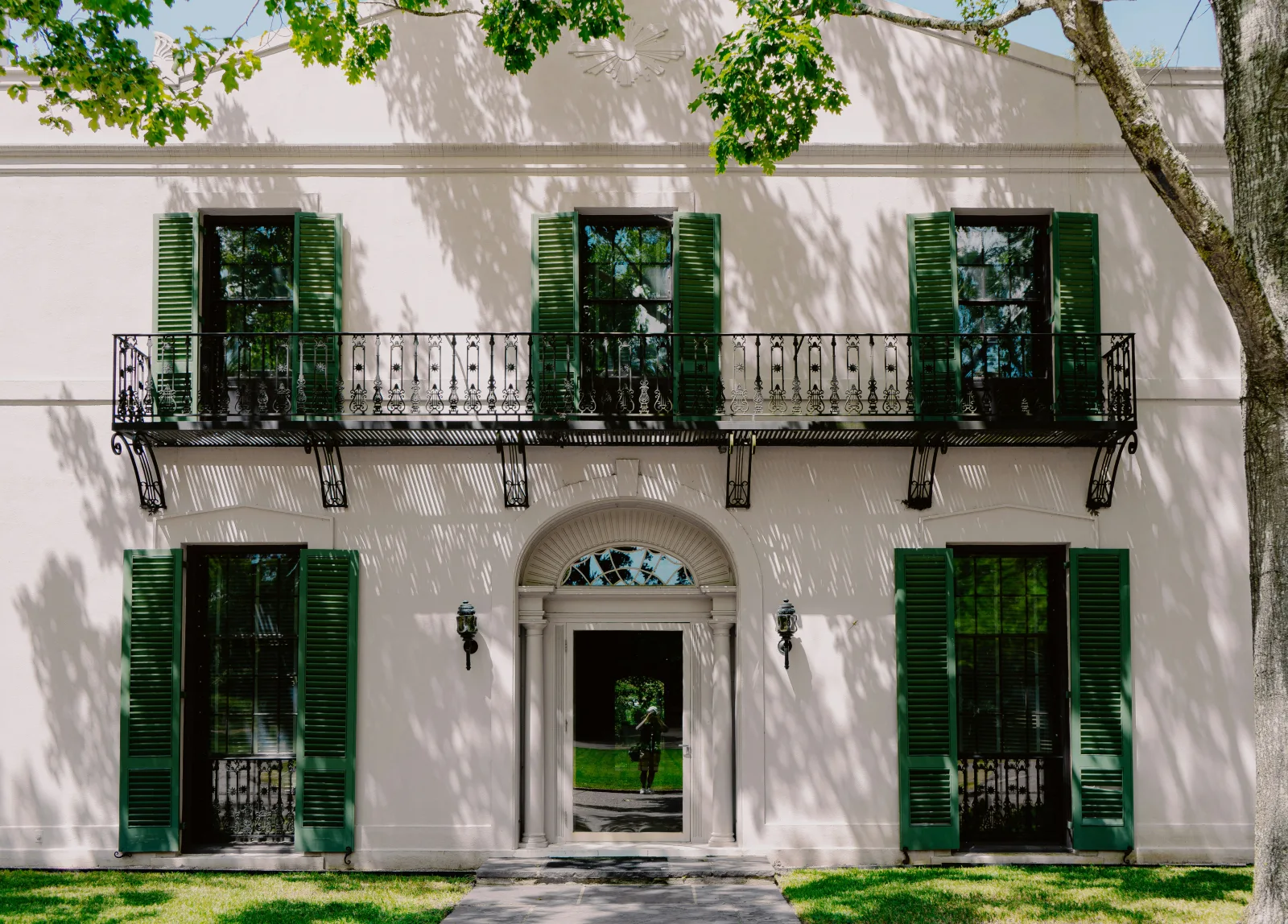
A 2BR/2BA TMC-area condo at the corner of Holcombe and Almeda, purchased for $425K in early 2025 and immediately furnished as a traveling-clinician MTR targeting MD Anderson and Texas Children’s contractors. After pulling $42K of land value (high-rise condo shares fractional land value), the depreciable basis lands at $340K. The cost seg study identifies $48K in 5-year property (full FF&E package — appliances, two queen and one king mattress set, dining and living room furniture, smart TVs, work-from-home desk in the den, kitchenware, washer/dryer in unit, ceiling fans, blinds, area rugs, smart locks and Yale keypad), $6K in 7-year property (built-in desk and Murphy bed in the den), and $48K in 15-year property (the building’s pro-rata share of pool deck, landscape, paver-walkway access, parking garage striping, and interior corridor finishes — yes, condo-share components are reclassifiable, which surprises most investors). Total reclassified: $102K. At 37% federal and 0% TX state, that is $42,000 in year-one savings.
The MTR positioning at TMC matters for material participation. Average stays at the property are 13–14 weeks (a standard travel-clinician contract). For stays of 30 days or longer, the rental is treated as a non-rental trade or business, and material participation is established by the standard 100-hour or 500-hour test. The owner-investor — an anesthesiologist at Methodist who manages the property himself between shifts — clears the 100-hour test through guest communication, turnover coordination, supply runs, and minor maintenance. The accelerated deductions offset W-2 income directly.
Who Is Doing This in Houston
The Houston MTR investor profile skews heavily toward TMC-employed clinicians themselves. We see an unusual concentration of physicians (anesthesiology, hospitalist, ER medicine), CRNAs, and nurse practitioners owning 1–4 furnished units in the TMC corridor. The play makes sense from their seat: they understand the demand cycle (intern/resident match in June, traveling-nurse contract starts every 4 weeks at most TMC hospitals), they have W-2 income at 37%–40% combined federal+payroll bracket, and they have personal relationships with the recruiting agencies (Aya, Cross Country, Trustaff, AMN) that source their tenants.
The Energy Corridor investor profile is different: oil & gas executives or senior engineers themselves — often with international corporate-housing networks built up over their own expat assignments. They acquire 1–3 properties in Lakeside Forest, Walnut Bend, or Memorial Hollow and rent them to colleagues’ incoming assignments through company referral programs. Average tenure is 14–18 months per furnished assignment.
The Heights investor profile is the standard urban house-hacker: buy a 1920s bungalow at $625K, live in the front while renovating the rear ADU, then convert to dual-income (front bungalow as LTR, ADU as STR or MTR). Cost segregation runs at the conversion-to-rental date with stepped-up basis.
The Sugar Land/Pearland/Clear Lake investor profile is the conservative LTR landlord — often a NASA contractor, an oil & gas mid-career engineer, or a Houston small-business owner — building a 5-to-15 unit suburban rental portfolio with 25-year holds. They are less aggressive on FF&E because the rentals are unfurnished, but the 15-year site improvement bucket on a master-planned-community SFR (HOA-required fence, irrigation, paver patio, frequently a pool) is still substantial.
TX Tax Considerations
- Texas has no state income tax. Cost segregation savings are entirely federal — no state recapture, no state conformity issues, no extra forms. A $102K reclassification at the 37% federal bracket = $42,000 in year-one federal savings.
- Property taxes in Harris, Fort Bend, and Brazoria counties are high (effective 2.0–2.7%) but property tax is unrelated to depreciation. The state income tax exemption is what makes the per-dollar reclassification math clean.
- Texas franchise tax exempts entities under ~$2.47M revenue — most rental LLCs are exempt and there is no separate state-level depreciation calculation required.
Want a number for a specific Houston property? Use the calculator — it’s pre-set with property-type defaults you can adjust to match your basis and tax bracket.
Common Houston Investment Properties
- 1BR/2BR TMC-area mid-rise condo (Holcombe corridor, West Ave, Med Center high-rises)
- Memorial Villages (Bunker Hill, Hedwig, Piney Point) traditional SFR
- The Heights / Garden Oaks renovated 1920s–1950s bungalow with rear ADU
- Energy Corridor (Memorial Hollow, Walnut Bend, Lakeside Forest) family SFR
- Sugar Land master-planned-community SFR (First Colony, Telfair, Riverstone)
- Clear Lake / Friendswood NASA-area family SFR
- Pearland Shadow Creek Ranch new-build SFR
Depreciable Features We Commonly See in Houston
- Multi-stage variable-speed HVAC with dehumidifier add-ons
- Whole-house Generac or Kohler standby generators (post-Harvey standard)
- Pool shell, decking, equipment pad, saltwater chlorinator, automation
- Storm-shutter packages or impact-rated windows in coastal-adjacent properties
- Privacy fencing (HOA-required in master-planned communities)
- Drainage and French-drain systems (mandatory after Harvey-era code updates)
- Drip irrigation systems and St. Augustine sod with aerator pumps
- Smart-home packages (locks, thermostats, security cameras)
- Full FF&E for MTR units (TMC traveling-clinician housing)
- Kitchen appliance packages with secondary refrigerator/freezer in garage
What People Worry About (and What Actually Happens)
“Hurricane Harvey flooded my purchase. Can I still cost-seg it?”
Yes — and the post-flood rebuild often produces a higher accelerated percentage than the original property. If the property was substantially rebuilt after Harvey or Imelda, much of the rebuilt scope (HVAC replacement, electrical upgrade, drywall and flooring, kitchen and bath cabinetry, exterior siding) is new construction with documented invoices that flow directly into the cost segregation classification. Properties with extensive Harvey rebuilds in Meyerland, West University, or Bellaire frequently see 30–34% accelerated reclassification — at the high end of residential outcomes.
FEMA-rebuilt properties and cost segregation →
“My CPA says cost seg is too aggressive for the IRS in Texas.”
Texas has no state income tax and no state-level depreciation conformity issues, which actually makes cost segregation simpler in TX than in any other state. The IRS Audit Techniques Guide for Cost Segregation governs the analysis nationwide, and the engineering methodology is identical in Houston, Boston, or Honolulu. There is no Texas-specific audit risk. Audit triggers are sloppy substantiation — which is exactly what an engineering-based study prevents.
Does cost segregation increase audit risk →
“My TMC condo only has $42K of land value — won’t the IRS push back on a low land allocation?”
For high-rise condos and TMC-area mid-rises, fractional land share is genuinely small. Most investors use the Harris County Appraisal District (HCAD) land/improvement allocation — which on a TMC condo is typically 8–15% land, 85–92% improvement. The IRS expects engineering-based or assessor-based land valuation, not a forced 20% rule of thumb. We document the HCAD allocation with the owner’s parcel ID and the building’s site plan in every Houston condo report.
How land valuation works in our reports →
Why Cost Segregation Works for TMC Mid-Term Rentals

The Texas Medical Center MTR play has the highest 5-year FF&E density of any cost segregation profile we run nationally. Here’s why: the typical TMC traveling clinician arrives for a 13-week contract carrying a single suitcase, expecting a property fully equipped to professional standards — kitchen complete with cookware and small appliances, work-from-home desk and ergonomic chair, smart TV and high-speed internet, premium linens and towels, washer/dryer in unit, secure parking, and 24/7 access. The investor must furnish to these standards or lose to the building next door.
A typical 2BR TMC condo MTR carries $42K–$52K of 5-year personal property: bedroom sets (queen + king, two complete), living room sofa and dining set, dining and bar seating, work-from-home setup, smart TV in every room, kitchen appliance package (range, microwave, dishwasher, refrigerator, stand mixer, espresso machine), small appliances (toaster, kettle, blender), full cookware and dishware sets, linens (3 sets per bed minimum), towels, lamps, area rugs, smart locks and security cameras. On a $425K acquisition, that is 12–14% of purchase price in FF&E alone — before any 15-year site improvements.
Beyond FF&E, TMC-area buildings carry depreciable common-area components on the condo’s pro-rata share — pool deck, gym equipment, lobby finishes, parking garage striping, landscape, exterior signage. Most CPA software ignores this; an engineering-based study captures it.
With 100% bonus depreciation permanently restored under the One Big Beautiful Bill Act (signed July 2025), every reclassified dollar is deductible in the first year. For TMC clinician-investors who materially participate in the rental operation, these deductions can offset W-2 and 1099 income — not just rental income.
Who This Example Applies To
- TMC traveling-clinician MTR investors (13-week contracts, $4,200–$5,200/mo gross)
- Energy Corridor expat-housing investors (6–24 month furnished assignments)
- Memorial / Tanglewood / Bellaire SFR investors (long-term unfurnished family rentals)
- Sugar Land, Pearland, Clear Lake suburban SFR landlords
- Heights / Garden Oaks house-hackers running primary + ADU dual-income
- Taxpayers in the 32–37% federal bracket (most TMC physicians and energy executives)
- Properties with full FF&E or master-planned-community site improvements
If your property is unfurnished and rented purely on 12-month leases without a substantial site-improvement package (no pool, generator, or upgraded HVAC), the FF&E reclassification will be limited and the cost seg ROI will be at the lower end of the range. Actual results vary based on property age, condition, renovations, and local construction costs.
Compare: Houston Properties at Different Price Points
| Price | Accelerated | Tax Savings | Study Cost | ROI |
| $325K TMC condo | $74,000 | $27,380 | $895 | 31x |
| $425K TMC MTR | $102,000 | $42,000 | $895 | 47x |
| $525K Energy Corridor SFR | $115,000 | $42,550 | $895 | 48x |
| $650K Memorial SFR | $148,000 | $54,760 | $895 | 61x |
| $850K Heights bungalow + ADU | $204,000 | $75,480 | $995 | 76x |
| $1.2M Memorial Villages SFR | $278,000 | $102,860 | $1,295 | 79x |
Compare: $425,000 Across Property Types
| Property Type | Accelerated | Tax Savings | Study Cost | ROI |
| TMC MTR | $102,000 | $42,000 | $895 | 47x |
| Energy Corridor LTR | $86,000 | $31,820 | $895 | 36x |
| Memorial unfurnished LTR | $79,000 | $29,230 | $895 | 33x |
| Sugar Land suburban SFR | $73,000 | $27,010 | $895 | 30x |
Frequently Asked Questions
How much does a cost segregation study cost in Houston? For a representative $425,000 Houston investment property, a Cost Seg Smart study runs $895. Full pricing: $495 (under $300K), $895 ($300K–$700K), $995 ($700K–$1M), $1,295 ($1M–$1.5M), $1,595 ($1.5M–$2M), $1,995 ($2M–$3M), $2,495 ($3M–$4M), $3,995 ($4M–$6M), $5,995 ($6M–$8M), $7,995 ($8M–$10M). Commercial and 5+ unit multifamily studies start at $1,995; 2–4 unit multifamily from $795. All studies delivered in under one hour with the CPA-Ready Guarantee — full refund if your CPA can’t use the report.
Why does Houston produce a larger 15-year bucket than other Texas cities?
Three reasons: HVAC over-spec is structural (Houston is the most humid major US metro), whole-house generators became near-standard after Harvey and Uri, and pool installations are unusually common in Memorial, Sugar Land, and the master-planned communities. A typical $500K Memorial SFR carries $45K–$60K in 15-year MACRS site improvements — measurably higher than a comparable Austin or Dallas property at the same price point. Houston’s flood-mitigation drainage and French-drain systems (mandatory under post-Harvey code revisions) add another $4K–$8K to the site improvement bucket.
Can I cost-seg a TMC condo with a low land allocation?
Yes. Harris County Appraisal District (HCAD) typically allocates 8–15% to land on TMC mid-rises and high-rises — that is the engineering-correct allocation, and the IRS expects you to use it rather than a generic 20% rule of thumb. We pull the HCAD parcel record into every TMC condo report and document the building’s site plan, parking allocation, and amenity-share calculation to support the depreciable basis.
Do Energy Corridor expat-housing rentals qualify for STR-level cost seg?
For cost segregation purposes, the depreciable life and component classification depend on the property’s use as a furnished residential rental — not on the booking platform or the average stay length. A 12-month furnished corporate-housing rental carries the same 5-year FF&E and 15-year site improvement classifications as a 7-day Airbnb. What changes is the material participation pathway. Energy Corridor corporate-housing leases are generally 30+ days, so the standard rental rules apply (500-hour test, 100-hour-with-no-one-spending-more, or REPS), not the STR-specific 7-day-average test. Most owner-managed Energy Corridor portfolios meet the standard tests.
Learn More About Cost Segregation
- What Is Cost Segregation? — Full explanation of how the study works and what you receive
- How Much Does a Cost Segregation Study Cost? — Pricing breakdown by property type and value
- What Percentage Gets Reclassified? — Typical accelerated depreciation rates by property type
- Cost Segregation for Mid-Term Rentals — How the material-participation test changes for 30+ day stays
Ready to See Your Actual Houston Numbers?
Want a number for a specific Houston property? Use the calculator — it’s pre-set with property-type defaults you can adjust to match your basis and tax bracket.
Cost segregation data for Houston, TX investors
The representative (median) outcome across 50 engine-modeled property scenarios matched to the Houston, TX investor profile. Year-1 savings computed at the metro combined bracket of 40.80%.
Representative scenarios modeled via Cost Seg Smart's proprietary
engine — IRS ATG-aligned methodology, industry-standard 2026 construction cost data base costs,
calibrated metro multipliers. n=50 fixtures matched to
Houston, TX investor profile. Not derived from individual
client returns. Methodology v1.0.0, generated
May 2026 (reproducible seed: houston-tx_v1_2026-05-17).
Year-1 savings computed at 40.80% combined (federal 37% + NIIT 3.8%; this state has no personal income tax, so there is no state-side adjustment). Confirm specifics with your CPA.
Tax law current as of July 2026. Federal: OBBBA restored 100% bonus depreciation under §168(k), permanent for property both acquired and placed in service after January 19, 2025 (property acquired or placed in service on or before that date remains under the prior 40% phase-down); 2026+ stays 100%. State conformity varies; verify with your CPA.
How should Houston, TX investors choose a cost segregation provider?
For a Houston, TX investor buying a property in the $425,000 range, the choice of study provider is the single biggest controllable variable in the ROI. The methodology is fixed by IRS Audit Techniques Guide rules (industry-standard construction cost data, MACRS classification, engineering-based component reclassification) — what varies is delivery cost and turnaround time.
Traditional engineering studies often run several thousand dollars and can take several weeks, because they include on-site inspections, sales discovery calls, and scheduling overhead. The IRS Cost Segregation Audit Techniques Guide does not require a physical site visit; it requires engineering-based classification with industry-calibrated cost derivation and component-level documentation.
Modern automated providers (such as Cost Seg Smart) deliver the same IRS ATG–aligned study for $495–$1,595 in under one hour, using satellite imagery, county assessor data, and the same industry-standard construction cost databases. For a Houston, TX investor at the metro's combined bracket, that cost delta typically exceeds the study cost itself by several times over. The CPA-Ready Guarantee (full refund if the report can't be used by your CPA) plus the 60-day money-back policy makes the decision essentially risk-free on the report itself.
The automated path is best-fit for Houston, TX investors who: own residential STR property valued under $2M, are comfortable uploading closing docs + property photos online (no in-person visit required), and want the report in time to file the current year's return rather than the next one.
All Cost Seg Smart studies include the CPA-Ready Guarantee (full refund if your CPA can't use the report) plus a 60-day money-back policy. Reports are delivered in under one hour with no on-site visit required.