Office build-out cost segregation
You fit out a leased floor — workstations, glass-walled conference rooms, supplemental cooling, cabling, finishes. As a tenant you funded the improvements, not the building, so most of that fit-out accelerates.
Office build-out cost segregation — also searched as office build-out depreciation, office renovation depreciation, or tenant improvement depreciation for an office — analyzes the fit-out you funded. An office fit-out is QIP-heavy: glass office partitions and demountable walls, conference-room AV, data and specialized cabling, security and access control, reception millwork, tenant-specific lighting, supplemental and server-room HVAC, and break-room improvements spread across 5- and 15-year property, with interior HVAC distribution, ceilings, and finishes as 15-year QIP. Office build-outs also often include systems furniture, modular workstations, and cubicles that may qualify for a shorter 7-year recovery period. With no land or shell in your basis, 65–85% of an office fit-out typically reclassifies. (Own the building rather than lease it? That's an office building cost segregation study — see the owner link below.)
Demountable glass fronts, conference-room AV, security and access control, the supplemental cooling for a server closet, and cabling threaded through every workstation — an office fit-out is QIP-dominant, with systems furniture and modular workstations that may also qualify for a shorter 7-year recovery period.
The basis analyzed is your build-out cost — not a property purchase price (you don't own the building). Ranges below are illustrative engineering estimates as a share of that build-out cost.
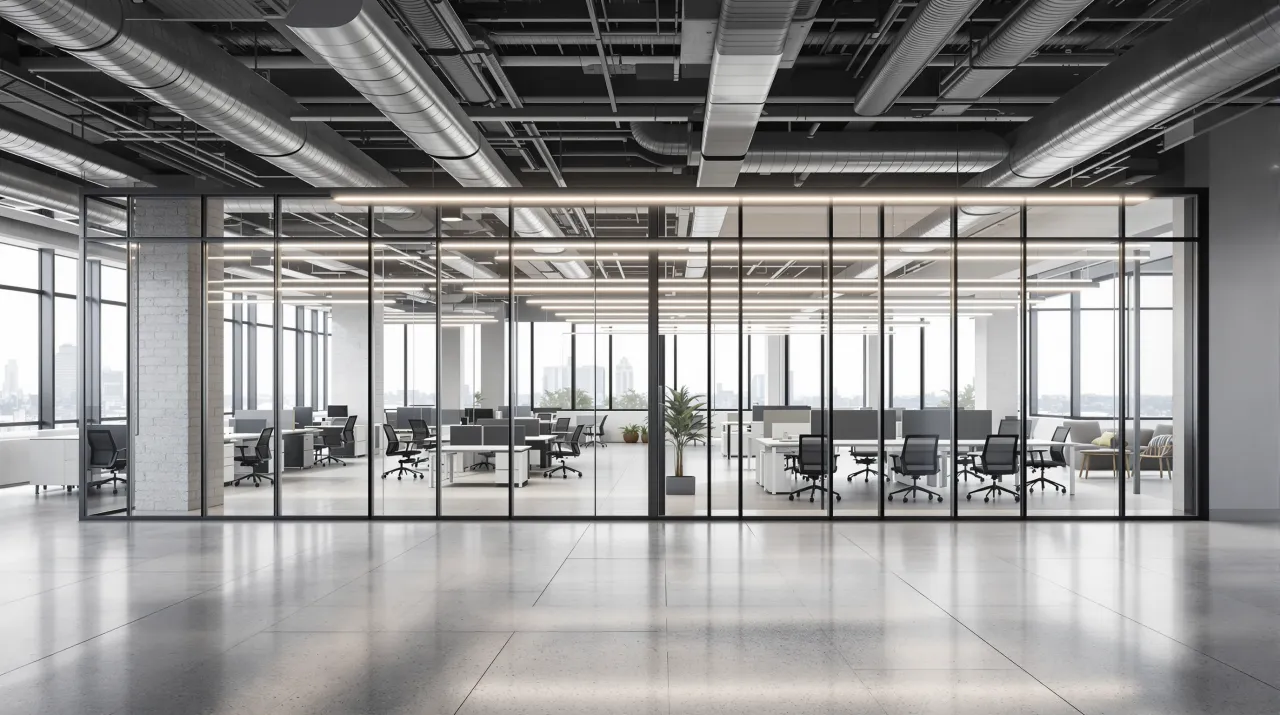
What reclassifies in a office & professional build-out
This is the segment-specific view. For the full 5- / 7- / 15-year QIP framework and primary sources, see the tenant-improvement cost segregation overview →
Worked example
- Scenario
- Office fit-out: glass offices, conference rooms, reception & modular workstations
- Build-out basis
- $750,000
- Illustrative reclassification
- 72% = $540,000 into accelerated MACRS
- Estimated year-1 deduction
- $540,000 (100% §168(k) bonus on eligible property)
- Estimated federal tax savings
- $200,000 at 37% marginal
- Study fee
- $2,995
How the $750,000 build-out splits by MACRS class
Illustrative and modeled — year-1 figures depend on build-out scope, §168(k) eligibility, §469 status, entity structure, and your CPA's tax position when the deduction lands. Not a filing figure. Every leasehold order is reviewed by our team before delivery.
Frequently asked
Isn't an office fit-out mostly slow 39-year property?
Does my systems furniture and modular workstations qualify separately?
We fit out the floor a couple of years ago. Can we still benefit?
Keep going
Everything you need to scope a office build-out cost segregation engagement:
You paid for the build-out. Get the depreciation you're owed.
Start your study and upload your build-out documents, or send your depreciation schedule and construction budget and we'll talk it through. Every leasehold order is reviewed by our team before delivery.