Cost Segregation for Self-Storage Facilities: 2026 Guide
A self-storage facility is a cheap shell on heavy site work: the paved drive aisles, fencing, and hundreds of roll-up doors reclassify out of the 39-year schedule. A $3M drive-up facility reclassifies ~$561K (≈23%), about $225,000 in Year-1 federal tax savings.
A self-storage facility is a cheap shell on heavy site work: the paved drive aisles, fencing, and hundreds of roll-up doors reclassify out of the 39-year schedule. A $3M drive-up facility reclassifies ~$561K (≈23%), about $225,000 in Year-1 federal tax savings.
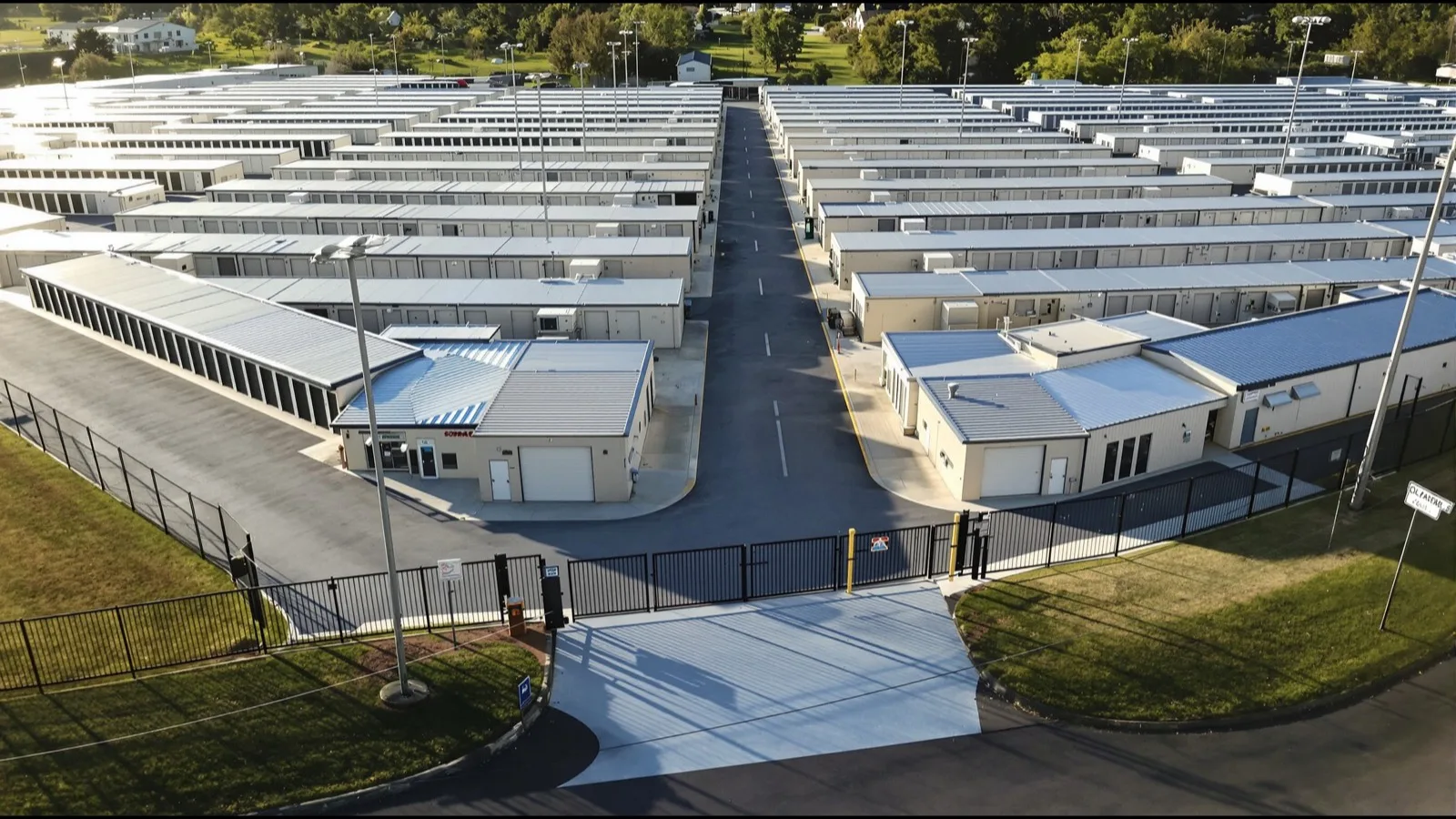
A self-storage facility is one of the leanest buildings in commercial real estate — which is exactly why it reclassifies well. Very little of a storage facility’s cost is “building”: it’s a low-cost metal shell sitting on a lot full of paved drive aisles, perimeter fencing, site lighting, and hundreds of roll-up unit doors. The paving and fencing are 15-year land improvements — usually the single biggest bucket, because a drive-up facility sits on two to three times its footprint in paving. The roll-up doors, security, keypad, and camera systems are 5-year personal property. On a $3 million drive-up facility, about $561,000 (≈23%) of basis reclassifies — worth roughly $225,000 in Year-1 federal tax savings at the 37% bracket with 100% bonus depreciation, against a $5,995 study fee. A study identifies and documents these assets; it does not assume them.
The Two Levers: the Drives and the Doors
A storage facility barely has a “building” story. It has a site story and an equipment story.
The drives and the site. Heavy paved drive aisles, aprons, and loading lanes are the dominant line in a self-storage study — there’s a lot of pavement and it’s expensive. Add perimeter fencing, gates and bollards (storage is security-heavy), site and exterior lighting across the rows, landscaping, and site drainage, and you have a large block of 15-year land improvements that scales with how much of the lot is paved.
The doors and the security. A drive-up facility has hundreds of roll-up unit doors — removable, serving the rental function, and 5-year property. Add the security cameras, keypad and gate-access systems, removable corridor lighting and partitions, and wayfinding, and the 5-year bucket adds up door by door. A climate-controlled facility adds dedicated HVAC on top, when it’s present.
What a cost segregation study changes.
| Metric | Without cost seg (39-year) | With cost seg + 100% bonus |
|---|---|---|
| Year-1 depreciation | ~$62,000 | ~$609,000 |
| Year-1 tax savings @ 37% | ~$23,000 | ~$225,000 |
| Reclassified into 5/7/15-yr | $0 | ~$561,000 (≈23%) |
| Study cost | N/A | $5,995 |
| Delivery time | N/A | 1–2 business days (most residential) |
What Gets Reclassified
Our engine models a self-storage facility from a dedicated component library built bottom-up from industry-standard construction cost data (GSA schedules, public procurement pricing, DOT unit-cost data). Here’s what moves out of the 39-year shell.
Fifteen-year land improvements — the site (the dominant bucket):
- Drive aisles, aprons & loading-lane paving (the dominant line), perimeter fencing, gates & bollards, site & exterior lighting, landscaping & irrigation, site drainage, gate access arm & call box
Five-year property — the doors and security:
- Roll-up storage unit doors (scales with unit count), security, cameras, keypad & gate access, corridor / aisle lighting (removable), movable corridor partitions, climate-control HVAC (when present), rental-office FF&E
Here’s how the most common self-storage assets typically classify:
| Component | Typical recovery period |
|---|---|
| Drive aisles, aprons & loading-lane paving | 15-year land improvement (dominant) |
| Perimeter fencing, gates & bollards | 15-year land improvement |
| Site & exterior lighting | 15-year land improvement |
| Landscaping, irrigation & site drainage | 15-year land improvement |
| Roll-up storage unit doors | 5-year personal property (scales w/ unit count) |
| Security, cameras, keypad & gate access | 5-year personal property |
| Corridor lighting & movable partitions | 5-year personal property |
| Climate-control HVAC (when present) | 5-year personal property |
| Rental-office FF&E & furniture | 5/7-year personal property |
| Building shell & structure | 39-year real property |
Recovery periods reflect typical treatment under IRS Publication 5653 and Rev. Proc. 87-56. The classification of any specific asset depends on its facts and is determined in the study — and the unit-door count and climate-control HVAC are captured from the facility’s actual configuration, not assumed.
A Worked Example: $3M Drive-Up Facility
Take a 60,000-square-foot drive-up self-storage facility purchased for $3 million. After land, roughly $2.42 million is depreciable basis.
Without a study, that depreciates straight-line over 39 years — about $62,000 a year. At a 37% bracket, ~$23,000 of Year-1 benefit.
With a cost segregation study, the engineering breakdown identifies about $561,000 of the basis as shorter-lived property — led by the paved drive aisles and fencing, then the roll-up unit doors and security. Under 100% bonus depreciation that’s deductible in Year 1, producing roughly $609,000 of first-year depreciation worth about $225,000 in federal tax savings — against a $5,995 study fee.
$3M facility · 60,000 SF · drive-up · CPA-ready report
The drives are the headline. A 60,000 SF facility on extensive paved drive aisles carries far more 15-year site work than the building cost suggests, and the hundreds of roll-up unit doors add a meaningful 5-year bucket — leaving only the cheap shell on the 39-year schedule.
Illustrative model. Actual reclassification and tax savings vary by property, basis, paving, unit count, and climate-control. Confirm with your CPA before filing.
Drive-Up, Climate-Controlled, RV & Boat Storage
The same playbook flexes across the segment. A drive-up facility leans hardest on the paved drive aisles and the many roll-up doors. A climate-controlled facility adds dedicated HVAC and interior corridor systems. An RV and boat storage site is almost all paving, fencing, and lighting, so the 15-year site-work lever dominates even more. Whatever the format, the study captures the paving, the doors, and the systems that are actually present.
Bought Years Ago? Claim the Catch-Up
You don’t have to do this in the year you buy or build. A lookback study lets you file a Form 3115 with your current-year return and pull all the depreciation you missed in prior years into one year — no amended returns, automatic IRS consent.
The Bottom Line for Your Facility
If you own a self-storage facility on the 39-year schedule, the deduction you’re missing isn’t in the building — it’s in the pavement and the doors. The more drive area and the more units, the more a study is worth, and a lookback can capture years of it at once.
Should you do this?
A cost seg study probably makes sense on your facility if any of these are true:
- You bought or built it in the last 1–10 tax years. A lookback study via Form 3115 captures the catch-up without amending old returns.
- You’re a drive-up facility with extensive paved drive aisles. Site work is the lever, and it scales with the paving.
- You have hundreds of units, security, or climate control. The roll-up doors and systems are the 5-year bucket.
- Your basis is at least ~$1M and you have facility income the deduction can reduce.
Scenarios above are illustrative. Outcomes depend on basis, paving, unit count, climate-control, and tax bracket. Confirm with your CPA before filing.
Cost Seg Smart is the modern cost segregation company — reports in 1–2 business days, not six weeks, and self-storage pricing from $2,495 rather than five-figure fees. If you own a self-storage facility, order your study → and the CPA-ready report lands in your inbox in 1–2 business days. See the full self-storage cost segregation overview for component-level detail and worked examples.
Frequently asked
What is cost segregation for a self-storage facility?
Cost segregation is an engineering-based analysis that separates a self-storage facility's purchase or construction cost into its component assets and assigns each the shorter recovery period the tax code allows. Instead of depreciating the whole property over 39 years, the study identifies the paved drive aisles, perimeter fencing, and site lighting as 15-year land improvements and the roll-up unit doors, security, and access-control systems as 5-year personal property. Because a storage facility is a low-cost shell on heavy site work, the share that qualifies for faster depreciation is substantial.
Do self-storage facilities qualify for cost segregation?
Yes — and they reclassify well for their cost, because so little of a storage facility is building. Two levers carry the study: the paved drive aisles, aprons, perimeter fencing and gates, and site lighting (15-year land improvements, usually the largest bucket), and the hundreds of roll-up unit doors plus the security, keypad, and camera systems (5-year personal property). A typical facility reclassifies roughly 19–36% of basis, most often around 23%, more on a paving-heavy drive-up site.
Are roll-up storage unit doors 5-year property?
Generally yes. The per-unit roll-up doors serve the identifiable rental-storage function and are removable rather than load-bearing partitions, so they are typically depreciated over 5 years rather than 39. Because a drive-up facility has hundreds of unit doors, the total is meaningful, and it scales with the unit count, which the study captures from the facility's actual configuration.
Are the drive aisles and paving 15-year property?
Yes. The paved drive aisles, aprons and loading lanes, perimeter fencing, gates and bollards, site and exterior lighting, landscaping, and site drainage are land improvements with a 15-year recovery period, not the 39-year period of the building. Because a drive-up facility sits on two to three times its footprint in paving, this site work is usually the single largest reclassification in a self-storage study.
Is climate-control HVAC reclassified?
When it is present and documented, yes. The dedicated split or PTAC units that condition climate-controlled units are removable equipment serving the rental function, so they are generally 5-year personal property. A facility without climate control simply won't have those lines; the study reflects what's actually there rather than assuming a full climate-controlled build-out.
How much does a self-storage cost segregation study cost?
Self-storage facilities have their own pricing tier by value: from $2,495 for a sub-$1M facility, $5,995 for a $2M–$4M facility, and $7,995 for a $4M–$7M facility, delivered as a CPA-ready PDF, within 1–2 business days. Smaller facilities are completed remotely; a larger facility (our default at $3M+ basis) may include an on-site observation. Portfolios above $15M are scoped per-engagement. Traditional firms charge $10,000–$30,000 and take four to six weeks.
Does this work for drive-up, climate-controlled, and RV or boat storage?
Yes. The engineering follows the property. A drive-up facility leans hardest on the paved drive aisles and the many roll-up doors; a climate-controlled facility adds dedicated HVAC and interior corridor systems; an RV and boat storage site is almost all paving, fencing, and lighting, so the 15-year site-work lever dominates. Each is captured from what is actually present and documented.
I bought my facility years ago — is it too late?
No. A lookback (catch-up) study lets you claim the depreciation you missed in prior years without amending old returns. Your CPA files a Form 3115 with your current-year return under the IRS automatic-consent procedures, and the cumulative missed depreciation flows through in a single year.
Is 100% bonus depreciation still available for self-storage owners?
Yes. The One Big Beautiful Bill Act made 100% bonus depreciation permanent for property placed in service on or after January 20, 2025, and for 2026 and beyond. (Property placed in service January 1–19, 2025 is at 40%.) Every dollar reclassified into 5-, 7-, or 15-year property is fully deductible in the year of acquisition or construction.