Usually — if you can use the loss. An Airbnb reclassifies more of its basis than a long-term rental (19–39% against 9–32%), because a furnished short-term rental is full of 5-year property: furniture, appliances, electronics, hot tubs, outdoor kitchens. What makes that deduction worth something this year is the second half of the sentence. When the average guest stay is 7 days or less and you materially participate, the activity is not a rental under §469, so the loss is non-passive and offsets W-2 or business income without real estate professional status. When either condition fails, the loss is suspended and the answer moves from "usually" to "eventually". The examples below assume the loss is usable and a 37% bracket; the section at the end says when to skip it.
STR investors who materially participate qualify under Treas. Reg. § 1.469-1T(e)(3)(ii)(A) to treat rental losses as non-passive without Real Estate Professional Status (REPS). Combined with permanent 100% bonus depreciation under 26 U.S.C. § 168(k) (OBBBA, placed-in-service 2025+) and the IRS Audit Techniques Guide (Pub 5653) methodology, the Year-1 math is the most favorable of any residential property class.
STR vs. long-term rental vs. condo — at a glance
Not running it as a short-term rental? See is cost segregation worth it for a long-term rental property for the buy-and-hold math.
| Property type | Reclass to 5/7/15-yr | Year-1 deduction (100% bonus) | Study cost |
|---|---|---|---|
| STR (Airbnb) this page | 19–39% | $45K–$280K | From $495 |
| SFR (long-term rental) | 9–32% | $18K–$165K | From $495 |
| Condo | 10–17% | $18K–$68K | From $495 |
Reclassification ranges are the bands we publish for each property type, measured from delivered studies (roughly the 10th to 90th percentile, sample sizes on each type's page). The deduction column is that range applied to the depreciable basis across the type's typical price band under 100% bonus depreciation; multiply by your bracket for the tax. See the full calculator to plug in your own basis and bracket.
Why an Airbnb is usually a strong candidate
- Higher reclassification: 19–39% vs. 9–32% for long-term rentals. STRs carry more 5-yr personal property (furniture, electronics, appliances, smart locks, hot tubs).
- The STR loophole: Average stay of 7 days or less means the 75/55 rule kicks in: the activity stops being a rental under IRC §469 and becomes a non-rental trade or business. Material participation alone is enough to make the losses non-passive (no REPS required).
- Active income offset: Non-passive losses can offset W-2 income, business income, and capital gains. A real-estate investment becomes immediate W-2 tax relief, not a deferred shelter.
Real STR examples

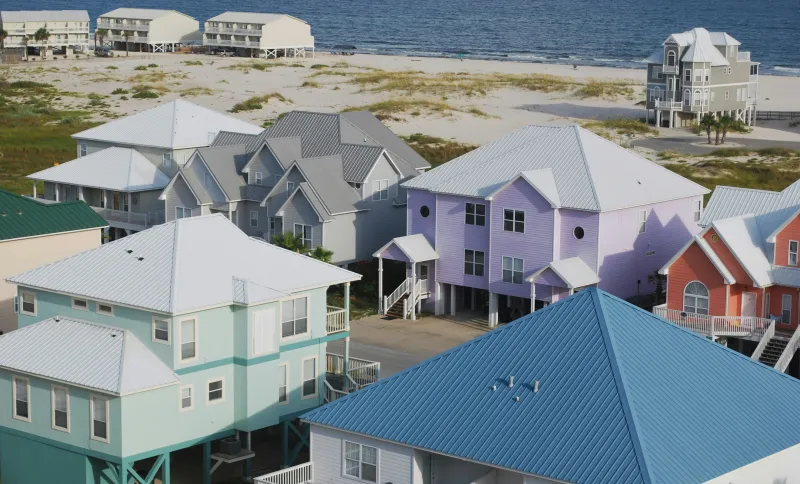
Estimates assume 37% federal bracket and full first-year usability. Your actual benefit depends on bracket, basis allocation, and your CPA's treatment.
When to skip it on Airbnb
- You don't materially participate (under 100 hours/yr) and can't show "no one else does more"
- Property basis under ~$200K with low finish levels
- You're planning to convert to long-term rental within 12 months
Typical numbers
$615K Gulf Shores STR, 25% reclassified, 37% bracket, 100% bonus depreciation = ~$52,688 Year-1 federal benefit on a $895 study fee. That's a 58× return in one year, if the loss is usable. Run your own number in the calculator below.