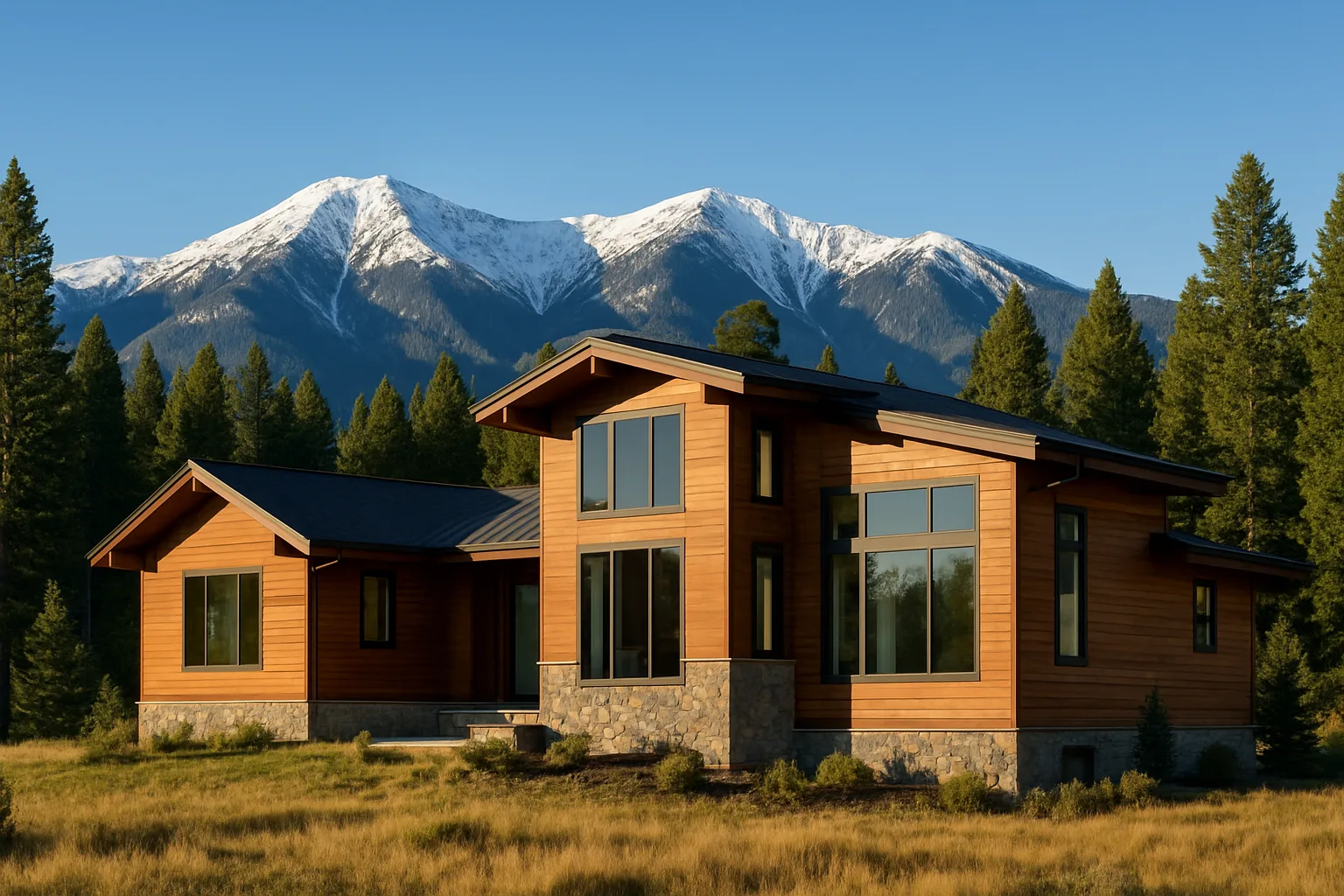
You’re choosing between two distinct Montana markets. Bozeman/Big Sky investors target $700K–$1.2M ski-luxury STRs near Mt. Bachelor and the Yellowstone gateway. Western Montana investors buy $400K–$800K cabins and ranch properties around Whitefish, Missoula, and the Bitterroot Valley. Per-dollar acceleration rates are comparable, but the worked numbers diverge: absolute Year-1 deductions scale with basis, and the FF&E mix differs between ski-luxury and rural cabin inventory. See Your Montana Tax Savings →
- IRS Audit Techniques Guide methodology
- 40+ page CPA-ready report
- Delivered the next business day
- Audit support included
Montana is one of the more interesting cost segregation states because it has two materially different vacation-rental markets with different economics. The Bozeman / Big Sky corridor is high-basis ski-luxury investment driven by Yellowstone gateway demand, Bridger Bowl, and Big Sky Resort. Property values in Big Sky regularly clear $1.5M for ski-in/ski-out condos and $3M+ for single-family mountain homes. Bozeman proper has tracked an unusual price trajectory since 2020, with median STR purchase prices doubling on tech-sector in-migration and remote-work relocations.
Western Montana (Whitefish, the Glacier National Park gateway, plus Missoula and the Bitterroot Valley) runs a different market. Cabin and ranch STRs at $400K–$800K entry prices, with seasonal demand patterns tied to Glacier (summer) and Whitefish Mountain Resort (winter). Per-dollar acceleration rates are comparable to Bozeman/Big Sky; absolute dollars are smaller because basis is smaller. Cost segregation pencils cleanly in both markets, but the worked numbers and study-ROI calculation are different.
does cost segregation increase audit risk →
How Cost Segregation Works in Montana
Cost segregation reclassifies portions of your property’s basis into 5-year (FF&E, appliances, carpet), 7-year, and 15-year (land improvements) MACRS recovery periods. Reclassified components qualify for federal bonus depreciation under §168(k) in the year placed in service.
Montana imposes individual state income tax. The state generally conforms to the federal Internal Revenue Code for individual income tax purposes, and Montana’s tax code (MCA §15-30-2120) does not require a general add-back of federal bonus depreciation on the individual return. That said, IRC conformity rules and bonus depreciation treatment can change year over year, so verify the current Montana §168(k) treatment with your CPA before filing. The hedge matters: state tax treatment is the kind of detail that shifts on a legislative session, and the federal cost segregation deduction is what we deliver. Whatever Montana ultimately allows on the state side, the federal piece is unaffected.
At the 37% federal bracket, every $100K reclassified produces $37K in federal Year-1 savings. Montana’s top marginal individual rate was recently reduced (SB 121 in the 2023 session moved the top rate to 5.9%); the state-side benefit on top of the federal acceleration is meaningful but modeled separately.
Worked example (illustrative figures) — $850K Bozeman / Big Sky vacation rental:
- $850,000 purchase price
- $690,000 depreciable basis (excluding land)
- $190,000 accelerated depreciation (reclassified to 5/7/15-year MACRS)
- $70,300 estimated federal tax savings (37% bracket)
- Montana state savings: modeled separately by your CPA based on current Montana IRC conformity treatment
Representative Montana Year-1 federal savings: $22,000 – $140,000 depending on basis and property type.
What Investors in Montana Should Know
Two markets, two playbooks. The Bozeman / Big Sky corridor is high-basis ski-luxury. Western Montana is mid-basis cabin and ranch. Don’t import a Big Sky worked example to a Whitefish property: the basis is wrong and the FF&E mix differs.
Bozeman is a tech-economy market now. Since 2020, Bozeman has absorbed substantial tech-sector relocations and remote-worker in-migration. Median home prices have roughly doubled. STR demand is supported both by Yellowstone summer traffic and Bridger Bowl winter tourism, plus year-round university and conference demand from Montana State. The investor base skews toward higher incomes and longer hold periods.
Big Sky is the high-basis play. Big Sky’s ski-in/ski-out condos and mountain homes routinely run $1.5M–$5M. Heavy FF&E (premium kitchens, hot tubs, ski-tuning rooms, mudrooms with heated floors) creates large 5-year MACRS allocations. Absolute first-year deductions on a $2M Big Sky home commonly run $400K–$500K.
Whitefish anchors Glacier and the ski economy. Whitefish Mountain Resort plus Glacier National Park (June–September) plus the Whitefish town tourism economy creates dual-season vacation rental demand at lower entry prices than Big Sky. Representative STR purchase price: $500K–$1M.
Western Montana cabin economy. The Bitterroot Valley, Flathead Lake (Polson, Lakeside), and Missoula’s surrounding areas support cabin and lake-house STRs. Lower-basis ($400K–$700K) with strong summer demand. Cost segregation pencils best at $500K+ purchase prices.
Property tax assessments. Montana reassessed residential property in the 2023 cycle, and many vacation-rental owners saw substantial assessment increases, particularly in Gallatin County (Bozeman/Big Sky) and Flathead County (Whitefish/Kalispell). Cost segregation’s first-year tax savings can offset some of this carrying-cost increase. It’s not a direct tie, but the cash-flow timing matters for investors absorbing higher property tax bills.
Multi-Property Investors and Form 3115 Lookback
The Bozeman / Big Sky investor base often holds 2–4 Montana properties acquired across the 2018–2022 appreciation cycle, and most never ran a study at the time. Form 3115 lookback recaptures the missed federal acceleration in a single tax year via §481(a), with no amended returns. Combined with a current-year study on the most recent acquisition, the portfolio benefit on a 3-property Montana hold routinely runs $150K–$300K of accelerated deductions in one filing. Multi-property study bundles run 5%–15% off per property. See bundle pricing →
Key Markets in Montana
Bozeman, MT
The Yellowstone gateway plus Montana State University plus tech-economy in-migration creates a year-round investor market. Median STR purchase prices run $700K–$1.2M, with downtown Bozeman, Four Corners, and the Bridger Canyon corridor leading activity. Heavy FF&E in competitive STRs supports above-average 5-year MACRS allocations. The combination of strong year-round demand and rising basis makes Bozeman one of the cleanest cost-segregation markets in the Northern Rockies. See Bozeman breakdown →
Big Sky, MT
Ski-in/ski-out condos at the Big Sky Resort base and luxury single-family mountain homes in the Spanish Peaks / Yellowstone Club perimeter define this market. Property values regularly clear $1.5M for condos and $3M+ for SFR. Premium FF&E packages calibrated to ski-vacation guest expectations produce some of the highest absolute first-year deductions of any STR market in the West.
Whitefish, MT
Glacier National Park gateway plus Whitefish Mountain Resort plus the Whitefish town tourism economy creates dual-season vacation rental demand. Representative STR purchase price: $500K–$1M. Cabin-style and chalet properties dominate the inventory. Cost segregation acceleration rates are strong on furnished cabins.
Missoula, MT
University of Montana plus regional government plus a growing tech sector supports a mixed long-term rental and STR market. SFR investors targeting $300K–$600K properties find Missoula one of the more accessible Western Montana markets. Cost segregation pencils above $300K purchase price.
Helena, MT
The state capital. Steady long-term rental demand serving state government and the regional economy. SFR-focused investor market.
Property Types That Benefit Most in Montana
Ski-luxury STRs — Big Sky, Whitefish, Bridger Bowl. Premium kitchens, hot tubs, ski-tuning rooms, mudrooms, heated floors. Strongest absolute first-year deductions in the state.
Yellowstone gateway cabins (Bozeman, Big Sky, West Yellowstone, Gardiner). Multi-bedroom cabins with hot tubs, game rooms, and outdoor entertaining setups. Strong FF&E density on lower basis than Big Sky proper.
Lake-house STRs (Flathead Lake, Whitefish Lake, Holter Lake). Seasonal summer demand. Boat docks and lakefront improvements add 15-year MACRS land-improvement basis.
Single-family rentals — Bozeman, Missoula, Helena suburbs. Population growth supports SFR demand. Cost segregation pencils above $300K.
Multifamily — Bozeman, Missoula. Tech-sector growth supports multifamily fundamentals. Unit-count multiplication makes cost segregation efficient on 10+ unit buildings.
Have one of these property types? See what your Montana property would save.
When Cost Segregation Typically Makes Sense in Montana
It generally makes sense when:
- Purchase price above
$500K for vacation rentals ($300K for SFR) - Property is furnished or you plan to furnish it (FF&E is where most acceleration comes from)
- You materially participate in your STR operation (100+ hours/year)
- You’re a W-2 earner who can use STR material participation to offset salary income
- You hold the property for 3+ years (depreciation recapture applies at sale: up to 25% on real-property gain, and ordinary rates on some personal-property components)
- Your CPA is comfortable verifying the current Montana §168(k) treatment
It may not make sense if:
- Property is under ~$300K with minimal improvements
- You’re a passive investor with no other passive income (the deductions may carry forward unused)
- You plan to sell within 12–18 months
- The property is unfurnished long-term rental with low FF&E density
Cost Segregation by City in Montana
Opportunities vary by market. Select a city below to see estimated savings and a detailed MACRS breakdown.
Bozeman, MT
Median STR: $850,000 · ~$32,000–$80,000 Year-1 federal savings · See Bozeman breakdown →
Montana Cost Segregation Guides
- Short-Term Rental Cost Segregation
- Single-Family Rental Cost Segregation
- Multifamily Cost Segregation
- Cost Segregation Calculator
- Bonus Depreciation Hub
- What Is Cost Segregation?
See Your Estimated Montana Savings
Run your numbers in under 30 seconds. 100% bonus depreciation is available now under federal law. Verify Montana state-side treatment with your CPA. See Your Montana Tax Savings →
Starting at $495 for residential studies under $300K basis. Delivered the next business day for simple residential SFR / STR; 3-5 business days for properties over $3M or commercial. Money-back guarantee.
For properties over $10M basis (large multifamily, hospitality, institutional commercial): same-day preliminary, ~2 weeks post-close final. By proposal.
CPA use note: These figures estimate the size of the depreciation deduction. Whether the loss is usable in the current year depends on passive-activity rules, STR material participation, REPS status, entity structure, depreciable basis, and state conformity. Your CPA decides how and when it is applied. Specialty and site components (equipment, casework, docks, pools, arenas, tenant improvements, and similar) are only classified when you own them and they are included in the depreciable basis being studied.
How should Montana investors choose a cost segregation provider?
For a Montana investor buying a property in the $850,000 range, the choice of provider is a major controllable variable in the return. The IRS Audit Techniques Guide sets the quality characteristics an engineering-based study should meet — industry-standard construction cost data, MACRS classification, and component-level documentation — but it does not make every provider's work identical; rigor, cost, and turnaround still vary.
Traditional engineering studies often run several thousand dollars and can take several weeks, because they include on-site inspections, sales discovery calls, and scheduling overhead. The IRS Cost Segregation Audit Techniques Guide does not prescribe an on-site inspection as a standalone requirement; it sets out the quality characteristics of an engineering-based study — component-level classification, a documented and supportable cost derivation, and a clear audit trail — and describes how a physical inspection can contribute to meeting them.
Modern automated providers (such as Cost Seg Smart) deliver an engineering-based, IRS ATG-aligned study using property records, documents, photos, and recognized construction-cost data, typically from $495 and often by the next business day. For a Montana investor at a high combined bracket, that cost and speed difference is meaningful. The CPA-Ready Guarantee (free revisions if your CPA flags a problem, and a refund if the report still can't be used) makes the decision essentially risk-free on the report itself.
The automated path is best-fit for owners who can provide closing documents and property photos online (no in-person visit required) and want the report in time to file the current year's return rather than the next one.
All Cost Seg Smart studies include the CPA-Ready Guarantee (free revisions if your CPA flags a problem, and a refund if the report still can't be used). Straightforward residential studies are often delivered the next business day and completed remotely; larger or more complex commercial studies take longer and may include an on-site observation.