From $495 · Under 1 Hour · CPA-Ready

Cost Segregation That Actually Works for Small Properties

Cost segregation studies used to cost $5,000 to $15,000 and take 4 to 8 weeks. Today, modern engineering-based providers deliver the same IRS-compliant analysis for under $500, in under one hour, with no site visit. For single-family rentals, short-term rentals, and condos under $300,000, studies start at $495. For properties between $300K and $1M, the price is $795. Traditional firms don't quote these smaller deals because their overhead (site visits, sales calls, scheduling queues) makes the math break even before the tax benefit kicks in. Once the study cost drops below $1,000, properties in the $200K to $500K range reliably produce 15x to 30x return on the study fee in first-year tax savings — which is why cost segregation now works for properties it never worked for before.

If you've been told cost segregation "isn't worth it" on a $200K–$500K property, what that usually means is: it isn't worth it at their price.

Under 1 Hour
Delivery
Order Online
No scheduling
From $495
Starting price
IRS ATG
Aligned methodology

Most firms take 4–8 weeks and charge $5,000+.

On a $250K rental, that's why the math usually breaks.

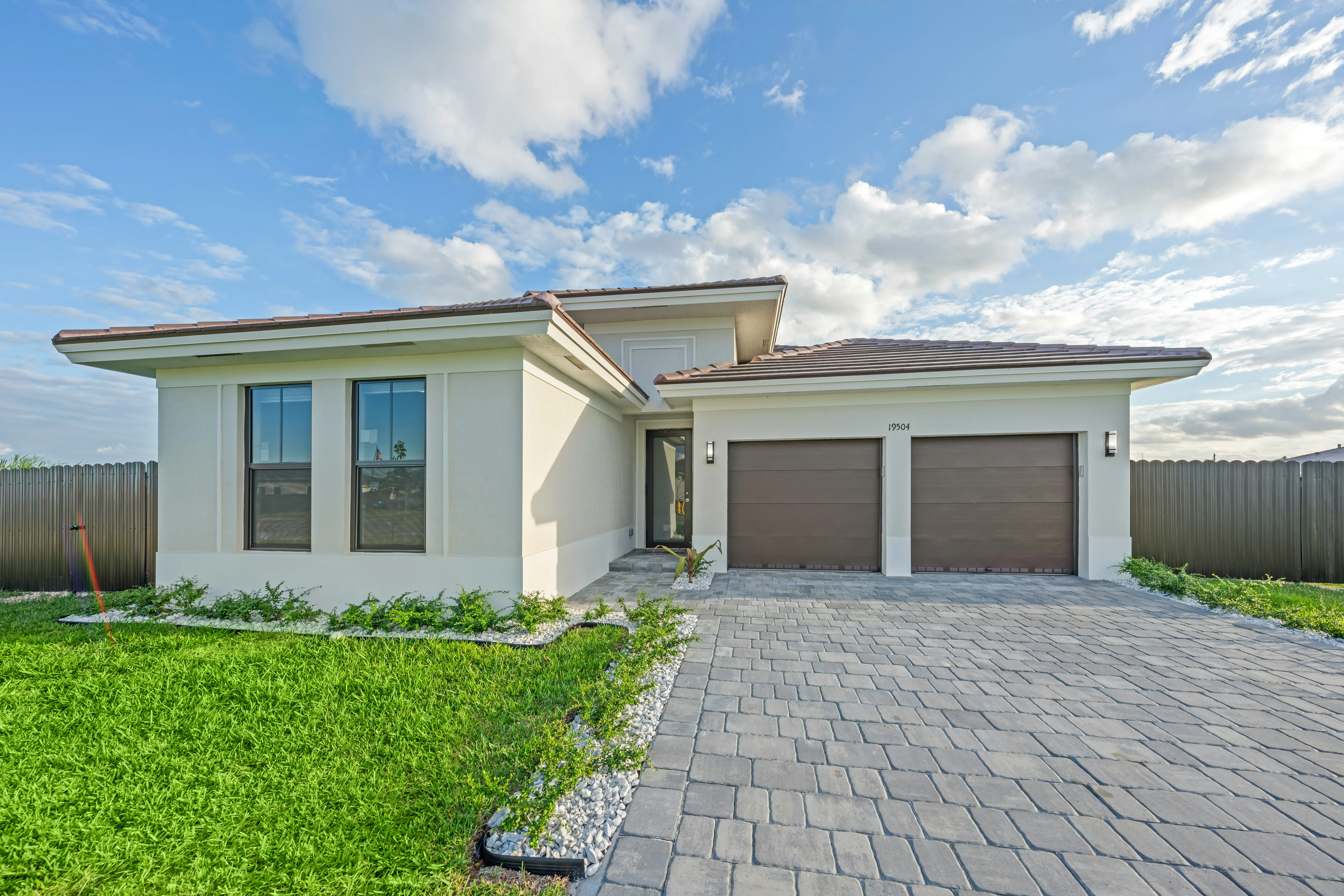
Single-family rental property — typical cost segregation candidate under $500K
The Story

Why cost segregation used to be expensive — and why it isn't anymore.

Cost segregation as a tax strategy is old. The specific rules we still use today — MACRS depreciation, the 5/7/15/27.5/39-year asset classes, the component reclassification framework — trace back to Hospital Corporation of America v. Commissioner in 1997 and the IRS's formal adoption of the methodology in the Cost Segregation Audit Techniques Guide that followed. Nothing about the tax framework has changed in a meaningful way in nearly three decades.

What did change is who could afford the analysis. For most of that history, a cost segregation study meant a licensed engineer flying to your property, walking every room, documenting finishes, and writing a custom report over several weeks. That's real work. It's also expensive work — and firms priced it accordingly: $5,000 on the low end, $10,000–$15,000 for a typical rental, more for commercial.

At those prices, small properties were a non-market. A $250,000 Airbnb generating maybe $12,000 in first-year tax savings doesn't pencil against a $10,000 study. The study consumed most of the benefit. So traditional firms quietly stopped quoting them, and investors with properties under $500K were told — often by the same CPAs those firms worked with — that "cost segregation isn't worth it at your size."

That framing was technically accurate. It was just about price, not about the tax benefit. The benefit was always there. The overhead just buried it.

In the last few years, that overhead started coming off the table. County assessor data is now available by API in every state. RSMeans construction cost data — the same database licensed engineers have used for decades — is accessible through software. Satellite imagery resolves to the individual roof pitch and parking layout. The IRS Audit Techniques Guide never required a site visit in the first place — it requires engineering-based methodology and defensible documentation. Once software could produce both without the travel and the scheduling queue, the price floor fell.

see our full methodology →

That's why the math now works on small properties. Nothing about the tax code changed. The production cost of a study dropped from about $5,000 in staff and travel time to about $100 in compute, which is why a study can ship for $495 instead of $5,000 and still be audit-ready. This page is the full explanation — including what "cheap" actually covers, what it doesn't, and where a traditional firm still makes more sense than we do.

The Category Shift

Same IRS framework. Different delivery.

Lower cost does not mean lighter methodology. It means less overhead.
Traditional FirmsCost Seg Smart
Price$5,000–$15,000$495–$795
Turnaround4–8 weeksUnder 1 hour
Sales CallRequiredNone
Site VisitOftenNot required
OutputCPA-ready reportCPA-ready report
Audit SupportYesYes
Best FitLarge / complex propertiesSFR, STR, condo, small rentals
What "Cheap" Actually Means Here

Cutting overhead is not cutting corners.

A cost segregation study has three parts. None of them require a salesperson or a site visit.

1

Engineering-based cost breakdown

RSMeans-calibrated component costs, down to the individual building system.

2

IRS-compliant classification

MACRS asset assignment per Rev. Proc. 87-56. 5-year, 7-year, 15-year, and 27.5/39-year categories.

3

A report your CPA can use

Full depreciation schedules, audit documentation, and Form 3115 support — ready to file.

Traditional firms bundle those three things with site visits, scheduling, sales reps, and multi-week queues. That's where the $5,000+ comes from.

Remove the overhead, run the same analysis through a software-driven workflow, and the output doesn't change — the delivery does.

Where the $5,000 Actually Goes

A traditional cost segregation study, priced out.

When a traditional firm quotes $5,000–$10,000 for a cost segregation study on a residential rental, they aren't making a 95% margin. They're honestly charging for overhead that the analysis itself doesn't require. Here's roughly where that money goes on a typical $8,000 study:

  • Engineer site visit (~$2,000). Travel time, on-site hours, photographs, measurements. Often a full day of a licensed engineer's time plus airfare or mileage.
  • Sales and intake (~$1,500). Discovery call, proposal, follow-up, contract negotiation. Sales reps on commission, account managers, CRM tooling. Often the single largest hidden cost.
  • Report production and review (~$3,000). Cost modeling, MACRS classification, written narrative, internal QC. This is the actual engineering work.
  • Firm overhead and audit support (~$1,500). Office, insurance, licensing, and the small percentage of studies that generate audit correspondence.

Roughly $3,500 of that $8,000 is overhead that the IRS does not require for a defensible study. Site visits aren't mandated. Discovery calls don't appear in Rev. Proc. 87-56. What the IRS actually wants is engineering-based methodology, MACRS classification, and audit documentation — the $3,000 chunk, not the $5,000 around it.

Automated providers don't skip the $3,000 of real engineering work. We skip the $5,000 of overhead that was never part of the tax analysis. That's why a study can ship for $495 and still meet the same IRS standards as a $10,000 report.

The Math, Run Out Loud

$250,000 short-term rental.

Qualifying furnished STR, 24–32% federal bracket, 20% land allocation. Illustrative, typical ranges.

$250,000 Short-Term Rental
Airbnb / VRBO · Year 1 at full bonus depreciation
Depreciable basis (after land)~$200,000
Reclassified to 5/7/15-year (20–25%)$40,000–$50,000
Year 1 tax savings (24% bracket)$9,600–$12,000
Year 1 tax savings (32% bracket)$12,800–$16,000
Study cost$495
Return on study cost (year one)~20x–30x
At $5,000, the same deal barely works. At $495, it's obvious.

Two more small-property scenarios, for reference:

$350,000 single-family rental (unfurnished, 27.5-year residential). Depreciable basis about $280,000. At a typical 18–22% reclassification rate, that's $50,000–$62,000 accelerated into shorter classes. Year 1 tax savings at a 24% bracket lands around $12,000–$15,000. Study cost: $495. Return on the study fee: roughly 24x–30x in year one.

$450,000 condo (furnished short-term rental). Depreciable basis about $370,000. Condos typically reclassify at 17–23% because the shell is shared — but interior finishes, FF&E, and specialty equipment still carry the analysis. Accelerated deductions: $63,000–$85,000. Year 1 savings at 32%: $20,000–$27,000. Study cost: $795. ROI: roughly 25x–34x.

Same illustrative framing as above. Actual results vary by property condition, location, furnishing level, bracket, and use pattern. The pattern is the point: at a sub-$1,000 study fee, sub-$500K properties produce 15x–35x year-one returns on the study cost in the overwhelming majority of qualifying cases. At $5,000–$10,000 study fees, the same deals barely break even.

Cost segregation didn't change.
The cost of doing it did.

Why small properties finally pencil
The Shift

For years, the industry quietly avoided small deals.

Not because the tax benefits didn't exist. Because the study fee consumed the benefit.

Here's the break-even logic. A typical residential rental reclassifies about 20% of its depreciable basis into shorter asset classes. With 100% bonus depreciation (permanently restored in 2025 under the One Big Beautiful Bill Act), those reclassifications are deductible in year one. For a $300K property with $240K depreciable basis, that's about $48,000 in accelerated deductions, or roughly $11,500 in tax savings at a 24% bracket.

Against a $5,000 study fee, that's a 2.3x return — positive, but not a clear win once you factor in depreciation recapture at sale. Against a $795 study fee, it's a 14x return, and recapture becomes an acceptable cost of the timing play. Against a $495 fee for sub-$300K properties, it's a 23x return. That's the difference between "maybe" and "obviously."

Once the study cost drops below about $1,000, the math flips across the entire small-property category. That's why you're suddenly seeing:

  • Airbnb investors using cost seg on $300K cabins — often with W-2 offset via material participation under IRC §469
  • First-time rental owners running studies in year one instead of waiting for a lookback via Form 3115
  • $200K–$400K deals that actually pencil without a 1031 exchange
  • CPAs recommending studies they used to talk clients out of

The shift isn't hypothetical — it's showing up in how CPAs actually advise on small properties. Three years ago the default answer was "not worth it." Today, for qualifying STR and small SFR properties at 24%+ brackets, the default answer is increasingly "yes, if the study is under $1,000."

One More Tailwind

100% bonus depreciation is back — permanently, for now.

The small-property math works even at 80% or 60% bonus depreciation (where it was briefly in 2023 and 2024). But at 100%, which was permanently restored in 2025 under the One Big Beautiful Bill Act, the entire reclassified amount deducts in year one. That compresses what used to be a multi-year benefit into a single tax year.

On a $250K STR reclassifying $50,000 to shorter asset lives, 100% bonus means all $50,000 is deductible the year the property was placed in service. Without bonus depreciation, that same $50,000 would spread across 5, 7, and 15-year straight-line schedules — still a benefit, but diluted.

Combine a permanently low study cost with permanent 100% bonus depreciation and the incentive to run the analysis in year one is as strong as it has ever been. Properties purchased in 2024 or 2025 that haven't had a study done are the most obvious candidates; owners of older properties can still capture missed deductions via a Form 3115 lookback study.

The Speed Question

Can it really be done in under an hour?

Yes. Most of the traditional 4–8 week timeline isn't analysis — it's scheduling site visits, waiting for engineers, and internal back-and-forth between sales, ops, and production.

Here's what a typical traditional engagement actually looks like, week by week:

  • Week 1: Discovery call, proposal, contract signing, initial document request.
  • Week 2: Client uploads closing documents, floor plans, photos, renovation records. Firm schedules a site visit.
  • Week 3–4: Engineer travels to the property, walks the building, takes measurements and photographs. Often delayed by weather, travel conflicts, or tenant scheduling.
  • Week 5–6: Engineer returns to office, writes up findings, builds cost model in the firm's internal tooling, generates the MACRS classification.
  • Week 7: Internal QC review. Sometimes a second-engineer check.
  • Week 8: Final report delivered to client, often in a scheduled review call.

Of those eight weeks, only about two to four days of actual engineering work happens. The rest is queue time, travel, and coordination. That's what the $5,000+ fee is compensating for — the calendar time, not the skill.

A software-driven workflow compresses those same steps into minutes. Assessor data pulls in seconds. RSMeans cost models apply to the building fingerprint automatically. MACRS classification runs against an established component library. A narrative engine generates the written report. Internal QC runs as an automated check with reviewer override. The median delivery time from Stripe webhook to PDF in your inbox is measured in minutes, not weeks.

The IRS does not require a site visit to any of this. It requires a defensible methodology. That's what the Cost Segregation Audit Techniques Guide actually says — verbatim, and it has said so since the guide was issued. The 13 "principal elements" it asks for are about documentation quality and classification logic, not about who walked the property.

CPA reviewing a cost segregation report
The Legitimacy Question

Is a cheap study still legitimate?

The question worth asking isn't "is it cheap?" It's "what's being cut?"

If the engineering methodology is being cut — if the study skips RSMeans-calibrated cost data, skips component-level classification, skips the MACRS asset framework, skips Form 3115 documentation for lookback studies — that's a problem. That produces a report your CPA can't defend and the IRS can push back on. Some very cheap "DIY software" tools genuinely do cut those things. Avoid those.

If what's being cut is the sales overhead, the travel time, the scheduling queue, and the manual intake workflow, none of that affects the tax outcome. The IRS doesn't evaluate studies on how they were delivered. It evaluates them on the MACRS classification logic, the cost derivations, and the audit documentation.

A CPA sitting down to apply a cost segregation study to a Form 4562 cares about four things:

  • Depreciation schedules — broken out by asset class (5-year, 7-year, 15-year, 27.5-year or 39-year) with full detail per building system.
  • Classification logic — a defensible reason each component landed in the class it did, tied back to Rev. Proc. 87-56 and the Audit Techniques Guide.
  • Cost derivation — how every reclassified dollar was calculated from the purchase price, using a recognized cost database like RSMeans.
  • Audit support — documentation the CPA can hand to the IRS if asked, without rebuilding anything from scratch.

None of those require a Zoom call or a site visit to produce. Our 40+ page reports include all four, every time. Same inputs, same outputs, different delivery.

The honest gut-check for any cheap study — ours or anyone else's — is to ask for a sample report before ordering. A real study looks like a real study: MACRS tables, component breakdowns, basis reconciliation, audit methodology appendix, executive summary. If a $500 study comes back as a one-page spreadsheet, that's the wrong kind of cheap. If it comes back as 40+ pages of engineering-grade documentation, it's the right kind.

Best Fit

Who this works for — and who it doesn't.

This approach fits especially well for:

  • Short-term rentals (Airbnb / VRBO) with material participation
  • Properties under $500K
  • Investors in 24%+ federal tax brackets
  • Owners who want results this week, not next month

A traditional firm still makes sense for:

  • $5M+ complex commercial properties with custom engineering needs
  • Highly customized mixed-use assets or specialty facilities
  • Edge cases requiring in-person engineering judgment
  • Owners planning to sell within 2–3 years without a 1031 exchange (recapture partially offsets the benefit)

For a standard single-family rental, STR, or condo under $500K, none of that is usually needed.

See what your property looks like with real numbers.

No signup. 60 seconds. No sales call.

Run Your Cost Seg Estimate →
FAQ

Questions that come up.

What is the cheapest cost segregation study?

The lowest-cost cost segregation studies today start around $495 for qualifying SFR, STR, and condo properties under $300K. Traditional firms usually charge $5,000–$15,000, which is why smaller deals often never penciled before.

How fast can a cost segregation study be done?

Modern software-driven workflows can deliver a CPA-ready report in under an hour. Traditional firms typically take 4–8 weeks, most of which is scheduling and site visits rather than actual analysis.

Is cost segregation worth it for a $250K property?

At a $495 study cost, a $250K short-term rental can generate roughly $9,600–$16,000 in first-year tax savings for a 24–32% bracket owner. That's a 20x–30x return in year one, which is why smaller properties now make sense.

Do cheap cost segregation studies hold up to IRS scrutiny?

What matters to the IRS is methodology and documentation, not price. A study using engineering-based cost modeling, MACRS classification per Rev. Proc. 87-56, and proper audit documentation is defensible regardless of how fast it was delivered.

Why do traditional firms charge so much more?

The $5,000–$15,000 price tag reflects bundled overhead: site visits, travel, sales calls, scheduling, and multi-week internal queues. The underlying engineering analysis is structured and repeatable, so removing the overhead removes the cost — not the methodology.

What's the minimum property value for cost segregation?

There's no legal minimum — any depreciable real property qualifies under MACRS. The economic minimum is wherever the study fee stops consuming the tax benefit. At $495 study fees and 24%+ brackets, properties as small as $150K–$200K can still generate 8x–15x ROI in year one.

Can you do cost segregation on a property I bought years ago?

Yes, via a lookback study using IRS Form 3115 (Change in Accounting Method). You can claim missed accelerated depreciation in the current tax year without amending prior returns. Lookback studies work for properties placed in service in any prior year.

Is this a DIY tool or a finished study?

It's a finished, CPA-ready cost segregation study delivered as a 40+ page PDF — not software you run yourself. You provide property details at checkout; the engineering analysis and report generation happen on our side. Your CPA applies the schedules directly to Form 4562.

Can I use a cheap cost segregation study to offset W-2 income?

Yes, if you qualify under IRC §469. Short-term rentals with material participation (average stay ≤ 7 days plus 100+ hours of active participation) can generate non-passive losses that offset W-2 or active income. Long-term rentals typically require real estate professional status to unlock the same treatment. The study itself doesn't change eligibility — it produces the deductions; the participation rules determine how they can be used.

What about depreciation recapture when I sell?

Recapture is real and applies on sale regardless of study price. Section 1250 real property recapture is capped at 25%; Section 1245 personal property reclassifications recapture at ordinary rates. Recapture is a timing issue, not a net-loss issue — you're pulling deductions forward and paying some of them back at sale. Strategies like 1031 exchange, step-up in basis, or continued hold can defer or mitigate it.