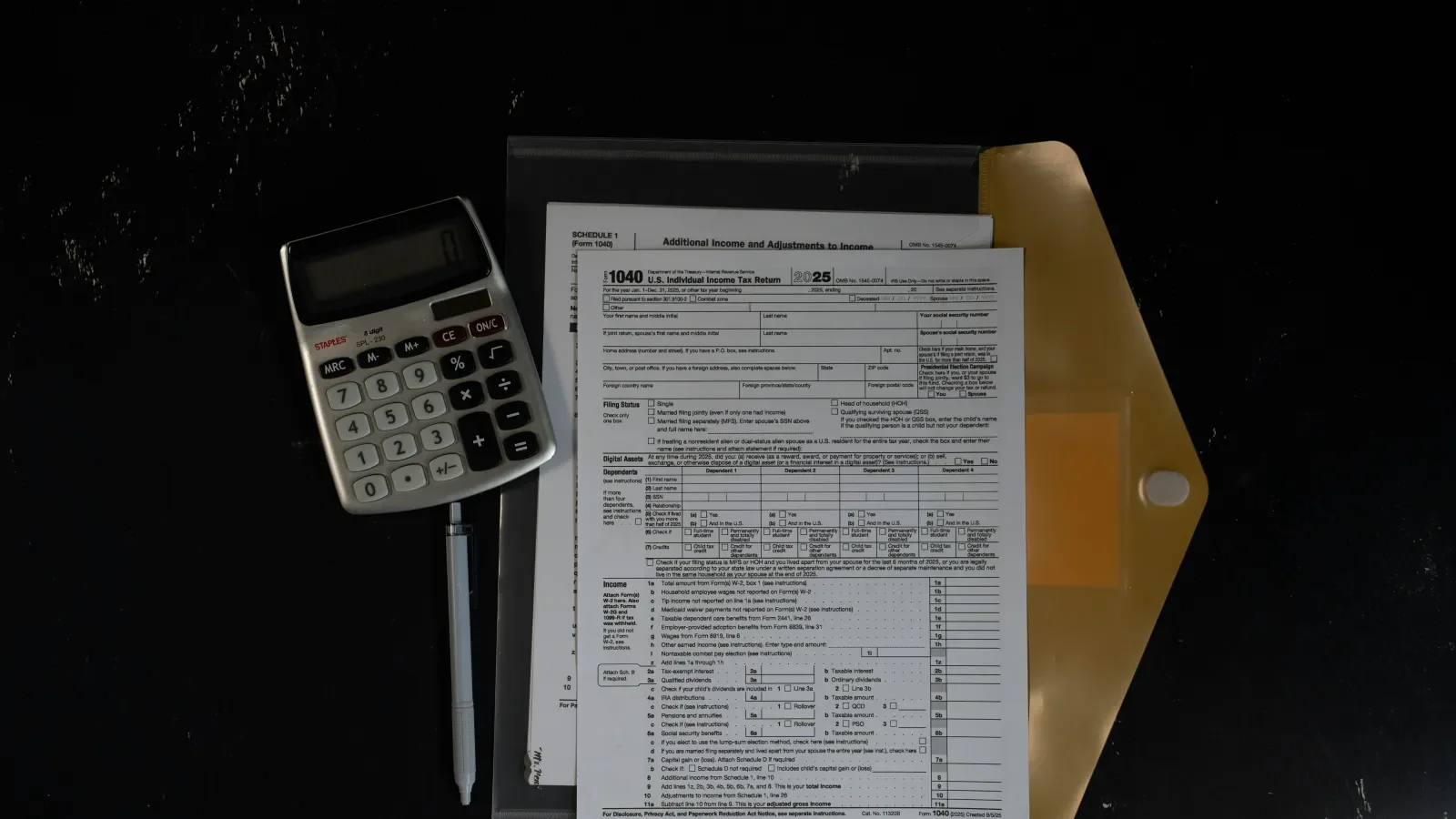
What's Inside a Cost Segregation Report?
A real $425K Charlotte SFR report dissected page by page — what your CPA actually files from, what the IRS examiner checks first, and how to spot a sloppy study.

A real $425K Charlotte SFR report dissected page by page — what your CPA actually files from, what the IRS examiner checks first, and how to spot a sloppy study.
Key Takeaways
- A cost segregation report is a 35-40 page engineering-based analysis that reclassifies building components into accelerated depreciation categories
- The report includes an executive summary, cost allocation tables, a line-item component breakdown, MACRS depreciation schedules, and IRS-cited engineering rationale
- Your CPA uses the depreciation schedules and cost allocation summary to file Form 4562 — a well-built report requires no follow-up questions
- Every dollar of the purchase price must be accounted for — reconciliation to the penny is a non-negotiable quality indicator
A cost segregation report is a 35-40 page engineering-based analysis that identifies building components eligible for accelerated depreciation. It includes an executive summary, property description, cost allocation tables, a component-level breakdown of every reclassified asset, MACRS depreciation schedules, engineering rationale with IRS citations, and supporting appendices. Your CPA uses this report to file the accelerated deductions on your tax return.
Most property owners order a cost segregation study and receive a PDF they never fully read. That is a missed opportunity. Understanding what each section contains — and why it is there — helps you evaluate the study’s quality, communicate with your CPA, and know exactly what is being filed on your behalf.
This walkthrough uses a real report for a $425,000 single-family rental in Charlotte, NC. The study reclassified $53,689 (15.8% of the depreciable basis) from 27.5-year property into 5-year and 15-year recovery classes. Download our complete sample report (PDF, 40 pages) and follow along.

A cost segregation report is designed to be CPA-ready: clear enough to file from, detailed enough to withstand IRS scrutiny.
1. Cover Page and Executive Summary (Pages 1-6)
The report opens with identification: property address, purchase price ($425,000), depreciable basis ($340,170), total accelerated amount ($53,689), and a unique report number. This is administrative, but it matters. If the IRS ever requests the study, the report number and property identification must match exactly.
The executive summary follows with the scope of work, a summary of the reclassification results, and a tax timing impact analysis. In this report, the study identifies $32,400 in 5-year personal property and $21,289 in 15-year land improvements — both eligible for 100% bonus depreciation under the One Big Beautiful Bill Act.
A CPA Quick-Reference Summary page condenses everything into a single-page snapshot: property facts, basis allocation by MACRS class, and estimated first-year tax savings at the 24%, 32%, and 37% brackets. There is also an industry benchmark comparison showing that the 15.8% reclassification rate falls squarely within the 15-25% normal range for single-family rentals.
Why this section matters: Your CPA reads the executive summary first. If the numbers are clear and the totals tie, they can evaluate the study in five minutes. A confusing or incomplete executive summary creates friction — and delays your filing.
2. Property Summary (Page 9)
This section establishes the baseline. It documents the property address, type (single-family residential), year built (2004), square footage (2,200 SF), construction type (wood frame), and notable features. It classifies the property under IRC Section 168(e)(2)(A) as Residential Rental Property with a 27.5-year recovery period.
The property summary is not just a formality. It defines the default depreciation schedule that the entire study is accelerating from. Without this classification, the MACRS class assignments in the rest of the report have no legal anchor. It also feeds into the engineering methodology — construction type and vintage determine which components exist, what they cost, and how they are classified under Revenue Procedure 87-56.
3. Cost Allocation Summary (Pages 10-11)
This is the money table. It traces every dollar from purchase price to final allocation:
| Category | Amount | % of Basis |
|---|---|---|
| Purchase Price | $425,000 | — |
| Land (Non-Depreciable) | $84,830 | 20.0% |
| Depreciable Basis | $340,170 | 100% |
| 5-Year Personal Property | $32,400 | 9.5% |
| 15-Year Land Improvements | $21,289 | 6.3% |
| 27.5-Year Real Property | $286,481 | 84.2% |
The report includes a pie chart showing the MACRS class allocation and a tax savings projection table at the 24%, 32%, and 37% brackets. At the 32% bracket, this property generates $17,180 in first-year tax savings from the accelerated components alone — on top of the standard 27.5-year depreciation on the remaining $286,481.
This is the page your CPA will reference most. The total accelerated amount, the class-level split, and the basis reconciliation are what they need to prepare Form 4562 and support any change of accounting method via Form 3115.

The cost allocation summary is the single most referenced page in the report — it contains everything your CPA needs to file.
4. Detailed Component Breakdown (Pages 13-15)
This is the engineering work. Every reclassified component is individually listed with its asset cost, indirect cost allocation, and total depreciable basis. The study for this Charlotte SFR identifies 46 individual components across three MACRS classes.
5-Year Personal Property (19 components) — $32,400
These are assets considered “tangible personal property” under IRS rules — items that are not structural and can be removed without damaging the building. In this report, the largest 5-year items include carpet and pad ($5,958), appliances ($5,446), vinyl/laminate flooring ($3,787), light fixtures ($3,646), removable kitchen fixtures ($2,355), and window treatments ($1,613). Each has been individually assessed and priced using industry-standard construction cost data adjusted for the Charlotte market. For a full list of components by class, see our reference guide.
15-Year Land Improvements (10 components) — $21,289
Land improvements are site-related assets with a 15-year recovery under IRC Section 168(e)(4). In this report: concrete paving ($4,406), landscaping ($3,917), wood deck/porch ($3,619), fencing ($2,780), exterior lighting, sidewalks, and the driveway. These components have a clear legal distinction from the building structure — they are improvements to the land, not part of the building itself.
27.5-Year Real Property (17 components) — $286,481
The remaining structural components stay on the standard 27.5-year schedule: foundation ($25,608), framing ($41,769), roofing ($18,979), HVAC system ($24,252), rough plumbing ($35,205), electrical distribution ($29,504), exterior walls, windows, insulation, and the fire sprinkler system. These are permanently affixed structural elements that cannot be reclassified.
Why this section matters: This is what makes a study audit-defensible — not a lump estimate, but item-by-item classification. Each component has been individually assessed for its MACRS class based on function, construction method, and relationship to the building structure. If the IRS audits, they will review whether each reclassification has support at the component level.
5. Indirect Cost Allocation (Page 16)
Real construction costs include more than materials and labor. The indirect cost section accounts for overhead that applies to every component: architectural and engineering fees (4%), general conditions (5.5%), equipment and tools (3.5%), permits and inspections (2%), insurance (2.5%), contractor overhead and profit (5%), and miscellaneous (2.5%). The total indirect rate is 25%, applied pro-rata to each direct component cost.
This is not padding. The IRS Audit Techniques Guide specifically requires indirect costs to be allocated, not ignored. A study that reports only direct costs will understate the depreciable basis of accelerated components and raise questions about methodology. The ATG identifies indirect cost allocation as one of the 13 principal elements of a compliant study.
how the classification process works →
6. Reconciliation of Costs (Pages 16-17)
This is the mathematical proof that the study accounts for every dollar. Purchase price ($425,000) equals land ($84,830) plus all depreciable components ($340,170). The variance in a properly built report is $0. Not close to zero — exactly zero.
If the numbers do not reconcile to the penny, it is a red flag. An IRS examiner reviewing a cost segregation study will check this before anything else. A study where the components do not add up to the purchase price suggests either sloppy methodology or components that were valued arbitrarily. The reconciliation section proves the study’s math is internally consistent.

Reconciliation to the penny is the first thing an IRS examiner checks — and the fastest way to evaluate any study’s quality.
7. Engineering Rationale by Category (Pages 17-18)
Each reclassification category includes a written justification with specific IRS legal citations. This is the legal backbone of the report. Floor coverings cite Treasury Regulation Section 1.48-1(e)(1) and apply the six-factor Whiteco test for determining whether an asset is personal or real property. Electrical components reference Revenue Procedure 87-56, Asset Class 00.11. Site improvements cite IRC Section 168(e)(4) for the 15-year land improvement classification.
These citations are not decoration. If the IRS audits a cost segregation study, the examiner checks whether each reclassification has regulatory and case law support. A study that reclassifies carpet as 5-year property but does not cite the legal basis for that classification is incomplete. The engineering rationale connects each component to the specific code section, regulation, or court decision that authorizes the accelerated recovery period.
8. MACRS Depreciation Schedules (Pages 18-20)
These are the year-by-year tables your CPA needs to file Form 4562. Under current law (100% bonus depreciation for assets placed in service 2025 and after), the schedules are straightforward:
| MACRS Class | Year 1 | Years 2+ | Total |
|---|---|---|---|
| 5-Year (100% Bonus) | $32,400 | $0 | $32,400 |
| 15-Year (100% Bonus) | $21,289 | $0 | $21,289 |
| 27.5-Year (Straight-Line) | $5,209 | $10,418/yr | $286,481 |
With 100% bonus depreciation, the 5-year and 15-year components are fully deducted in Year 1. The 27.5-year real property continues on its standard straight-line schedule. Your CPA pulls these exact numbers when preparing the depreciation portion of your tax return. A report that does not include these schedules forces your CPA to build them from scratch, which defeats the purpose of the study.
9. Additional Sections (Pages 20-40)
The remaining half of the report contains supporting analysis and documentation that strengthens the study’s defensibility but is not part of the core filing:
cost segregation audit risk → Net Present Value Analysis Quantifies the time-value benefit of accelerating deductions into earlier years Depreciation Recapture Considerations IRC Sections 1245 and 1250 recapture rules and their impact at sale Methodology and Basis of Analysis Data sources, cost databases, observation methodology, and analytical approach Legal Authority for Asset Classification Full citation of IRC sections, Treasury Regulations, and Revenue Procedures Schedule for Fixed Asset Ledger Entry Formatted for direct import into your accounting system Appendix A: Cost Derivation Summary Shows how unit costs were derived from industry-standard cost data and adjusted for geography Appendix B: IRS ATG Quality Elements The 13-element checklist the IRS uses to evaluate study quality Appendix C: Revenue Procedure 87-56 The IRS asset class table governing MACRS recovery periods Appendix D: Case Law and IRS Rulings Whiteco, Hospital Corporation of America, and other foundational decisions Appendix E: Audit Documentation and Support Guidance for responding to IRS information requests Appendix G: Disclaimers and Limitations Scope boundaries, assumptions, and professional responsibility statements
These appendices exist for one reason: audit support. If the IRS questions a reclassification, your CPA or representative can point to the specific appendix that documents the methodology, the legal authority, and the cost derivation. Most property owners will never need to reference them. But if you do, they are there.
What to Look For in Any Cost Segregation Report
Whether you are evaluating our sample reports or comparing studies from different providers, these are the quality indicators that separate a defensible study from a questionable one:
- Does the report reconcile to the penny? Total allocated (land + all depreciable components) must equal the purchase price. Any variance is a red flag.
- Are components individually itemized with costs? Each reclassified asset should have its own line item with a specific dollar amount — not a lump percentage applied to the whole building.
- Does it cite specific IRS code sections for each reclassification? IRC sections, Treasury Regulations, and Revenue Procedures should appear next to each category — not just in a general appendix.
- Is there an engineering rationale for each category? The report should explain why each component qualifies for its MACRS class, not just state the classification.
- Are indirect costs allocated per ATG methodology? Construction overhead (permits, insurance, contractor profit) must be distributed to components, not ignored or lumped into one category.
- Does it include MACRS depreciation schedules your CPA can file? Year-by-year tables for each recovery class should be included and ready to transfer to Form 4562.
- Is there an industry benchmark comparison? The accelerated percentage should be compared against published ranges for the property type. Outliers in either direction warrant explanation.
- Does it address depreciation recapture? A complete study discusses IRC Sections 1245 and 1250 recapture implications at sale — because your CPA will ask about it.
- Is the methodology consistent with the IRS ATG 13 principal elements? The Audit Techniques Guide lists 13 elements the IRS expects. A quality study addresses all of them.
- Can your CPA file it without requesting additional information? The ultimate test. If your CPA needs to call you or the provider with questions, the report is incomplete.
How This Compares to Traditional Firm Reports
The core deliverables are the same across providers: MACRS class assignments based on engineering analysis, component-level cost classification per Revenue Procedure 87-56, year-by-year depreciation schedules, and IRS legal citations supporting each reclassification. The classification methodology is identical because the IRS rules are the same for everyone.
The differences are in process and scope. Traditional engineering firms conduct physical site visits, which means an on-site inspector walks the property and photographs specific components. Their reports may run 60-100 pages for complex properties and include photographic documentation from the inspection. For standard residential properties — SFR, short-term rentals, condos, and small multifamily — the components are predictable from construction type, age, and market. A 2004 wood-frame SFR in Charlotte has the same component inventory whether you walk it or analyze it remotely using assessor data, satellite imagery, and construction cost databases.
Where physical inspection adds clear value: complex commercial properties with specialized equipment, industrial buildings with unique process infrastructure, mixed-use properties with unusual layouts, or properties where the construction type is ambiguous. For a standard rental property, the engineering analysis produces the same classifications either way. The question is whether you want to pay $5,000-$8,000 for the site visit or $895 for the same tax result. You can see more property breakdowns to compare typical outcomes.
Related Reading
- What Makes a Cost Segregation Study Audit-Defensible?
- What Your CPA Needs to Know About Cost Segregation
- How Cost Segregation Shows Up on Your Tax Return
- Cost Segregation Component List: Every Reclassified Asset
See what your property’s report would look like
Frequently asked
How many pages is a typical cost segregation report?
A typical Cost Seg Smart report runs 30-40 pages and includes an executive summary with a MACRS allocation pie chart, property overview, component-by-component breakdown with IRS asset class citations, indirect cost allocation, full reconciliation to the purchase price, engineering rationale with legal citations, year-by-year depreciation schedules for Form 4562, and methodology documentation. The report is designed to be handed directly to your CPA with everything needed to file -- no additional research or interpretation required.
What does my CPA do with the cost segregation report?
Your CPA uses the MACRS depreciation schedules in the report to complete Form 4562 (Depreciation and Amortization) on your tax return. For a new acquisition, the reclassified components are entered as separate asset classes on the depreciation schedule. For a lookback study on a property you already own, your CPA files Form 3115 (Change in Accounting Method) and claims the cumulative missed depreciation as a Section 481(a) adjustment. The report provides all the line items, amounts, and legal citations your CPA needs.
How does the report hold up if the IRS audits?
The report is built to the 13 principal elements specified in the IRS Cost Segregation Audit Techniques Guide. Each reclassification includes the specific IRS legal citation (Treasury Regulations, Revenue Procedures, or case law) that authorizes the accelerated recovery period. Costs reconcile to the purchase price to the penny. The methodology section documents data sources, valuation approach, and classification criteria. An IRS examiner reviewing the study can trace every dollar from purchase price through component allocation to depreciation schedule.
How quickly can I get a cost segregation report?
Cost Seg Smart delivers reports usually by the next business day from the time you submit your property details. Traditional engineering firms typically take 4-8 weeks. The studies use the same industry-standard construction cost data and IRS-recognized classification methodology, but the analysis and report generation are automated. Studies start at $495 for residential properties and $1,995 for commercial. Every report includes a CPA-Ready Guarantee -- if your CPA cannot use the report to file, you receive a full refund.