Key Takeaways
- Renovations create new depreciable assets separate from your original purchase basis
- A cost segregation study on improvements can accelerate 50–70% of renovation costs into Year 1 deductions
- Partial asset disposition lets you write off the old component AND accelerate the new one
- Renovations over $50K almost always justify a standalone cost seg study
If you've renovated a rental property, you've created new depreciable assets. A cost segregation study on those improvements can accelerate deductions into Year 1—even if you already did a study on the original purchase.
Most investors think of cost segregation as something you do once, at acquisition. But every capital improvement you make to a property adds new depreciable basis. That new basis gets its own placed-in-service date and its own depreciation schedule. Without a study, the entire renovation cost goes onto the default 27.5-year (residential) or 39-year (commercial) straight-line schedule. With a study, the qualifying components get reclassified into 5, 7, or 15-year recovery periods—and with 100% bonus depreciation restored permanently under the One Big Beautiful Bill Act, those reclassified amounts can be deducted in full in the year the improvement is placed in service.
The economics are often better than a purchase study. Renovations tend to be heavy on short-life components—cabinets, countertops, fixtures, appliances, flooring—which means the percentage of the improvement cost that qualifies for acceleration is typically higher than the percentage of a whole-building purchase.
What Renovation Work Qualifies
Any capital improvement that adds to your property's depreciable basis is a candidate. The key word is "capital"—the improvement must add value, extend the property's useful life, or adapt it to a new use. Routine maintenance and repairs (fixing a leaky faucet, patching drywall) are expensed in the year incurred and don't need a cost seg study. But substantial renovations create new assets classified under the same IRS MACRS rules that apply to the original building.
Cabinets, countertops, appliances, sinks, faucets, under-cabinet lighting, and specialty tile are all 5-year personal property under IRC §168. In a typical kitchen remodel, 60–75% of the cost qualifies for 5-year recovery. The structural elements—walls, subfloor, rough plumbing—stay on the building schedule.
Vanities, toilets, tub/shower fixtures, tile, mirrors, light fixtures, and exhaust fans. Similar to kitchens, the personal property percentage tends to run 55–65% of the renovation cost. Walk-in showers with custom tile and frameless glass push toward the higher end.
Carpet, hardwood, LVP, tile—all flooring that is not structural subfloor qualifies as 5-year personal property. Flooring replacement is one of the cleanest renovation categories for cost seg because nearly 100% of the cost is accelerable.
Driveways, patios, retaining walls, fencing, irrigation systems, outdoor lighting, and mature landscaping. All classified as 15-year land improvements under IRC §168(e). Pools and hot tubs are also 15-year property.
A new HVAC system's classification depends on the property type and how the system is configured. Window units and mini-splits are typically 5-year personal property. Central systems integrated into the building structure may remain on the building schedule, though the individual components (thermostats, ductwork dampers, controls) can sometimes be segregated into shorter-life categories.
A new roof generally stays on the building's recovery period. But this is where partial asset disposition becomes valuable: you can write off the remaining basis of the old roof as a loss in the year of replacement. The deduction on the disposed component often exceeds what you'd get from acceleration alone.
Room additions, garage conversions, and tenant buildouts contain a mix of structural (27.5/39-year) and personal property (5/7-year) plus potential land improvements (15-year). A $100K addition might have $35–50K in accelerable components depending on the finish level and scope.
How Renovation Cost Seg Differs from a Purchase Study
The distinction is straightforward but important. A cost segregation study on a purchase analyzes the entire building's depreciable basis—every component from the foundation to the light fixtures. A renovation study analyzes only the improvement cost. The original building (and any prior study on it) is unaffected.
This means you can have two studies on the same property: one covering the acquisition basis and a separate one covering a later renovation. Each has its own placed-in-service date. Each is depreciated on its own schedule. They don't interfere with each other.
The practical result is that renovation studies tend to produce higher acceleration percentages than purchase studies. When you buy a building, a large portion of the basis is in structural elements—foundation, framing, roofing, exterior walls—that remain on the long-life schedule. But when you renovate, you're typically spending money on finishes, fixtures, equipment, and site improvements. These are disproportionately short-life components. A whole-building study on an unfurnished SFR might reclassify 17–18% of the basis. A renovation study on the same property's kitchen and bathroom remodel might reclassify 60–70% of the improvement cost.
Partial Asset Disposition: The Double Benefit Most Investors Miss
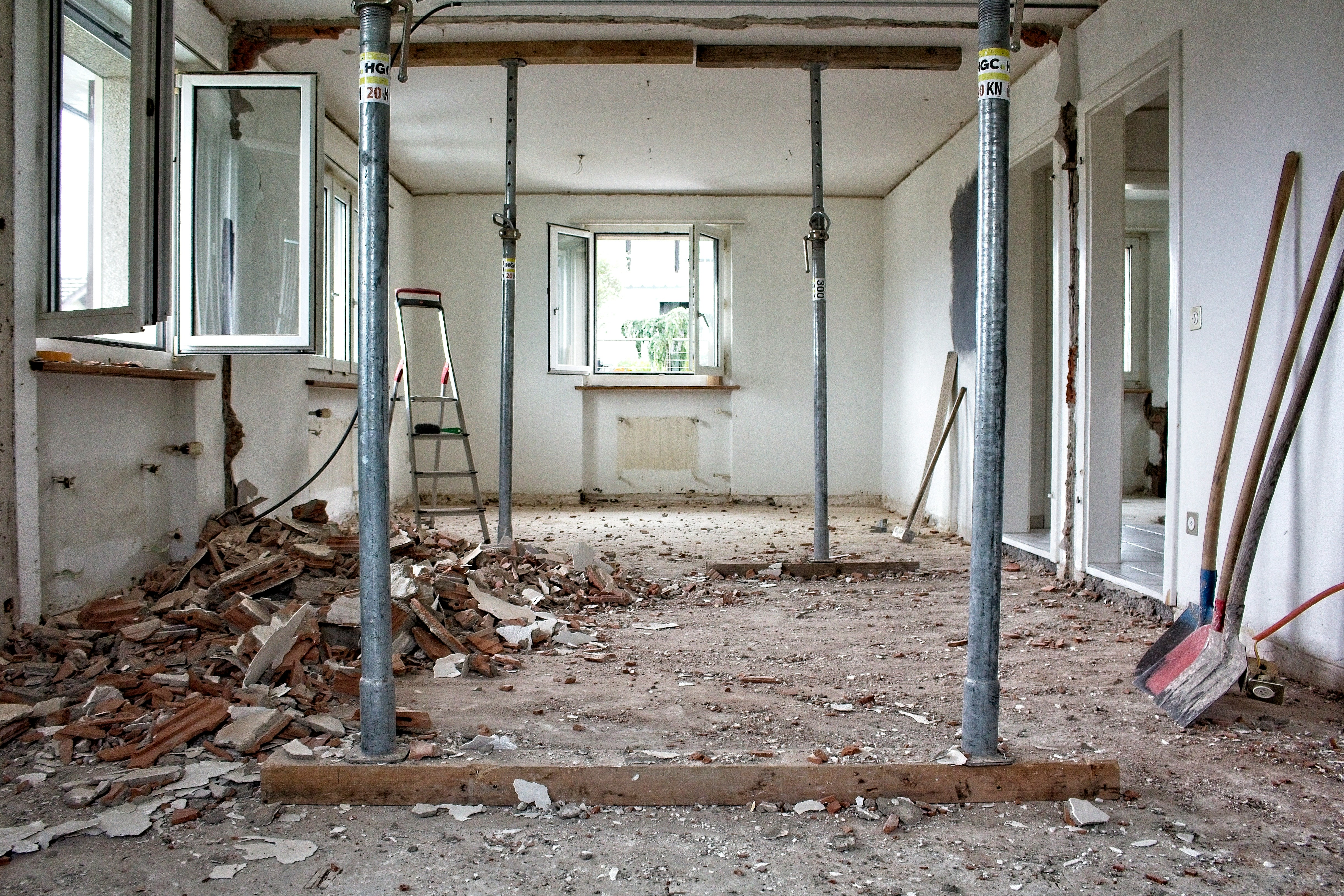
Partial asset disposition under Treas. Reg. 1.168(i)-8 When you replace a building component, you can dispose of the old component's remaining undepreciated basis as a loss—AND begin depreciating the new replacement. This creates two deductions from a single renovation event: a loss deduction on the old asset and accelerated depreciation on the new one. Your CPA makes the election on your tax return; it does not require IRS approval or a Form 3115 filing.
Here's how it works in practice. Say you bought a rental property five years ago for $400K. The original cost seg study identified $12,000 in kitchen cabinets as 5-year property. Those cabinets have been fully depreciated. You now spend $25,000 on a full kitchen remodel that includes new cabinets, countertops, and appliances.
Without the disposition election, you simply start depreciating the $25,000 improvement. With the election, you also dispose of the old kitchen components that still have remaining basis on the building schedule—items like the countertops and plumbing fixtures that were classified as 27.5-year property in the original study (or were never segregated at all). That remaining basis becomes a loss deduction in the current year.
This is particularly valuable for roof replacements. A roof classified as 27.5-year property that was placed in service 10 years ago still has 17.5 years of basis remaining. When you replace it, you can write off that entire remaining balance as a loss—a deduction that would otherwise trickle out over nearly two decades.
Most investors and many CPAs don't realize this election exists. It's one of the highest-value applications of cost segregation for renovated properties, and it's available for any component replacement, not just full renovations. For more on how cost segregation analysis works and what it covers, see our complete overview.
When a Renovation Study Makes Sense
Not every renovation justifies a separate cost seg study. The study cost needs to be justified by the tax benefit it produces. Here's a general framework based on renovation cost for a residential rental property.
| Renovation Cost | Worth a Study? | Why |
|---|---|---|
| $50K+ | Usually yes | Enough basis to produce meaningful acceleration. A $50K renovation with 60% in short-life property yields ~$30K in Year 1 deductions—roughly $11K in tax savings at 37%. |
| $20K–$50K | Maybe | Depends on the component mix. A $30K flooring-and-fixtures project (nearly all 5-year property) is more study-worthy than a $40K structural addition. Run the numbers first. |
| Under $20K | Probably not | Study cost may approach or exceed the incremental tax benefit of acceleration versus standard straight-line depreciation. Consider asking your CPA to classify the components directly. |
For commercial properties and tenant buildouts, the thresholds shift upward. Commercial renovations tend to be larger in scope ($100K+), and the longer default recovery period (39 years) means each reclassified dollar is moving further on the depreciation schedule—making the study even more valuable per dollar studied.
If you're unsure whether your renovation qualifies, the calculator can give you a quick estimate. Enter the renovation cost as the purchase price and see the projected acceleration. If the estimated Year 1 deduction is at least 10–15x the study cost, it's worth proceeding.
Worked Example: $80K Kitchen and Bathroom Remodel
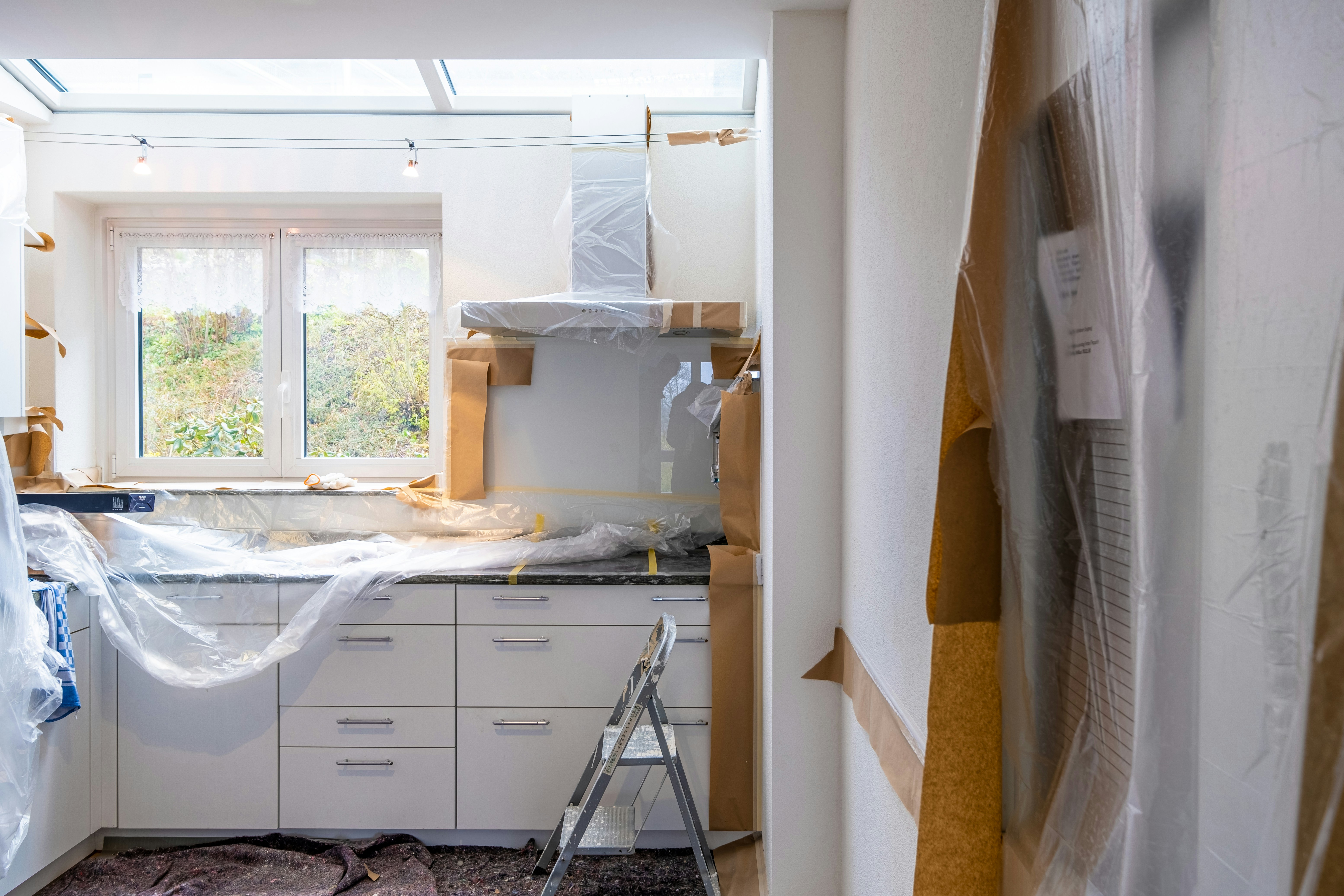
A rental property owner in Austin completes an $80,000 renovation: a full kitchen gut-and-remodel ($55K) and two bathroom renovations ($25K). The property was purchased three years ago and already had a cost seg study on the original acquisition. Here's how a renovation-specific study breaks down the improvement cost.
$80K Kitchen + Bathroom Renovation — Component Breakdown
That's 81% of the renovation cost reclassified into shorter recovery periods—far higher than the 17–18% typical for a whole-building SFR study. The reason: renovations are disproportionately composed of the exact components that cost segregation is designed to identify. There's no foundation or framing diluting the percentages.
Without the study, the entire $80,000 would depreciate over 27.5 years, producing ~$2,909 per year in depreciation. With the study, $65,000 is deducted in Year 1. The acceleration is worth approximately $24,050 in federal tax savings in the first year alone. Compare that to what you'd expect from a whole-building study at typical benchmark rates and the renovation study often produces a higher ROI per dollar of basis studied.
If the investor also elected partial asset disposition on the old kitchen and bathroom components, the total Year 1 deduction would be even higher—adding the remaining undepreciated basis of the replaced components as a loss. On a property purchased three years ago, that could add another $5,000–$10,000 in deductions depending on the original study's classification of those components.
Frequently Asked Questions
Yes. Any capital improvement to a rental or commercial property creates new depreciable basis that can be studied separately. Kitchen remodels, bathroom renovations, additions, new HVAC systems, roof replacements, and landscaping projects all qualify. The study covers only the improvement cost, not the entire building, and can be done regardless of whether a study was performed on the original purchase.
Yes. A cost segregation study on the original purchase only covers the basis from that acquisition. Renovations create new depreciable assets with their own placed-in-service date. A separate study identifies which components qualify for 5-year, 7-year, or 15-year recovery periods under MACRS, allowing you to take bonus depreciation in the year the improvement is completed. The two studies—purchase and renovation—exist independently and don't affect each other.
Partial asset disposition is an IRS-recognized election under Treas. Reg. 1.168(i)-8 that lets you write off the remaining undepreciated basis of a building component when you replace it. If you replace a roof with 15 years of depreciation remaining, you deduct the old roof's remaining basis as a loss in the year of replacement—while simultaneously beginning to depreciate the new roof. It's a double benefit from a single renovation, and it doesn't require IRS approval. Your CPA makes the election on your tax return. For more on how depreciation and recapture interact, see our detailed guide.
Related Articles

Cost Segregation Benchmarks: What to Expect by Property Type
Engineering-based benchmarks across residential and commercial property types. Typical reclassification rates and what drives variation.

Depreciation Recapture and Cost Segregation
What happens to accelerated depreciation when you sell. How recapture works and why the math still favors acceleration.
When Not to Do Cost Segregation
Cost seg isn't right for every property. Here's how to know if the economics work for yours.