Miami's high-price, high-demand STR market ($600K–$1M+ median) pairs well with Florida's zero state income tax. Furnished luxury rentals in South Beach, Wynwood, and Brickell typically accelerate $40K–$120K into Year 1 at the 37% federal bracket. International tourism and seasonal demand sustain premium nightly rates, and pool/patio assets push reclassification rates toward the upper end of the STR range.
Miami Is One of the Hottest Markets for Cost Segregation
You dropped $1.2 million on a South Beach STR. Or $650,000 on a Brickell condo. Or $1.4 million on a Little Havana fourplex. You're paying the mortgage, the insurance, the management fees -- and then the IRS takes its cut on top. Meanwhile, you're depreciating the entire property over 27.5 years like it's 1985.
Miami purchase prices are high. That's the bad news for your bank account but the good news for cost segregation. Higher basis means more dollars get reclassified into shorter depreciation schedules. More reclassified dollars means bigger Year 1 deductions. We're talking $40,000 to $120,000+ in accelerated tax savings that most Miami investors are leaving on the table.
Whether you own a furnished Airbnb in South Beach, a condo investment in Brickell, or a mixed-use building in Wynwood -- and you haven't done a cost seg study -- you're overpaying the IRS. Full stop.
Miami Real Estate Market Snapshot
$600,000
$500,000
$55,000
0.97%
None
Above Average
No state tax, international tourism demand. Top investment areas: South Beach, Brickell, Wynwood, Coconut Grove.
Source: Public assessor data, Zillow, AirDNA estimates. Values are approximate metro-area medians.
Why Miami Properties Generate Big Cost Seg Savings
Several factors make Miami an especially strong market for cost segregation studies. First, purchase prices are high. A 2-bedroom condo in Brickell that sold for $650,000, a furnished South Beach STR that traded at $1.2 million, a fourplex in Little River for $1.4 million—these are real numbers that translate to substantial depreciable bases.
Second, Miami has a heavy concentration of property types that generate high reclassification percentages. Short-term rentals with full furnishing packages, pools, outdoor entertaining areas, and luxury finishes produce more 5-year and 15-year property than a bare-bones long-term rental. Condos with high-end buildouts—custom cabinetry, designer fixtures, upgraded flooring, smart home systems—also carry significant reclassifiable components.
Third, Miami's construction cost index is moderate relative to other major metros. You're not paying San Francisco or Manhattan premiums, which means your component-to-basis ratios tend to be favorable. More of your purchase price maps to depreciable building components rather than inflated land or structural costs.
Key insight for Miami investors: High purchase prices + furnished properties + favorable construction costs = some of the largest cost segregation deductions in the country. A $1M South Beach STR can typically accelerate $50,000–$70,000 in Year 1 deductions.
100% Bonus Depreciation Is Back—and the Timing Is Perfect
The One Big Beautiful Bill Act (OBBBA), signed into law in July 2025, permanently restored 100% bonus depreciation for qualifying property. That means every dollar of 5-year, 7-year, and 15-year property identified in your cost segregation study can be deducted in full in Year 1.
This is a significant shift. In 2023, bonus depreciation had dropped to 80%. In 2024, it was just 60%. Many investors delayed their cost seg studies during that phase-down, waiting for a better window. That window is now wide open.
For Miami investors who purchased properties in 2022, 2023, or 2024 and haven't yet done a cost segregation study, the math is clear: you can file a lookback study now and claim all the missed accelerated depreciation in a single year. Your CPA files a Form 3115 (change in accounting method), and the cumulative catch-up deduction flows into your current-year return. You don't need to amend prior years individually.
How Cost Segregation Works for Miami Condos
Condos are one of Miami's most common investment property types—and many condo investors assume cost segregation doesn't apply to them. That's a misconception worth correcting.
When you buy a condo, you're purchasing an interior unit plus a proportional share of common areas. Our engineering-based analysis applies a structural shell reduction to account for the fact that you don't own the building's roof, foundation, or exterior walls outright. But everything inside your unit—flooring, cabinetry, fixtures, appliances, interior doors, bathroom tile, plumbing fixtures, electrical outlets, HVAC components—is your depreciable property.
For a Miami condo with upgraded finishes (which describes most investment-grade units in Brickell, Edgewater, or South Beach), the reclassifiable percentage is typically 14–22% of the depreciable basis. On a $750,000 condo, that's $84,000–$132,000 in accelerated deductions—all deductible in Year 1 under 100% bonus depreciation.
If you own a condo that you've furnished for short-term rental use, the numbers climb higher. The furniture, kitchenware, linens, electronics, and decor all qualify as 5-year property on top of the building components.
Condo investors take note: You don't need to own a house to benefit from cost segregation. Our engine handles condos with structural shell reductions built in, identifying every reclassifiable component inside your unit.
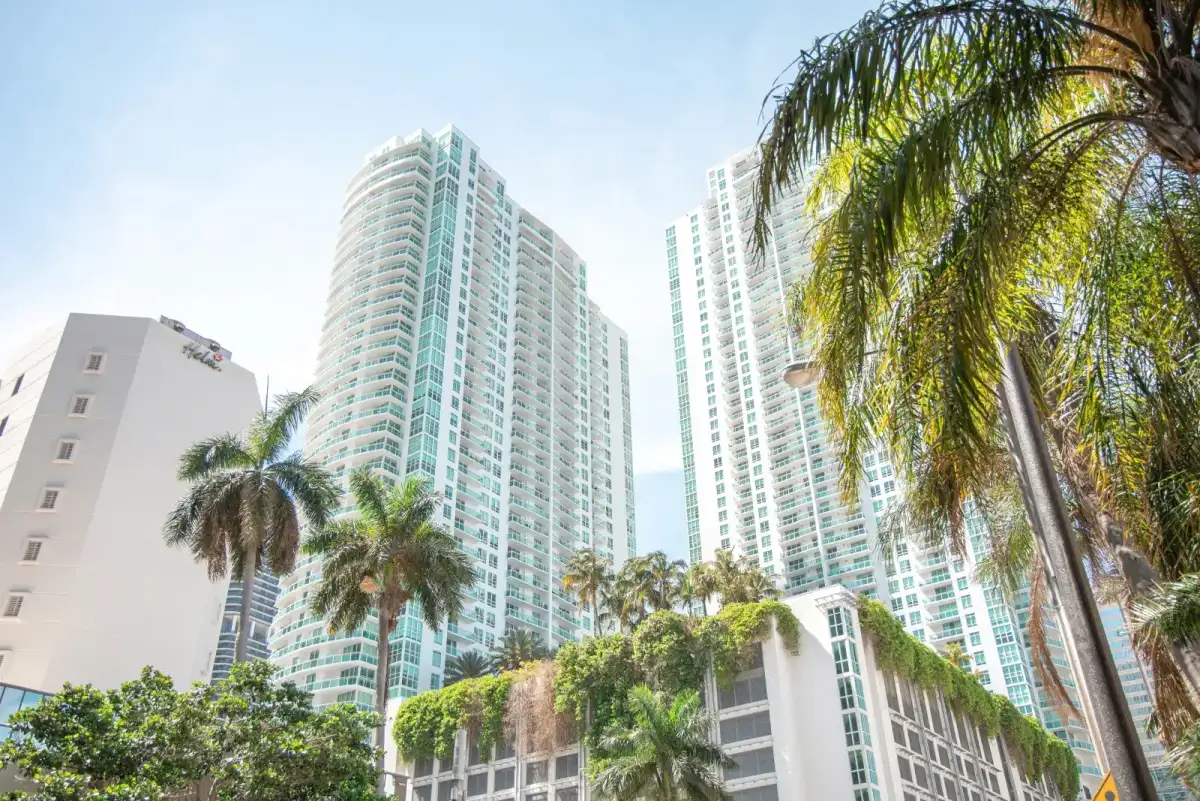
A Real Example: Furnished 1BR STR in South Beach
Let's make this concrete with a property profile we see regularly from Miami investors.
The property: A 1-bedroom, 1-bathroom condo in a South Beach building, purchased in 2023 for $750,000. Fully furnished for Airbnb use with designer furniture, a renovated kitchen, smart TV setup, and balcony furnishings. The owner is a remote tech professional with W-2 income of $320,000.
Without cost segregation: The depreciable basis (purchase price minus land) is approximately $600,000. Under straight-line depreciation over 27.5 years, that's about $21,800 per year. Modest, and spread over nearly three decades.
With cost segregation: An engineering-based study identifies approximately 22% of the depreciable basis as 5-year, 7-year, and 15-year property. For a fully furnished condo STR, this includes cabinetry, flooring, bathroom fixtures, appliances, lighting, the furniture package, and balcony improvements.
| Category | Amount | Year 1 Deduction |
|---|---|---|
| 5-Year Property (furniture, appliances, fixtures, cabinetry) | $99,000 | $99,000 (100% bonus) |
| 15-Year Property (lobby share, balcony improvements, common area land improvements) | $33,000 | $33,000 (100% bonus) |
| 27.5-Year Property (remaining building) | $468,000 | $17,018 (straight-line) |
| Total Year 1 Accelerated Deductions | $132,000 |
At a 37% federal tax rate, that $132,000 in Year 1 deductions translates to approximately $48,800 in estimated tax savings. Compare that to the $21,800 straight-line deduction (worth about $8,066 in tax savings). The cost seg study, starting at $495, generates a return on investment of more than 60x.
A Bigger Example: Fourplex in Little Havana
Miami's small multifamily market—duplexes, triplexes, and fourplexes—is thriving, particularly in neighborhoods like Little Havana, Little River, Allapattah, and Liberty City where investors are acquiring and renovating 2-4 unit buildings.
The property: A fourplex in Little Havana, purchased for $1,400,000 in early 2024. Built in 1965, recently renovated with updated kitchens, bathrooms, flooring, and new HVAC systems in all four units. Two units rented long-term, two operated as STRs.
With cost segregation: The depreciable basis is approximately $1,120,000. An engineering-based study identifies roughly 24% as 5-year and 15-year property—renovated kitchens, bathroom fixtures, flooring, HVAC components, landscaping, paving, fencing, and exterior lighting.
| Category | Amount | Year 1 Deduction |
|---|---|---|
| 5-Year Property (fixtures, appliances, cabinetry, HVAC components, flooring) | $179,200 | $179,200 (100% bonus) |
| 15-Year Property (landscaping, paving, fencing, site improvements) | $89,600 | $89,600 (100% bonus) |
| 27.5-Year Property (remaining building) | $851,200 | $30,953 (straight-line) |
| Total Year 1 Accelerated Deductions | $268,800 |
At a 37% federal tax rate, that's approximately $99,456 in estimated Year 1 tax savings. For a property generating rental income across four units, that kind of tax reduction fundamentally changes the investment's cash-on-cash return.
Miami Neighborhoods and the Cost Seg Math
Miami-Dade County is enormous and diverse. Here's how cost segregation plays out across the investment neighborhoods we see most often:
South Beach / Mid-Beach (33139, 33140): The epicenter of Miami's STR market. Furnished condos and boutique rental buildings dominate. High purchase prices ($600K–$2M+ for condos) combined with full furnishing packages produce strong reclassification percentages. If you're running a licensed STR in South Beach, cost seg should be automatic.
Brickell / Downtown (33130, 33131): Miami's financial district has exploded with condo inventory. Many investors buy units in buildings like Brickell Heights, SLS Brickell, or Rise to rent on platforms or through corporate housing. Even unfurnished condos have meaningful reclassifiable components from upgraded interiors.
Wynwood / Edgewater (33127, 33137): Mixed-use is king here. Investors buying buildings with ground-floor retail and upper-floor residential see strong cost seg results because commercial properties depreciate over 39 years (making acceleration even more valuable) and mixed-use buildings have diverse component categories.
Little Havana / Allapattah (33135, 33142): The small multifamily sweet spot. Duplexes, triplexes, and fourplexes purchased in the $800K–$1.5M range, often renovated. Older construction with renovations tends to produce higher reclassification percentages because the renovation costs themselves contain significant 5-year property.
Coconut Grove / Coral Gables: Single-family luxury rentals and STRs with substantial outdoor improvements—pools, summer kitchens, tropical landscaping, coral rock walls, covered patios. The 15-year land improvement category is often significant for these properties.
Miami Beach (North Beach, Surfside, Bal Harbour): Luxury condo market with some of the highest per-unit values in the state. Even a single condo unit at $1.5M+ generates meaningful cost seg savings.
Florida: No State Income Tax, Maximum Federal Benefit
Florida has no state income tax. Some investors mistakenly think this makes depreciation less valuable. The opposite is true for a practical reason: you're still paying federal income tax at rates up to 37%, and cost segregation directly reduces that federal liability.
And because Florida doesn't have a state income tax, you won't face state-level depreciation recapture when you sell. The recapture calculation is simpler, and the overall tax math is more favorable for Florida investors compared to states like California or New York where state recapture adds another costly layer.
For many Miami investors—especially the wave of high-income relocators from New York, New Jersey, and California—the combination of no state income tax plus aggressive federal depreciation through cost segregation is a powerful one-two punch.
Material Participation: STR Owners Can Offset W-2 Income
If you operate a short-term rental in Miami (average guest stay under 7 days), the IRS treats your rental activity differently from traditional long-term rentals. If you materially participate in managing your STR—and the threshold is just 100 hours per year—your rental losses become non-passive. That means they can offset your W-2 income, consulting fees, business profits, and investment gains.
For a Miami tech worker, finance professional, or business owner earning $250K+ who also manages their own South Beach Airbnb—handling bookings, coordinating cleaners, managing guest communications, making pricing decisions—the 100-hour bar is easy to clear. Keep a simple activity log. That documentation transforms your cost segregation deductions from passive offsets into direct reductions against your highest-taxed income.
Why Automated Cost Seg Is Better Value Than Traditional Firms
Traditional cost segregation firms in Miami charge $5,000 to $15,000 per study. They send an engineer for a site visit, take weeks to produce a report, and charge premiums for the South Florida market. For a $2M+ commercial building, that might make sense. But for the vast majority of Miami investment properties—condos, STRs, duplexes, fourplexes—paying $8,000 for a cost seg study on a $750,000 condo doesn't pencil out.
Modern engineering-based cost segregation uses standardized component databases, property records, and IRS-compliant analysis methods to produce the same reclassification results without a physical site visit. You get a 40+ page CPA-ready PDF report delivered in under 1 hour, starting at $495. The engineering methodology is the same. The IRS compliance is the same. The report is the same format your CPA needs to apply the deductions.
For a $750,000 condo generating $48,800 in estimated tax savings, that's a return on investment of more than 60x. At $795 versus $8,000, the automated approach isn't just comparable—it's the obvious choice for residential and small commercial investors.
Traditional cost seg firms in Miami charge $5,000–$15,000 and take weeks. Our engineering-based studies start at $495 and deliver in under 1 hour. Same IRS-compliant methodology, same CPA-ready format, fraction of the cost.
Related Reading
Who Should Do a Cost Seg Study Right Now?
Not every Miami investor needs a cost seg study, but most do. Here's who benefits the most:
You own a furnished STR. Furnished properties generate the highest reclassification percentages. All that furniture, kitchenware, electronics, and decor is 5-year property. A fully furnished South Beach STR typically sees 20–28% of depreciable basis accelerated.
You own a condo worth $500K+. Even without furniture, Miami condos with upgraded interiors carry significant reclassifiable components. Our engine handles condos with built-in structural shell reductions.
You bought a small multifamily. Duplexes, triplexes, and fourplexes in Little Havana, Allapattah, or Little River—especially renovated ones—produce strong cost seg results because renovation costs contain heavy 5-year property.
You own mixed-use property. Wynwood and Little Havana mixed-use buildings with retail below and residential above depreciate over different recovery periods, and cost seg maximizes the accelerated portion of both.
You have high W-2 or 1099 income. Combined with material participation in your STR, cost seg deductions can offset your earned income. The higher your tax bracket, the more valuable each dollar of deduction becomes.
You've owned for 2+ years and never done a study. A lookback study lets you claim all the missed accelerated depreciation in a single year via Form 3115. The cumulative catch-up can be substantial.
How to Get Started
The process is straightforward. You provide your property details—address, purchase price, property type, year built, and any significant improvements or furnishings. We generate an engineering-based cost segregation report that breaks your property into its component depreciation categories with IRS-compliant schedules. You hand the 40+ page report to your CPA, who applies it to your tax return (or files a Form 3115 for a lookback study).
If you're a Miami investor sitting on a condo, STR, duplex, or mixed-use building and you haven't done a cost segregation study, you're almost certainly overpaying on federal taxes. Purchase prices in this market are high enough that the accelerated deductions are meaningful. Bonus depreciation is at 100%. The window is open.
Cost Seg Smart is the modern cost segregation company. Reports delivered in under an hour -- not six weeks. Starting at $495, not $5,000. You spent seven figures on a Miami property but won't spend $795 to save $40,000-$120,000 in taxes? This isn't just for people who can afford five-figure studies. Everyone who owns rental property in Miami should be doing this. The math works. The timing is right. You can get it done right now.
See the full Miami cost segregation breakdown with calculator and sample report on our Miami page.
How Much Can You Save in Year One?
Enter your email to see your estimate
Frequently Asked Questions
How much does a cost segregation study cost in Miami?
Cost Seg Smart studies start at $495 for properties under $300K and $795 for properties up to $1M — the same price nationwide. There are no travel fees or site visit charges because the IRS does not require a physical inspection. Traditional firms in the Miami market typically charge $3,000 to $10,000 for the same analysis.
What's the typical accelerated depreciation for a Miami rental property?
Miami investment properties typically reclassify 20-35% of depreciable basis into 5-year and 15-year MACRS categories through cost segregation. For a $800,000 rental property, that translates to roughly $59,000 in Year 1 tax savings at the 37% bracket. Short-term rentals tend toward the higher end of this range due to furniture, fixtures, and equipment.
Does Florida conform to federal bonus depreciation rules?
Florida has no state income tax, so cost segregation savings are entirely at the federal level. This simplifies the analysis — there are no state-level depreciation adjustments to track.
How fast can I get a cost segregation study for my Miami property?
Under one hour from order to delivery. Cost Seg Smart reports are generated using the same RSMeans construction cost data and IRS classification methodology as traditional firms — but delivered in minutes instead of weeks. No scheduling, no site visit, no waiting 4-8 weeks. Your CPA-ready report with MACRS depreciation schedules is emailed immediately after ordering.
More from the Blog

Cost Segregation for Airbnb Properties: A Complete Guide
Learn how Airbnb and short-term rental investors use cost segregation to accelerate $20K-$80K in depreciation deductions.

Austin STR Investors: 100% Bonus Depreciation Is Back
For Austin investors who bought at the 2022 peak, cost segregation on your original purchase price could recover $30K-$80K in Year 1 deductions.
Next Steps
- Run your estimate — free calculator, 30 seconds
- See real examples — 50+ breakdowns by property type
- Understand audit risk — what the IRS actually checks
- Multifamily guide — apartments, duplexes, and small multifamily