Denver's strong appreciation, high rental demand, and proximity to mountain recreation make it a top-tier market for SFR investors using cost segregation.
| MACRS Class | Amount | % of Accelerated | Bonus Eligible |
|---|---|---|---|
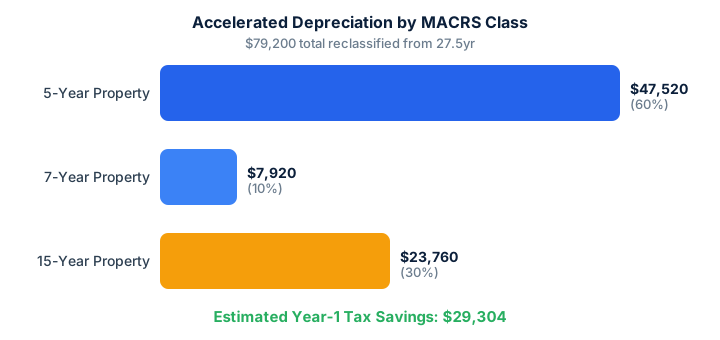
| 5-Year Property | $47,520 | 60% | Yes — 100% |
| 7-Year Property | $7,920 | 10% | Yes — 100% |
| 15-Year Property | $23,760 | 30% | Yes — 100% |
| 27.5yr Property | $360,800 | 82% | No — standard schedule |
| Total Depreciable Basis | $440,000 | 100% | — |
| Method | Year-1 Deduction | Difference |
|---|---|---|
| Standard Straight-Line (27.5yr) | $16,000 | — |
| With Cost Segregation + Bonus | $79,200 | +$63,200 |
Denver's rental market benefits from a steady stream of transplants attracted by the outdoor lifestyle, tech job growth, and a vibrant downtown scene. The metro area — including Lakewood, Aurora, Arvada, and Thornton — offers SFR rentals in the $450K-$650K range that command strong monthly rents. The combination of appreciation and cash flow makes Denver a buy-and-hold investor's dream.
At $550K, a Denver rental property generates approximately $79K in accelerated depreciation through cost segregation, producing about $29K in first-year tax savings. Colorado's flat 4.4% state income tax adds another $3,500 in state tax savings on top of the federal benefit. The study costs $795 — a total return of over 40x.
Denver's newer construction stock (many investor-target homes were built 2010-2023) tends to have detailed component-level cost data available from builders and assessors. This actually improves the precision of cost segregation analysis — the more granular the construction data, the more confidently each component can be classified into its correct MACRS recovery period. For investors buying newer homes in the suburbs, this translates to higher confidence in the accelerated depreciation amounts.
A cost segregation study is an engineering-based analysis that reclassifies components of your property into shorter IRS depreciation categories (5, 7, and 15 years) instead of the default 27.5 or 39 years. This accelerates your depreciation deductions, reducing your tax bill in the early years of ownership.
For long-term rentals, depreciation deductions are generally passive and can only offset passive income. However, there are two key exceptions: (1) if your AGI is under $150K, you can deduct up to $25K in passive losses against ordinary income, and (2) if you qualify as a Real Estate Professional (750+ hours/year in real estate), all rental income becomes non-passive. STR owners who materially participate can deduct against W-2 income regardless.
Our studies are delivered in 3-5 business days. You provide the property address, purchase price, and closing date — we handle everything else using assessor records, satellite imagery, and construction cost databases. No site visit or tenant disruption required.
Get a professional, IRS-defensible cost segregation study delivered in 3-5 business days. Starting at $795.
Order Your Study →Related Examples