San Diego's year-round coastal tourism, high property values, and strict STR regulations make cost segregation essential for maximizing after-tax returns.
| MACRS Class | Amount | % of Accelerated | Bonus Eligible |
|---|---|---|---|
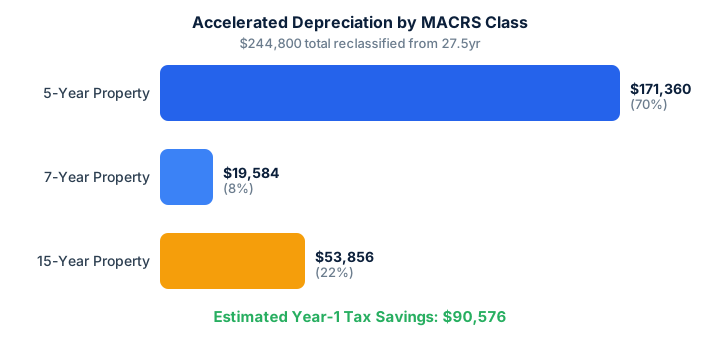
| 5-Year Property | $171,360 | 70% | Yes — 100% |
| 7-Year Property | $19,584 | 8% | Yes — 100% |
| 15-Year Property | $53,856 | 22% | Yes — 100% |
| 27.5yr Property | $475,200 | 66% | No — standard schedule |
| Total Depreciable Basis | $720,000 | 100% | — |
| Method | Year-1 Deduction | Difference |
|---|---|---|
| Standard Straight-Line (27.5yr) | $26,182 | — |
| With Cost Segregation + Bonus | $244,800 | +$218,618 |
San Diego's Airbnb market commands premium nightly rates driven by year-round sunshine, beach access, and a constant flow of tourists to the Zoo, Gaslamp Quarter, La Jolla, and the convention center. Properties in Mission Beach, Pacific Beach, Ocean Beach, and North Park routinely generate $80K-$150K in annual rental revenue — but they also come with high purchase prices that make tax optimization critical.
At a typical $900K purchase price, cost segregation on a San Diego Airbnb reclassifies approximately $245K into shorter MACRS classes, generating about $91K in first-year tax savings. California's high state income tax rate (up to 13.3%) means the combined federal and state benefit of accelerated depreciation is among the highest in the country — though the state conformity rules require careful handling by your CPA.
San Diego's regulations have tightened STR permits in many neighborhoods, which has concentrated the market and increased property values in zones where short-term rentals remain allowed. This scarcity premium means investors are paying more — but also earning more per night. Cost segregation ensures that the higher purchase price translates into proportionally higher tax benefits, preserving the investment economics even as prices rise.
| Price | Accelerated | Tax Savings | Study Cost | ROI |
|---|---|---|---|---|
| $300K | $81,600 | $30,192 | $795 | 38x |
| $500K | $136,000 | $50,320 | $795 | 63x |
| $750K | $204,000 | $75,480 | $795 | 95x |
| $1M | $272,000 | $100,640 | $1,195 | 84x |
| $400K | $108,800 | $40,256 | $795 | 51x |
| $600K | $163,200 | $60,384 | $795 | 76x |
| $1.5M | $408,000 | $150,960 | $1,195 | 126x |
A cost segregation study is an engineering-based analysis that reclassifies components of your property into shorter IRS depreciation categories (5, 7, and 15 years) instead of the default 27.5 or 39 years. This accelerates your depreciation deductions, reducing your tax bill in the early years of ownership.
Short-term rentals are typically furnished with furniture, appliances, electronics, linens, kitchenware, and décor — all of which qualify as 5-year personal property under MACRS. This FF&E (furniture, fixtures, and equipment) often represents 15-20% of the property's depreciable basis, significantly increasing the accelerated depreciation amount compared to unfurnished long-term rentals.
When you sell a property, the IRS recaptures accelerated depreciation at a maximum rate of 25%. However, the time value of money strongly favors taking the deduction now: $50K in tax savings today is worth far more than paying $12,500 in recapture tax years later. Additionally, a 1031 exchange can defer recapture indefinitely.
Get a professional, IRS-defensible cost segregation study delivered in 3-5 business days. Starting at $795.
Order Your Study →Related Examples