Miami's combination of South Beach condos, snowbird seasonal demand, and high construction costs creates a distinctive cost segregation profile.
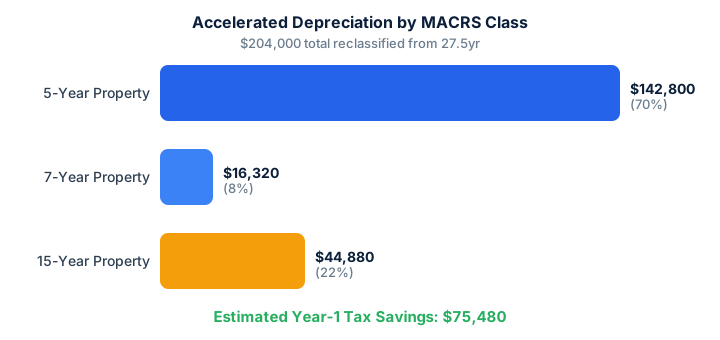
| MACRS Class | Amount | % of Accelerated | Bonus Eligible |
|---|---|---|---|
| 5-Year Property | $142,800 | 70% | Yes — 100% |
| 7-Year Property | $16,320 | 8% | Yes — 100% |
| 15-Year Property | $44,880 | 22% | Yes — 100% |
| 27.5yr Property | $396,000 | 66% | No — standard schedule |
| Total Depreciable Basis | $600,000 | 100% | — |
| Method | Year-1 Deduction | Difference |
|---|---|---|
| Standard Straight-Line (27.5yr) | $21,818 | — |
| With Cost Segregation + Bonus | $204,000 | +$182,182 |
Miami's Airbnb market runs on two engines: the year-round tourist draw of South Beach, Wynwood, and Brickell, and the seasonal snowbird migration that fills longer-term rentals from November through April. Properties in both categories benefit from cost segregation, but the dynamics are different. Beach-adjacent condos tend to have lower land-to-building ratios (good for cost seg), while single-family STRs in neighborhoods like Coconut Grove or Coral Gables carry higher land values.
Construction costs in South Florida are among the highest in the country, which actually benefits cost segregation analysis. Higher construction costs mean a higher depreciable basis relative to land value — and more dollar value in the reclassifiable building components. A $750K Miami Airbnb typically generates $204K+ in accelerated depreciation.
Condo investors should note: cost segregation applies to your unit's allocated share of the building's depreciable components. Common-area improvements, building-wide systems, and your unit's interior buildout all qualify. Many Miami condo STR investors overlook this, assuming their condo association dues cover all building depreciation. They don't — your individual study captures component-level detail that standard depreciation misses entirely.
| Price | Accelerated | Tax Savings | Study Cost | ROI |
|---|---|---|---|---|
| $300K | $81,600 | $30,192 | $795 | 38x |
| $500K | $136,000 | $50,320 | $795 | 63x |
| $750K | $204,000 | $75,480 | $795 | 95x |
| $1M | $272,000 | $100,640 | $1,195 | 84x |
| $400K | $108,800 | $40,256 | $795 | 51x |
| $600K | $163,200 | $60,384 | $795 | 76x |
| $1.5M | $408,000 | $150,960 | $1,195 | 126x |
| Property Type | Accelerated | Tax Savings | Study Cost | ROI |
|---|---|---|---|---|
| Airbnb / Short-Term Rental | $204,000 | $75,480 | $795 | 95x |
| Rental Property | $108,000 | $39,960 | $795 | 50x |
A cost segregation study is an engineering-based analysis that reclassifies components of your property into shorter IRS depreciation categories (5, 7, and 15 years) instead of the default 27.5 or 39 years. This accelerates your depreciation deductions, reducing your tax bill in the early years of ownership.
Short-term rentals are typically furnished with furniture, appliances, electronics, linens, kitchenware, and décor — all of which qualify as 5-year personal property under MACRS. This FF&E (furniture, fixtures, and equipment) often represents 15-20% of the property's depreciable basis, significantly increasing the accelerated depreciation amount compared to unfurnished long-term rentals.
Absolutely. Cost segregation applies to your condo unit's allocated share of the building's depreciable components, plus your unit's individual buildout (flooring, fixtures, cabinetry, appliances). Many Miami condo STR investors overlook this, assuming standard depreciation captures everything. It doesn't — a proper study identifies significantly more in reclassifiable components.
Get a professional, IRS-defensible cost segregation study delivered in 3-5 business days. Starting at $795.
Order Your Study →Related Examples