What Happens If You Don't Materially Participate?
Suspended on Form 8582, not lost. The losses release at sale or when passive income shows up — but the Year 1 W-2 offset disappears. The math, with caveats.

Suspended on Form 8582, not lost. The losses release at sale or when passive income shows up — but the Year 1 W-2 offset disappears. The math, with caveats.
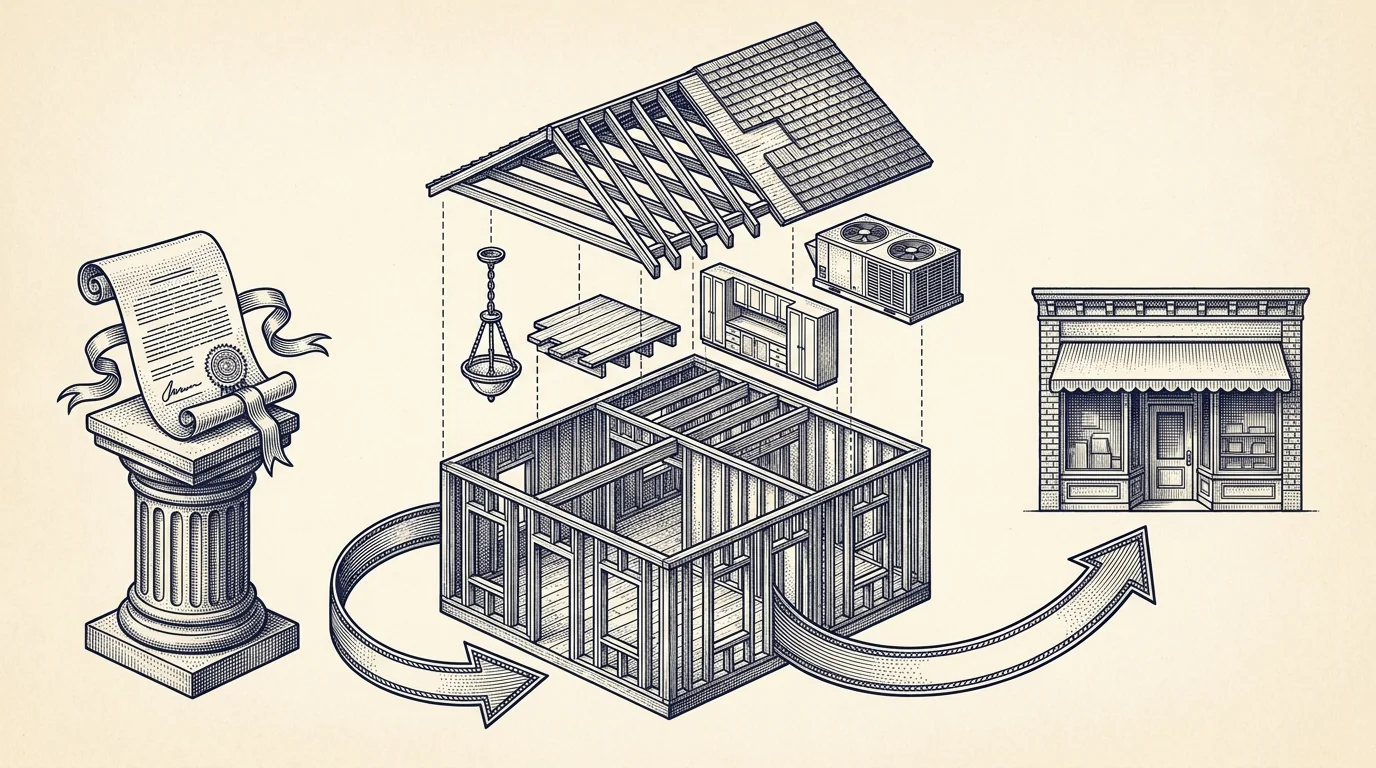
If you don’t materially participate, cost segregation losses are suspended, not lost. Under IRC §469 passive activity rules, accelerated depreciation on a long-term rental creates a passive loss that can only offset passive income (other rentals, K-1s). Excess losses carry forward indefinitely and release fully when you sell the property. Meanwhile, you still benefit from reduced current rental income tax and an eventual deferred windfall at sale.
Most cost segregation advice assumes you either qualify as a real estate professional or run a short-term rental where you materially participate. If you’re a W-2 earner with a long-term rental you don’t actively manage, the math you’ve read about doesn’t apply to you — at least not in the year you do the study.
short-term rental cost segregation → The short answer
If you don’t materially participate in your rental activity and you’re not a real estate professional, the losses generated by cost segregation become passive under IRC Section 469. Passive losses can only offset passive income. Any excess gets “suspended” — carried forward indefinitely on IRS Form 8582 — until you have passive income, start materially participating, or fully dispose of the property.
That sounds bad. Sometimes it is. Sometimes it isn’t. The rest of this article explains when suspended losses are a problem worth avoiding and when they’re just a timing issue that resolves itself.
Why Passive Activity Rules Exist
The passive activity loss rules go back to the 1986 Tax Reform Act. Congress was tired of high-income earners creating artificial losses through real estate partnerships and using them to offset salary and investment income. IRC Section 469 was the response.
The rule, boiled down: losses from “passive activities” can only offset income from other passive activities. They cannot offset W-2 wages, self-employment income, interest, dividends, or capital gains. A rental activity is passive by default, regardless of how involved you are — unless you qualify as a real estate professional under IRC Section 469(c)(7) or the 7-day average rental period rule applies.
The tax code treats this as a feature, not a bug. The whole point is to prevent real estate losses from sheltering active income unless the owner is genuinely participating as a trade or business. When you do a cost segregation study but don’t materially participate, the losses are still real — they just don’t reduce your current tax bill.
The Seven Material Participation Tests (Briefly)
Under Treasury Regulation 1.469-5T, the IRS provides seven tests for material participation. You only need to meet one.
- 500-hour test — You participated in the activity for more than 500 hours during the tax year.
- Substantially all test — Your participation constituted substantially all of the participation by anyone in the activity.
- More than 100 hours and no one else more — You participated more than 100 hours AND no individual (including non-owners like a cleaner or manager) participated more than you.
- Significant participation activity — The activity was a “significant participation activity” (100+ hours) and your combined participation in all SPAs exceeded 500 hours.
- Five of ten years — You materially participated in the activity in any 5 of the prior 10 tax years.
- Personal service activity — The activity is a personal service activity and you materially participated for any 3 prior years.
- Facts and circumstances — Based on all facts, you participated on a regular, continuous, and substantial basis (must be at least 100 hours).
For rental real estate investors with day jobs, Tests 1 and 3 are the practical options. If you own a single rental and hire a cleaner, the cleaner probably works more hours on the property than you do — which means Test 3 fails. For a full treatment of these tests, see our guide on how to meet material participation, or our real estate professional status guide.
What “Suspended” Actually Means Mechanically
If your rental generates a $60,000 loss this year and you don’t have $60,000 of passive income from other activities, the excess can’t be deducted on your current return. It goes on IRS Form 8582 and carries forward.
Form 8582 tracks your passive activity losses year by year. Each year the IRS asks: do you have any passive income from any source that can absorb the suspended loss? If yes, it gets applied. If no, it rolls forward again.
Carryforward has no expiration. The loss doesn’t disappear after 10 years or 20. It stays on your return until it’s used. The IRS doesn’t “forgive” suspended losses — they just wait in line.
What this looks like in practice: you do cost seg on a $500K rental in Year 1, generate a $60K paper loss, and your W-2 is unaffected. You don’t save any federal tax that year from the study. The $60K suspended loss sits on Form 8582. In Year 2, the rental generates a $5K paper loss again plus $3K of actual taxable rental income — the $5K new loss adds to the suspension, and the $3K of passive income gets absorbed by the suspended pool. And so on.
How Cost Seg Amplifies the Problem If You’re Not Participating
Without cost segregation, a typical long-term rental generates a small paper loss (maybe $3–$10K from normal depreciation). That usually gets absorbed by the rental’s own income, so the passive loss trap is quiet.
Cost seg changes the scale of the loss by 10x. A $500K SFR that would have $5K of depreciation now has $50–$80K in Year 1 deductions after reclassification and 100% bonus depreciation. That pushes you well past any rental income and generates a large suspended loss if you’re not participating.
Here’s what that looks like with actual numbers: Illustrative Scenario: Anna in Austin, $600K Duplex, 35% Bracket Purchase price$600,000 Land allocation (20%)$120,000 Depreciable basis$480,000 Accelerated via cost seg (22%)$105,600 Straight-line Year 1 depreciation on remaining basis$13,600 Total Year 1 depreciation$119,200 Rental income Year 1 (net of expenses, pre-depreciation)$24,000 Paper loss generated$95,200
Anna has a W-2 job and hires a property manager. She does not materially participate. Her W-2 is $220,000.
If she’s not a real estate professional and the property is a long-term rental: the $95,200 paper loss is passive. It cannot offset her W-2 income. She has no other passive income. The $95,200 gets suspended on Form 8582. Her federal tax bill in Year 1 is unchanged by cost seg.
If she materially participated (or the property were a short-term rental and she met material participation tests there): the $95,200 would offset her W-2 income directly. At 35%, that’s about $33,000 in federal tax savings in Year 1.
Same study. Same numbers. Different tax outcome because of one variable: participation. This is why the W-2 offset strategy for short-term rentals is so much more useful than doing cost seg on a passively-held long-term rental — not because the study is different, but because the loss classification is different.

When Suspended Losses Become Usable
Suspended losses don’t disappear. They wait. And they become usable in three specific situations, each governed by different code sections.
Scenario 1: You Start Materially Participating in a Future Year
Under IRC Section 469(b), if you change your participation level in a future tax year, the character of the activity changes going forward. Past-year suspended losses from when it was passive stay suspended — they don’t retroactively become non-passive. But if the activity’s current income or loss is non-passive (because you materially participate), that income or loss is treated accordingly.
The key nuance: suspended passive losses can still be released when passive income materializes in a future year, even after you change to material participation. The character doesn’t retroactively apply, but the pool of suspended losses is still there waiting for any passive offset.
Scenario 2: You Generate Passive Income from Another Activity
If you later acquire a second rental that generates passive income — for example, a cash-flowing long-term rental that doesn’t need cost seg — that passive income absorbs the suspended losses from the first property dollar for dollar.
Some investors intentionally buy a second rental specifically to create passive income that unlocks prior-year suspended losses. This is a legitimate strategy, but the second property has to be a real rental with real income, not a paper transaction.
Scenario 3: You Dispose of the Property in a Taxable Transaction
This is the one most investors don’t realize. Under IRC Section 469(g), when you fully dispose of a passive activity in a fully taxable transaction to an unrelated party, all remaining suspended losses from that activity become deductible in the year of sale — against any type of income, not just passive.
This is a big deal. The $95,200 suspended loss from Anna’s duplex doesn’t stay trapped forever. When she eventually sells the property in a regular taxable sale, that suspended loss releases and offsets the gain on sale, plus any remaining balance offsets her other income (W-2, capital gains, whatever).
Important caveats on this:
- Gifting the property or transferring at death doesn’t count. The suspended losses are lost if you die holding the property (they don’t transfer to heirs).
- A 1031 exchange does NOT trigger release of suspended losses. The losses continue to suspend against the replacement property.
- Installment sales trigger partial release each year as payments are received.
- Sales to related parties don’t qualify for the full disposition release rule.
The full-disposition rule means suspended losses are not money lost forever. They’re money deferred. The worst case on a typical sale is you recover them when you sell. The worst case on never selling is they transfer with recapture rules into your estate — worth discussing with your CPA before assuming a study is wasted.
What to Do If You’ve Already Taken a Study and Can’t Use the Losses
A few scenarios show up regularly. Each has a different answer and your CPA is the right person to confirm which applies to you.
If you took the study recently and the return hasn’t been filed yet: your CPA may consider whether the election under Section 168(k)(7) to opt out of bonus depreciation makes sense — or whether electing out of partial categories could smooth the loss. This is highly fact-specific. Don’t assume opting out is the right answer — most of the time the full deduction plus suspension is better than a smaller deduction plus immediate usability. Your CPA runs the numbers.
If the return was already filed and the loss is now suspended: nothing to “fix.” The loss sits on Form 8582 and carries forward. The cost seg study still did its job — it just did it on a deferred timeline. Year 1 federal savings are zero; later-year savings materialize when the trigger events happen.
If you’re considering a lookback study (Form 3115) on an older property and you don’t materially participate: run the numbers carefully before ordering. The large catch-up deduction would become a suspended passive loss. You’d still benefit when you sell, but if sale is more than 5-10 years out and you have no other passive income, the deferral value drops. See our lookback study guide for the usual math.
If you have a long-term rental and a short-term rental: the STR is often the better candidate for cost seg because material participation is easier to establish and the losses are typically non-passive. Doing cost seg on the STR first, using those losses against W-2 income, and doing the long-term rental’s study later (when you have passive income or are ready to sell) is often the better sequence.
If you want the losses usable and you can adjust your participation: some investors move toward becoming a real estate professional under IRC Section 469(c)(7) — requires 750+ hours in real property trades/businesses AND more than half your personal services in real estate. This is a real commitment, not a paper designation. The consequences of claiming REPS without actually qualifying are significant.
Free preliminary depreciation estimate — property summary, basis allocation, five-year schedule. We do the work; you get the PDF.
See my estimated Year-1 savings →Frequently Asked Questions
Can I use cost segregation if I’m not a real estate professional?
Yes, you can do the study and claim the accelerated depreciation on your return. But if you don’t materially participate and you’re not a real estate professional, the resulting losses are passive and usually get suspended on Form 8582. The study still has value — the losses release later when you have passive income or dispose of the property — but you won’t see federal tax savings in Year 1.
What is a suspended passive loss?
A suspended passive loss is an excess passive activity loss that couldn’t be deducted in the current year because you didn’t have passive income to absorb it. It carries forward indefinitely on Form 8582 until you have passive income, change your participation status, or fully dispose of the property.
How long do suspended losses carry forward?
Indefinitely. Under IRC Section 469, there is no expiration date. The losses stay on your return year after year until they’re used. However, they’re lost if you die holding the property — they don’t transfer to heirs.
Does a short-term rental count as material participation?
Ownership itself doesn’t count. You still need to meet one of the material participation tests. But short-term rentals benefit from a separate exception: when the average guest stay is 7 days or fewer (Treasury Reg 1.469-1T(e)(3)(ii)), the activity isn’t classified as a “rental activity” for passive loss purposes. If you also materially participate, the losses are non-passive and can offset W-2 income. See our STR tax loophole guide for a full walkthrough.
Can my spouse’s participation count toward material participation?
Yes. Under IRC Section 469(h)(5), a spouse’s hours count toward yours, even if the spouse doesn’t have an ownership interest. This is how many couples structure cost seg strategies when one spouse has a high W-2 and the other can commit the hours.
Related Reading
- Can Cost Seg Offset W-2 Income? What Actually Works (2026)
- Do I Need REPS for Cost Segregation?
- The STR Tax Loophole Explained
- Selling After Cost Segregation: Recapture Math
Check if Cost Seg Pencils Before You Order
Our calculator uses your property type, purchase price, and tax bracket. Two minutes. No email required. Run Your Numbers → · Order your study →
Frequently asked
Can I use cost segregation if I'm not a real estate professional?
Yes, you can do the study and claim the accelerated depreciation on your return. But if you don't materially participate and you're not a real estate professional, the resulting losses are passive and usually get suspended on Form 8582. The study still has value — the losses release later when you have passive income or dispose of the property — but you won't see federal tax savings in Year 1.
What is a suspended passive loss?
A suspended passive loss is an excess passive activity loss that couldn't be deducted in the current year because you didn't have passive income to absorb it. It carries forward indefinitely on Form 8582 until you have passive income, change your participation status, or fully dispose of the property.
How long do suspended losses carry forward?
Indefinitely. Under IRC Section 469, there is no expiration date. The losses stay on your return year after year until they're used. However, they're lost if you die holding the property — they don't transfer to heirs.
Does a short-term rental count as material participation?
Ownership itself doesn't count. You still need to meet one of the material participation tests. But short-term rentals benefit from a separate exception: when the average guest stay is 7 days or fewer (Treasury Reg 1.469-1T(e)(3)(ii)), the activity isn't classified as a 'rental activity' for passive loss purposes. If you also materially participate, the losses are non-passive and can offset W-2 income.
Can my spouse's participation count toward material participation?
Yes. Under IRC Section 469(h)(5), a spouse's hours count toward yours, even if the spouse doesn't have an ownership interest. This is how many couples structure cost seg strategies when one spouse has a high W-2 and the other can commit the hours.