Why Phoenix Is One of the Best Cost Segregation Markets in the Country
You bought a $500,000 rental in Mesa. Or a $900,000 Scottsdale STR. Or a fourplex in Tempe. You're collecting rent, paying your mortgage, and depreciating the whole thing over 27.5 years on autopilot. Meanwhile, you're leaving $15,000 to $60,000 in Year 1 tax savings on the table because nobody told you about cost segregation.
Phoenix has something most major metros don't: an enormous supply of newer construction loaded with modern building systems -- upgraded HVAC, energy-efficient windows, smart home wiring, designer fixtures -- all of which qualify for accelerated depreciation. Combine that with Scottsdale's explosive STR market and 100% bonus depreciation being back, and you have a market where the cost seg math is exceptionally compelling.
A $795 study on a $500K property can unlock $15,000-$25,000 in Year 1 tax savings. That's the kind of ROI that makes the decision obvious.
Key insight for Phoenix investors: With typical purchase prices between $400K and $1.2M, newer construction, and favorable cost indices, Phoenix-area properties generate some of the strongest cost-seg ROI in the country. A $795 study on a $500K property can unlock $15K-$25K in Year 1 tax savings.
The Scottsdale STR Boom: Snowbirds, Bachelorettes, and Tax Deductions
Scottsdale's short-term rental market is a category of its own. From October through April, the city fills with snowbirds fleeing Midwest and Northeast winters. Spring training brings baseball fans. Year-round, Old Town Scottsdale draws bachelorette parties, golf trips, and corporate retreats. The result is one of the highest-performing STR markets in the Sun Belt, with premium properties in neighborhoods like Old Town, McCormick Ranch, DC Ranch, and the Scottsdale Waterfront commanding $300-$600+ per night during peak season.
For investors, this STR revenue is taxable. And this is where cost segregation becomes critical. A fully furnished Scottsdale vacation rental purchased for $850,000 generates a substantial depreciable basis. Without a cost seg study, you're limited to roughly $24,000 per year in straight-line depreciation over 27.5 years. With a study, you can accelerate 20-28% of that basis into Year 1 deductions—pulling forward $40,000 to $60,000 or more in deductions that directly offset your taxable rental income (and potentially your W-2 income, if you materially participate).
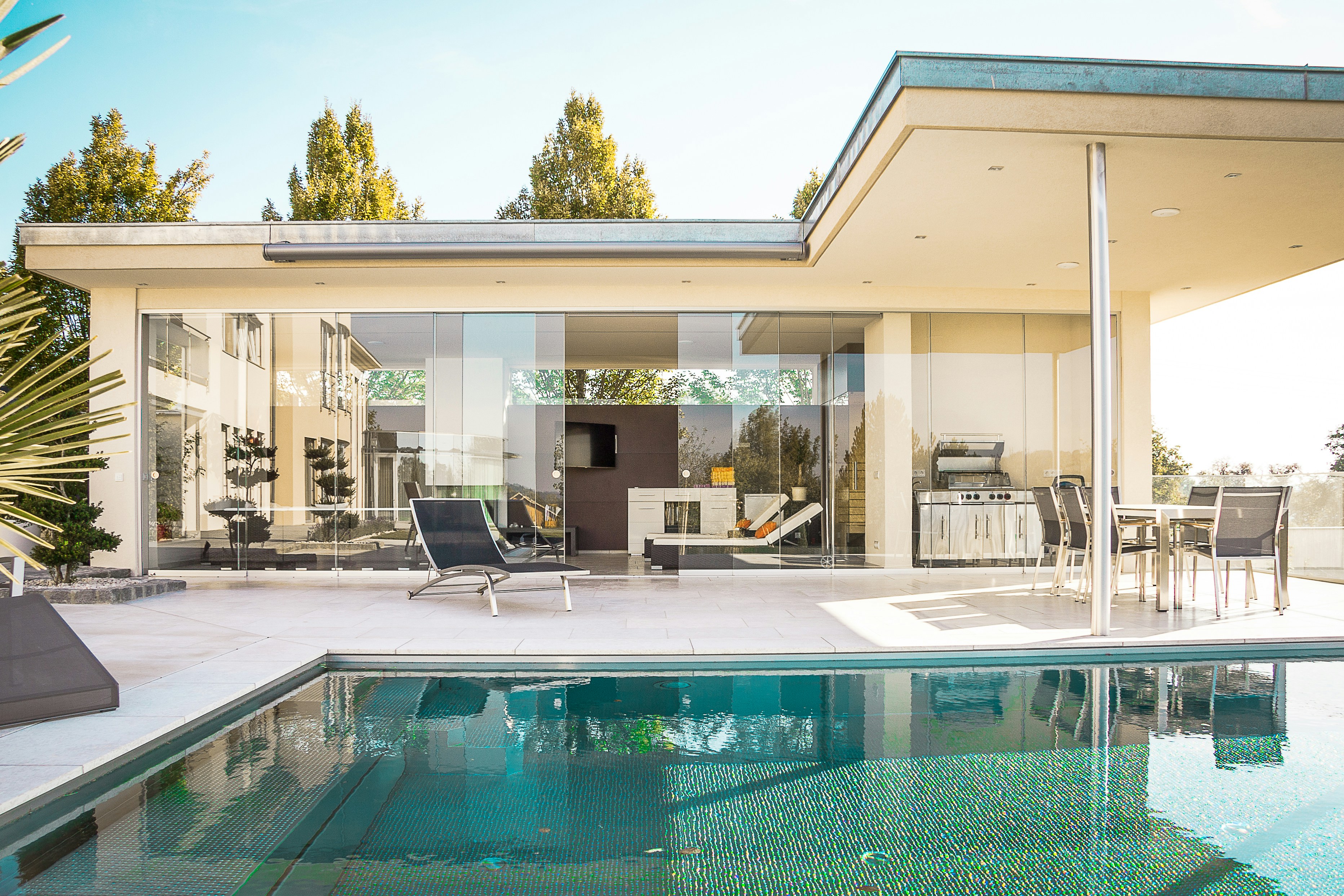
Scottsdale STR properties are also ideal cost seg candidates because of how they're built and furnished. Pools, hot tubs, outdoor kitchens, desert landscaping, built-in BBQs, fire pits, putting greens, casita conversions—these are all common features in Scottsdale vacation rentals, and every one of them is reclassifiable to a shorter depreciation schedule (5-year or 15-year property instead of 27.5-year).
100% Bonus Depreciation Is Back—and the Timing Is Perfect for Phoenix
The One Big Beautiful Bill Act, signed in July 2025, permanently restored 100% bonus depreciation for qualifying property. That means every dollar of 5-year, 7-year, and 15-year property identified in your cost segregation study can be deducted in full in Year 1. No phase-down. No waiting.
To put that in context: in 2023, bonus depreciation was only 80%. In 2024, it dropped to 60%. Many Phoenix investors wisely delayed their cost seg studies during that phase-down period. Now that we're back to 100%, the Year 1 deduction from a cost segregation study is at its maximum possible value.
This matters especially in Phoenix because the market's explosive appreciation from 2020 through early 2022 means many investors are sitting on properties with high cost bases that they haven't yet fully leveraged for tax purposes. If you bought a Chandler rental for $480K in 2021, a Gilbert townhome for $520K in 2022, or a Scottsdale STR for $900K in 2023—your depreciable basis is locked at that purchase price, regardless of where the market has moved since. Now is the time to accelerate those deductions.
A Real Example: 4BR SFR Rental in Mesa
Let's walk through a scenario that reflects what we see from Phoenix-area investors every week.
The property: A 4-bedroom, 2.5-bathroom single-family rental in Mesa, purchased in March 2022 for $485,000. Built in 2018. Standard finishes, unfurnished long-term rental. The owner is a healthcare professional with W-2 income of $220,000.
Without cost segregation: The depreciable basis (purchase price minus land) is approximately $388,000. Under straight-line depreciation over 27.5 years, that's about $14,100 per year in depreciation deductions. Modest, and spread over nearly three decades.
With cost segregation: An engineering-based study identifies approximately 18% of the depreciable basis as 5-year, 7-year, and 15-year property. For a newer-build SFR, this includes appliances, cabinetry, fixtures, flooring, HVAC components, landscaping, paving, and fencing.
| Category | Amount | Year 1 Deduction |
|---|---|---|
| 5-Year Property (appliances, fixtures, cabinetry, flooring) | $50,400 | $50,400 (100% bonus) |
| 15-Year Property (landscaping, paving, fencing, site work) | $19,400 | $19,400 (100% bonus) |
| 27.5-Year Property (remaining building) | $318,200 | $11,570 (straight-line) |
| Total Year 1 Accelerated Deductions | $69,800 |
At a 32% federal tax rate, that $69,800 in Year 1 deductions translates to approximately $22,300 in estimated tax savings. Compare that to the $14,100 straight-line deduction (worth about $4,500 in tax savings). The cost seg study, starting at $795, generates a return on investment of roughly 28x. On a $485K property, that kind of ROI is hard to find anywhere else.
A Second Example: Furnished STR in Scottsdale
Now let's look at the higher end of the Phoenix market—a Scottsdale vacation rental targeting the snowbird and event crowd.
The property: A 3-bedroom, 3-bathroom home near Old Town Scottsdale, purchased in January 2023 for $875,000. Built in 2016. Fully furnished with designer furniture, a heated pool, spa, outdoor kitchen, fire pit, and putting green. The owner is a California-based tech executive with total income of $450,000 who materially participates in managing the STR.
Without cost segregation: Depreciable basis of approximately $700,000 (after land). Straight-line depreciation of $25,450 per year.
With cost segregation: A fully furnished STR with extensive outdoor improvements sees approximately 26% of depreciable basis reclassified to shorter recovery periods.
| Category | Amount | Year 1 Deduction |
|---|---|---|
| 5-Year Property (furniture, appliances, fixtures, cabinetry, decor) | $126,000 | $126,000 (100% bonus) |
| 15-Year Property (pool, landscaping, paving, outdoor kitchen, fire pit) | $56,000 | $56,000 (100% bonus) |
| 27.5-Year Property (remaining building) | $518,000 | $18,836 (straight-line) |
| Total Year 1 Accelerated Deductions | $182,000 |
At the 37% federal bracket, that $182,000 in Year 1 deductions translates to approximately $67,300 in estimated tax savings. Because this owner materially participates in the STR and the average guest stay is under 7 days, these losses are non-passive—they offset his W-2 income directly. The $795 study fee generates a return on investment north of 84x.
Scottsdale STR owners who materially participate get a double advantage: cost segregation accelerates their deductions AND the STR classification allows those losses to offset W-2 income. If you're managing your own bookings, coordinating cleaners, and handling guest communications for 100+ hours per year, you almost certainly qualify.
Phoenix Neighborhoods and the Cost Seg Math
Phoenix's construction cost index runs at approximately 0.92 relative to the national average—lower than most major metros. That's actually favorable for cost segregation: your building components aren't inflated by coastal construction premiums, which means component-to-basis ratios tend to be efficient. Here's how the math plays out across the Valley:
Scottsdale (85251, 85254, 85255, 85258, 85262): The premium STR and luxury market. Higher purchase prices ($700K-$1.2M+), heavy furnishing investment, extensive outdoor improvements. These properties routinely see 22-28% of depreciable basis reclassified, especially when fully furnished for the vacation rental market. The pool, spa, outdoor kitchen, desert landscaping, and hardscaping alone can represent $40K-$80K in 15-year property.
Mesa / Tempe / Chandler (85201-85249, 85281-85284): The sweet spot for SFR investors. Purchase prices typically range from $400K to $600K, with abundant newer construction (2015+). These properties generate 15-20% reclassification rates. On a $500K property, that's $60K-$80K in accelerated deductions—meaningful tax savings at any bracket.
Gilbert / Queen Creek (85295-85298, 85142): Master-planned community territory with newer builds. Think DR Horton, Meritage, Taylor Morrison—properties built in the last decade with standardized but modern construction. Cost seg percentages run 14-18%, and because these properties are typically purchased in the $450K-$650K range, the absolute dollar benefit is strong.
Paradise Valley (85253): Ultra-luxury market. Properties here start at $1.5M and often feature extensive custom construction—wine cellars, home theaters, guest casitas, resort-style pools, and custom desert landscaping. The reclassification percentages can reach 25-30% due to the sheer volume of specialized components.
Goodyear / Buckeye / Surprise (85338, 85326, 85374): The West Valley growth corridor. Newer construction at lower price points ($380K-$500K). While reclassification percentages are slightly lower for new tract homes, the study economics are still compelling because the study fee is the same regardless of property price—and even 15% reclassification on a $420K property yields meaningful savings.

The Snowbird Advantage: Seasonal STR Income Meets Year-Round Deductions
Phoenix's STR market has a unique seasonal dynamic that creates an interesting tax situation. Most Scottsdale and Paradise Valley STRs generate the majority of their revenue between October and April—the snowbird season. That's when nightly rates peak, occupancy hits 80-90%, and revenue per property is highest.
But your depreciation deductions apply to the entire year, not just the months when the property is rented. If you're depreciating a $700,000 basis and your cost seg study accelerates $150,000 into Year 1, that deduction offsets all of your rental income—plus potentially creates a loss that offsets your other income (assuming you materially participate in an STR). The seasonal revenue pattern doesn't reduce your depreciation benefits.
This is especially relevant for out-of-state investors who own Scottsdale STRs remotely. Many California, Washington, and Illinois residents have purchased vacation rentals in the Phoenix area specifically for the tax benefits combined with strong seasonal income. Cost segregation amplifies both sides of that equation.
Arizona Has No Special State Complications
Arizona has a flat state income tax rate of 2.5%—one of the lowest in the country. While that means the state-level tax savings from cost segregation are modest, it also means Arizona doesn't create any of the complications that states like California (which requires separate depreciation schedules) or New York (with additional recapture rules) impose.
Your federal cost segregation study works cleanly for Arizona state tax purposes. No special adjustments, no separate state depreciation schedules, no additional compliance burden. You get one study, it applies to both your federal and state returns, and the combined tax savings flow through straightforwardly.
And at the federal level, where the real savings happen, Phoenix investors in the 32-37% bracket are looking at $0.32-$0.37 back for every dollar of accelerated deductions. On a $500K property generating $70K in accelerated deductions, that's $22K-$26K in federal tax savings alone.
Why Traditional Cost Seg Firms Don't Make Sense for Phoenix Properties
Here's the uncomfortable truth about the Phoenix market: traditional cost segregation firms charge $3,000 to $5,000 for a residential study. They send an engineer to your property for a site visit. The process takes 4-8 weeks. And the report they deliver covers the same IRS depreciation categories that an engineering-based automated study covers.
For a $5M commercial property, that fee structure makes sense—$5,000 is a rounding error on the tax savings. But for the typical Phoenix investor with a $450K rental in Mesa or a $650K property in Chandler? Spending $4,000 on a cost seg study that generates $20,000 in tax savings is a 5x return. That's fine, but it's not great.
Compare that to an automated, engineering-based study at $795. Same IRS-compliant component analysis. Same depreciation schedules. Same 30+ page CPA-ready PDF report. Delivered in under 1 hour instead of 6 weeks. On that same $450K Mesa rental, $795 for $20,000 in tax savings is a 25x return. That's the difference between "worth considering" and "no-brainer."
The Phoenix price point—properties in the $400K-$1.2M range—is exactly where automated cost segregation creates the most value. The traditional firms have priced themselves out of this market. That's why thousands of Phoenix-area investors have left these deductions on the table. The economics just didn't pencil at $4,000 per study. At $795, they absolutely do.
Traditional cost seg firms charge $3K-$5K and take 4-8 weeks. For a $500K Phoenix rental, that eats into your ROI significantly. An automated study at $795 delivers the same IRS-compliant 30+ page report in under 1 hour—making cost segregation a no-brainer for the typical Phoenix price point.
Who Should Do a Cost Seg Study Right Now?
Not every Phoenix investor needs a cost seg study, but most do. Here's who benefits the most:
You own a Scottsdale STR. Furnished vacation rentals generate the highest reclassification percentages—typically 22-28% of depreciable basis. The pool, furniture, outdoor improvements, and decor all get accelerated. Combined with material participation, these deductions can offset your W-2 income.
You bought a newer-build rental in Mesa, Chandler, Gilbert, or Tempe. Properties built after 2015 have modern components that qualify for shorter depreciation schedules. Even at modest purchase prices ($400K-$600K), the tax savings are meaningful.
You're an out-of-state investor. California, Washington, and Illinois residents who own Phoenix rentals get the benefit of Arizona's clean tax treatment combined with federal savings at their home-state tax brackets. If you're in the 37% federal bracket, every dollar of accelerated deduction saves $0.37.
You've owned for 2+ years and never done a study. A lookback study lets you claim all the missed accelerated depreciation in a single year. Your CPA files a Form 3115 (change in accounting method), and the cumulative catch-up flows into your current-year return. You don't need to amend prior years.
You own a small multifamily. Duplexes, triplexes, and fourplexes in the Phoenix area—especially in Tempe near ASU or in the I-17/I-10 corridor—generate strong cost seg results because they have duplicated systems (multiple HVAC units, kitchens, bathrooms) that all qualify for accelerated schedules.
How to Get Started
The process is straightforward. You provide your property details—address, purchase price, property type, year built, and any significant improvements or furnishings. We generate an engineering-based cost segregation report that breaks your property into its component depreciation categories with IRS-compliant schedules. You hand the 30+ page report to your CPA, who applies it to your tax return (or files a Form 3115 for a lookback study).
The entire process takes under 1 hour from order to delivery. No site visit. No 6-week wait. No $4,000 fee. Just a CPA-ready report backed by engineering analysis and IRS-defensible methodology.
Cost Seg Smart is the modern cost segregation company. Reports delivered in under an hour -- not six weeks. $795, not $5,000. You spent half a million dollars on a Phoenix rental property but won't spend $795 to save $15,000-$60,000 in taxes? This isn't just for people who can afford five-figure studies. Every Phoenix-area investor sitting on a property and depreciating it over 27.5 years should be doing this. You can get it done right now.
How Much Can You Save in Year One?
Enter your email to see your estimate
More from the Blog

Cost Segregation for Airbnb Properties: A Complete Guide
Learn how Airbnb and short-term rental investors use cost segregation to accelerate $20K-$80K in depreciation deductions.
How STR Owners Use Cost Segregation to Offset W-2 Income
Short-term rental owners who materially participate may be able to use depreciation losses to offset their salary and other active income.