The Most Expensive Invisible Line in Real Estate
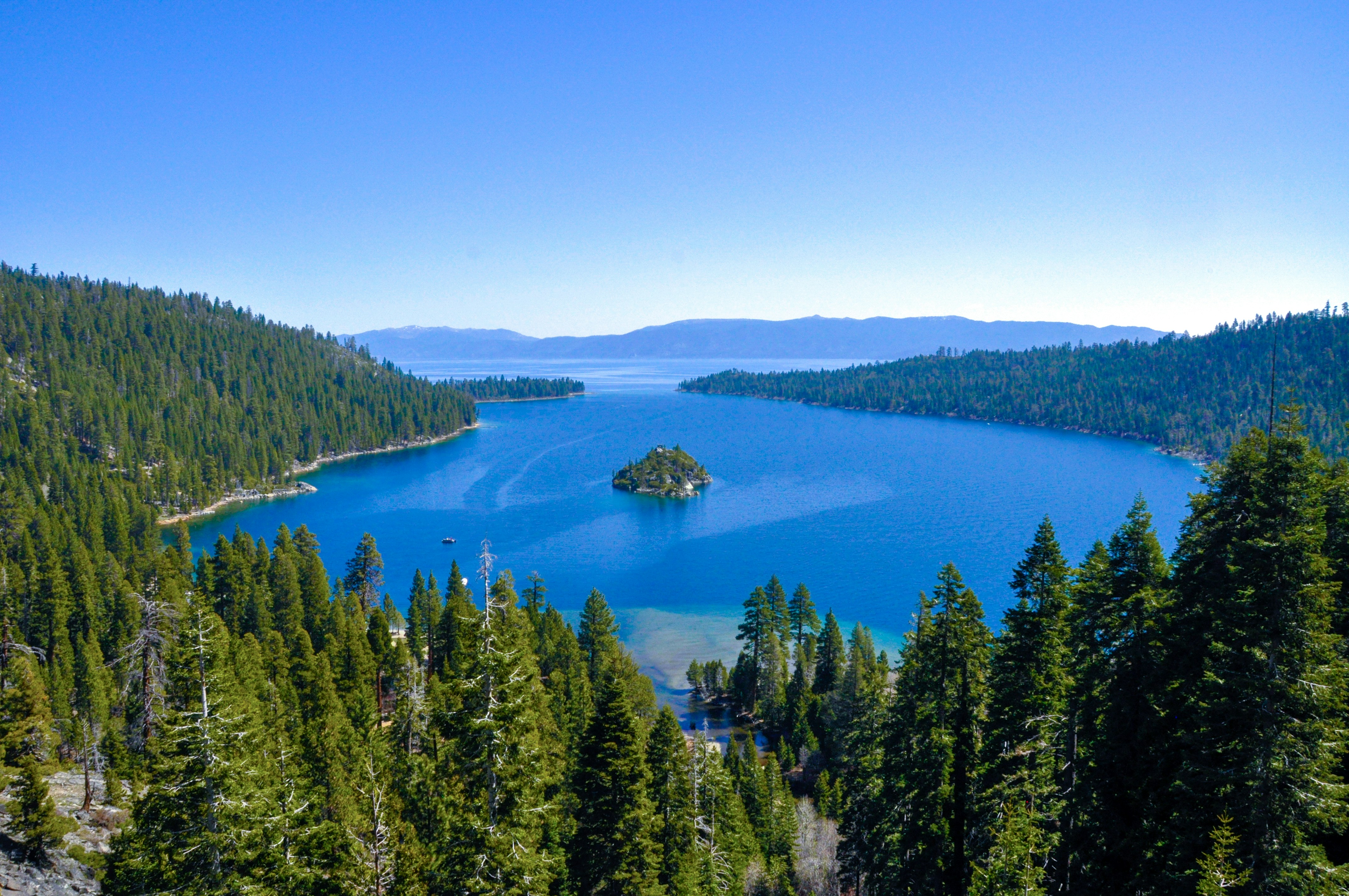
Lake Tahoe is one of the only vacation rental markets in America where a property's value—and its tax implications—can change by six figures depending on which side of an invisible line it sits on. The California-Nevada border runs right through the lake, and the difference between Tahoe City (California) and Incline Village (Nevada) isn't just a few miles of shoreline. It's the difference between a 13.3% state income tax and a 0% state income tax.
If you own an STR in the Tahoe basin—whether it's a ski cabin in Truckee, a lakefront A-frame on the North Shore, or a condo in Incline Village—you're sitting on a property that's worth $700K to $2M+ in a market with year-round rental demand. And you're almost certainly depreciating it wrong.
Cost segregation can unlock $50,000–$90,000 in Year 1 tax savings on a typical Tahoe property. If your cabin is on the California side, the combined federal and state benefit is even larger—because California's steep income tax rate means accelerated depreciation saves you money on both your federal AND state returns. Let's break down exactly how this works.
The California vs. Nevada Tax Math
Let's address the elephant in the room first, because it changes the entire cost segregation calculus.
California side (Truckee, Tahoe City, Kings Beach, South Lake Tahoe, Alpine Meadows): California's top marginal income tax rate is 13.3%—the highest in the nation. If you're a high-income earner with a California STR, cost segregation provides a double benefit: accelerated depreciation reduces both your federal taxable income (up to 37%) and your California taxable income (up to 13.3%). On a $950K property with $200K in accelerated deductions, that's an additional $26,600 in state tax savings on top of the federal benefit. California alone. That's not a rounding error.
Nevada side (Incline Village, Crystal Bay, Stateline, Zephyr Cove): Nevada has no state income tax. Zero. Your cost segregation benefit is purely federal. But here's the counterintuitive part—even without the state tax kicker, cost segregation on a Nevada-side Tahoe property still generates massive savings because these properties tend to be more expensive. Incline Village median home prices hover around $1.5M. At 37% federal, you're still looking at $60,000–$90,000+ in Year 1 savings.
Important nuance: if you own a Tahoe property in California but you personally live in Nevada (or another no-income-tax state), California may still tax the rental income generated by the property. Your cost segregation deductions would offset that California-source income. Talk to your CPA about your specific situation—multi-state tax allocation is worth getting right.
Why Tahoe Properties Are Built for Cost Segregation
Beyond the state tax arbitrage, Tahoe properties have structural characteristics that make them exceptional cost segregation candidates. These aren't simple beach bungalows or cookie-cutter condos. They're mountain properties built to handle 20 feet of snow, entertain guests year-round, and survive at 6,200+ feet of elevation. That engineering intensity translates directly into depreciable components.
5-Year Property—Tahoe cabins are loaded with this. Hot tubs (nearly universal—you can't compete in this market without one, and they take a beating from snow, altitude, and heavy use). Ski gear storage systems—boot dryers, heated mudrooms, custom ski racks. All furnishings, which in Tahoe tend toward the premium end: leather sofas, solid wood dining tables, quality bedding. Kitchen appliances (high-end is standard at this price point). Every TV, gaming console, and sound system. Specialty flooring—heated tile in bathrooms and entryways. Saunas and steam showers. Window treatments. Cabinetry and stone countertops.
15-Year Property—this is where mountain properties really differentiate. Expansive multi-level decks (engineered for snow load—these are substantial structures). Outdoor fire pits and stone patios. Hot tub pads and dedicated equipment areas. Retaining walls on sloped lots (extremely common in the Sierra). Snow-rated exterior lighting. Heated driveways (yes, some Tahoe properties have these). Landscaping and erosion control. Fencing. Exterior staircases and walkways built to code for mountain terrain.
A typical well-appointed Tahoe cabin sees 24–28% of its depreciable basis reclassified to accelerated schedules. Properties with extensive outdoor living areas, saunas, and premium furnishing packages can push above 30%.
A Concrete Example: North Shore Cabin
You purchased a 4-bedroom cabin near Kings Beach on the North Shore (California side) for $950,000. It's got a hot tub on the back deck, a ski gear mudroom with boot dryers, a stone fireplace, a sauna, premium furnishings, heated bathroom floors, a multi-level deck with a fire pit, and mountain views that make guests leave five-star reviews without you doing anything else right.
| Cost Segregation Breakdown | |
|---|---|
| Purchase price | $950,000 |
| Land allocation (15%)* | $142,500 |
| Depreciable basis | $807,500 |
| Accelerated components (~26%) | $209,950 |
| Year 1 accelerated deduction (100% bonus) | $209,950 |
| Estimated federal tax savings at 37% bracket | $77,682 |
| California state tax savings at 13.3%** | $27,923 |
| Total estimated Year 1 tax savings | $105,605 |
*Land ratios around Tahoe vary significantly. Lakefront properties can have land allocations of 25–40% (the land itself is extremely valuable). Properties a mile or two from the lake on mountain terrain often run 10–18%. Your specific land allocation matters—a cost segregation study uses county assessor data and other sources to determine the appropriate split.
**California state savings assume the property owner is a California resident or the income is California-source. If the property is on the Nevada side, the state savings line drops to $0—but the federal savings remain identical.
Without cost segregation, you'd take roughly $29,364 per year in straight-line depreciation ($807,500 / 27.5). With cost segregation, you're pulling $209,950 forward into Year 1. That's over 7 years of depreciation captured immediately. At combined federal + CA rates, that's potentially $105,000+ in Year 1 tax savings on a single property.
For California-side Tahoe property owners in the top bracket, cost segregation effectively generates a combined federal + state tax benefit of over 50 cents on every dollar of accelerated depreciation. A $200K acceleration saves you $100K+ in taxes. That's the kind of math that makes your CPA smile.
The South Lake Tahoe STR Ban—and Where to Focus Instead
If you've been following the Tahoe STR market, you know about the South Lake Tahoe situation. In 2022, voters approved Measure T, which phased out most vacation home rentals outside the Tourist Core. By the end of 2023, most residential neighborhoods in South Lake Tahoe were off-limits for STRs. The city went from roughly 1,400 permitted STRs to a few hundred in the Tourist Core.
This matters for two reasons. First, if you're one of the lucky ones who still has a permitted STR in South Lake Tahoe's Tourist Core, your permit is now extremely valuable—you have a regulatory moat. And you should absolutely be doing cost segregation, because your property's earning potential is protected by the very restrictions that eliminated your competition.
Second, the ban pushed investor attention (and dollars) to other parts of the basin where STRs remain legal:
North Shore / Kings Beach / Tahoe Vista—Placer County has a VHR permit system but hasn't capped permits. Strong year-round demand. Properties in the $700K–$1.2M range.
Truckee / Donner Lake—technically not on the lake, but 15 minutes from the slopes and increasingly popular with Bay Area remote workers. The town regulates STRs but hasn't banned them. Properties in the $800K–$1.5M range.
Incline Village / Crystal Bay (NV)—the premium Nevada-side play. No state income tax, no STR ban, and some of the most expensive properties in the basin. Properties in the $1M–$3M+ range. If you're buying for both investment return and tax efficiency, the Nevada side is hard to beat.
Alpine Meadows / Olympic Valley—ski-in/ski-out properties near Palisades Tahoe (formerly Squaw Valley). Condo-heavy market with strong ski season rental demand. Properties in the $500K–$1.2M range.
TRPA Building Restrictions: Your Hidden Advantage
The Tahoe Regional Planning Agency (TRPA) strictly controls development in the Lake Tahoe basin to protect water quality and the environment. New construction is heavily restricted—you can't just build whatever you want, wherever you want. Coverage limits, setback requirements, and environmental review processes make new supply extremely constrained.
This is actually great news for existing property owners. Limited new supply means existing properties hold value and rental demand stays strong. It also means your property's depreciable improvements are particularly valuable from a cost segregation perspective—the outdoor hardscaping, decking, and land improvements that TRPA carefully reviewed and approved are all separately depreciable assets.
Material Participation: The Key That Unlocks Everything
If your Tahoe property has an average guest stay of 7 days or fewer (standard for the ski cabin and summer vacation market), the IRS does not automatically classify it as a passive rental activity. If you materially participate—spending more than 100 hours per year on the property and more than anyone else—your losses become non-passive. They can offset your W-2 salary, your 1099 income, your business profits.
For Tahoe specifically, material participation is achievable even for remote owners. Managing pricing across peak ski weekends and summer holidays alone takes significant time. Coordinating with snow removal services (a Tahoe-specific operational requirement), managing hot tub maintenance, dealing with the inevitable pipe-freeze emergencies in January, communicating with guests about road conditions and chain requirements—the operational demands of a mountain property add up quickly. Keep a simple log documenting your hours.
When material participation is combined with cost segregation, a high-income professional with a $950K Tahoe cabin can generate $75,000–$105,000 in Year 1 tax savings that directly offset their primary income. For someone earning $400K+ between W-2 and other sources, this is a genuinely meaningful tax reduction.
100% Bonus Depreciation Is Back—Permanently
The One Big Beautiful Bill Act, signed in July 2025, permanently restored 100% bonus depreciation for 2025 and beyond. After years of phase-downs (80% in 2023, 60% in 2024), every dollar of accelerated property identified in your cost segregation study can now be deducted in full in Year 1. For Tahoe investors sitting on $800K–$2M properties loaded with depreciable components, the timing couldn't be better.
How It Works: Simple, Not Complicated
Modern cost segregation studies don't require someone to drive up I-80 through a blizzard to inspect your cabin. Engineering-based studies use property data, building component databases, and IRS-recognized valuation methodologies to classify your property's components remotely. You provide your property details—purchase price, square footage, year built, property type, any significant features or improvements—and receive a CPA-ready PDF report, typically in under an hour.
Cost Seg Smart is the modern cost segregation company. Reports delivered in under an hour—not six weeks. Studies start at $795. For a cabin purchased at $950,000, that's $795 to potentially save $75,000–$105,000 in taxes. You'll spend more than that on hot tub chemicals this year. You can order your study right now.
How Much Can You Save in Year One?
Enter your email to see your estimate
More from the Blog

Smoky Mountain Cabin Revenue Down 35%? Here's the Tax Move Smart Investors Are Making
Gatlinburg and Pigeon Forge cabin revenue has dropped 30-40% from peak. Smart investors are using cost segregation to recover $25K-$60K.
How STR Owners Use Cost Segregation to Offset W-2 Income
Short-term rental owners who materially participate may be able to use depreciation losses to offset their salary and other active income.